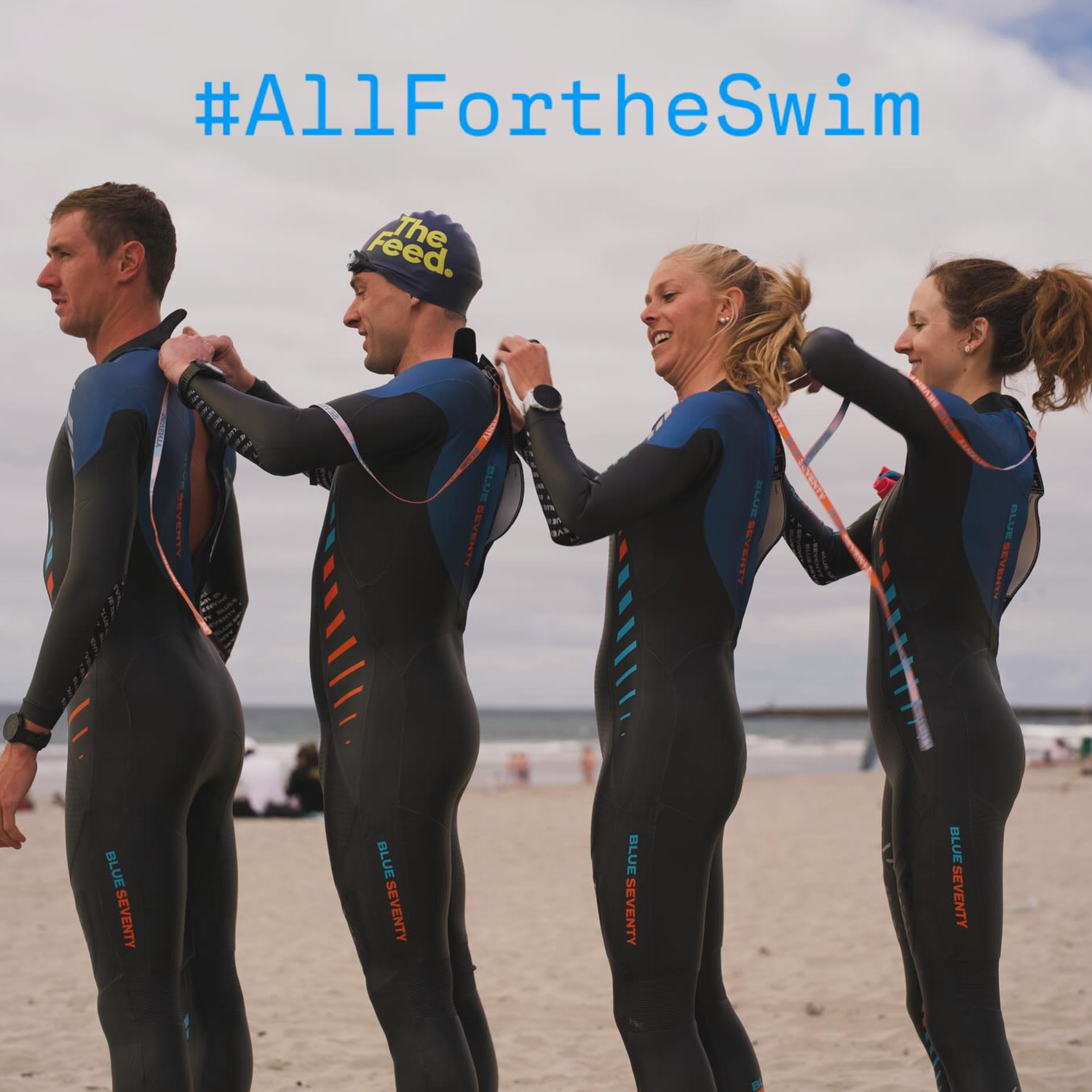



For most swimmers, the best under-layer is almost nothing. A swim-specific wetsuit works by letting a thin layer of water inside. Your body warms that water, and the neoprene slows heat loss. A wetsuit is not waterproof and is not designed to keep you dry. Bulky clothing under the suit breaks the neck, wrist, and ankle seals and lets cold water flush through with each stroke.
Why less is usually warmer
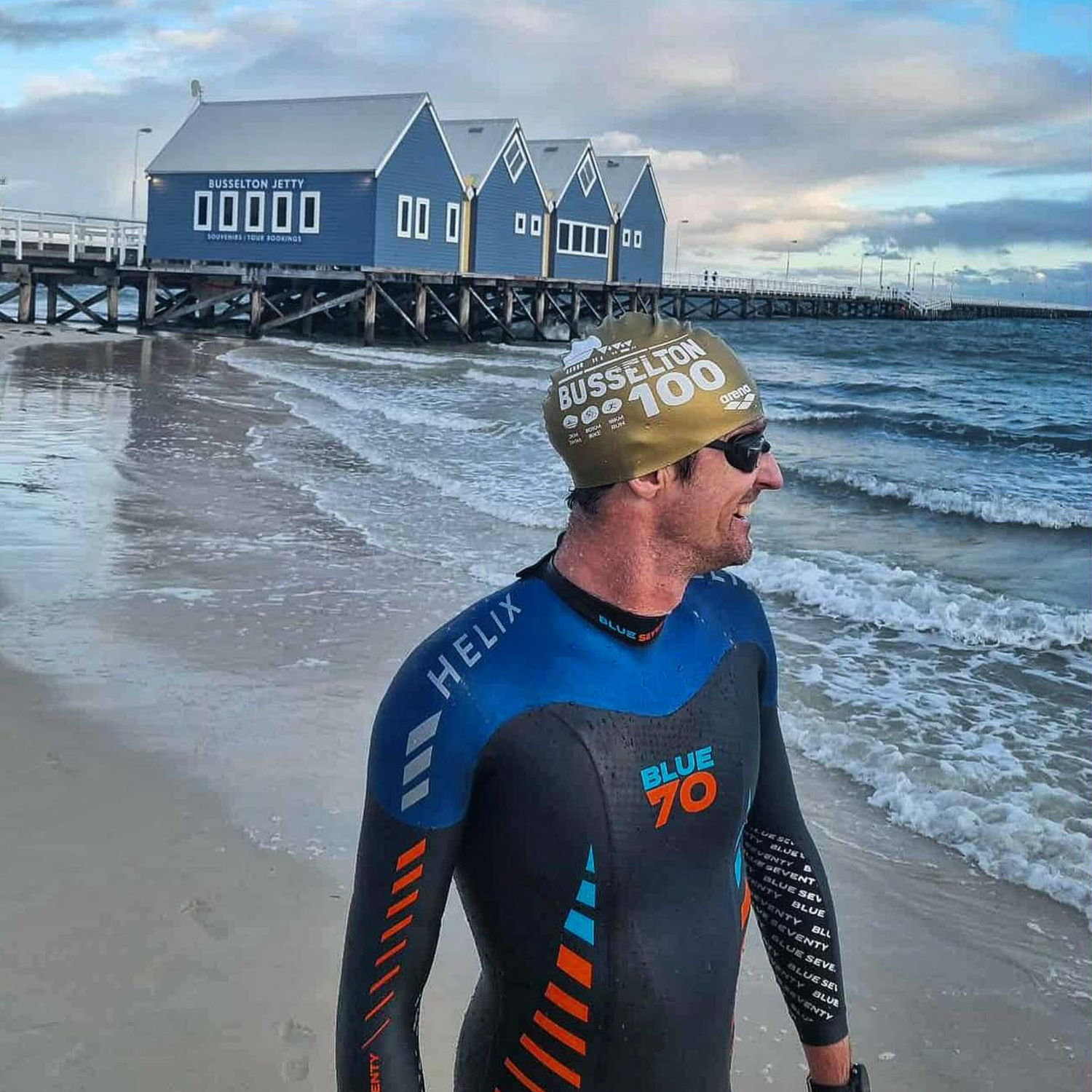
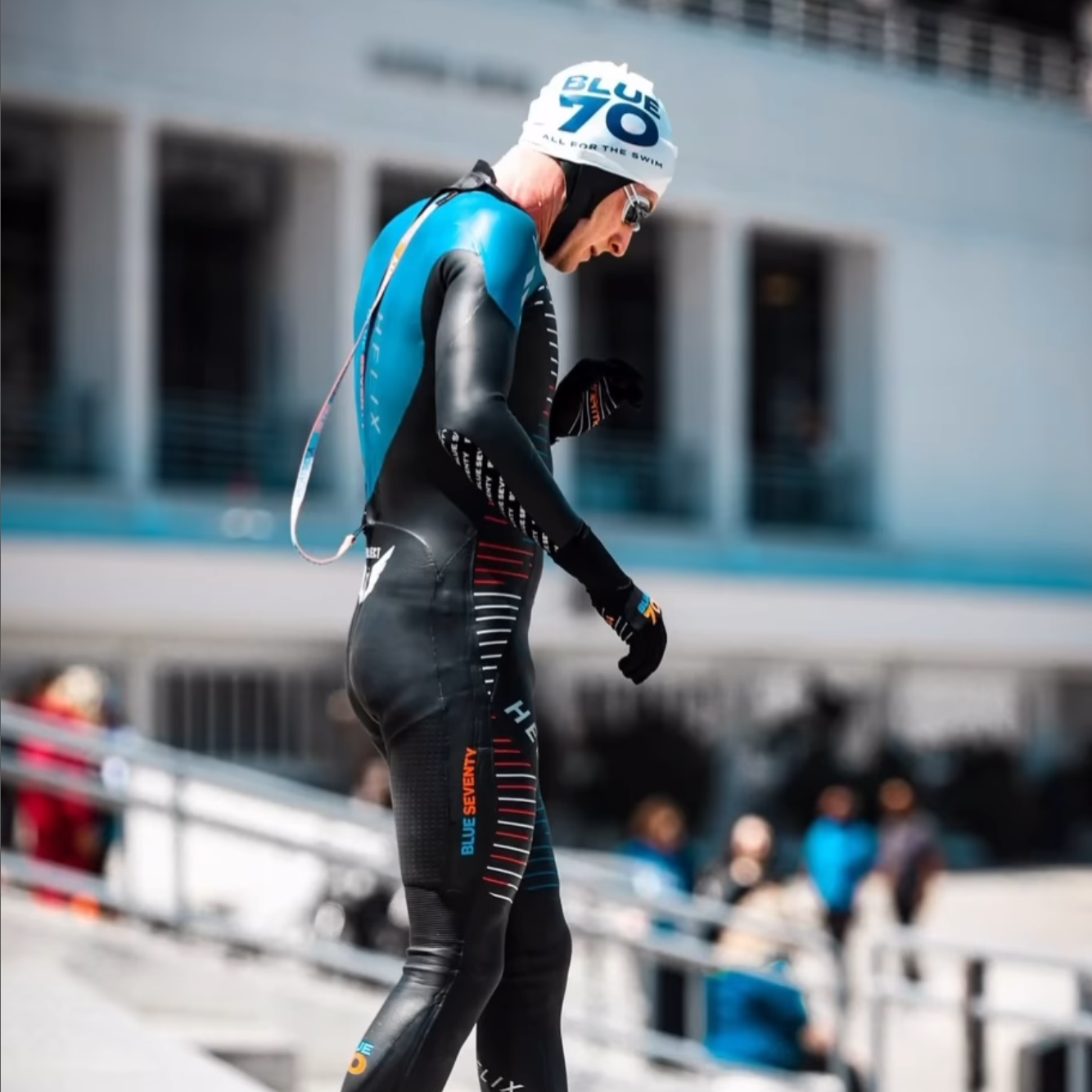
Your core is already the warmest part of a fitted Blue70 wetsuit. Neoprene traps a thin layer of water next to your torso and legs. If you add a cotton t-shirt, running shorts, or underwear, those fabrics hold water against your skin and cool you down. Cotton is the worst choice. It soaks up water, stays wet, and adds drag and chafe without providing useful insulation. Thick rash guards or fleece tops create folds under the shoulders and can restrict your stroke, which costs heat and energy.
If you do add a layer
For extra warmth or chafe protection, choose a thin, synthetic thermal swim layer cut close to the body. It should fit like a second skin and stretch through the shoulders. Test it at home with your wetsuit on. If it bunches at the neck, wrists, or ankles, the layer is too thick or too loose.
For most swimmers, a snug swim brief, jammer, or one-piece training suit is the right amount underneath. It protects against chafing and keeps the suit comfortable without interfering with the seal. Women who want more coverage can use a snug, unpadded sports-style swim top, but not a regular bra with straps and hardware that can dig in.
Where extra warmth really comes from
The bigger gains come from choosing the right suit and protecting the areas that lose heat fastest. For water below roughly 56 to 58 degrees Fahrenheit, Blue70 builds the Thermal Reaction with a full Zirconium jersey lining. That synthetic jersey lining sits against the skin, holds the warmed water layer longer, and adds meaningful thermal protection for cold-water swimming. It is purpose-built for cold water, so you do not need to pile clothing under it to extend your season.
Thermal comfort still depends on water temperature, time in the water, and your own cold tolerance. No wetsuit removes the need for gradual cold-water acclimatization and safe swim practices.
Hands, feet, and head lose heat quickly
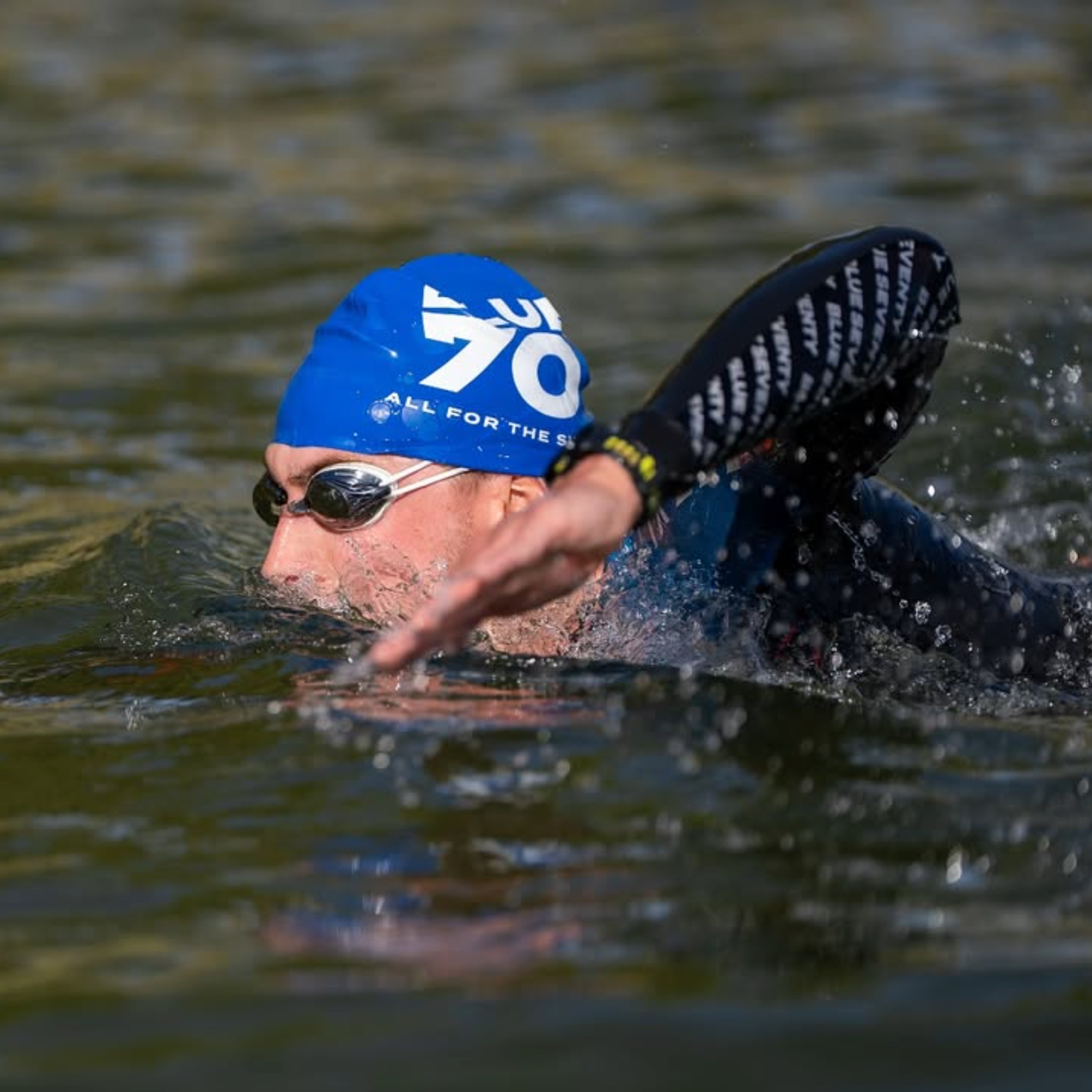
Your hands, feet, and head lose heat quickly in cold water. A neoprene cap, gloves, and socks or booties add more warmth than anything you could squeeze under the suit. Blue70 carries thermal accessories for cold-water swimming, and they are designed to work with the wetsuit rather than fight it. Keep them snug. A loose glove or bootie lets cold water flush through and turns into a cold pocket.
Check the fit first
Before adding any under-layer, check that your wetsuit fits. A suit that is too loose lets water pump in and out. That feels cold even before you add clothing. A properly fitted swim-specific wetsuit should feel snug on land, especially through the torso, and loosen slightly once the thin water layer settles inside. If you are between sizes, use the Blue70 sizing tool or take a Test Swim. Blue70 allows returns and exchanges within 30 days from ship date, and swimming in the suit does not affect your ability to get a refund if it comes back clean, dry, and unmodified.
When not to add warmth
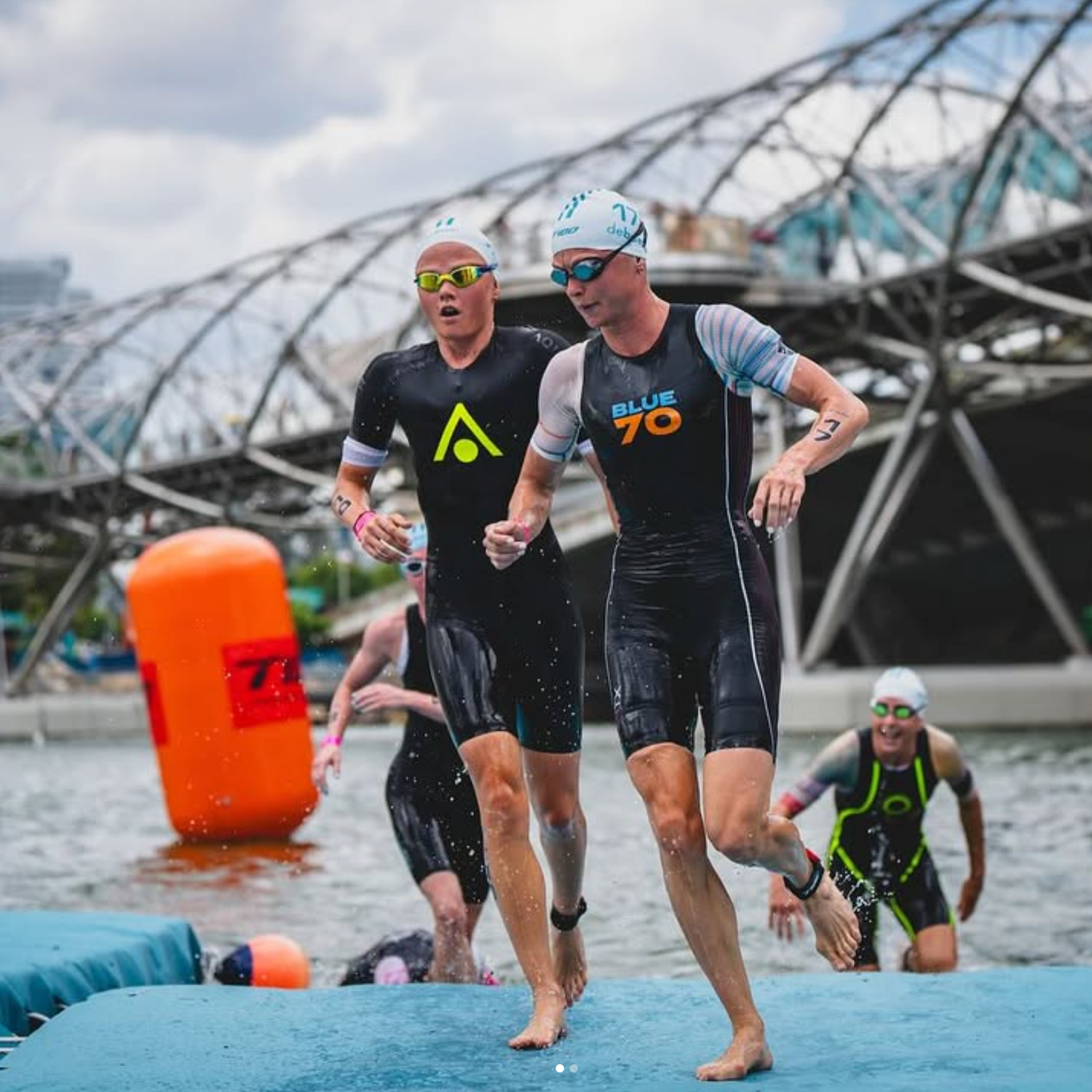
If your water is above 70 to 72 degrees Fahrenheit, a full thermal suit and extra layers are usually too warm for longer swims. In that range, a sleeveless suit or swimskin is often the better call. Save the thermal layers for water that actually feels cold on your skin after you start moving.
Quick checklist for cold swims
- Start with a properly fitted Blue70 wetsuit, with no bulky clothing underneath.
- If you use a base layer, choose a thin synthetic thermal swim top with a second-skin fit.
- Avoid cotton, padded bras, underwear, and fleece.
- For water below about 56 to 58 degrees Fahrenheit, move to the Blue70 Thermal Reaction.
- Add snug neoprene gloves, socks or booties, and a cap.
- Build cold exposure gradually and swim with others.
If cold water is on your calendar, start with the Thermal collection and use the size tool before ordering. Happy swimming.