


Cramps rarely come from one thing. Dehydration, low sodium, a rushed meal, and tight calves from over-kicking or a poorly pulled-up wetsuit all play a part. The food you eat before you swim matters, but it works only when you also manage fluids and suit fit.
Start with timing before the food
Eat your main pre-swim meal two to four hours before you get in. That gives your stomach time to empty and your muscles time to store glycogen. A full stomach compresses under a snug wetsuit, and that pressure can leave you nauseated or trigger side stitches that feel like cramps. If you swim early, set an alarm, eat a small meal, and go back to sleep rather than trying to fuel on the drive. A rushed meal at the water's edge won't have time to move out of your stomach before the suit starts pressing on it.
Build the meal for easy digestion
Pick foods you already know. A pre-wetsuit meal should be carbohydrate-based with some protein, low in fat, and low in fiber. Carbs convert to glycogen, which your muscles draw on during the swim. A little protein helps keep you from getting hungry before the start. Fat and fiber slow digestion, which you don't want under a neoprene suit.
Useful options:
- Oatmeal made with water or low-fat milk, a banana, and a small spoon of nut butter
- White rice with two scrambled eggs and a pinch of salt
- Turkey sandwich on white bread
- Smoothie with banana, yogurt, and a scoop of protein powder if you use it
Skip anything spicy, fried, creamy, or heavily sauced. Carbonated drinks can make you feel bloated under a wetsuit. If you don't usually have caffeine before swimming, race morning is the wrong time to try it. Caffeine can speed up digestion and leave you needing a bathroom mid-swim.
Front-load fluids early in the day
Many open water cramps start with fluid loss you don't notice because you're wet. You still sweat in cold water, and you still lose sodium through sweat. Start hydrating when you wake up. Drink a full glass of water, then sip steadily up to the swim instead of chugging right before. For a longer swim, a warm day, or a heavy sweat profile, add an electrolyte mix that includes sodium. Salt is the main electrolyte lost in sweat, and low sodium can make calves and feet twitch. If you cramp often, track what you drink and how salty your skin and suit feel after training.
Use a race-morning timeline
Test this in training before your next wetsuit session.
- Three hours out: full breakfast, mostly carbs, some protein, low fat, low fiber
- 60 to 90 minutes out: a banana or a few pretzels if you're hungry
- 20 minutes out: small sips of water
- After swimming: rehydrate and eat a mixed meal within an hour
If your stomach complains during the swim, move breakfast earlier or shrink the snack. If you feel flat at the 40-minute mark, add more carbs at breakfast. Write down what you ate and how the swim felt. Over a few sessions you'll find the pattern.
Check the suit fit before you blame breakfast
Calf and foot cramps sometimes start in a suit that fits too tight in the lower leg, or when you don't pull the neoprene up high enough at the ankles and knees before you zip. Blue70 builds its suits for swimming, not surfing, and uses Yamamoto neoprene across the line. But any wetsuit can restrict if it's not donned properly.
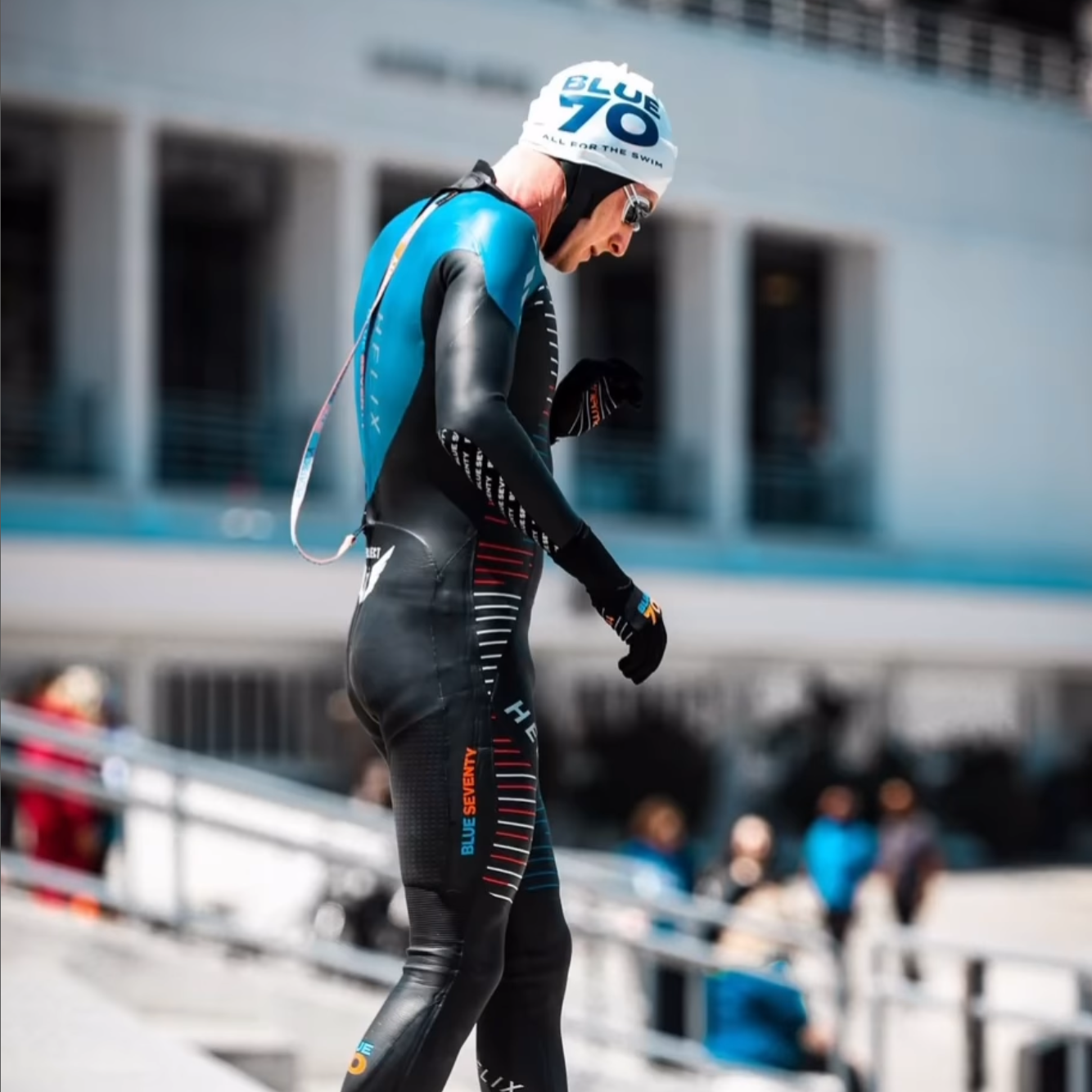
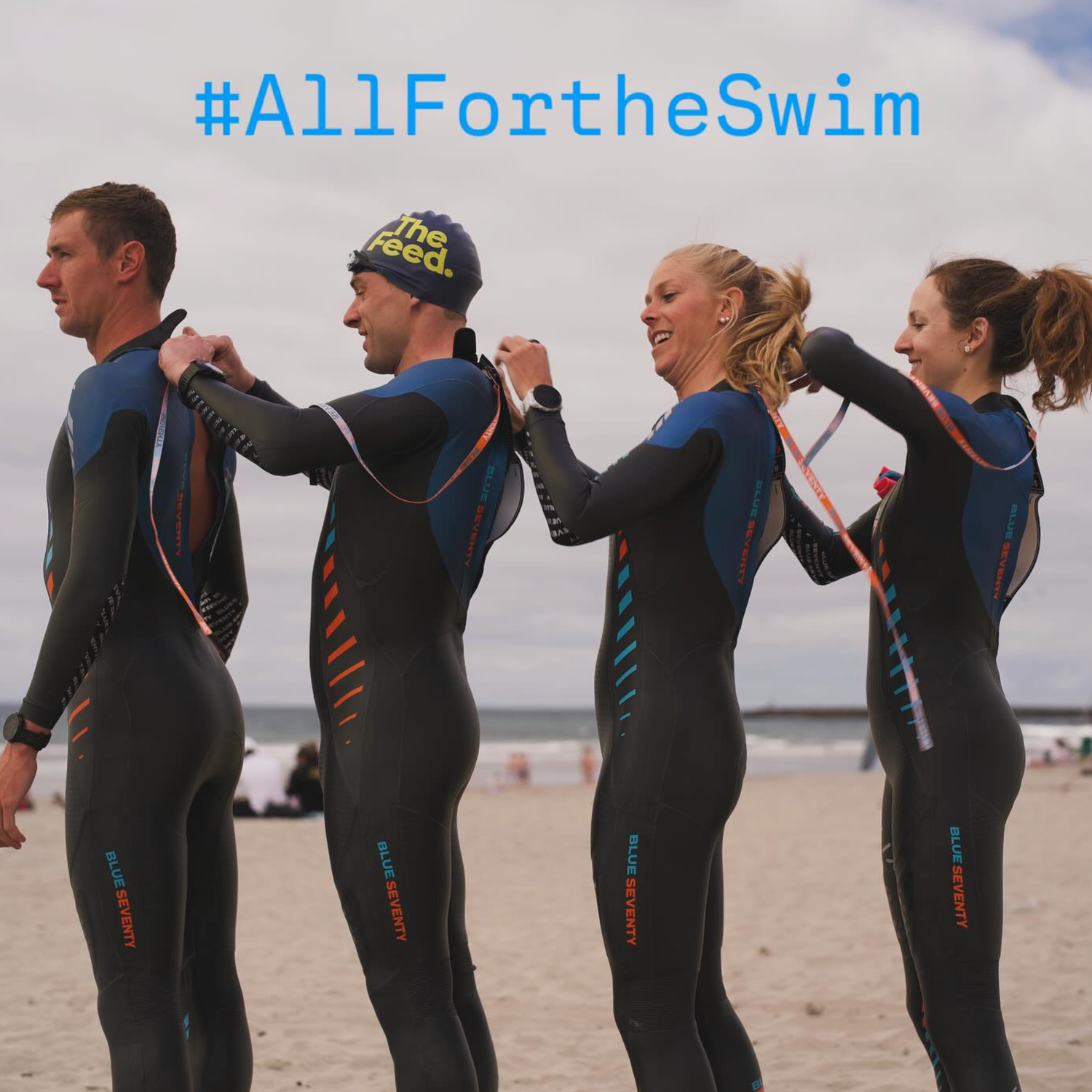
When you put on a Blue70 suit, work the neoprene up inch by inch, pulling extra material from the shins and thighs toward your hips before you settle the suit high into your armpits. You should feel snug on land but able to take a full breath and rotate your shoulders. In the water, the suit should feel less restrictive than it did on land. If your feet cramp, check your kick. Wetsuit buoyancy lifts your legs, so you may not need to kick as hard or as wide. Relax the ankles and let the suit support your body position.
If a cramp hits mid-swim
Stop swimming and call for support if you're in a race or group. Roll onto your back, breathe, and gently stretch the affected muscle. Don't fight a severe cramp. Once you're out, sip an electrolyte drink and warm up. A single cramp often passes, but repeated cramping means your pre-swim fuel, fluids, or suit fit needs adjustment. Change one variable at a time so you know what worked.
Cramp prevention starts hours before you zip up. Eat a familiar, carb-based meal two to four hours out, hydrate steadily, add sodium for longer swims, and check that your Blue70 wetsuit fits through the calves, hips, and shoulders. If suit fit is still uncertain, use the Blue70 fit guide and size charts on the Blue70 website before your next open water session. Happy swimming!