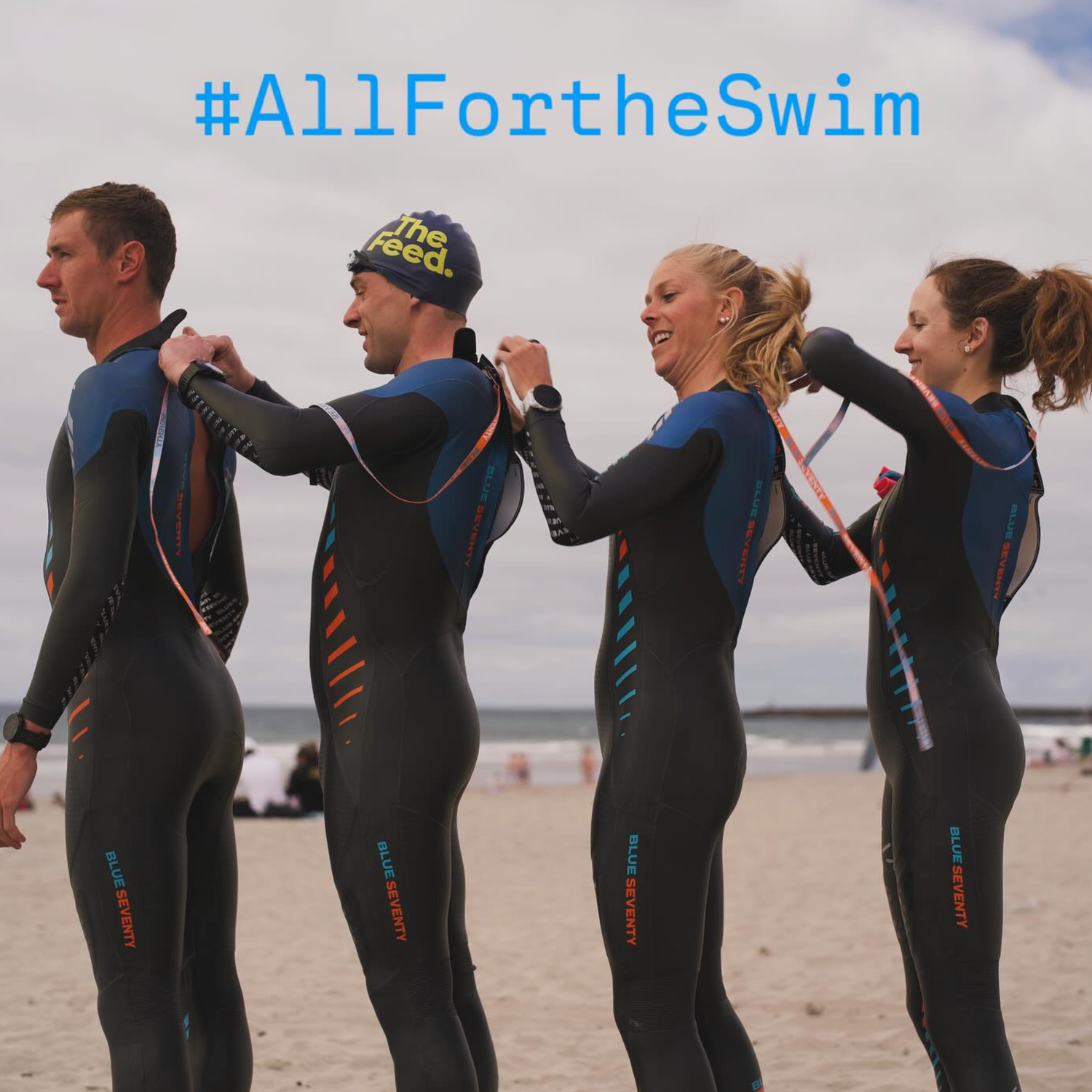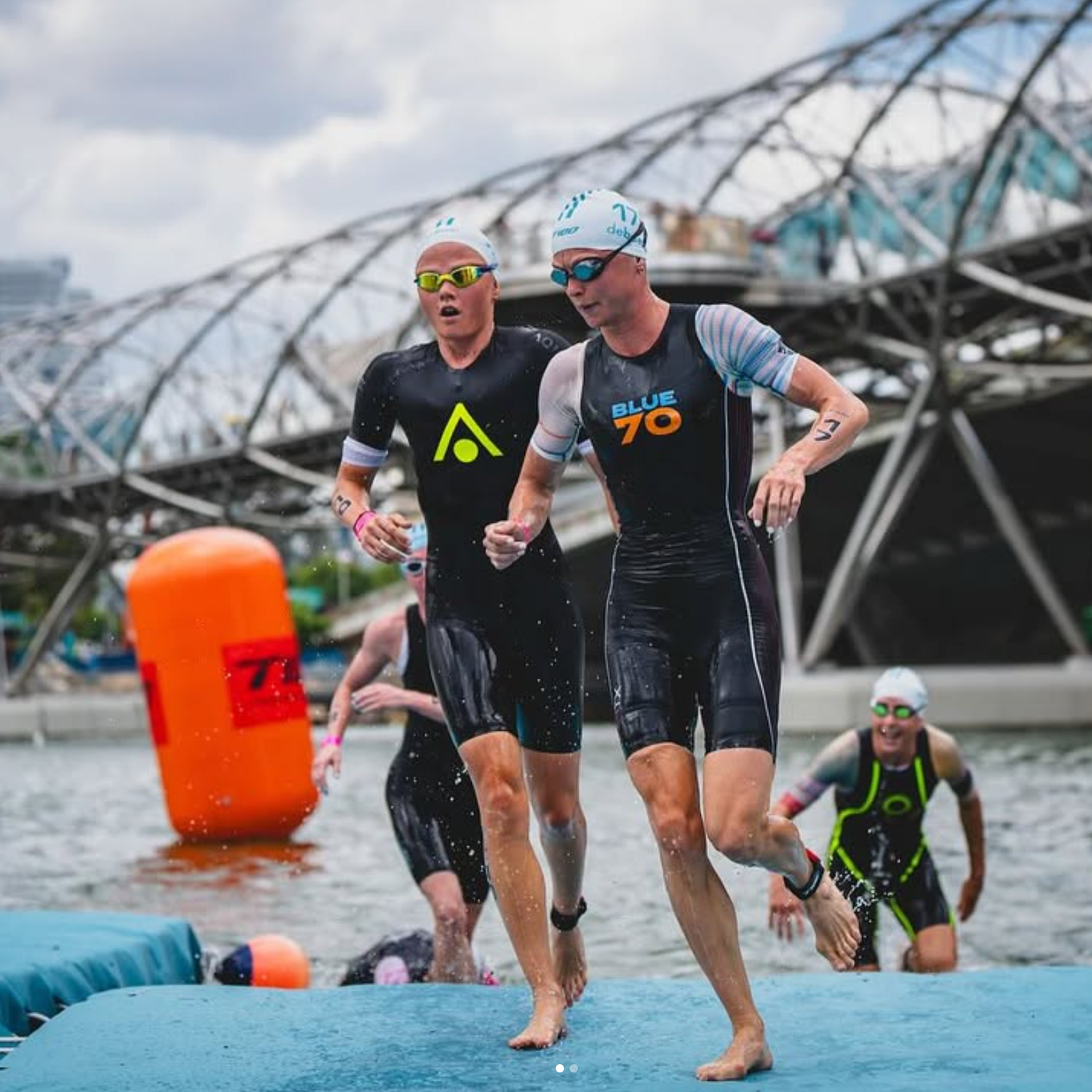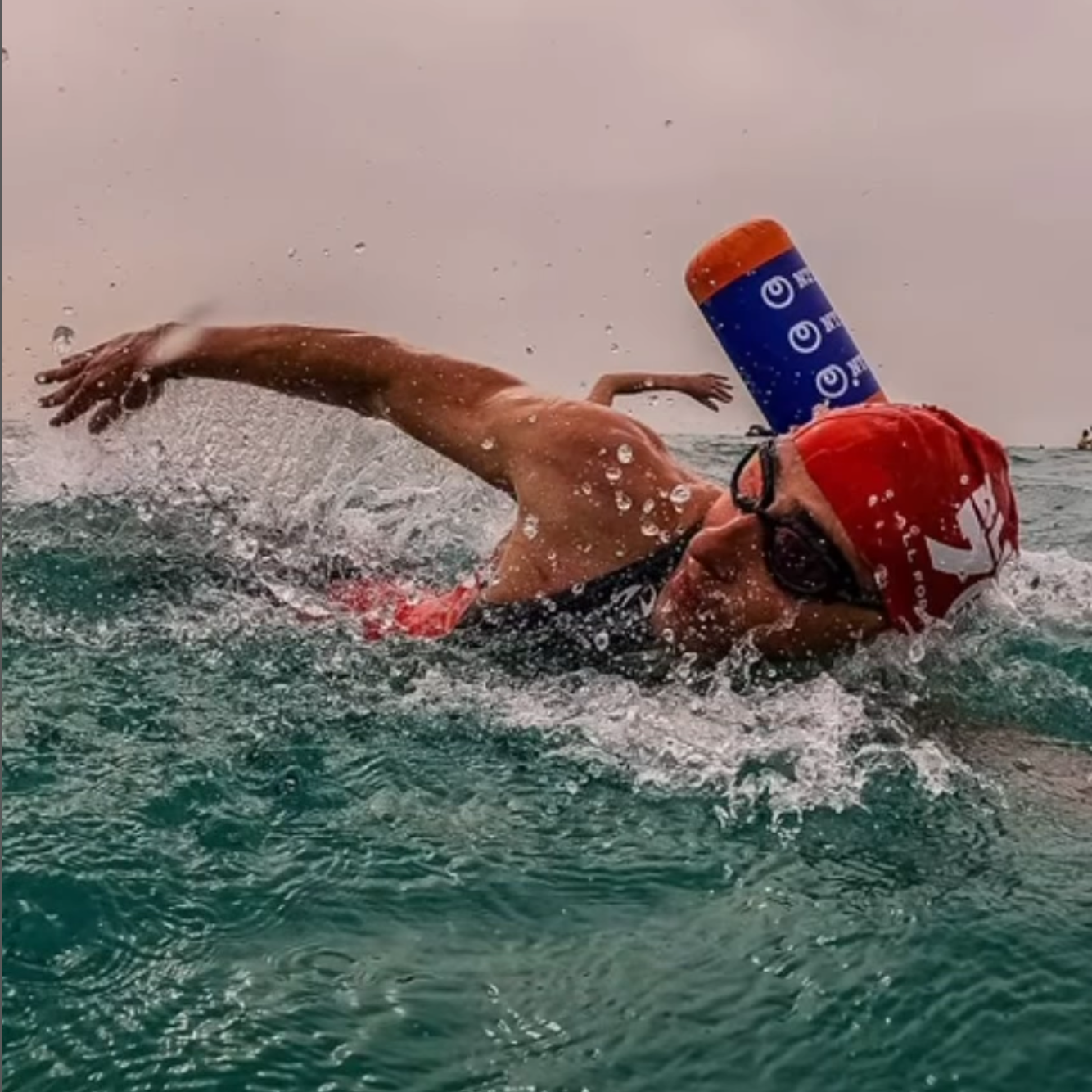



Yamamoto neoprene is the rubber foam blueseventy uses in every wetsuit. A swimming wetsuit has a different job from a surf or dive suit. You repeat the same shoulder rotation stroke after stroke, and the suit needs to move with you. Yamamoto neoprene delivers that flexibility while adding buoyancy and thermal protection.
What Yamamoto neoprene is
Yamamoto is the neoprene supplier behind the foam in blueseventy wetsuits. Blueseventy uses three cell grades of Yamamoto neoprene: 38, 39, and 40. The cell number is a flexibility rating. Higher numbers mean more flexible neoprene.
The practical translation is simple. A 40-cell panel bends more easily than a 38-cell panel. In the shoulders, that difference is immediately noticeable.
Why flexibility matters in a swim wetsuit
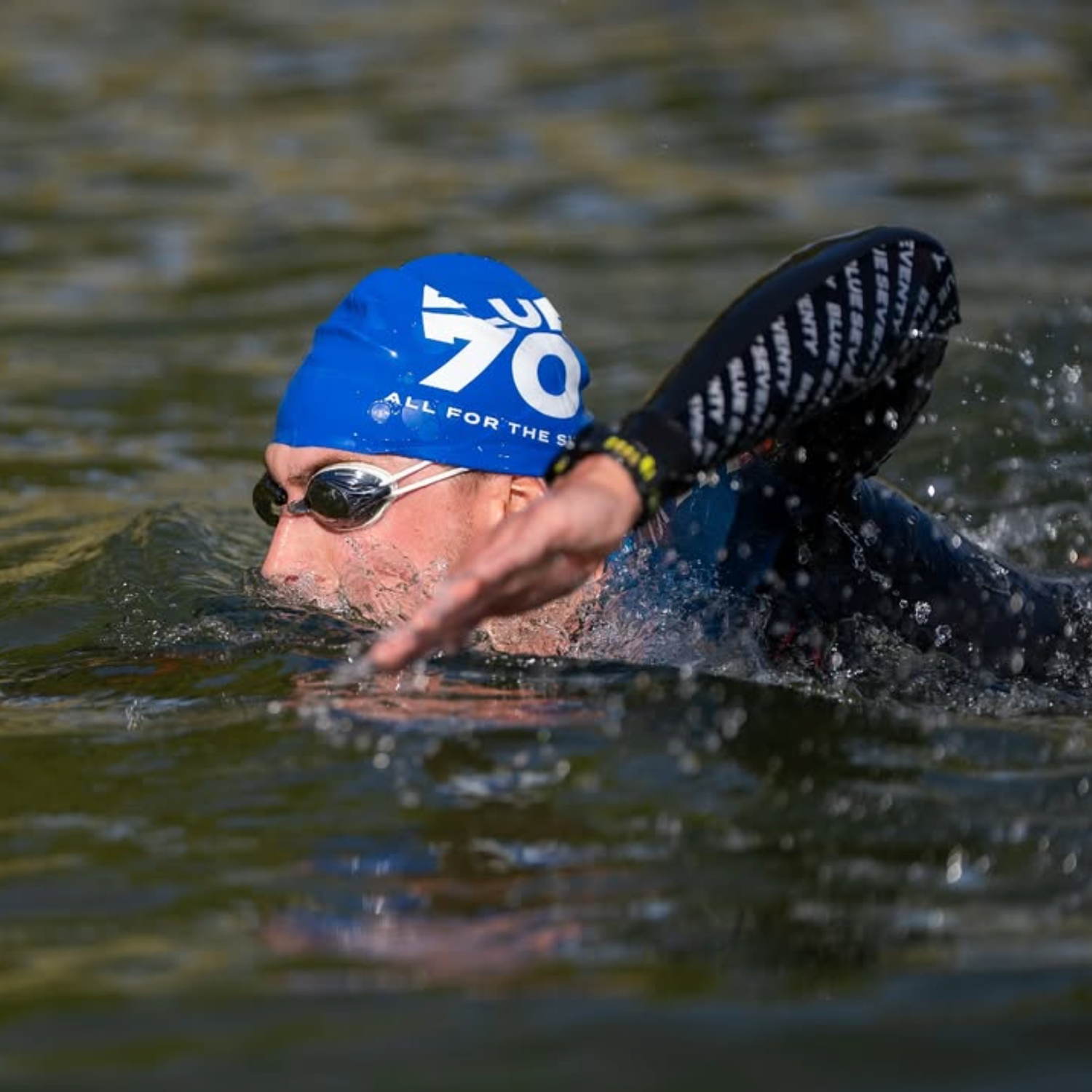
Freestyle and backstroke depend on constant shoulder rotation. If the suit restricts that rotation, your catch shortens and your arms fatigue faster. Yamamoto neoprene in the arms and shoulders lets the suit follow the stroke. You spend less energy working against the rubber and more energy pulling water.
A swimmer takes thousands of strokes per session. Small amounts of flexibility add up.
Buoyancy equals speed
Neoprene lifts your hips and legs in the water. That improves body position and reduces drag. Yamamoto neoprene holds its buoyancy consistently because the foam structure is uniform. Blueseventy places that buoyancy where it helps most, including the LIFT panels in the Helix.
When your lower body rides higher, you swim flatter. A flatter position means less drag. Less drag means the same effort moves you farther.
Thermal protection
A wetsuit works by letting a thin layer of water inside. Your body warms that layer, and the neoprene slows heat loss. Yamamoto neoprene adds a consistent insulation layer. For swims below about 56 to 58 degrees Fahrenheit, the Thermal Reaction adds a full Zirconium jersey lining for meaningful cold-water protection.
How blueseventy applies the grades
Blueseventy chooses the cell grade based on where the panel sits on the swimmer's body, what kind of stroke the suit needs to accommodate, and how often the swimmer plans to train in that model.
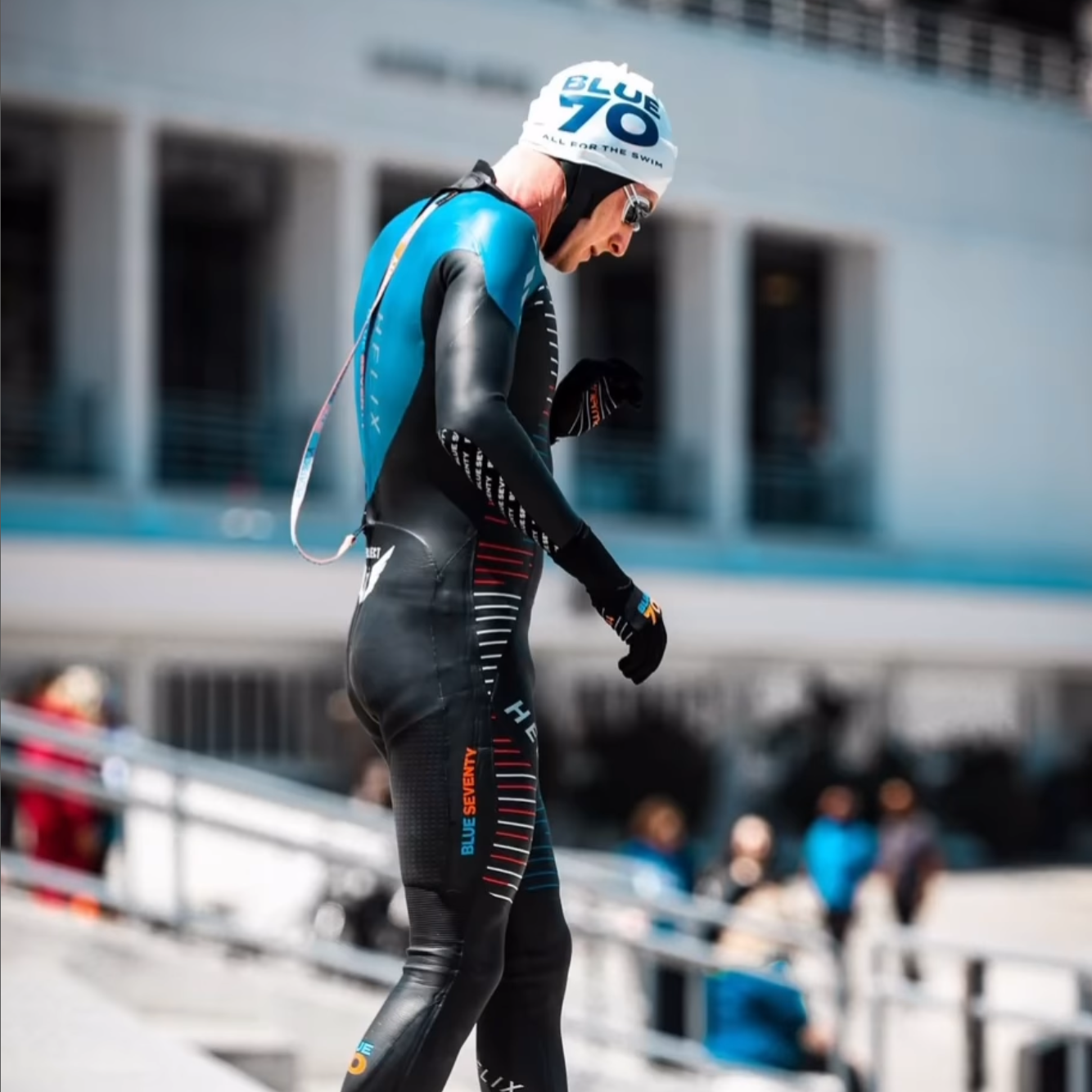
- Helix: the thinnest, most flexible neoprene in the arms and shoulders, built for race-day range of motion.
- Reaction: a higher-grade neoprene than Fusion, suited to frequent and longer swims.
- Fusion: balances flexibility with a lower-sitting neckline for comfort during shorter frequent swims.
- Thermal Reaction: Yamamoto neoprene plus a Zirconium jersey lining for cold water.
- Reaction Sleeveless: Yamamoto flexibility without shoulder coverage for warm water or easier fit.
- Sprint: entry-level suit still built with Yamamoto neoprene.
Does premium neoprene require more care?
The thinnest, most flexible neoprene also asks for more care. The Helix uses thin rubber that will break down more quickly if you train in it several times a week. Blueseventy makes that trade-off deliberately: race-day freedom costs some training durability. For heavy training, choose Reaction or Fusion. For race-day performance, Helix earns its place.
Rinse your suit in fresh water after every swim and dry it flat away from sun and heat. Fingernail punctures and heel tears are the two most common forms of damage. Small nicks can often be fixed with Aquaseal neoprene cement. The warranty covers manufacturing defects for one year. It does not cover punctures, heat damage, or wear and tear.
Matching the neoprene to your water
Below about 56 to 58 degrees Fahrenheit, the Thermal Reaction is the stronger choice. Above about 70 to 72 degrees Fahrenheit, a full suit can feel too warm on longer swims, so a sleeveless suit or swimskin becomes the better call. Between those ranges, most swimmers do well with the Helix, Reaction, or Fusion depending on training frequency and race goals.
The short way to choose
- Race-focused and willing to care for delicate rubber: Helix.
- Training several times a week, longer swims: Reaction.
- Shorter frequent swims, a balance of fit and value: Fusion.
- Entry-level and budget-conscious: Sprint.
- Cold water: Thermal Reaction.
- Warm water or easier fit: Reaction Sleeveless.
Find your size in 30 seconds on the site, or take a test swim. The test swim policy lets you swim in a wetsuit and still return or exchange it if it comes back clean and dry.
Happy swimming.