


The warmest Blueseventy swimming wetsuit is the Thermal Reaction. It is the suit we built for cold water, and it earns that place by being fully lined with Zirconium jersey, a synthetic wool material that helps hold body heat in the thin water layer next to your skin.
One mechanics point first. A swimming wetsuit is not waterproof and is not designed to keep you dry. It lets a small amount of water in. Your body warms that water, and the neoprene plus the lining slow heat loss.
What Makes the Thermal Reaction the Warmest Blueseventy Wetsuit
The key detail is the Zirconium jersey lining. The Thermal Reaction is fully lined with it. Because the Zirconium jersey runs throughout the interior, the neoprene adds buoyancy and structure while the lining holds the warmed water film close to your skin, which gives you a longer comfort window in water that would otherwise end a swim early.
Blueseventy builds its wetsuit line with Yamamoto neoprene in 38, 39, or 40 cell. Higher cell numbers mean more flexibility. For cold water, you need flexibility without losing the fit that keeps water from flushing through. A thermal suit that is too loose will let cold water in at the neck, wrists, or ankles and carry away the warm layer your body warmed.
The Thermal Reaction is a full suit, with arms and full torso coverage. More coverage means more of your body inside that warmed water film, and that matters when water temperatures drop toward the 50s Fahrenheit. The suit has been part of the Blueseventy cold-water range since 2018.
When a Thermal Suit Makes Sense
Blueseventy's published guidance points to a thermal suit when water is below about 56 to 58°F. In that range, a purpose-built thermal suit adds meaningful warmth. Above about 70 to 72°F, a full suit can feel too warm over longer swims, and a thermal suit will feel warm even sooner. The Thermal Reaction fits cold lakes, early-season open water, and long distance cold-water training.
If you swim in cold water once a week or more, the Thermal Reaction is the most direct choice. If your cold water exposure is a short acclimatization dip and you run hot, a standard Reaction or Fusion may be enough, but you will be working harder to stay comfortable once the water sits in the 50s.
If you plan to race in the suit, check the event's current wetsuit rules. Temperature cutoffs and thickness limits vary by race organizer, and a thermal suit may not be permitted at every water temperature.
Fit Is Warmth: Why the Seal Matters
Fit matters. A thermal suit only works if the water it warms stays close to your body. The Thermal Reaction, like every Blueseventy wetsuit, should fit snug on dry land and feel more comfortable once you are in the water. If you can slide a hand inside the neck seal, cold water will flush in and undo the lining's work.
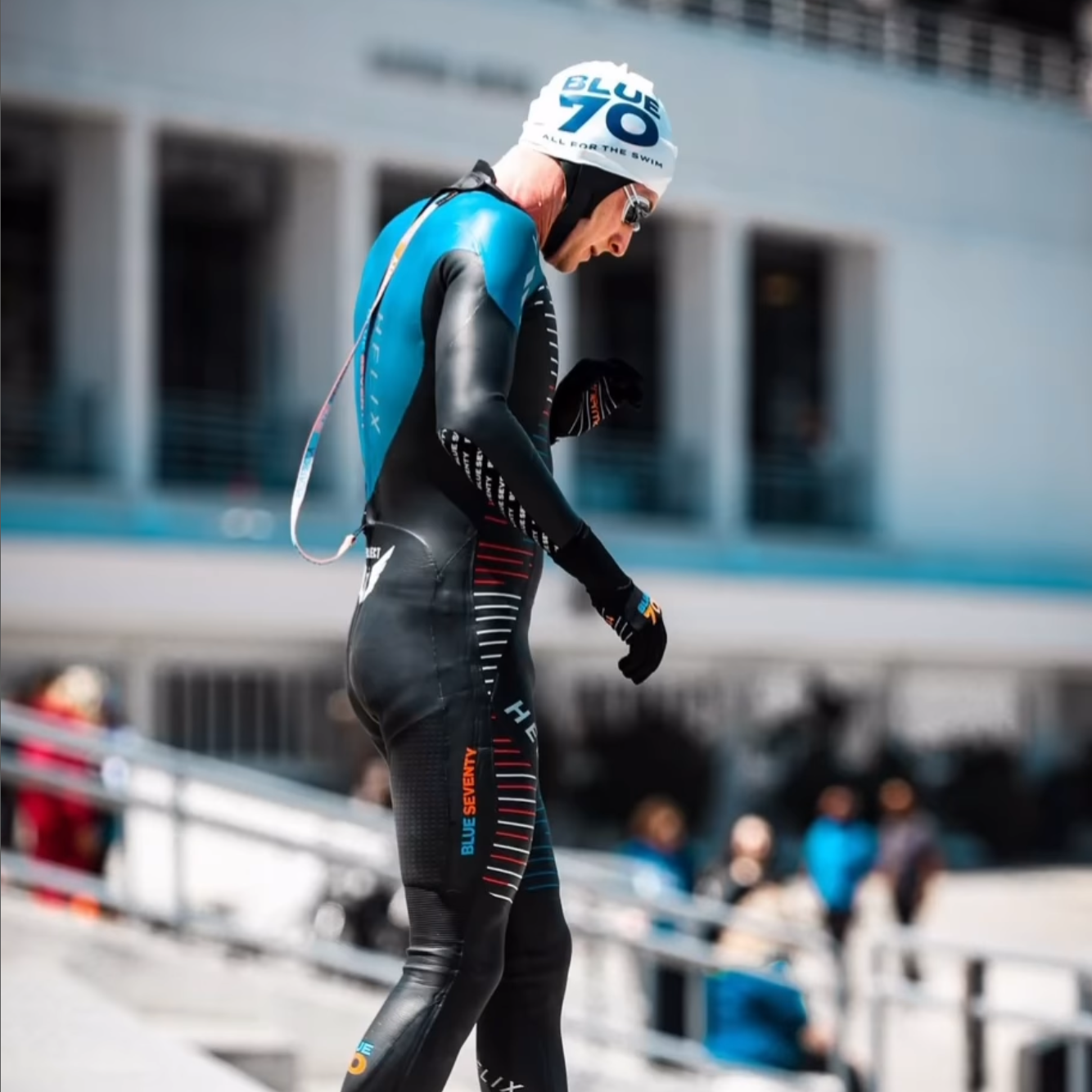
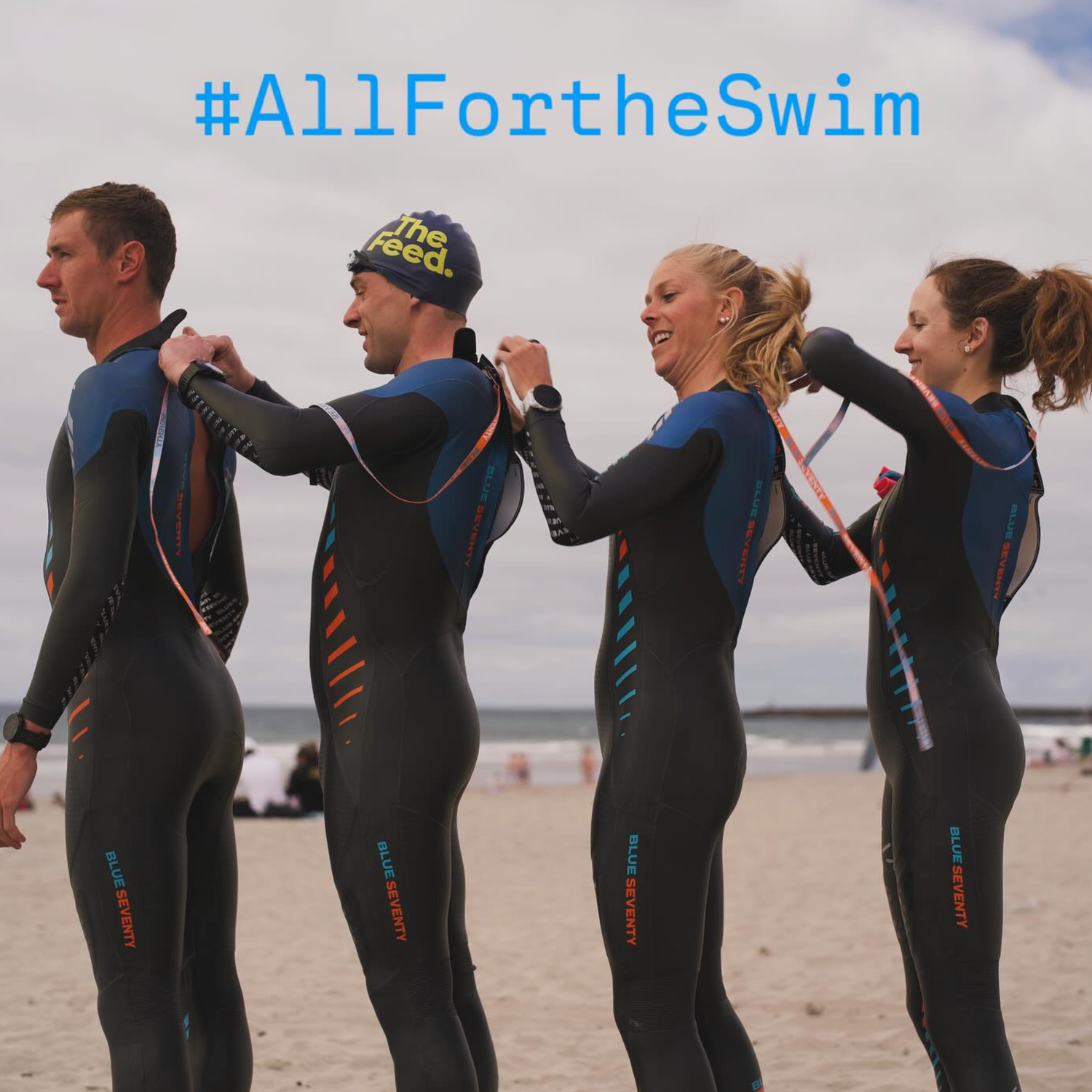
When you put the suit on, start with the legs and work the neoprene upward in small grabs. Use the pads of your fingers, not your nails. Pull the arms on one at a time, then shimmy the shoulders into place before zipping. The neck should sit flat against your skin, and the wrists and ankles should close without gaps.
For women, Blueseventy's Femme Fit pattern adjusts the bust, torso, wrists, and ankles and uses a lower neckline and longer zipper. A suit cut for your body seals better, and a better seal means less cold water exchange.
What a Thermal Wetsuit Will and Won't Do
The Thermal Reaction provides added thermal protection for cold-water swimming. It is not a personal flotation device, and it does not make cold water risk-free. Cold water still pulls heat from your head, hands, feet, and face. Acclimatize gradually, swim with others, and know the signs of cold stress. If you or someone you are swimming with gets too cold, get out, warm up, and seek medical help if needed.
You will feel water enter the suit when you first get in. That is how a wetsuit works, not a defect. The suit warms that water layer against your skin, and the Zirconium jersey helps hold the heat there.
Caring for a Cold-Water Suit
After every cold-water swim, rinse the suit in fresh water. Salt, sand, and lake water can break down neoprene over time. Air dry it out of direct sun and away from heat. Do not wring it, hang it by the shoulders on a sharp hanger, or leave it in a hot car. Fingernail punctures are the most common damage on any new wetsuit, so handle it with your fingertips or gloves when putting it on.
Small nicks and tears can be repaired with Aquaseal neoprene cement. Blueseventy carries neoprene cement for this job, and a clean repair keeps cold water from sneaking in through a hole.
For the warmest suit in the Blueseventy range, the answer is the Thermal Reaction. If your swimming calendar runs into the 50s, start there. You can use the on-site sizing tool to find your size, and Blueseventy's test swim policy lets you swim in it and still return or exchange a clean, dry suit if it isn't right. Happy swimming.