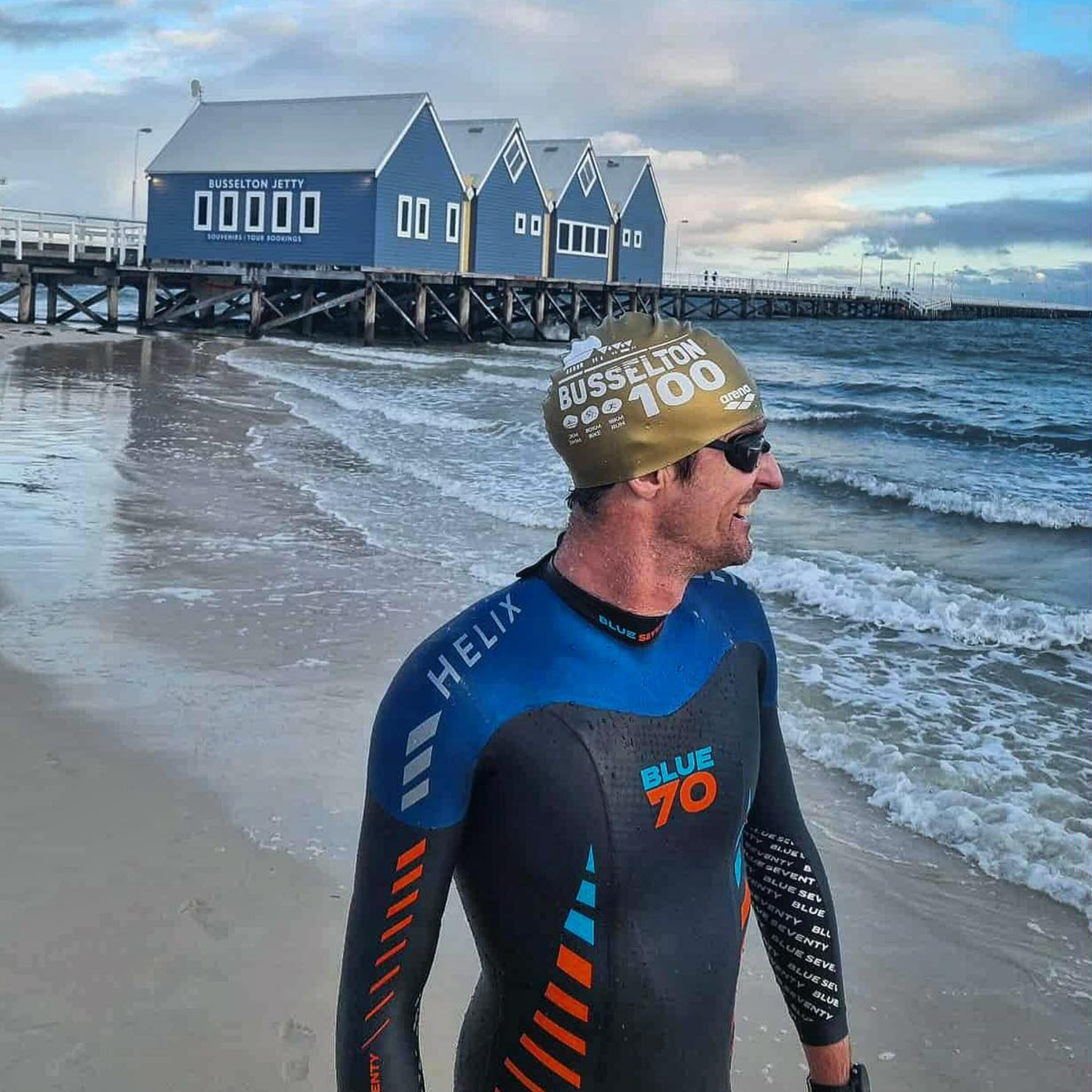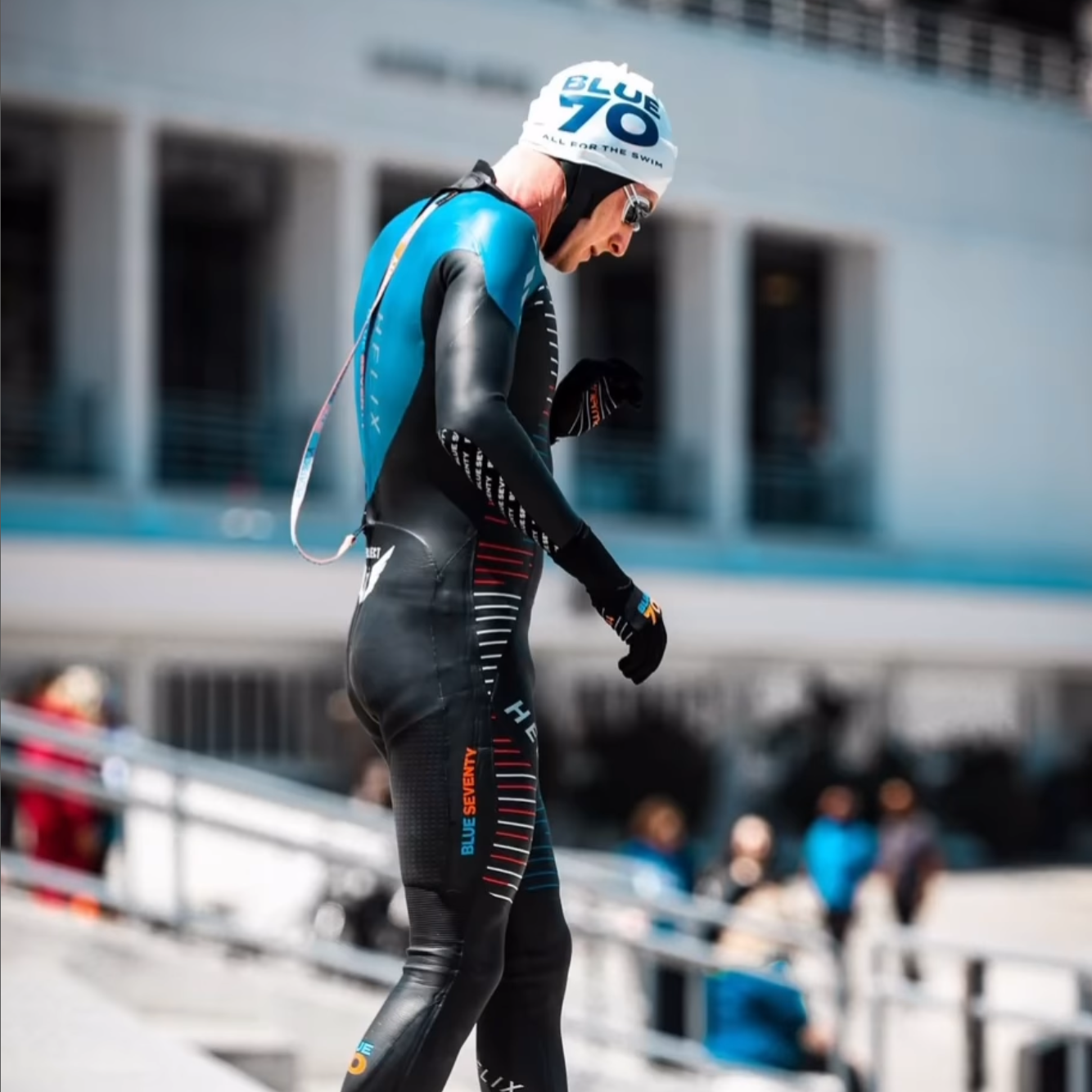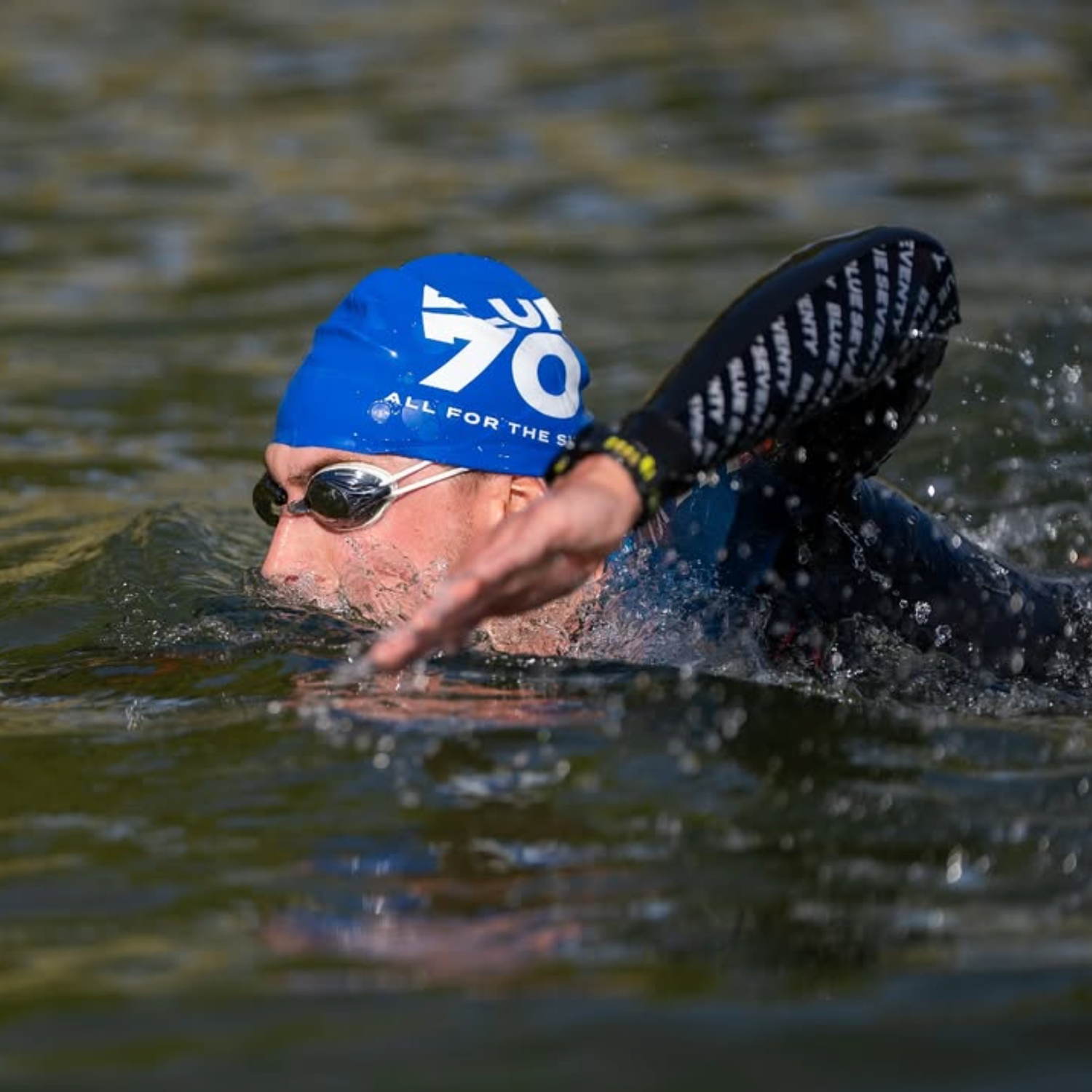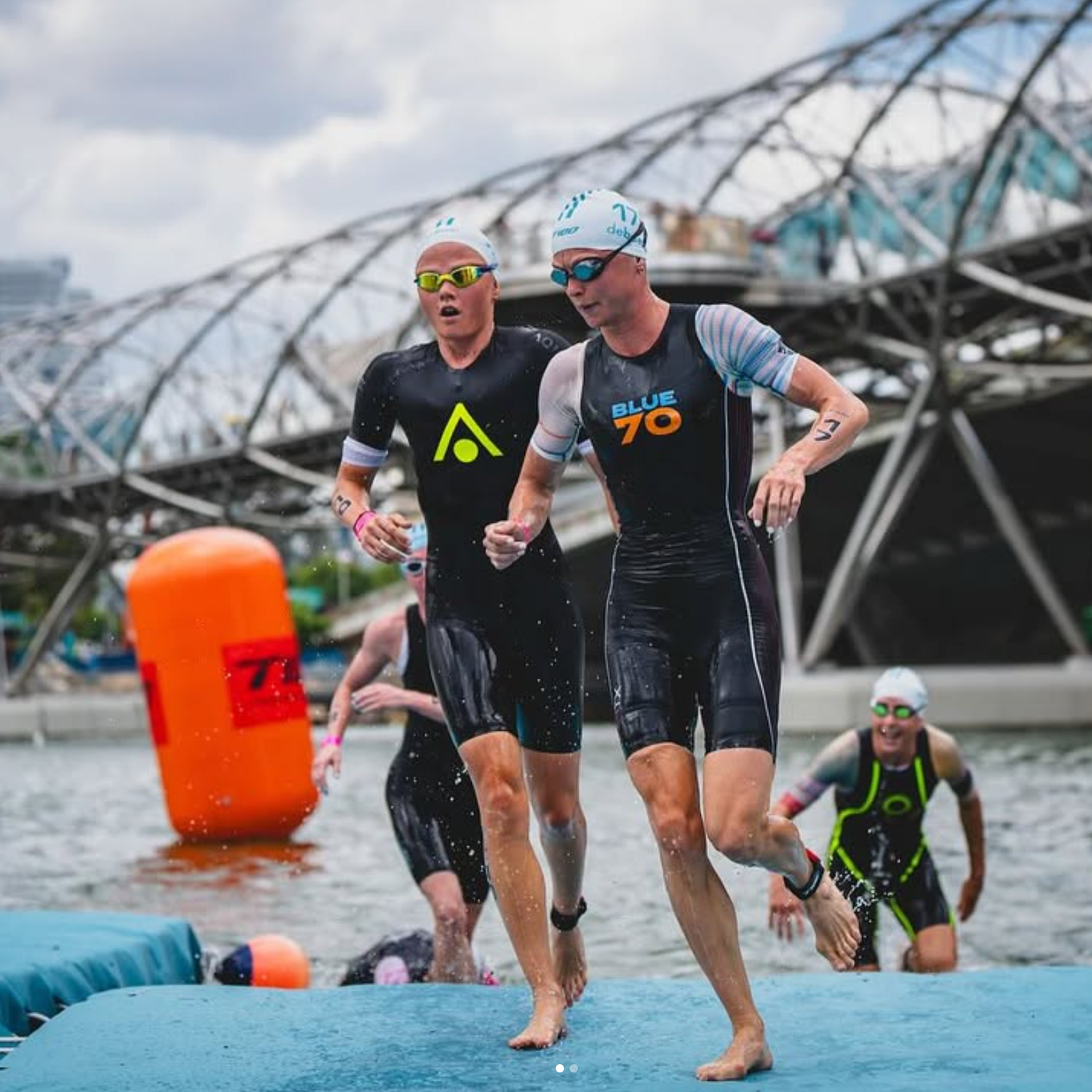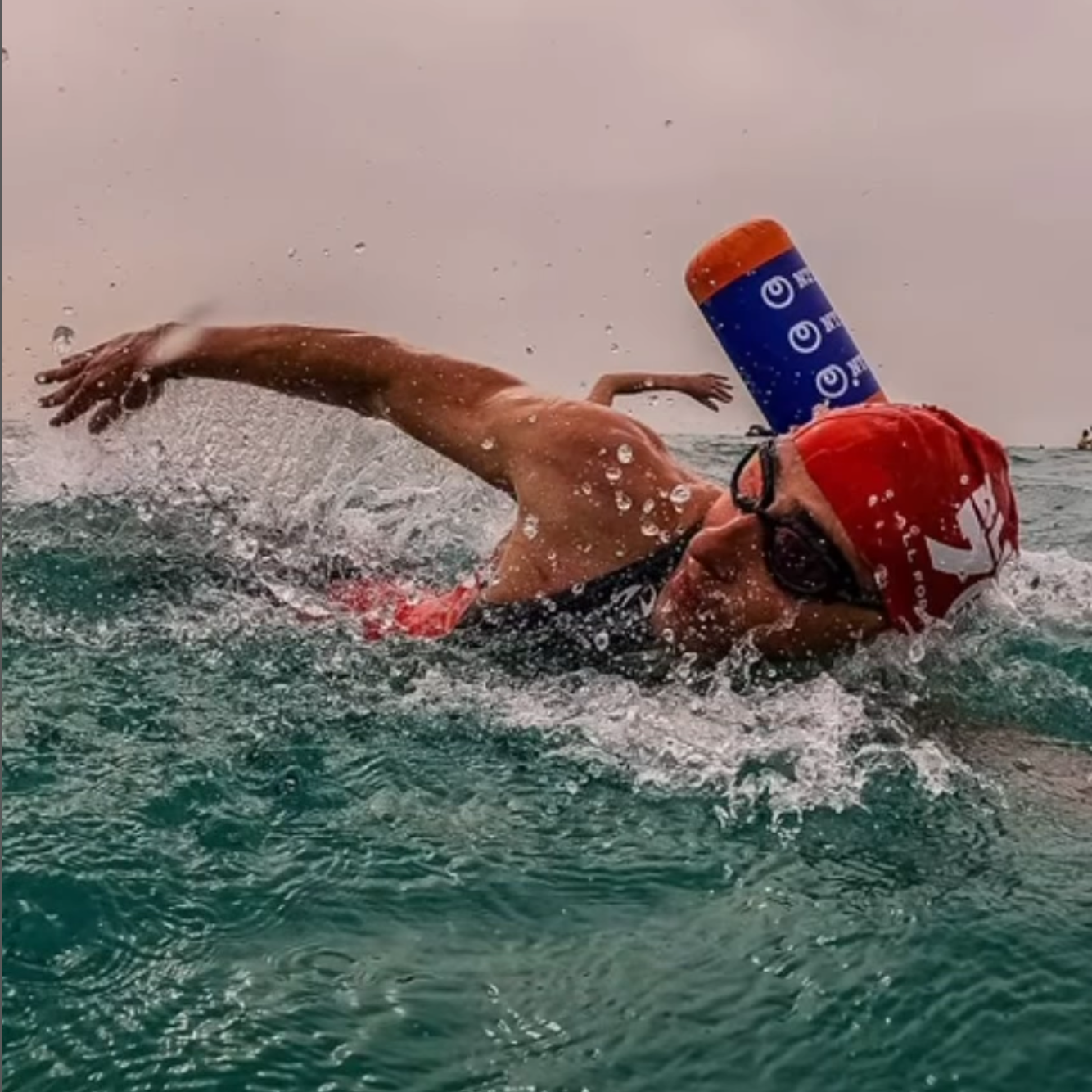



Smooth skin panels are the glossy, rubber-like sections on the outside of many swim-specific wetsuits. Their main job is to reduce surface drag while you swim. On a blueseventy suit, that benefit sits inside a larger design goal: better body position, less shoulder restriction, and more feel for the water.
What smooth skin panels are
Neoprene starts as a flexible foam sheet. To make it wearable, most wetsuit panels get a fabric layer on the inside, the outside, or both. A smooth skin panel skips the outer fabric and leaves the neoprene surface exposed. The result is a slick surface that moves through water with less friction than a fabric face.
Why surface drag matters in swimming
Open-water and triathlon swimmers spend most of the stroke in a horizontal position. Every part of the suit that pushes forward through the water creates a small amount of friction. Smooth skin panels reduce that friction on the chest, torso, and sometimes the legs. The effect is not a magic time drop. It is one piece of the suit's hydrodynamic package, working with fit and buoyancy.
For a swim-specific brand like blueseventy, that matters because the suit is built for continuous forward motion, not for surfing or diving.
Water absorption and wind chill
Fabric-faced neoprene holds a little water on its outer surface. Smooth skin lets water bead and run off instead of soaking into the outer layer. A suit with smooth skin panels can feel lighter at the end of a long swim and will dry faster in transition or on the shore.
The same property reduces the wind-chill effect when you are standing on a beach in a wet suit before a race. It does not mean the suit is waterproof or that you stay dry inside. A wetsuit still allows a thin layer of water in next to your skin, which your body warms.
Where panels go and why
You normally see smooth skin on areas where drag reduction pays off most and where stretch is not the top priority. The chest and upper legs are common spots. The shoulders usually stay fabric-faced because that is where you need the most mobility and durability over thousands of strokes. blueseventy suits are built around shoulder freedom, so the panel layout balances a slick surface against the stretch your stroke needs.
Smooth skin is not a buoyancy feature
This distinction matters. Smooth skin changes the outer surface. It does not add flotation. Buoyancy comes from the thickness and grade of the neoprene and from features like blueseventy's LIFT buoyancy panels. No wetsuit is a personal flotation device, and smooth skin does not change that. It supports your position by reducing drag, not by lifting you.
Care for smooth skin panels
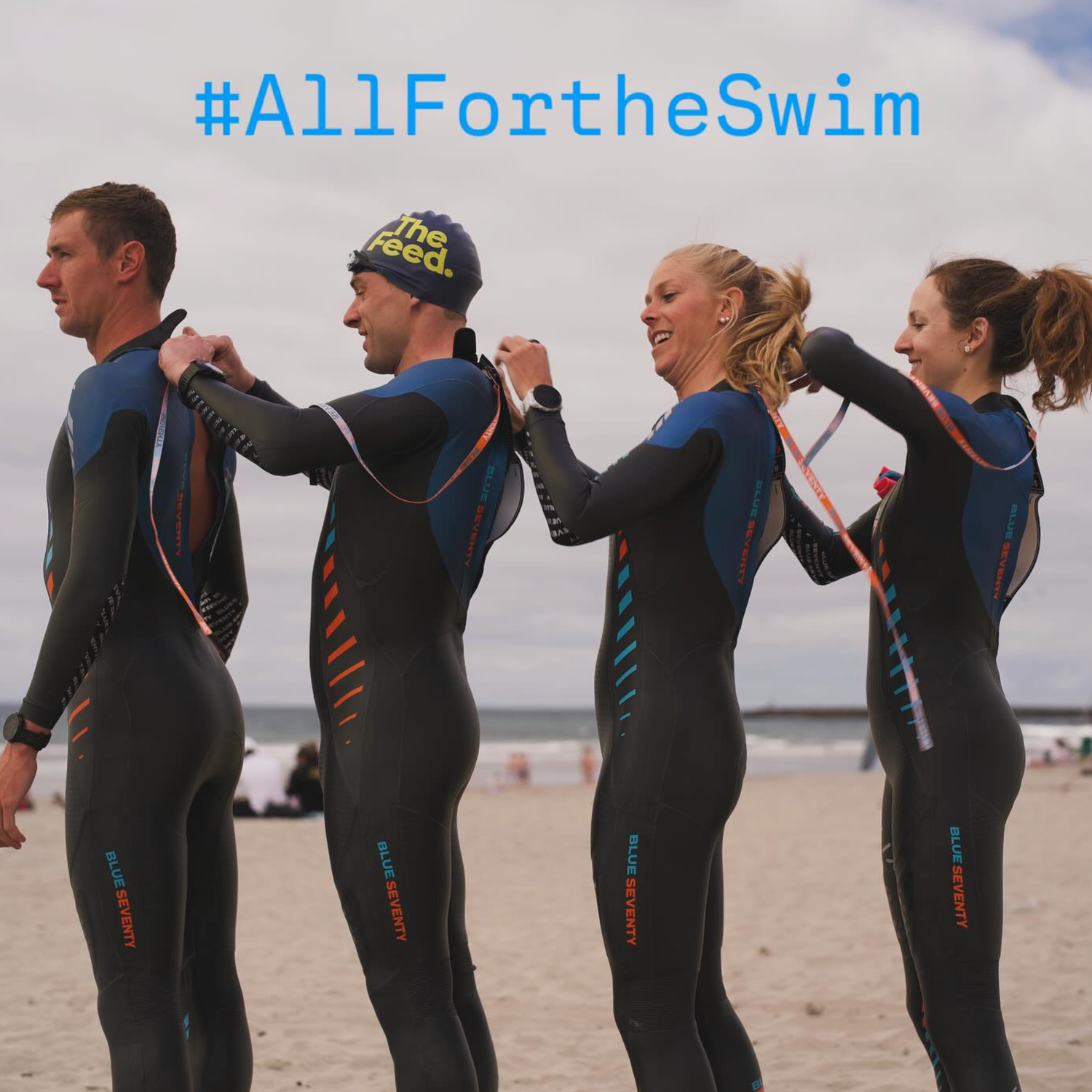
Smooth skin is less forgiving than fabric-faced neoprene. Fingernails are the most common enemy. A few habits protect the surface:
- Push with the pads of your fingers when pulling the suit on, not with your fingertips.
- Remove watches and rings before handling the suit.
- Lay the suit on a clean towel or mat instead of rough concrete.
- Rinse in fresh water after swimming and hang it dry away from direct sunlight.
These panels can nick or tear, and blueseventy's warranty covers manufacturing defects, not fingernail punctures or force damage.
Which blueseventy suit fits your training
If your race calendar matters more than your training volume, the Helix is the flagship race suit with light, flexible neoprene and race-focused paneling. If you swim once a week or more and want a suit that handles training, the Reaction and Fusion are built for frequent use. Smooth skin panels, where used, work alongside those materials.
The best way to know how a suit feels is to swim in it. Take a Test Swim. It will not affect your return if the suit comes back clean, dry, and unmodified.