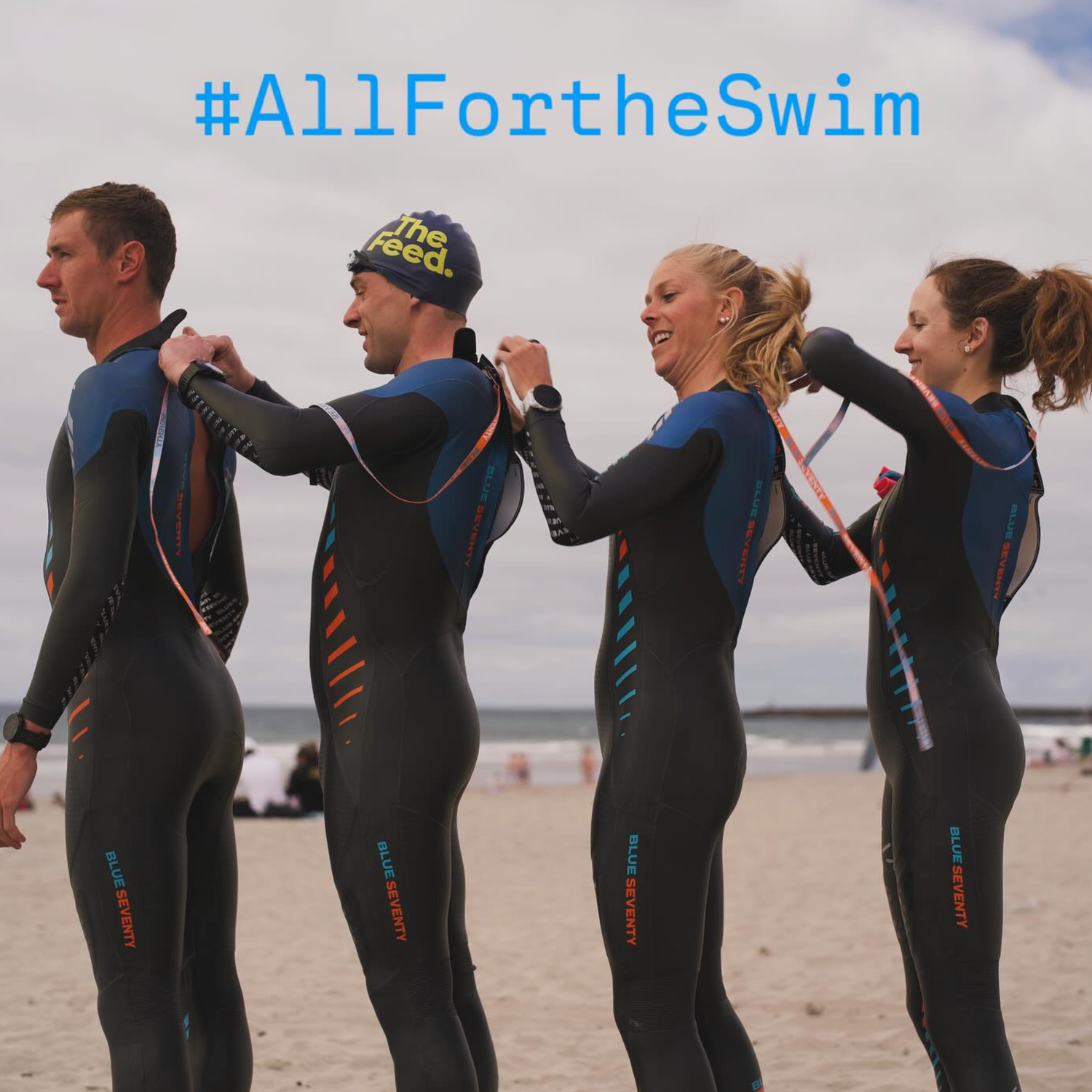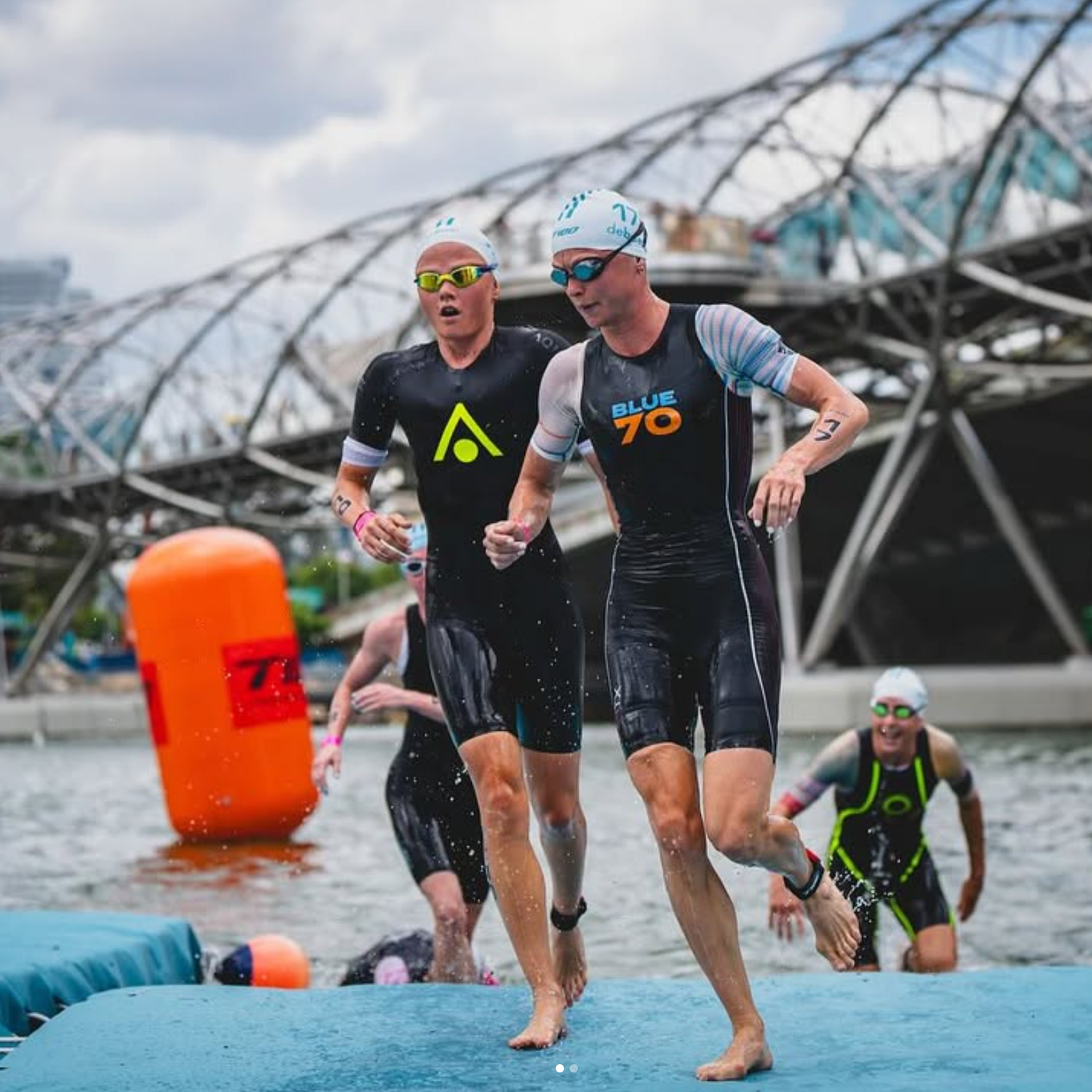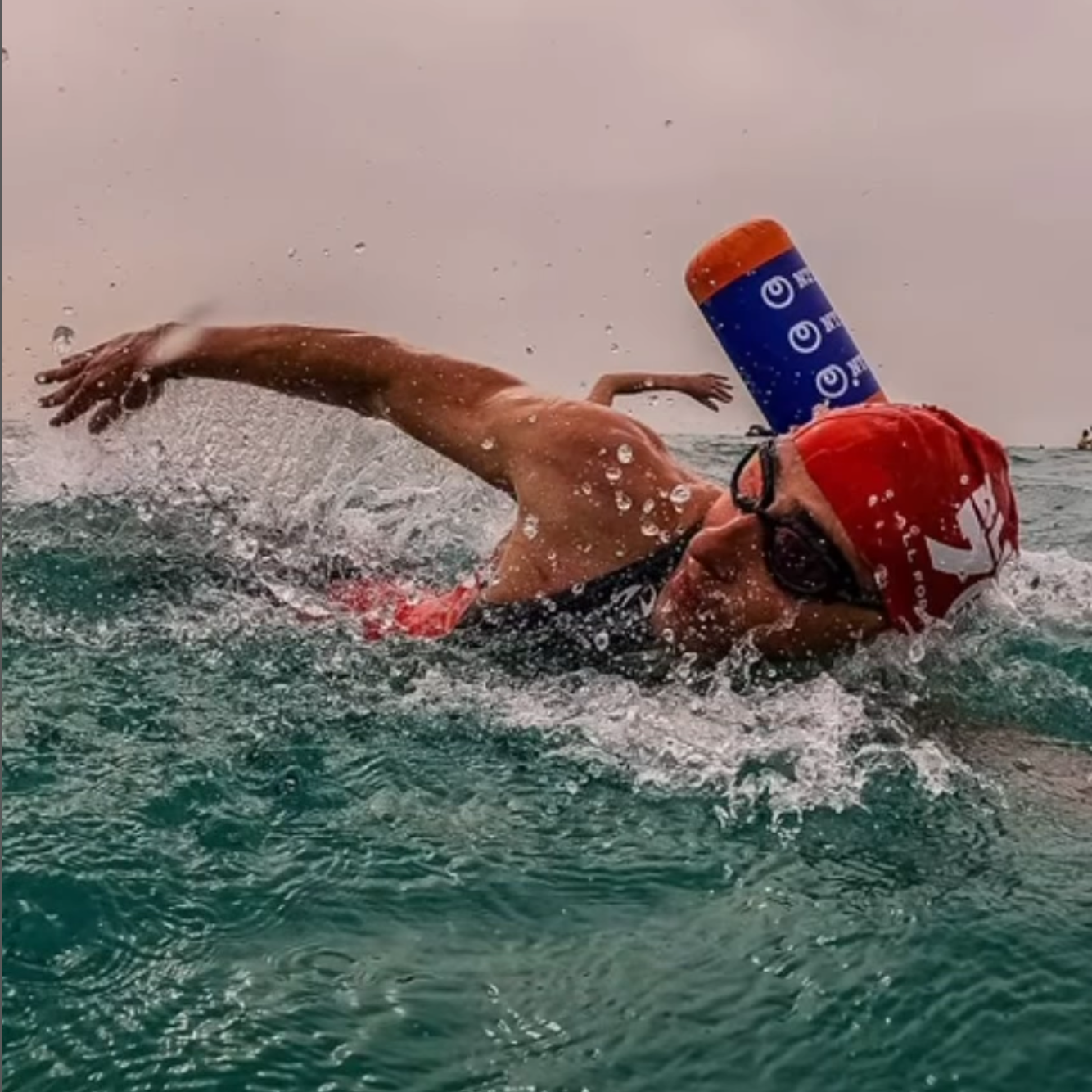



Fast wetsuit removal in transition is a practiced sequence. Most of the time you save is set up before you reach your bike, and it starts the moment you stand up in shallow water. The goal is to have the suit at your waist before you cross into T1, then use a standing step-out at the bike instead of a sit-down wrestling match.
Prepare before race morning
The first variable is fit. A suit that is too tight at the ankles and calves will bind no matter how hard you pull. A suit that fits snug on land but moves over wet skin should peel with a smooth, continuous pull. Use the size chart before you buy, and if possible, take the suit for a Test Swim so you know how it releases when wet.
Before the swim, rub a small amount of swim-safe lubricant on your ankles and calves. The leg cuffs are the most likely point to stick during T1. A light layer helps the neoprene slide over your heel and Achilles without you pulling hard enough to tear the suit.
Practice the same sequence you will race. A dry rehearsal in your living room will not tell you much. You need at least one run-through in a wet suit, ideally after a short swim or shower, so you learn how the material behaves when it is slippery and stuck to your skin.
Run the same sequence from water to bike
The order matters more than speed. Fast transitions are smooth transitions, and smooth comes from repeating the same steps in the same order.
- Unzip fully as soon as you stand. Do not wait until transition. Open the zipper, peel the neck open, and let water drain from the shoulders.
- Keep your cap and goggles on. Strip the suit off your shoulders and arms while you jog toward T1. Use your thumbs inside the neck opening to push the shoulders outward and down. Let the arms peel themselves rather than pulling from the wrist cuffs.
- Push the suit down to your waist while you keep moving. The top half should be hanging around your hips before you reach your bike.
- Once the suit is at your waist, remove your cap and goggles. Carry them in one hand. You need both hands free for the leg exit.
- At the bike, put one hand on the saddle for balance. Push the suit down to your knees. Lift one knee to let the water drain from the leg.
- Step on the inside cuff of the suit with your opposite foot. Pull your heel and calf out, then repeat with the other leg. Step on the neoprene cuff, not the zipper or seams.
- Set the suit inside your transition area, then move to helmet and shoes.
If standing on one leg is not stable for you, sit briefly and pull the legs off. The standing step-out saves time when it is rehearsed, but a controlled sit is faster than a fall or a torn suit.
Where Blue70 suit features help
Several Blue70 design choices lower the resistance you feel during a fast exit.
The Fusion has a lower-sitting neckline, introduced in the 2021 redesign. Less material at the throat means less neoprene to fold and catch when you pull the collar open.
Women's Femme Fit sizing includes an extended zipper length. The longer zipper path is designed to make entry and exit easier, and it also helps the shoulders release with less twisting.
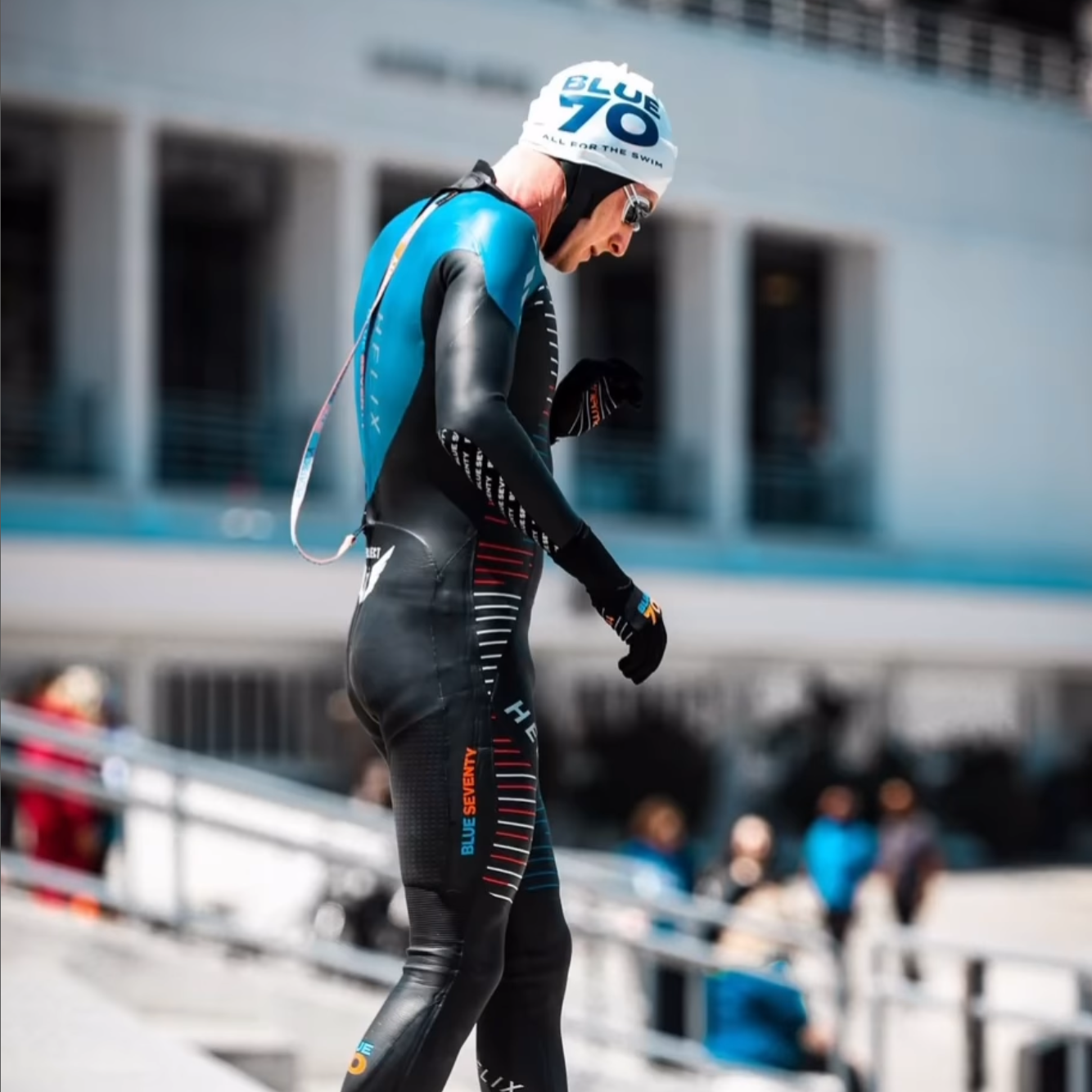
The Helix uses thin, flexible neoprene in the arms and shoulders. Those panels peel back with less resistance than stiffer material, which matters when you are stripping the top half while running.
Sleeveless suits remove faster because there is less suit to fight. In water above about 70°F, the Reaction Sleeveless or Glide Short John leaves your arms free and shortens the T1 sequence to unzip, push down, and step out.
In cold water below about 56°F, the Thermal Reaction is the cold-water option, with a Zirconium jersey lining designed for added thermal protection. The removal sequence stays the same, but practice in that suit because the lining and additional material affect how the suit releases.
Common mistakes that add seconds
- Waiting until your bike to unzip. You lose the entire run from the water with the suit still sealed at the neck and shoulders.
- Pulling the suit off by the wrists. That folds the neoprene and creates a tight band around your forearms. Push from the inside of the shoulders instead.
- Kicking the suit off. A controlled step on the cuff is precise. Kicking is not, and it often drives a heel into the suit.
- Leaving cap and goggles on through the leg exit. That leaves one hand occupied while you try to balance and pull.
- Letting the suit dry out. Wet neoprene slides more easily than half-dry neoprene. Keep moving from water to transition instead of stopping to towel off.
Drill until the order feels automatic
The fastest way to remove a wetsuit is the way you can repeat without thinking. Practice the full sequence three to five times before race week. Start with a dry run to learn the order, then repeat it wet after a short swim or shower.
During the wet reps, include your cap and goggles. Pay attention to the ankles and calves. If the suit sticks at the cuffs every time, check the size chart or add a little more swim-safe lubricant before the swim.
You do not need to rush the first reps. Speed comes from order and economy of motion, not from tearing at the neoprene. Smooth is fast because it keeps the material moving in one direction.
A clean wetsuit exit leaves more energy for the bike and removes a common source of T1 panic. Start with a suit that fits, prepare the ankle and calf cuffs, and run the same sequence every time. Practice it in the suit you will race in, and transition becomes a short stop instead of a wrestling match.