


Choppy water punishes a loose-fitting wetsuit harder than flat water does. Waves pull at the torso, current works against the zipper, and every sighting stroke asks more from your shoulders. The right Blue70 suit depends on how often you train, how cold the water runs, and whether you plan to race, train, or do both in rough open water. For most swimmers who train and race regularly in chop, the Reaction is the strongest all-around choice. Racers who want maximum shoulder freedom on race morning should look at the Helix.
What choppy water asks from a wetsuit
Secure fit. In chop, a suit that shifts lets water flush in and out. That cools you and changes your body position stroke to stroke. Blue70’s fit guidance is direct: the suit should feel snug on dry land and more comfortable once you are in the water. A lower-sitting neckline, like the one added to the Fusion in 2021, can reduce chafing without losing the watertight seal.
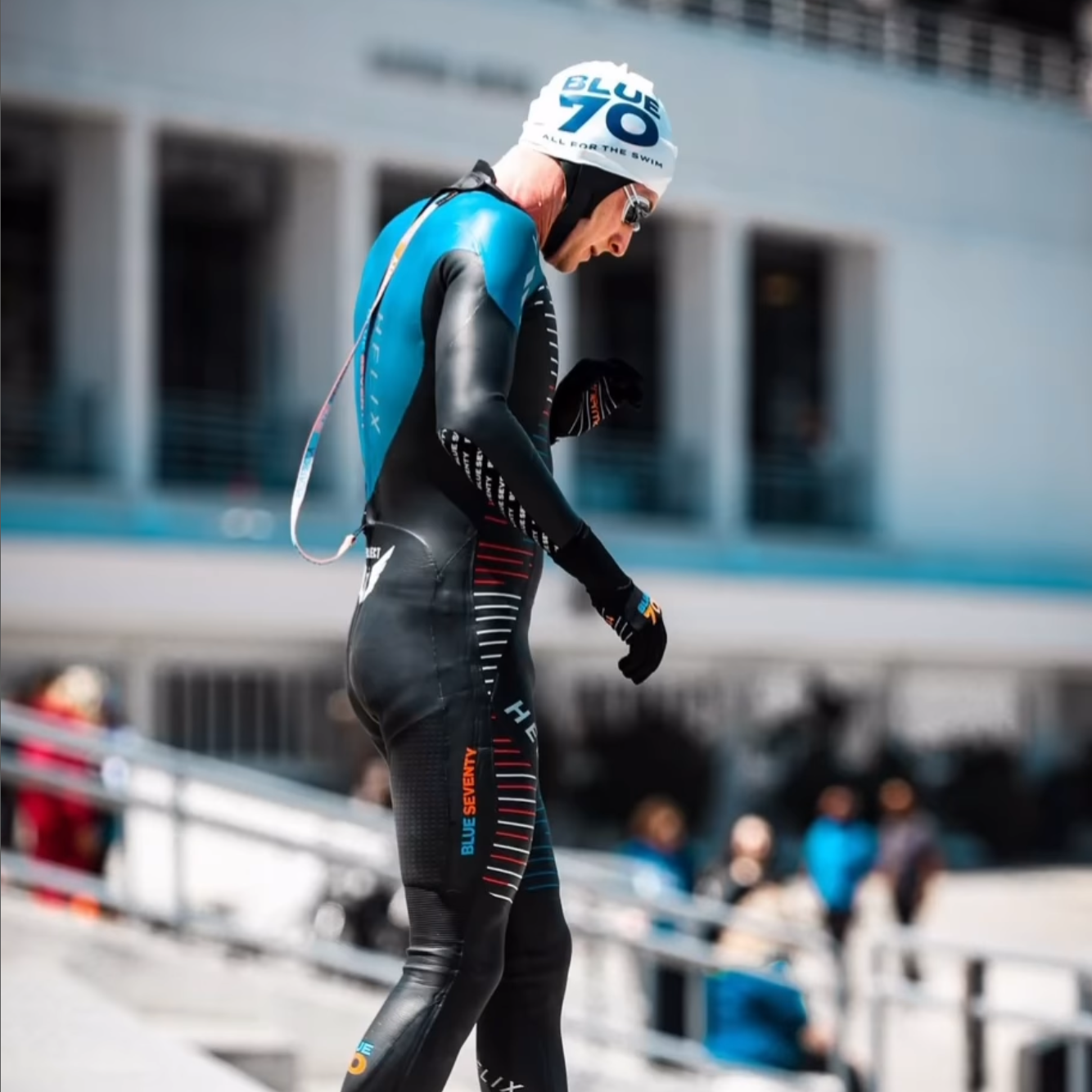
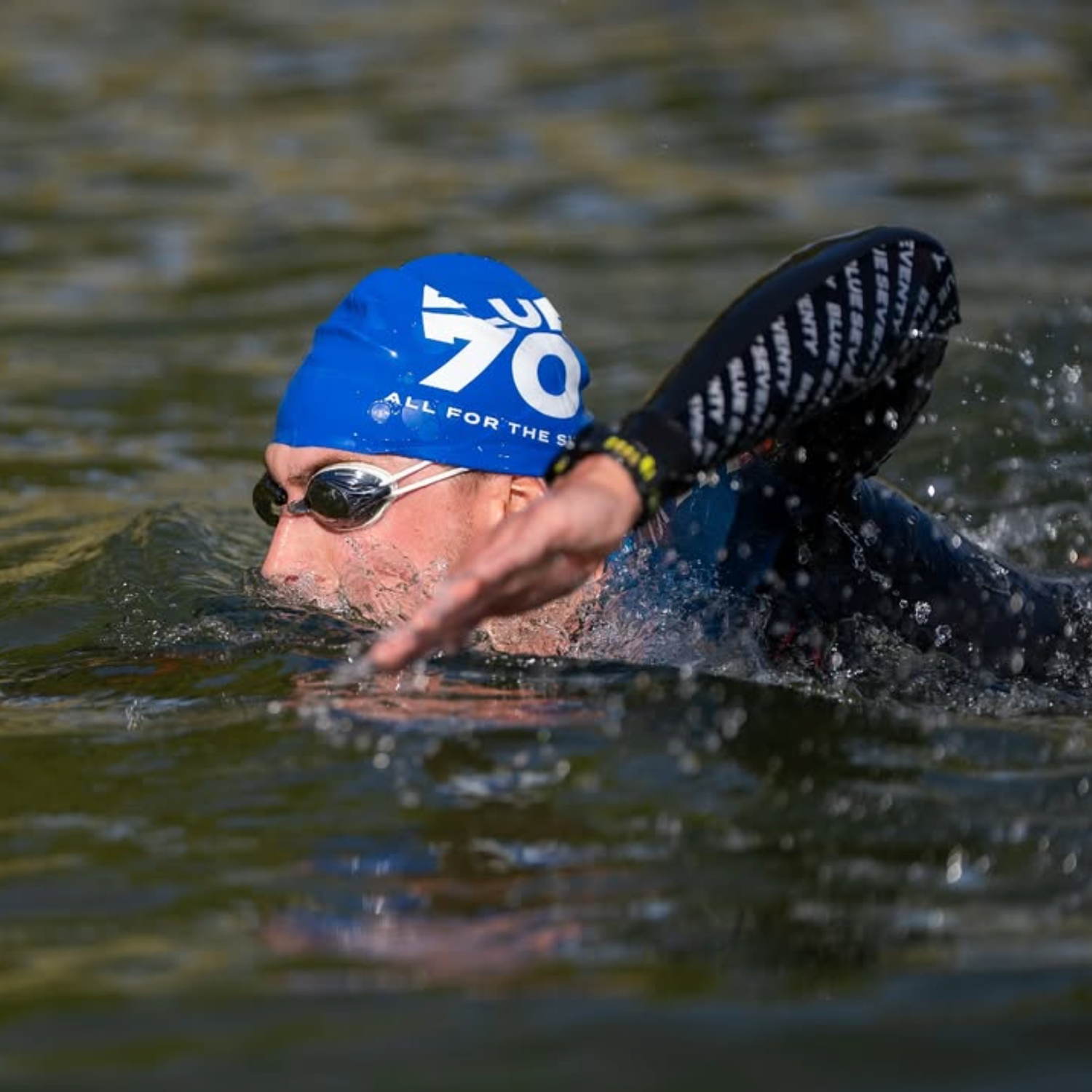
Shoulder freedom. You sight more often in waves, recover with a shorter path, and sometimes need a wider arm swing to stay balanced. Blue70 builds its wetsuits from Yamamoto neoprene in 38, 39, and 40 cell grades. A higher cell number means more flexibility. The Helix uses thin, flexible neoprene in the arms and shoulders for this reason, and it includes a permeable catch panel so your hand and forearm keep their feel for the water.
Buoyancy. A wetsuit improves your body position by lifting your hips and legs. That matters in chop because a higher, more horizontal position helps you ride over surface texture instead of fighting it. Buoyancy equals speed, but it is not a safety flotation system. Blue70 wetsuits are not Coast Guard certified personal flotation devices.
Durability. Rough water swims and frequent training can stress seams, zippers, and neoprene. If you swim in chop once a week or more, choose a suit built for repeated use. The Reaction uses higher-grade neoprene than the Fusion and is recommended for frequent, longer swims. The Helix is a race-day suit with delicate neoprene that can break down faster if you use it as a daily trainer.
Blue70 wetsuit options for choppy water
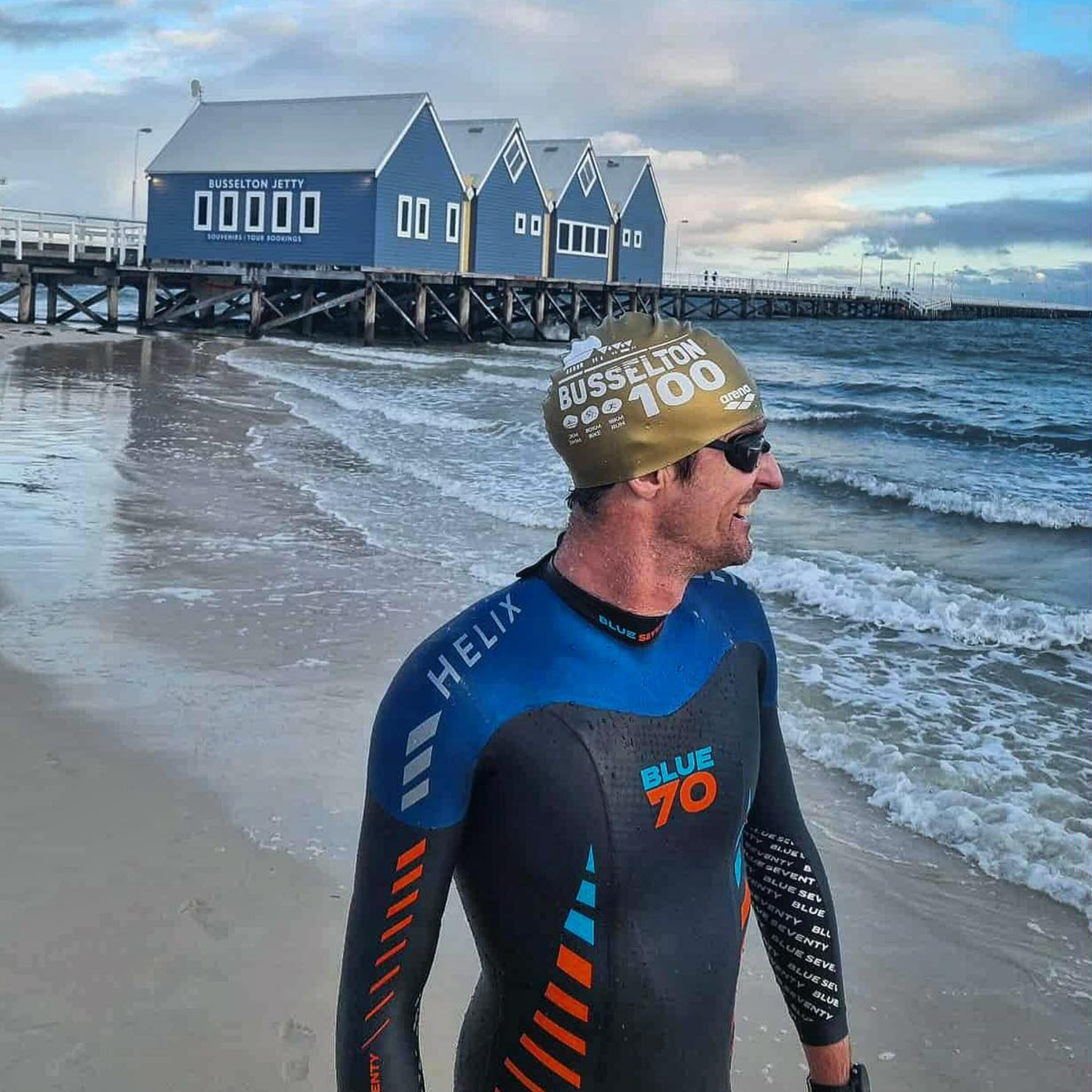
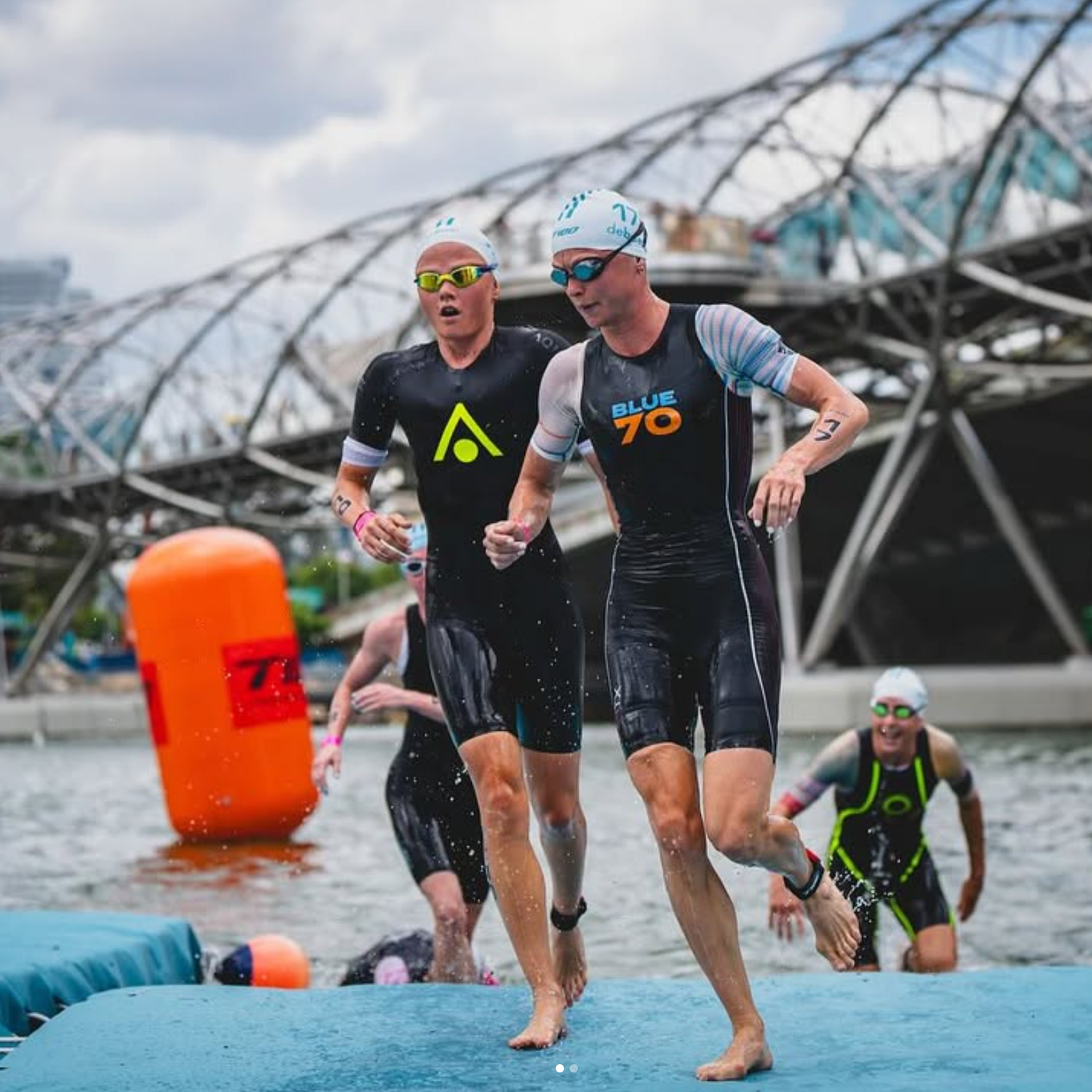
- Helix, $995. Total race-day performance. Thin, flexible arms and shoulders, LIFT buoyancy panels, and a permeable catch panel. Choose it if you race in chop and want unrestricted reach. Save it for race morning; the delicate neoprene is not built for daily training.
- Reaction, $680. Higher-grade neoprene than Fusion, recommended for frequent, longer swims. This is the workhorse for rough water. Pick it if you swim open water once a week or more and want one suit for training and racing.
- Fusion, $420. Blue70’s mid-range best seller. The 2021 redesign gave it a lower-sitting neckline. Good for shorter frequent swims, first seasons in open water, and swimmers who want a secure seal without neck pressure.
- Thermal Reaction, $785. Fully lined with Zirconium jersey for added thermal protection. When your choppy swims happen in water below about 56–58°F, this is the model to choose.
- Sprint, $325. Entry-level suit. It works for occasional chop and a first race, but the fit and shoulder flexibility are less refined than the models above.
- Reaction Sleeveless, $395. For warm water above about 70–72°F, a full suit can become too warm over longer swims. Sleeveless gives you easier entry and a lower price, though it offers less insulation.
Women’s versions of these models use Femme Fit sizing, which refines the bust, torso, wrist, and ankle areas and includes a lowered neckline and extended zipper.
Cold water below about 56–58°F demands more than a wetsuit. Acclimatize gradually, swim with a group, and know your limits. A thermal suit adds protection but does not make cold water risk free.
Fit is the real performance feature in chop
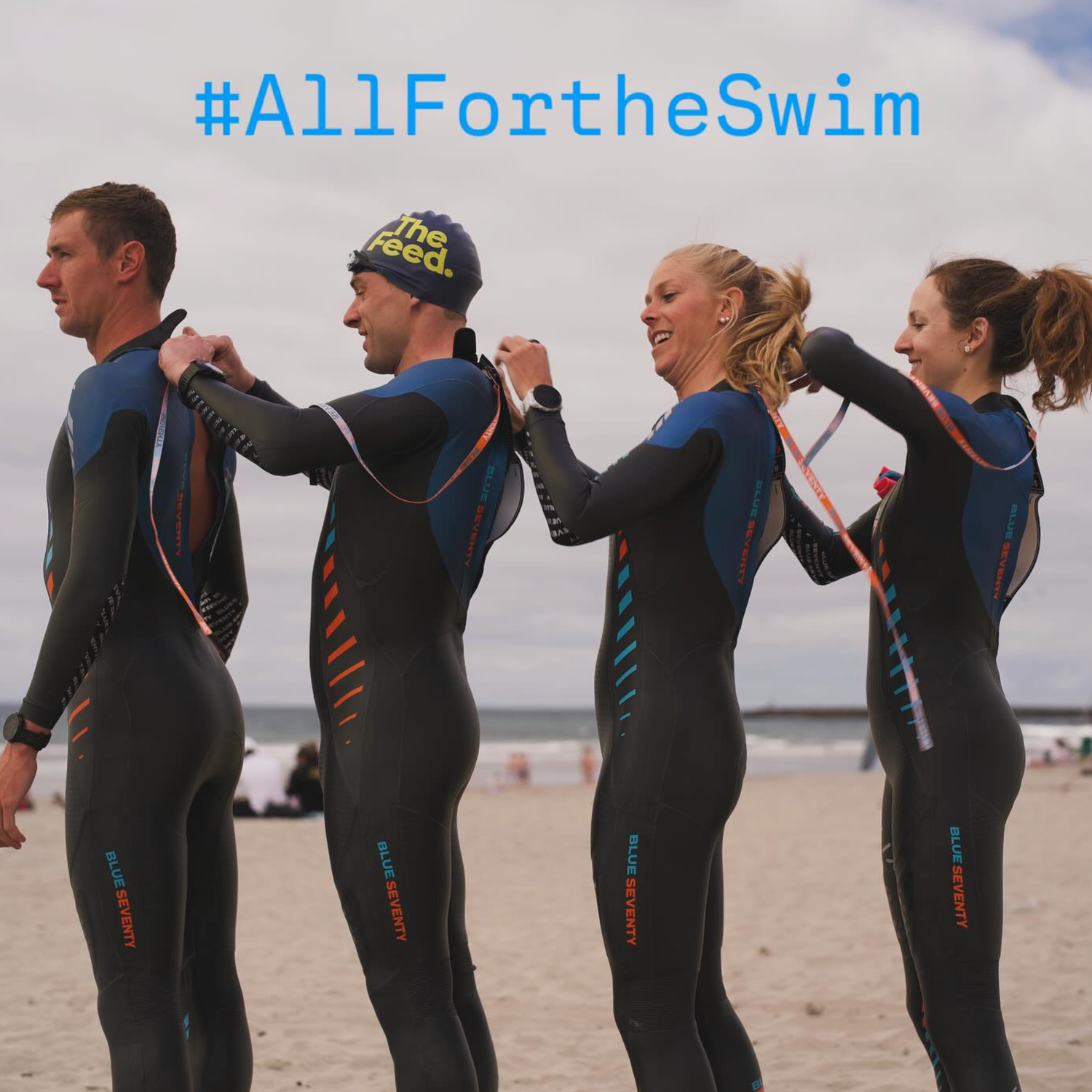
Even the Helix will fight you if it is too big or if you put it on wrong. A suit that is too large around the torso lets water in, and a suit pulled too low in the shoulders restricts your reach. Pull the legs all the way up, work the neoprene up your torso, and then settle the shoulders. Use the flats of your fingers, not fingernails, to avoid punctures. Fingernail tears and heel tears are the most common ways swimmers damage a new suit.
Because open water fit is hard to judge on dry land, Blue70 lets you swim in the suit and still return or exchange it. The suit must come back clean, dry, unmodified, and with tags and accessories. That policy removes much of the risk from buying a choppy-water suit online.
How to swim well in choppy water
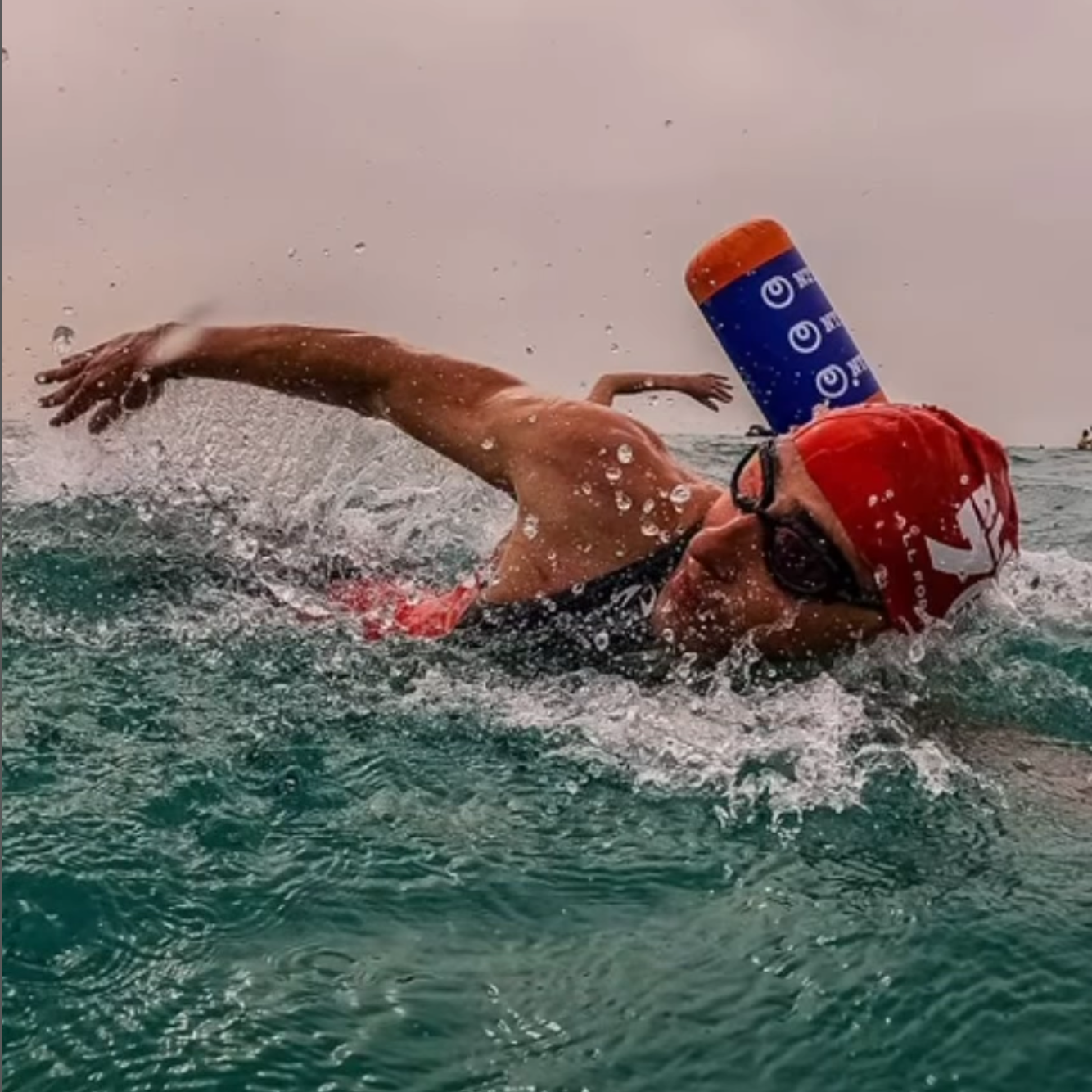
- Sighting. Lift only your eyes, not your whole head. A full head lift drops your hips and puts the brakes on. In chop, sight on the top of a wave, then keep your head down and swim toward the next marker.
- Stroke rhythm. Shorten your stroke slightly and keep your turnover up. Long glides feel efficient in flat water, but waves interrupt them and can throw off your timing. A higher stroke rate keeps you moving through broken water.
- Breathing. Bilateral breathing helps in chop because you can choose the side away from oncoming waves. Practice it in the pool before you need it in open water.
- Body position. Keep your core engaged and your hips high. A well-fitted Blue70 wetsuit helps lift the legs, but you still need to press your chest down and keep your head neutral.
Caring for a wetsuit after rough open water
Rinse the suit inside and out with fresh water after every swim. Salt, sand, and chlorine break down neoprene over time. Dry it in the shade, not in direct sun, and never use hot water or a dryer. Small fingernail punctures, heel tears, and seam nicks can be repaired with Blue70 Aquaseal neoprene cement.
Store the suit folded or laid flat, not hung by the shoulders. Hanging by the shoulders can stretch the neoprene and distort the fit. A cool, dry spot away from heat is enough.
Which Blue70 wetsuit should you choose for choppy water?
For most swimmers, the Reaction is the best all-around answer. It combines higher-grade neoprene, a cut built for frequent longer swims, and enough shoulder freedom to handle rough water without falling apart after one season. If you race in chop and already train in something else, the Helix is the race-day choice. If you are entering your first open-water season or swimming shorter distances, the Fusion costs less and still gives you a secure, comfortable neck seal. In cold choppy water below about 56–58°F, move to the Thermal Reaction.
Get the fit right first. A suit that moves with you in rough water is worth more than any single design feature. Use the Blue70 sizing tool or a local dealer to confirm your size, then take the suit for a test swim before race day.
Happy swimming.