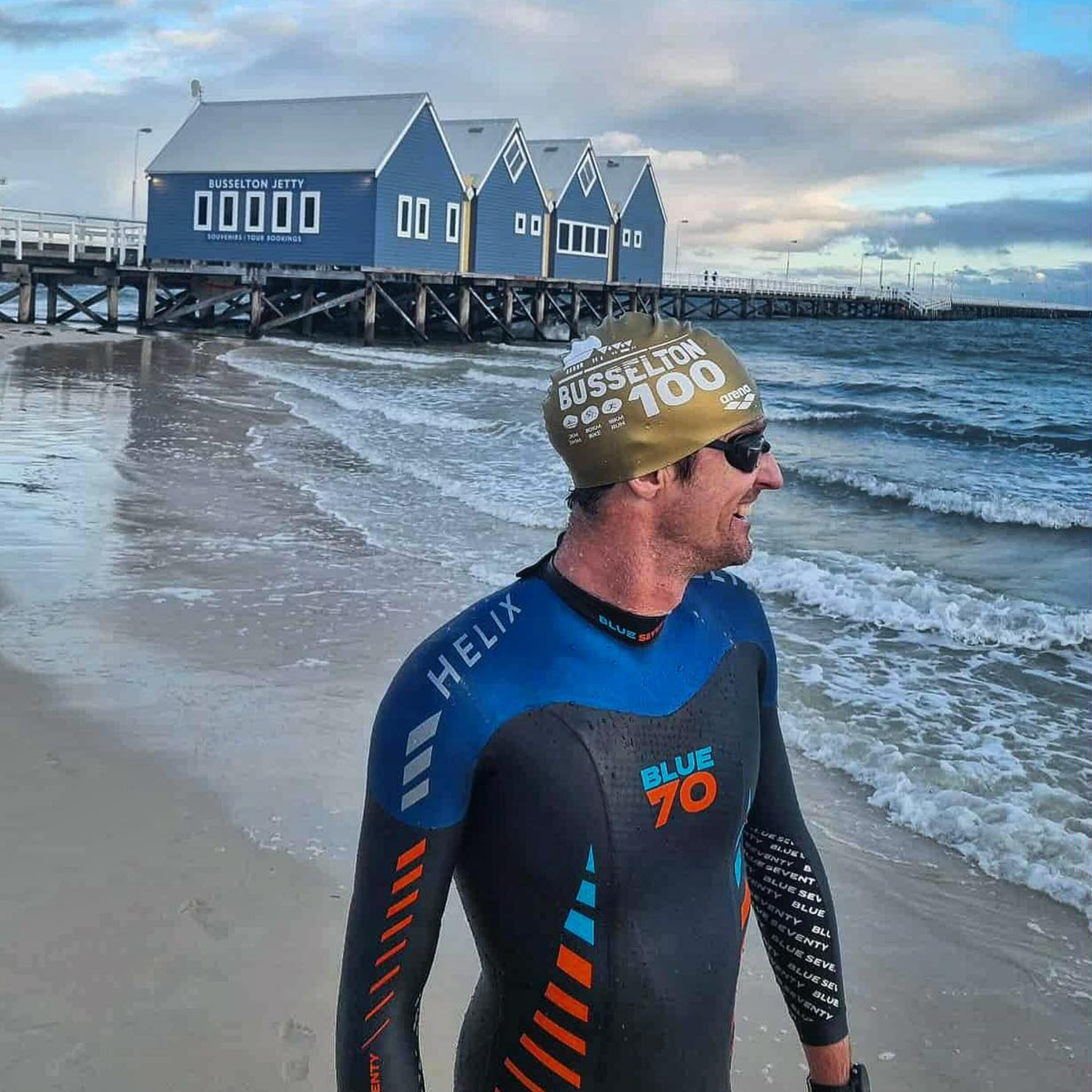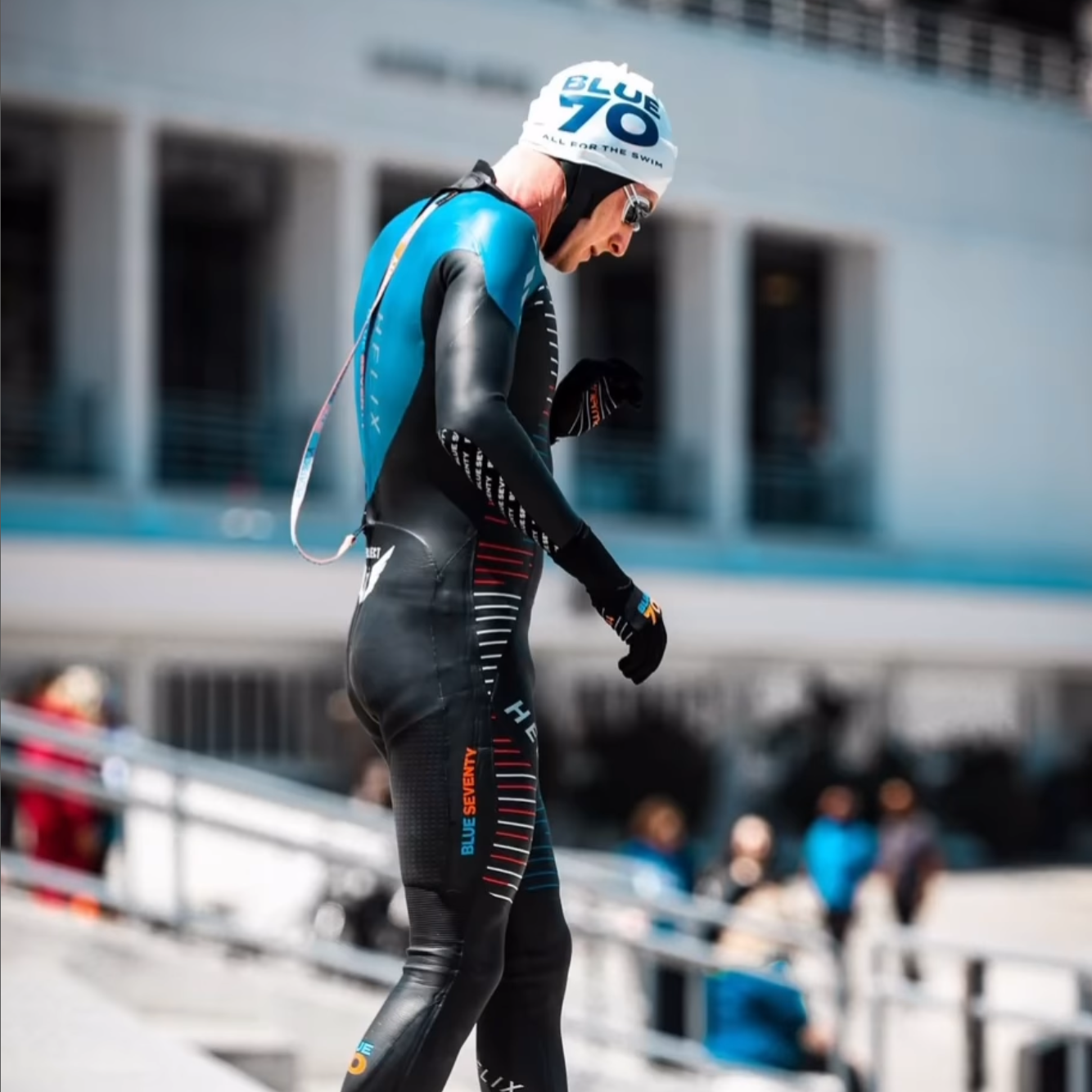



The best way to store a wetsuit on a hanger is to fold it once at the waist and drape it over a wide, padded hanger. Hanging a wetsuit by the shoulders from a narrow hanger puts the suit's full weight on two small points. Over time that stretches the neck, shoulders, and underarm panels, especially on a suit with thin arm neoprene like the blueseventy Helix.
Start with clean and dry
Storage begins before the hanger. After a swim, rinse the suit inside and out with cool fresh water. Salt crystals and chlorine left in the neoprene wear on the material. A damp suit stored in a closet or gear bag can develop mildew. Turn the suit inside out and let the inside dry, then turn it back and let the outside dry. Use shade and airflow. Direct sun, radiators, and car trunks break down neoprene over time.
Why the shoulders need the most care
blueseventy builds the Helix with thin Yamamoto neoprene in the arms and shoulders. The thin panels give you a long, free stroke without shoulder fatigue, but they are the most delicate part of the suit. If you hang a Helix, Reaction, Fusion, Sprint, or Thermal Reaction by the shoulders on a wire hanger, the narrow hook concentrates pressure exactly where the suit is thinnest. The result is a stretched neckline and a poor fit that no amount of adjusting will fix.
The hanger to use
Use a wide hanger with padding or broad, rounded shoulders. A thick plastic suit hanger works, and a padded coat hanger works too. Avoid wire shirt hangers, thin plastic hangers, and any hanger with rough seams or exposed metal ends. Those edges can snag the outer jersey or leave compression marks in the neoprene.
How to hang it correctly
- Rinse the suit in cool fresh water after every swim.
- Dry the inside and outside completely in a shaded, ventilated spot. Do not wring or twist the neoprene.
- Lay the suit flat. Fold the legs up once so the ankles sit near the shoulders.
- Drape the folded suit over a wide, padded hanger so the bar carries the weight at the waist and torso.
- Hang it in a cool, dry closet away from direct light, heaters, and sharp edges.
If you prefer a full-length hang, use a wide hanger with broad shoulder supports and make sure the suit is completely dry first. Never hang a wet suit full length from a narrow hook. A wet suit is heavier, and the shoulders bear that extra weight.
Why folding at the waist works
Folding at the waist keeps the heavy lower-body panels from pulling on the shoulders. The waist and upper legs are thicker and more tolerant of pressure than the shoulder and arm panels. The suit hangs in a balanced U shape over the bar, and the weight distributes across a wide area instead of two small points. You also avoid tight creases because the fold is gentle and single.
Mistakes that shorten a wetsuit's life
- Hanging by the shoulders on a wire or thin plastic hanger.
- Storing the suit damp in a bag, bin, or car.
- Folding it into a tight square for weeks at a time.
- Leaving it in direct sunlight to dry or store.
- Letting the zipper teeth press into the neoprene.
- Using a hanger with rough edges or exposed metal.
Each of these creates creases, stretch, or heat damage. blueseventy's one-year warranty covers manufacturing and material defects. It does not cover heat or chlorine damage, normal wear and tear, fingernail punctures, heel tears, or zipper damage from force. Handle the suit carefully when you take it off and when you put it on the hanger.
Long-term and off-season storage
For off-season storage, follow the same steps: rinse, dry fully, fold once at the waist, and hang on a wide padded hanger. You can also store the suit flat on a shelf if it is completely dry and not stacked under heavy gear. Avoid airtight plastic bags, which trap any remaining moisture. A breathable garment bag or a simple cotton cover keeps dust off without locking in dampness.
Before you put a suit away for a long stretch, check the seams and the zipper. Brush off any sand or grit, because those small particles act like sandpaper when the suit shifts. Make sure the zipper is clean and closed. Store the suit in a closet, not a garage or car, where temperature swings stress the neoprene.
Take care of the suit after every swim, and it keeps its fit and flexibility through the season. Happy swimming.