


Leaving a blueseventy wetsuit in a hot car can permanently damage it. Heat is the biggest avoidable threat to neoprene after chlorine. The inside of a parked car traps heat like a greenhouse, and the temperature climbs well above the outside air on a sunny day. Your suit sits in that heat, and the neoprene, adhesives, and linings all take abuse.
What heat does to a wetsuit
Neoprene is a closed-cell foam. Those tiny gas-filled cells give a wetsuit its buoyancy, flexibility, and insulation. Prolonged heat breaks down the foam and the glue that holds the panels together. The suit can lose flexibility, stiffen, shrink, or delaminate. Seams can pull apart because the adhesive softens and then fails when the suit is stretched. Zippers can warp, and the outer fabric can fade or become brittle.
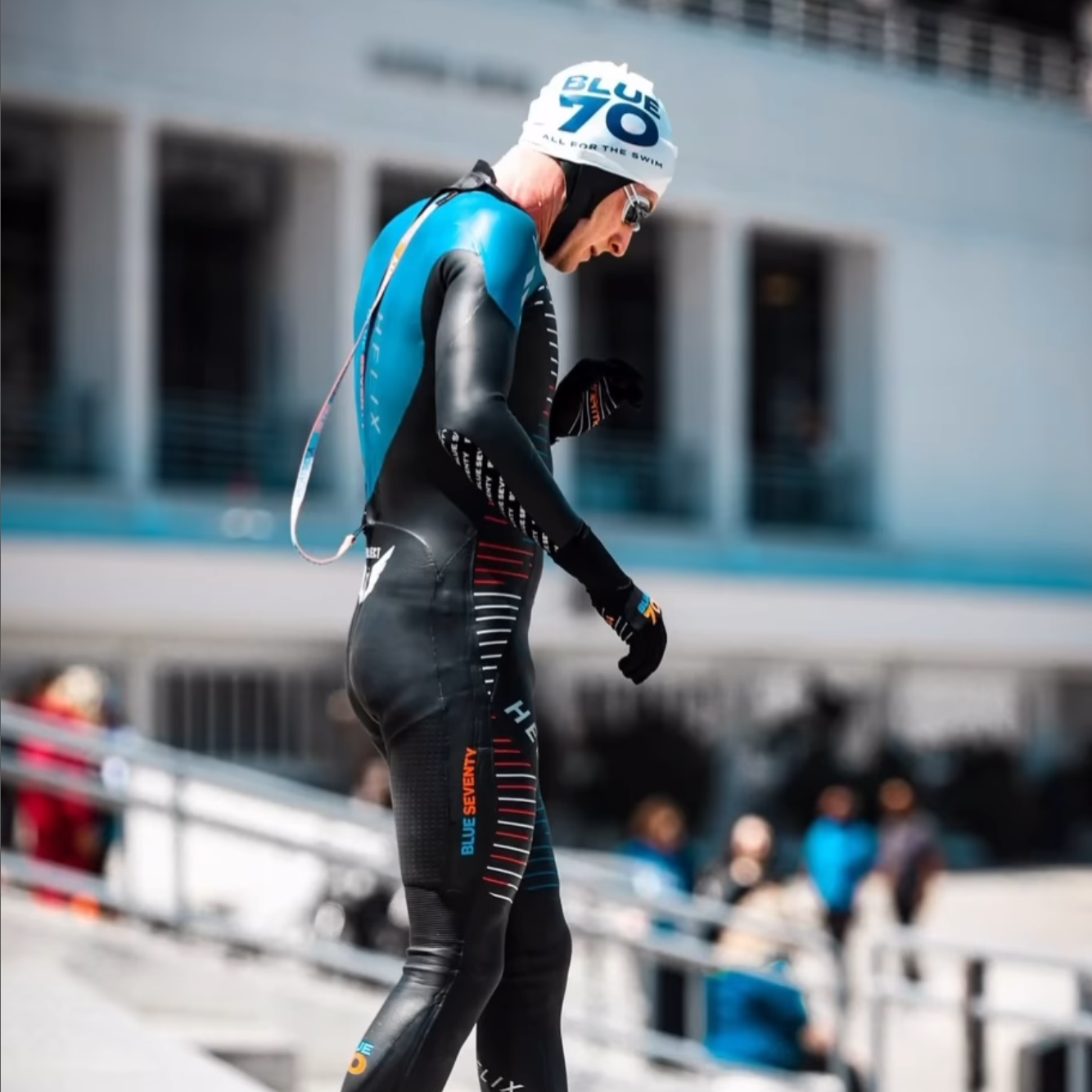
Thin, highly flexible neoprene is more vulnerable. A Helix has thin, flexible arm and shoulder panels designed for reach and feel. Those panels show heat stress sooner than more durable neoprene. The Reaction and Fusion still suffer from repeated hot-car exposure. No blueseventy wetsuit likes being baked.
Signs your suit has been heat-damaged
- The neoprene feels stiff or crunchy instead of pliable.
- Panels look shriveled, compressed, or permanently creased.
- Seams show gaps, curling edges, or visible adhesive.
- The zipper sticks, won't lie flat, or has a wavy tape.
- The lining looks melted, shiny, or cracked.
Some of these show up immediately. Others appear after you swim, when the suit stretches and the weakened seams fail.
What to do right after a hot-car mistake
Get the suit out of the car and inspect it before your next swim. Rinse it with cool fresh water and dry it flat in the shade. Let it cool completely before you stretch or put it on. Stretching a heat-softened suit can tear the adhesive or distort the panels.
A short exposure on a mild day does not automatically ruin the suit. If the neoprene still feels pliable and the seams are intact, you got to it in time. If the neoprene feels stiff, crunchy, or compressed, treat it as damaged.
How to avoid heat damage
Rinse your suit after every swim and get it out of the car as soon as you can. Dry it flat or hang it at the waist, inside out first, away from direct sun and heat sources. Store it in a cool, dry place. Do not leave it in a car during race weekend, and do not pack it hot or damp into a gear bag for hours.
At a race, bring your suit into transition or the hotel room. If you must leave it in the car for a short stop, park in shade, keep the suit out of direct sun, and place it low in the vehicle where the air is cooler. The trunk is often cooler than the cabin, but no part of a hot car is a safe long-term home for neoprene.
Will warranty cover it?
No. blueseventy's one-year warranty covers manufacturing and materials defects for the original owner. Heat damage is not a manufacturing defect. The warranty excludes heat and chlorine damage, fingernail punctures, heel tears, zipper damage from force, wear and tear, and non-swimming use. A suit left in a hot car falls under heat damage.
If the damage is a small seam nick or a clean tear from a separate cause, Aquaseal neoprene cement can handle a simple repair. It cannot restore foam that has lost its flex or compressed. For a suit that has stiffened, shrunk, or delaminated, replacement is the honest call.
Protect the suit by rinsing it after every swim, drying it in shade, and storing it cool. If you are unsure whether a hot car has damaged your suit, inspect the seams and panels. Email our support team at us@blueseventy.com before your next swim.
Happy swimming.