


Cold-water spearfishing looks close enough to open-water swimming that many athletes assume the wetsuit logic is the same. Neoprene is neoprene, cold is cold, and thicker must mean better. That line of thinking breaks down fast once you look at how the body actually moves, rests, and loses heat in each activity.
From a blueseventy perspective, this is a useful crossover topic because it exposes a mistake swimmers and triathletes make all the time: they judge a wetsuit by category name instead of by what happens in the water. A swim-specific wetsuit is built for steady forward movement, shoulder rotation, body position, and efficiency over distance. A cold-water spearfishing wetsuit has to perform during swimming, but also during lower-output periods when heat loss becomes a bigger part of the equation.
If you are a swimmer, that difference is worth studying. It sharpens the way you think about thermal protection, fit, breathing, buoyancy, and fatigue. It also explains why the best suit for one cold-water session can feel wrong in another, even when the temperature is identical.
Work rate changes everything
A swimmer generates heat continuously. You settle into rhythm, your shoulders keep moving, your legs contribute, and the suit supports a long stretch of active motion. That steady output changes how warm you feel and how much restriction you can tolerate before the suit starts costing you energy.
Cold-water spearfishing creates a different pattern. There may be a swim out, a dive, a pause, another short burst of movement, then more waiting. Those lower-output windows matter because your body is producing less of its own heat. The suit has to do more of the work.
That is why advice based only on water temperature misses the point. Cold water is not one problem. A continuous swim and a stop-start session place different demands on the same neoprene.
Why swimmers often overrate thickness
The most common shortcut in cold-water gear talk is simple: if the water gets colder, add more thickness. There is some truth in that. More neoprene usually means more insulation. But thickness also changes flexibility, breathing comfort, range of motion, and how much effort it takes to move well.
Swimmers notice this first in the shoulders and chest. If the suit resists overhead movement or presses too hard across the rib cage, your stroke changes. Your breathing changes too. The suit might feel warmer at first touch, but if it makes you tense through the upper body, you pay for that over time.
That trade-off matters outside triathlon as well. In any cold-water session, a suit that limits natural movement can raise the cost of every minute you spend in the water. Thermal protection and movement economy belong in the same conversation.
Buoyancy is more than lift
In triathlon, buoyancy usually gets framed as a body-position tool. That is fair. Better lift through the hips and legs helps many athletes hold a cleaner line through the water, which can reduce wasted effort. blueseventy has long approached wetsuit design from that swim-specific point of view because body position matters.
Cold-water spearfishing complicates that picture. Buoyancy still matters, but not only for surface alignment. It also affects how balanced the suit feels at the surface, how naturally you move through short swims, and how the suit behaves when your session includes repeated changes in depth.
A better question is not, “How buoyant is this suit?” A better question is, “Where is the buoyancy, and what does it do to the way I move?” Distribution matters as much as amount.
The shoulder test still tells the truth
One lesson from triathlon wetsuit fitting carries over almost perfectly: restricted shoulders create fatigue long before they create obvious pain. Athletes often miss this during a quick fitting because the suit feels snug but manageable for the first minute. Ten or twenty minutes later, the tension shows up in breathing, arm recovery, and general comfort.
That issue does not disappear in cold-water spearfishing. Surface swimming, reaching, gear handling, and repeated movement through the upper body all depend on clean shoulder mobility. If the neoprene pulls down through the shoulders because the suit is not fully seated, or if the chest feels compressed once the zip is closed, the problem compounds over the session.
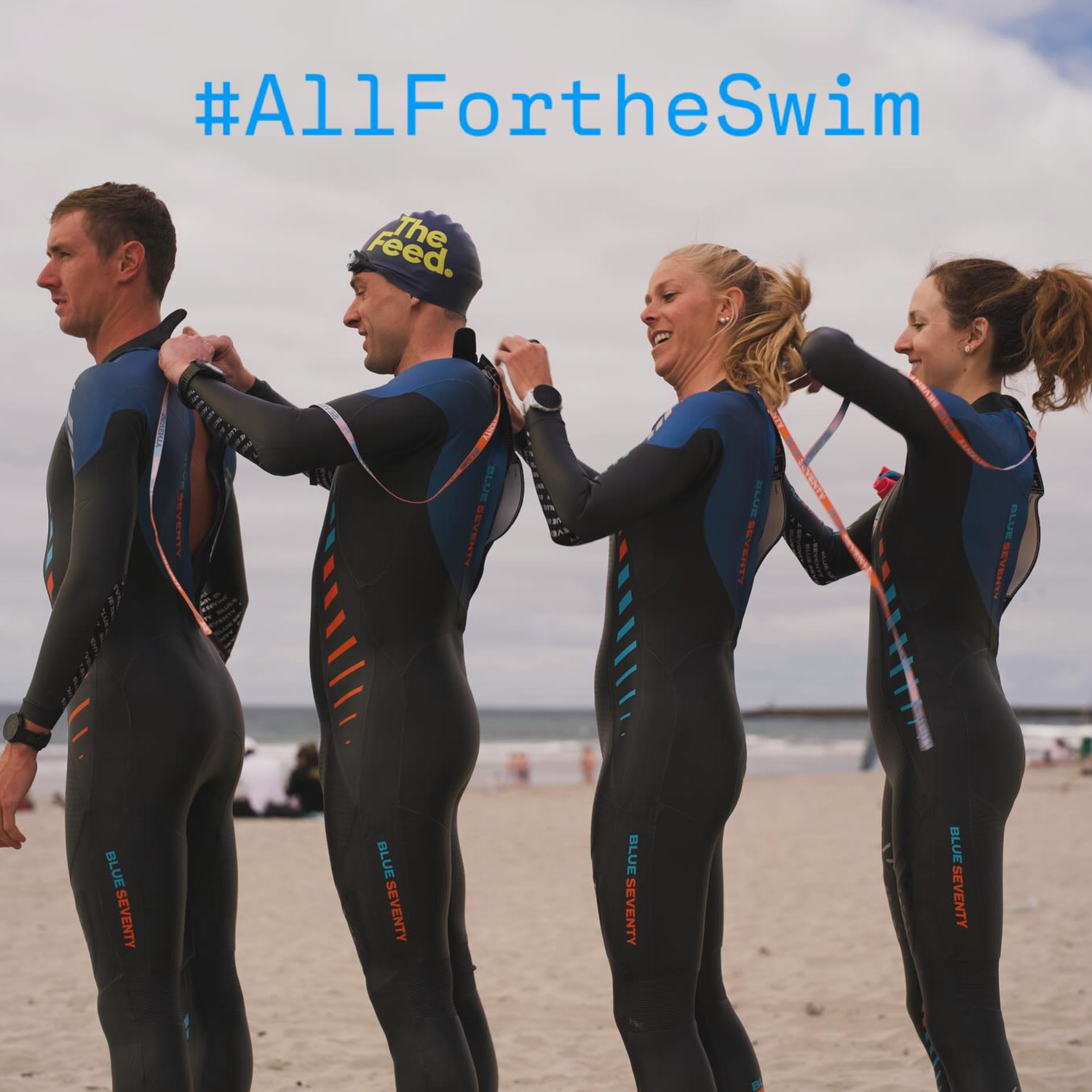
blueseventy’s fit doctrine is straightforward: a wetsuit should feel snug on land and more comfortable in the water, especially when it has been put on correctly. A surprising number of fit complaints come from suits that are sitting too low through the legs and hips, which leaves the shoulder panels doing work they were never meant to do.
Bad donning creates fake fit problems.
Neck comfort is not a small detail
Open-water swimmers learn quickly that neckline design can ruin an otherwise solid suit. A collar that sits too high, presses into the throat, or rubs during repeated head movement becomes impossible to ignore over distance. That is one reason blueseventy refined the Fusion in 2021 with a lower-sitting neckline that improves comfort while preserving the seal.
The lesson applies well beyond triathlon. In cold water, the neck has to stay close enough to limit flushing, but it cannot interfere with relaxed breathing. If you zip a suit fully, rotate your head, and struggle to take a full breath, that suit is already telling you something useful.
If the neck feels intrusive on land, it will feel worse in the water.
A swimmer’s checklist for judging a cold-water suit
You do not need to be shopping for a swim-specific race suit to use a swimmer’s eye. These checks are simple, and they reveal most fit problems early.
- Check breathing under tension: Raise both arms overhead, then reach forward as if starting the catch. You should still be able to take a full breath.
- Look for dead space: Pay attention to the lower back, underarms, crotch, and behind the knees. Extra space often means more water movement inside the suit.
- Test shoulder recovery: Lift one arm high, rotate it forward, and repeat on both sides. Binding here becomes fatigue later.
- Check the lower body: Bend the knees, point the toes, and flex the ankles. If the suit grabs behind the knees or through the calves, long surface swims get expensive.
- Judge the neck honestly: A close seal is good. Pressure on the throat is not.
- Wear it long enough to learn something: Pressure points often show up after the first minute, not during it.
What this teaches triathletes and open-water swimmers
The value in looking at cold-water spearfishing from a blueseventy point of view is not that one suit should serve every water sport. It is that the comparison forces a better question: what will I actually be doing in this suit?
That question should guide every wetsuit decision. A race-day suit is built around flexibility, feel for the water, and speed-oriented body position. A frequent-training suit has to balance performance with durability. A thermal suit has to add meaningful warmth for colder swims without creating enough restriction to undo the benefit.
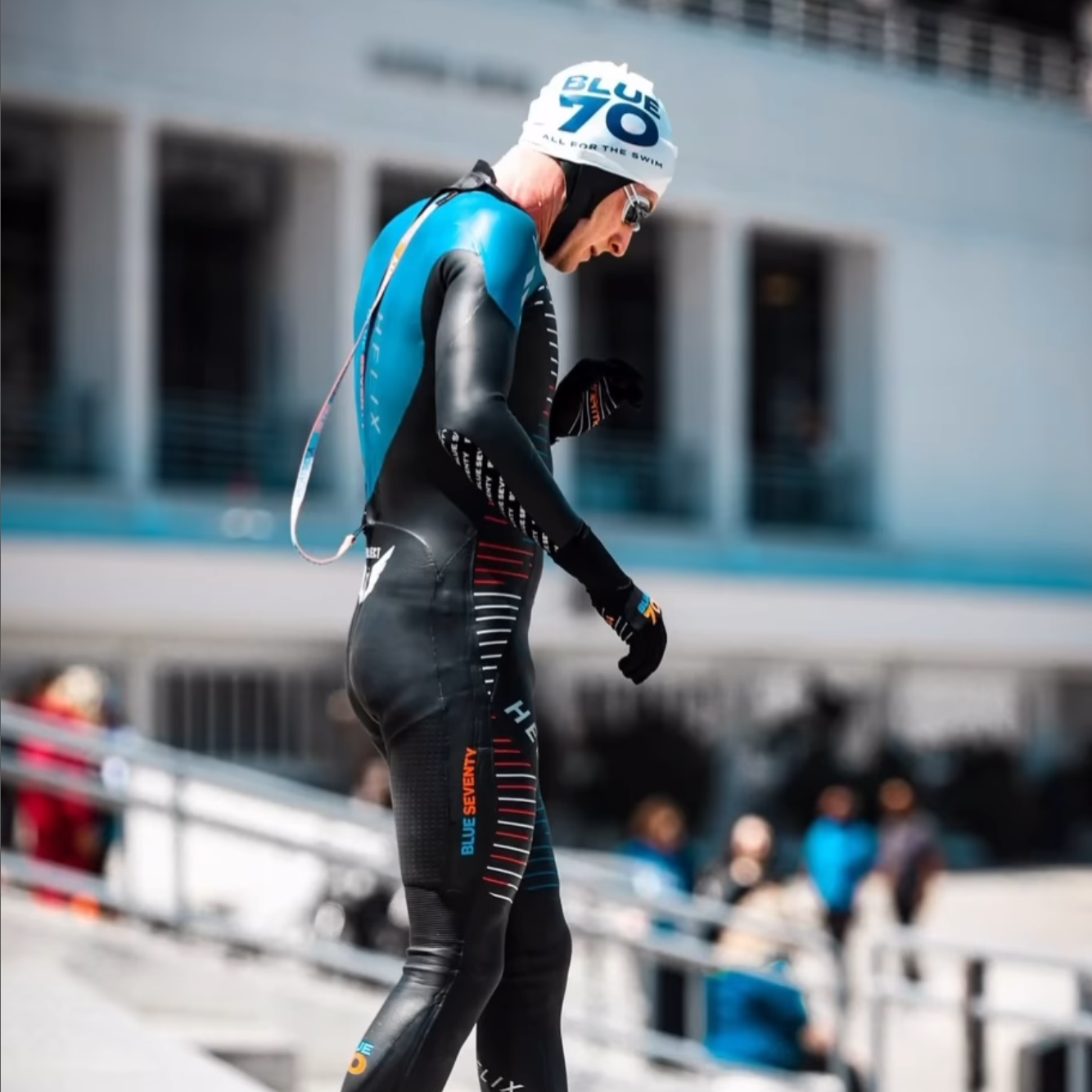
blueseventy’s line reflects those different jobs. The Helix is built for race-day performance and freedom through the shoulders. The Reaction and Fusion serve athletes who need dependable swim-specific performance across regular training. For colder water, the Thermal Reaction uses a Zirconium jersey lining and is designed for swimmers who need added thermal protection in low-temperature conditions.
Those are different tools for different sessions. The same principle explains why cold-water spearfishing gear should be judged by exposure pattern, not by a single number on a thermometer.
The practical takeaway
If you borrow one idea from this comparison, make it this one: match the wetsuit to the workload. Do not choose only for the coldest part of the day, and do not choose only for the first five minutes in the water. Choose for the full pattern of effort, breathing, movement, and exposure.
That approach leads to better decisions for swimmers, triathletes, and anyone spending serious time in open water. Fit still matters. Shoulder freedom still matters. Neck comfort still matters. Buoyancy still matters. Cold water simply raises the cost of getting any of those wrong.
If you are choosing a swim-specific wetsuit for training or racing, blueseventy’s fit guidance can make that process easier. Start with the size charts, review the wear guide, and use the Take a Test Swim option to judge the suit where it counts: in the water.