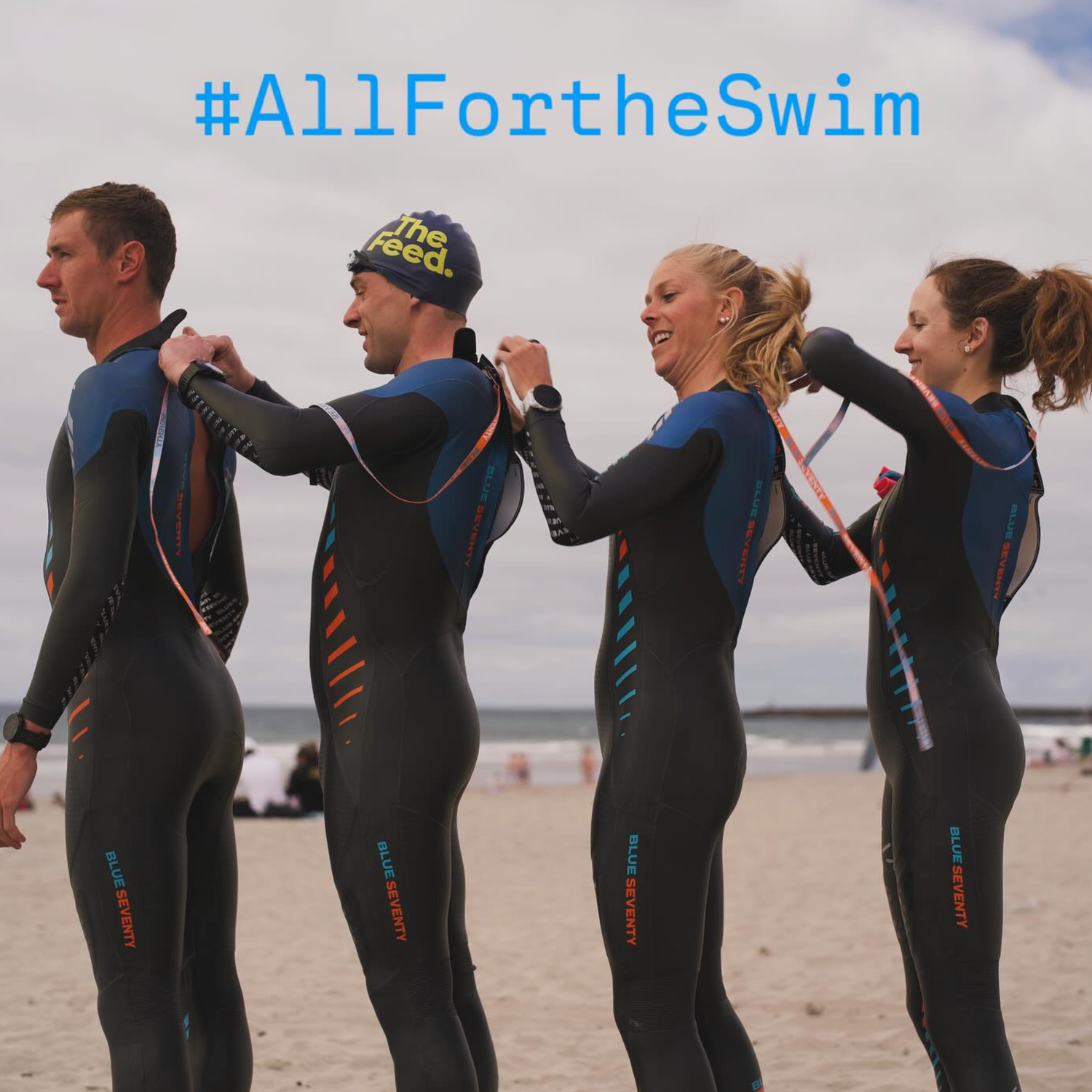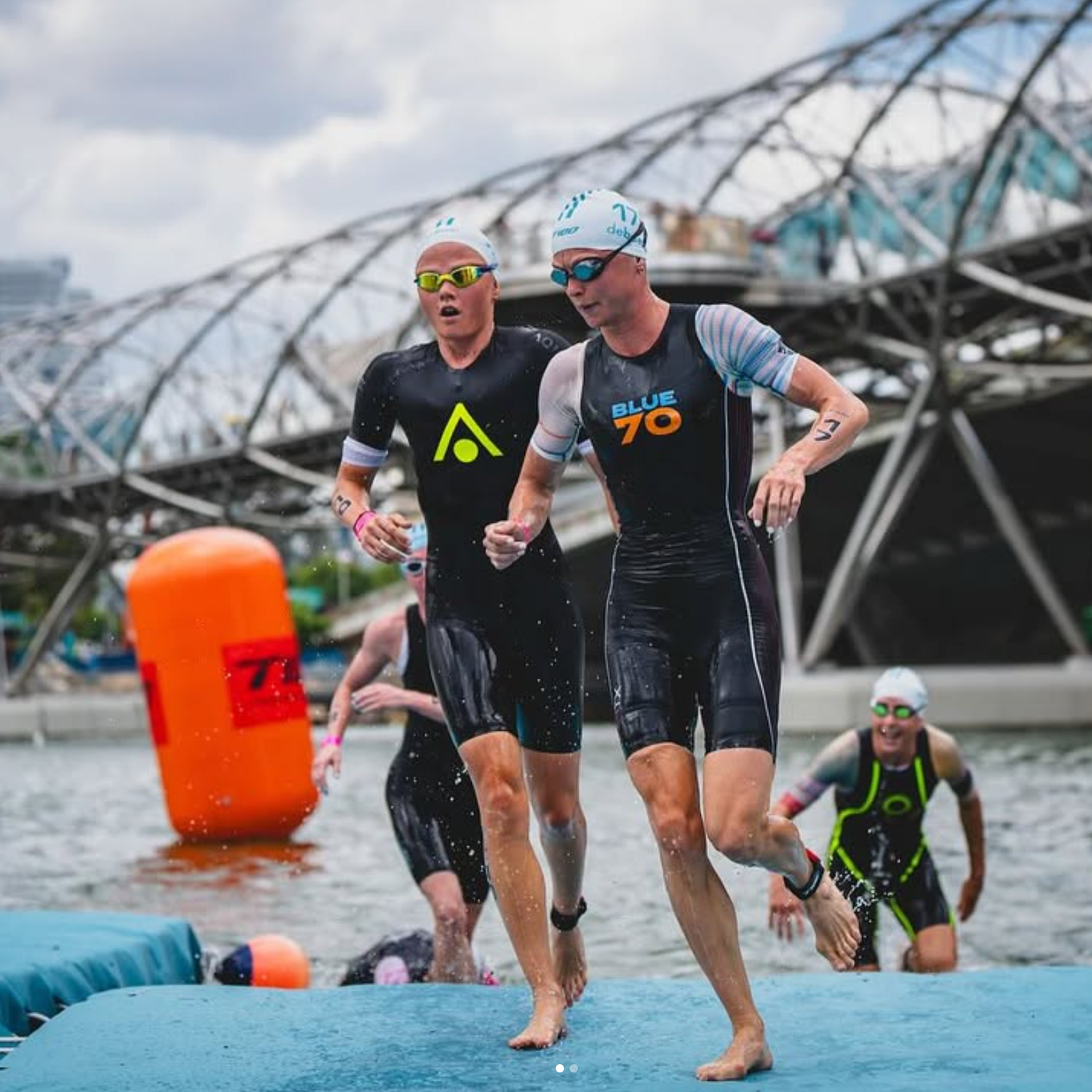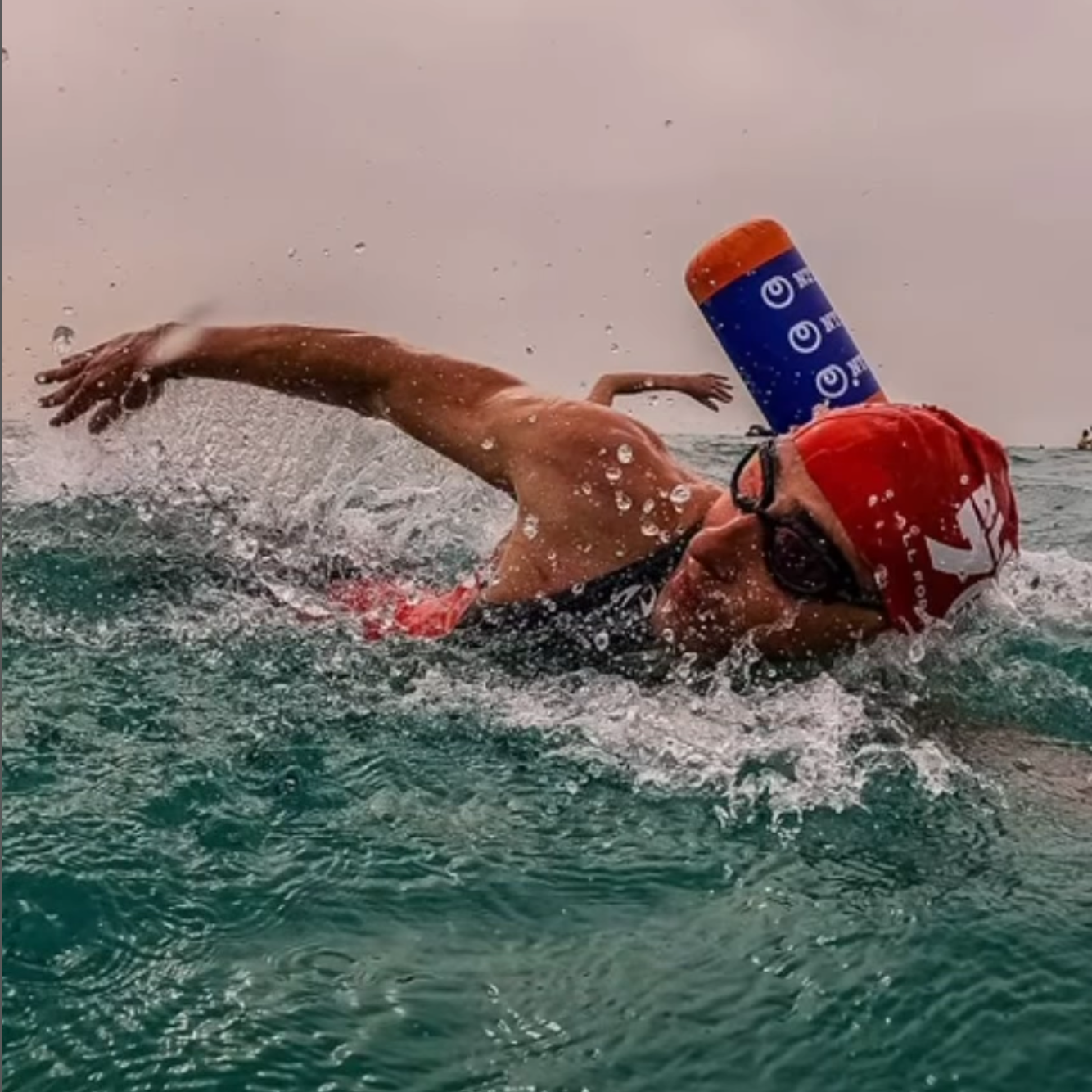



A poor quality swimming wetsuit gives you concrete tells. The shoulders bind when you reach, the neck digs in, and the suit seems to work against your body position instead of with it. Before you spend money, look for the details that separate a swim-specific suit from a layer of neoprene that wasn't cut for forward motion.
Shoulder restriction on every stroke
Put the suit on and trace your freestyle motion: reach overhead, rotate from the hips, touch the opposite shoulder blade. If the suit pulls across your upper back or catches under your armpit, the neoprene is too stiff or the panels are placed wrong. That restriction costs you energy on every stroke.
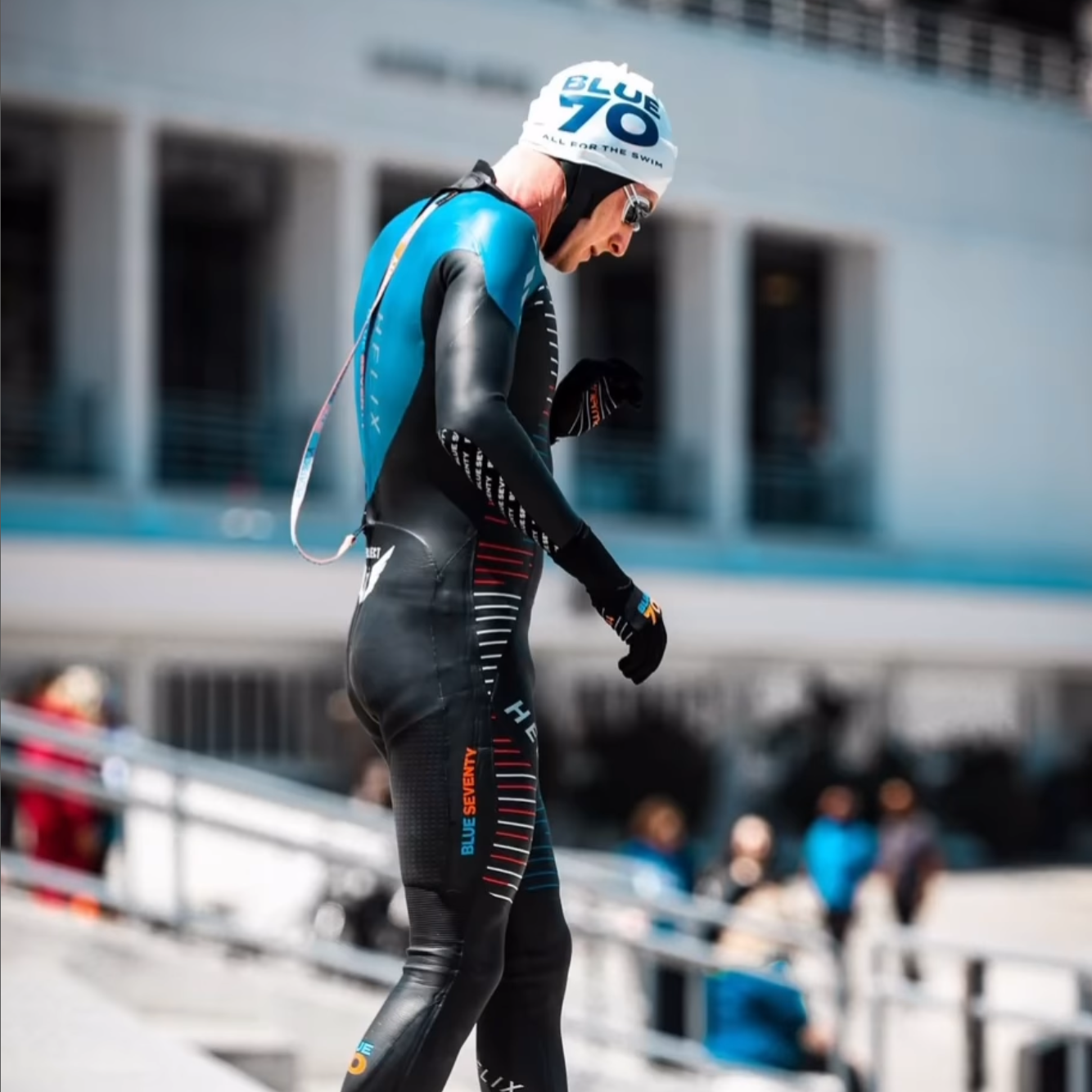
A swim-specific suit should let the shoulders move freely while the rest of the suit stays snug. Even small restrictions in the shoulder accumulate into fatigue over a longer swim. blueseventy uses Yamamoto neoprene in 38, 39, and 40 cell. Higher cell number means more flexibility. The Helix uses thin, flexible neoprene in the arms and shoulders for race-day range of motion. The Reaction uses higher-grade neoprene for swimmers who train frequently and still want freedom from restriction.
Neckline that chafes or flushes
A poor neck seal fails in two ways. It rubs the skin raw on the first open-water turn, or it lets water rush in every time you breathe to the side. Both problems trace back to cutting corners on the neck pattern.
A good neckline sits lower. It follows the shape of the neck instead of standing up like a collar. blueseventy addressed this directly in the 2021 Fusion redesign with a lower-sitting neckline for comfort without losing the watertight seal. On women's suits, Femme Fit lowers the neckline further and refines the pattern in the bust, torso, wrists, and ankles to reduce chafing and gapping.
Buoyancy in the wrong place
A wetsuit should change your position in the water rather than simply wrapping you in rubber. If a suit floats the chest but leaves the hips and legs dragging, it adds buoyancy without a swimmer's body position in mind. Poor buoyancy placement shows up as a heavy kick, a dropped hip line, and more drag.
Buoyancy equals speed in open water. Better body position reduces the surface area fighting the water. blueseventy's LIFT panels in the Helix and the LIFT buoyancy short use NBR foam placed to raise the hips and legs. blueseventy launched the LIFT short in 2020 as the first buoyancy short built with NBR foam.
Uniform neoprene stiffness
A poor quality suit feels like the same stiffness from the shoulders to the ankles, with no distinction between the panels that need to flex and the panels that need to resist wear. Quality swim-specific suits vary the panel thickness by job: flexible where you move, durable where you don't.
Thick panels across the forearms or chest can also blunt your feel for the water. blueseventy's Helix uses a permeable catch panel, in the line since 2010, to preserve that feel during the catch and pull. Thin race neoprene gives you freedom in the arms but breaks down more quickly with frequent training use. That is an honest trade-off. Swimmers who swim once a week or more should choose the Reaction for longer swims or the Fusion for shorter, frequent swims.
If you swim below about 56 to 58 degrees Fahrenheit, the Thermal Reaction adds a Zirconium jersey lining designed for cold-water thermal protection. Remember that a wetsuit is not waterproof. It allows a thin layer of water in, and your body warms that layer to provide insulation.
Weak seams and zipper strain
Check the seams before you buy. They should lie flat, stretch with the neoprene, and show no gaps or bubbles. If stitching pulls apart when you stretch the panel with light tension, construction is weak. Zipper teeth should close smoothly without forcing.
Fingernail punctures and heel tears are common damage points when swimmers pull a suit on by grabbing the neoprene with their nails. blueseventy warranties manufacturing and material defects for one year for the original owner. Fingernail punctures, heel tears, zipper damage from force, heat or chlorine damage, and normal wear and tear are not covered. That list matches the failure patterns weak construction and rough handling create. For small nicks and cuts, blueseventy offers Aquaseal neoprene cement.
Generic sizing and poor women's fit
Fit is speed. A poor fit often means the suit was cut from one generic shape and scaled up or down. That shows up in bunching at the armpits, gapping at the small of the back, or a chest that feels crushed while the legs are loose.
For women, unisex grading can mean a suit that fits the hips but doesn't fit the bust or neck. blueseventy uses Femme Fit across every women's wetsuit, with refinements in the bust, torso, wrists, and ankles, a lowered neckline, and an extended zipper for easier entry and faster transitions. The extended zipper also accommodates wider hips and reduces the struggle in T1. On any suit, aim for snug on dry land and more comfortable once you are in the water. A suit that feels loose and easy on land will usually be too loose in the water.
No test swim option
Dry-land fit tells you part of the story. A mirror check is not enough. Wetsuits change when water enters and the neoprene warms and settles. A seller or brand that expects you to decide based only on a mirror check is asking you to guess.
blueseventy's Test Swim policy lets you swim in a wetsuit and still return or exchange it within 30 days from the ship date, as long as the suit comes back clean, dry, unmodified, and with tags and accessories attached. Swimming in it does not affect your ability to get a refund. That policy removes the biggest risk in buying a wetsuit online.
Quick signs to check before you buy
- Raise your arms and rotate. Watch for shoulder bind or armpit pull.
- Trace the neckline. It should sit low and follow your neck without standing up like a collar.
- Check panel stiffness. You want flexible shoulders and durable torso and leg panels.
- Stretch the seams lightly. They should stretch with the material, not pull apart.
- Confirm the return and exchange policy includes swimming in the suit.
You can spot a poor quality swimming wetsuit by its restricted shoulders, a chafing or flushing neckline, misplaced buoyancy, uniform neoprene stiffness, weak seams, and a generic fit. You can check most of these before you buy: move your arms, inspect the seams, check the neoprene grade, and confirm you can take a test swim. blueseventy builds swim-specific suits around Yamamoto neoprene, targeted LIFT buoyancy, Femme Fit, and a test swim policy so you can find a suit that works with your stroke instead of against it.
A wetsuit adds buoyancy but is not a personal flotation device. That buoyancy improves body position; it does not replace open-water safety habits. Happy swimming.