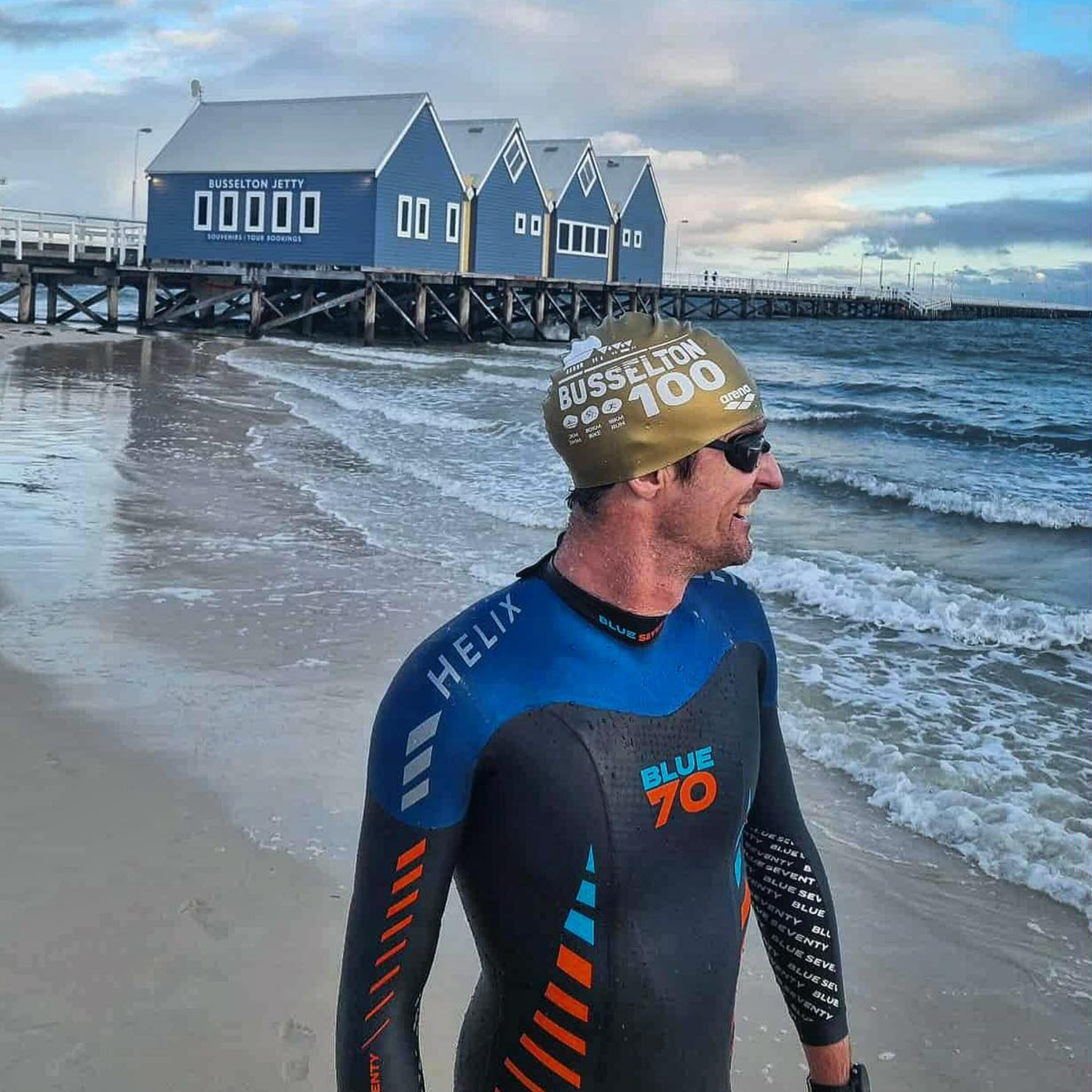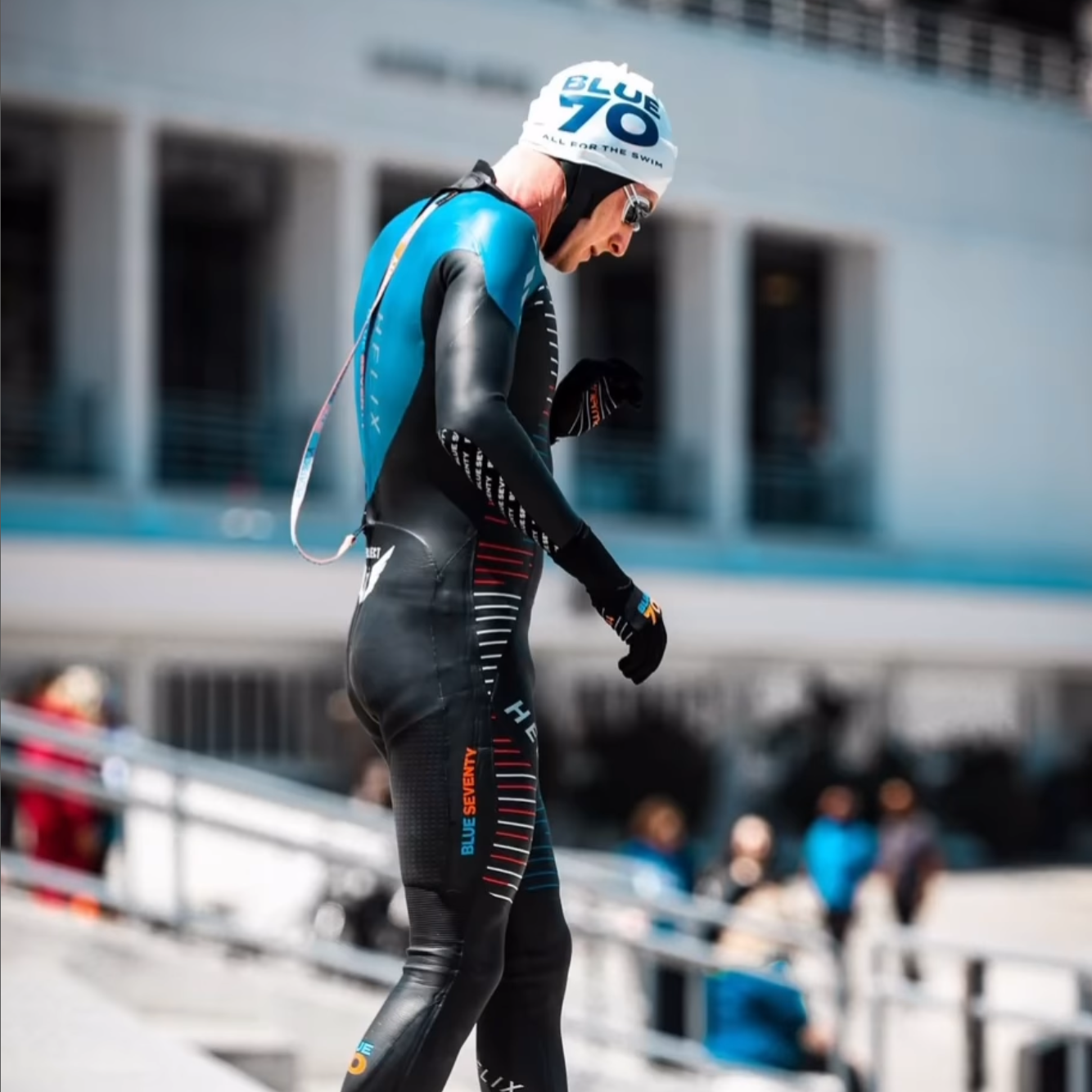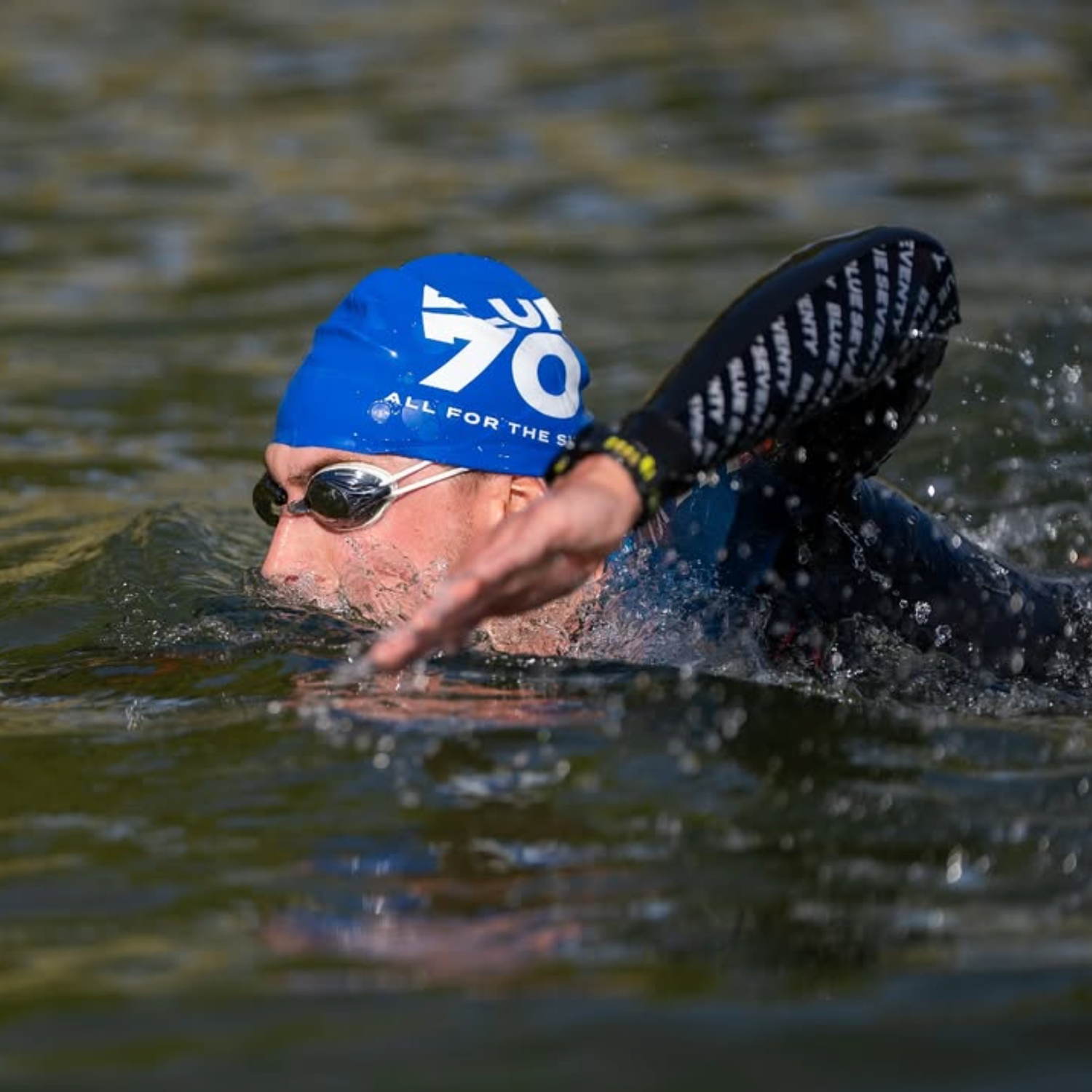



A reverse zipper closes in the opposite direction from a traditional back zip, so the pull and slider finish at the low back when the suit is closed, not at the base of the neck. That small change affects neck comfort, back-panel movement, and how much water enters around the collar.
What changes with a reverse zipper
The zipper still runs up the back. The difference is the closed position. With a standard back zip, the slider stops at the neck. With a reverse zip, the slider stops low on the back. The neckline can sit closer to your skin without a rigid zipper pull behind your head.
That position matters during a swim. Your neck and upper back move with every breath and sight. A slider at the base of the neck can press into the skin and create a hot spot over a long session.
Less neck chafing
Moving the slider low reduces the bulk at the collar. The neckline lies flatter, so there is less rubbing where the suit meets the back of the neck. Swimmers who finish long open-water sessions with a raw line across the neck usually notice the difference right away.
A flatter neckline also allows a closer seal at the top of the zipper. That helps limit the slow trickle of water down your spine.
A cleaner upper back for shoulder rotation
The zipper pull and slider are not weightless. Their position affects how the back panel lies. When the bulk sits low, the upper back has fewer rigid points, and the suit can follow your shoulder blade movement instead of working against it, which is exactly what you want during a long freestyle set.
At Blue70, we cut suits for freestyle motion. Zipper placement and neckline shape are part of that swim-specific fit.
A pull you can locate by feel
A reverse zipper puts the pull where many swimmers find it easier to grab over the shoulder. On race morning, you don't want to search for a small tab at the back of your neck with cold fingers. The lower pull can be simpler to locate and operate without help.
Direction matters less than practice. A zipper that sticks will cost you time in T1 no matter where it sits.
How to check a Blue70 suit
Not every Blue70 model uses a reverse zipper. Check the product photos and spec list on the suit you are considering. Look for where the closed zipper pull ends up. If it sits at the low back, it is a reverse-zip design.
If you already own a Blue70 suit, put it on, zip it, and note where the slider lands. Then practice unzipping with one hand over the opposite shoulder.
Zipper care that keeps it moving
A reverse zipper needs the same care as any back zip. Follow these steps after each swim:
- Rinse the suit in fresh water.
- Let it dry out of direct sun.
- Keep the zipper clean and free of grit.
If the zipper feels stiff, don't force it. Check for neoprene caught in the teeth and use a wetsuit-safe zipper lubricant. A forced pull is how zipper damage happens.
When a reverse zipper is worth seeking
Choose a reverse zip if neck chafing has been a problem for you or if you want a cleaner upper-back feel. The design offers a small comfort and fit benefit that shows up on long swims and during quick transitions.
Dive in and take a test swim in your Blue70 suit. The 30-day return policy still applies after you swim in it, as long as it comes back clean, dry, and unmodified.