


Ask most swimmers what happens to a wetsuit once it's done, and you'll get a shrug. It sits in a garage for a year. Then a donation bin. Then, eventually, a landfill. The word "recycling" gets attached to wetsuits more as a hope than a description of any real process, and that's worth examining, because the material at the center of every wetsuit was never built with a second life in mind.
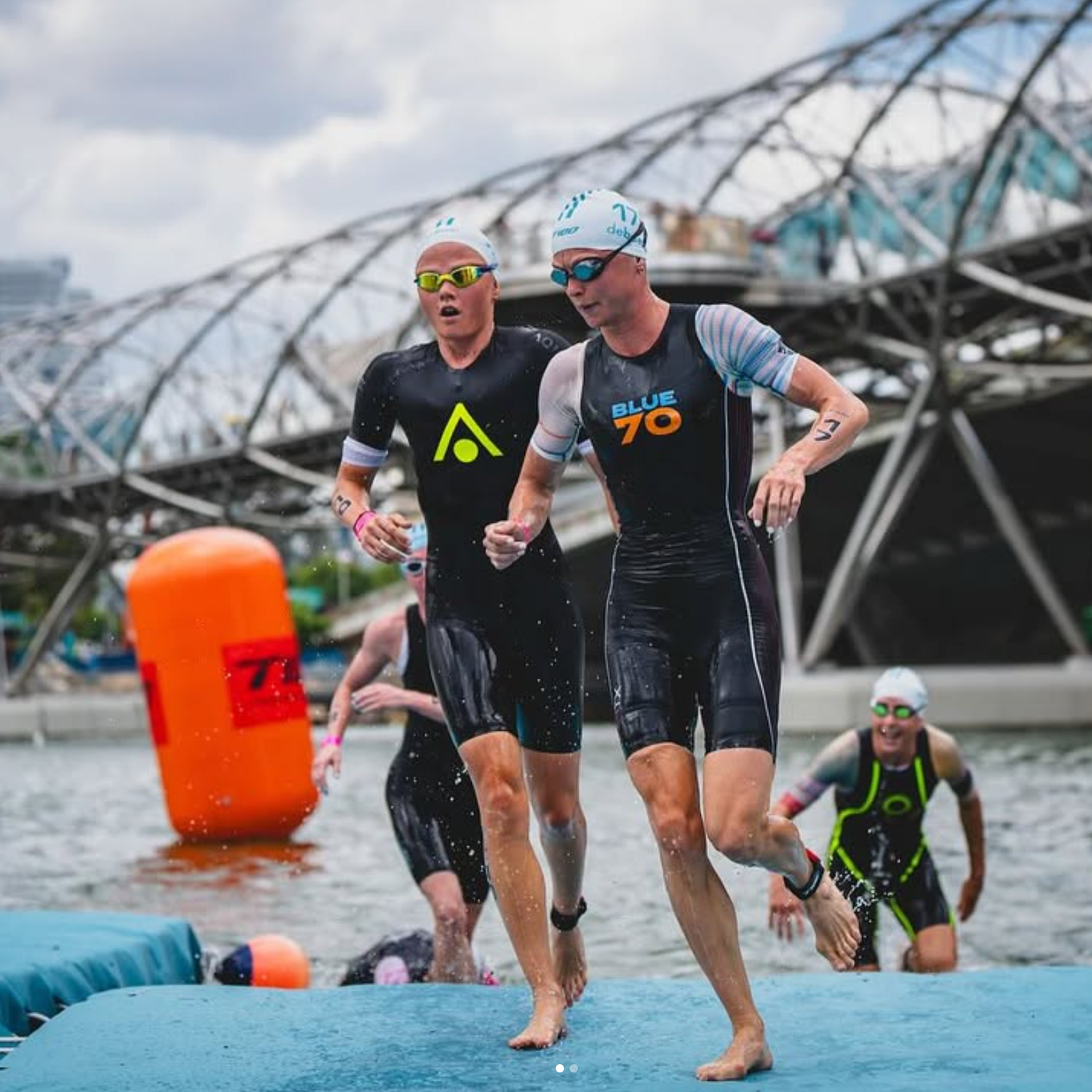
Blue70 wetsuits are built from Yamamoto 38, 39, and 40-cell neoprene. It's the same family of material used across the entire swim wetsuit category, and it shares a problem with all of them: once the suit is worn out, there isn't a clean way to turn it back into a new one.
Why Neoprene Resists Recycling
Neoprene is polychloroprene rubber. During manufacturing, it's vulcanized: heat and cross-linking agents lock the polymer chains into a permanent structure. That's why a wetsuit holds its shape and snaps back into place after ten thousand strokes instead of sagging out after a season of open-water swims. It's also why the material can't be melted down and reformed, the way a plastic bottle gets turned into fleece. Vulcanized rubber just doesn't run through that kind of process.
Then there's the construction. Most swim wetsuits bond a jersey or Zirconium lining directly to the neoprene core, which makes the finished product a composite material. Composites are the hardest category for any recycling stream to handle, full stop. Separating the layers costs more than the recovered material is worth. This isn't a flaw specific to any one brand's wetsuits. It's chemistry, and it applies whether the suit was built for swimming, diving, or surfing.
What "Recycling" Actually Means in Practice
When a wetsuit does get processed instead of thrown away, it's almost always shredded and downcycled, not recycled in the strict sense of the word. Ground neoprene shows up as gym flooring padding, yoga mat filler, gasket material, industrial insulation. That's a legitimate second use. It keeps material out of a landfill a little longer.
What it doesn't do is turn an old wetsuit into a new one. That distinction matters more than it sounds like it should. If you're ever evaluating an environmental claim from a wetsuit brand, ask one specific question: does the used suit come back as another wetsuit, or as padding for something else entirely? The answer tells you what the claim is actually worth.
The Bigger Lever: Extending Working Life
Here's the part that gets skipped over. The single most effective thing you can do for a wetsuit's footprint has nothing to do with what happens after you throw it out. It's delaying the throwing out. A suit that lasts four seasons instead of two has already cut its footprint in half, no downstream process required.
Most wetsuit damage isn't dramatic. It's a fingernail puncture from rushing a donning before a race start. A heel tear from stepping into the leg without rolling the cuff first. Heat damage from drying a suit in direct sun, or leaving it folded in a hot car trunk for a week after the event. Blue70's own warranty terms spell this out: fingernail punctures, heel tears, zipper damage from forcing a stuck zip, and heat or chlorine damage all fall outside the one-year manufacturing warranty. Not because the brand is looking for an excuse. Because these are handling issues, not material defects.
That exclusion list doubles as a maintenance checklist:
- Rinse in fresh water after every swim. Saltwater and chlorine both accelerate neoprene breakdown over time.
- Dry away from direct heat and direct sun, not draped over a hot railing or left in a car.
- Store the suit rolled, not folded, so you're not creasing the same panel every single time.
- Use a lubricant or plastic bags over fingers and toes when donning a brand-new suit, especially during the first few swims before the neoprene has broken in.
None of this is complicated. That's exactly why it rarely comes up. "Rinse your wetsuit" doesn't sound like a sustainability initiative. But it's the lever that actually moves the needle.
Choosing the Right Suit for How You Actually Swim
Model selection belongs in this conversation too. The Helix, Blue70's flagship at $995, uses extremely thin, flexible neoprene through the shoulders and arms to maximize feel for the water on race day. That thinness is a deliberate trade-off. It comes at a durability cost: frequent training swims wear that neoprene down faster than a suit built for volume.
For swimmers training once a week or more in open water, the Reaction ($680) or Thermal Reaction ($785) makes more sense, built with a higher grade of neoprene for repeated use rather than single-day speed. For shorter, frequent sessions, the Fusion ($420) fills the same role at a lower price point.
Buying a Helix for three training sessions a week isn't just a mismatch between suit and workload. It's a suit that will need replacing well before one matched to how it's actually used would. Matching the model to your training frequency is a purchasing decision. Quietly, it's also a waste-reduction decision.
Policies That Stop Waste Before It Starts
A wetsuit returned because it's the wrong size, then abandoned in a closet instead of exchanged, is waste that never had to happen. Blue70's Test Swim policy lets you actually swim in a suit and still return or exchange it within 30 days of the ship date, as long as it comes back clean, dry, and with the tags attached. That policy exists to solve a sizing problem. It has a side benefit: fewer wrong-fit suits end up forgotten in a garage because someone was too nervous to test the fit in open water first.
The warranty structure works the same way. A manufacturing defect caught within the first year gets repaired, not replaced outright, which keeps a functional suit in circulation instead of retiring it over one fixable seam.
When a Suit Has Genuinely Reached the End
Eventually every wetsuit runs out of road. Usually that means the neoprene has thinned to the point of losing its recoil, or a repair simply won't hold anymore. Before writing a suit off entirely, a few options are worth trying.
- Check with a local swim club or youth triathlon program. They'll often take older suits for younger athletes who outgrow gear every season regardless of its condition.
- Try a neoprene cement repair on small tears or seam separations before assuming the suit is finished. Many are fixable.
- Look for a local textile or rubber recycler that specifically accepts neoprene. Most curbside recycling programs won't take it.
The honest state of wetsuit recycling right now is that the infrastructure hasn't caught up to the demand for it. That's not likely to change soon. The more immediate opportunity isn't waiting around for it to. It's treating fit, care, and model selection as the sustainability decisions they already are, starting with the suit hanging in your garage right now.
If you're not sure whether your current suit matches how often you actually swim, take a Test Swim in a Reaction or Fusion, or reach out to the Blue70 support team about a repair before assuming your suit needs replacing altogether.