


There's a specific kind of frustration that comes with a busted wetsuit zipper. It doesn't announce itself with a rip or a puncture. One day the slider just... stops catching. Or the pull tab comes off in your hand. No drama, just a quiet mechanical failure at the one part of your suit that everything else depends on. Because here's the thing about a zipper: it's the only way in or out of the suit. When it goes, the whole suit is temporarily useless, no matter how good the neoprene still is.
What most swimmers don't have a good handle on is what fixing it should actually cost, and more importantly, whether it's even the right call. Is this a five-minute fix? A shop job? Or is a zipper failure the universe telling you the suit's had a good run and it's time to let it go? The answer changes depending on a few things, so let's break it down properly.
Why the Zipper Usually Fails Before the Neoprene Does
It helps to understand what you're actually dealing with mechanically, because that shapes everything about cost.
A wetsuit zipper is a small system: teeth, a slider that locks them together, and a tape that's bonded or stitched into the neoprene panel. Neoprene itself breaks down slowly, over seasons, from sun exposure and chlorine and just general flexing. Zippers don't work that way. They tend to go suddenly, and almost always at one of these points:
- The slider separates from the pull tab - by far the most common issue, and usually the cheapest to sort out
- Teeth get bent or misaligned, typically from being forced closed while wet or at an angle
- The zipper tape lifts away from the neoprene at the seam - a more serious, structural repair
- Corrosion, especially on suits that spend a lot of time in saltwater and don't get rinsed promptly
Each of those has a completely different repair path and price tag. Treating "zipper repair" as one single thing is exactly where swimmers get thrown off about what to expect.
The Fix-It-Yourself Tier
Here's something worth knowing: a lot of what feels like a zipper "failure" isn't actually a broken zipper. It's a small mechanical hiccup that you can sort out yourself, no shop required.
If the slider has popped off the track, or the pull tab has come loose, that's often a five-minute job with a pair of pliers and a replacement pull. These are cheap, and in a pinch, even a keyring loop will get you through a swim. No cement, no stitching, no boxing the suit up and mailing it anywhere.
If the very edge of the zipper tape has started to lift - a small section, not the whole seam - a careful dab of neoprene cement can hold it. The material cost here is almost nothing. The real cost is patience: rushing the cure time is the single most common reason a DIY fix falls apart again within a few swims.
One honest caveat: this only works for early-stage or cosmetic damage. If the teeth themselves are bent or several inches of tape have pulled away, cement alone isn't going to hold up against the stretch of pulling the suit on over your shoulders.
When You Actually Need a Specialist
Once a zipper needs full replacement - new tape, new teeth, a proper re-stitch into the neoprene - you're in different territory. It's worth knowing what you're paying for here, because it's not really the parts.
Labor is most of the bill, not materials. A replacement zipper unit is inexpensive on its own. What costs money is the skill involved: removing the old zipper without damaging the neoprene around it, getting the new tape perfectly aligned along the seam, and bonding or stitching it so it can survive being stretched across your shoulders or down your back, which happens to be one of the highest-stress zones on the entire suit.
It also takes longer than people expect. This isn't a same-day fix at most repair shops. The adhesives need proper cure time, and rushing that step is how repairs fail a second time. If you've got a race on the calendar, plan for weeks, not days.
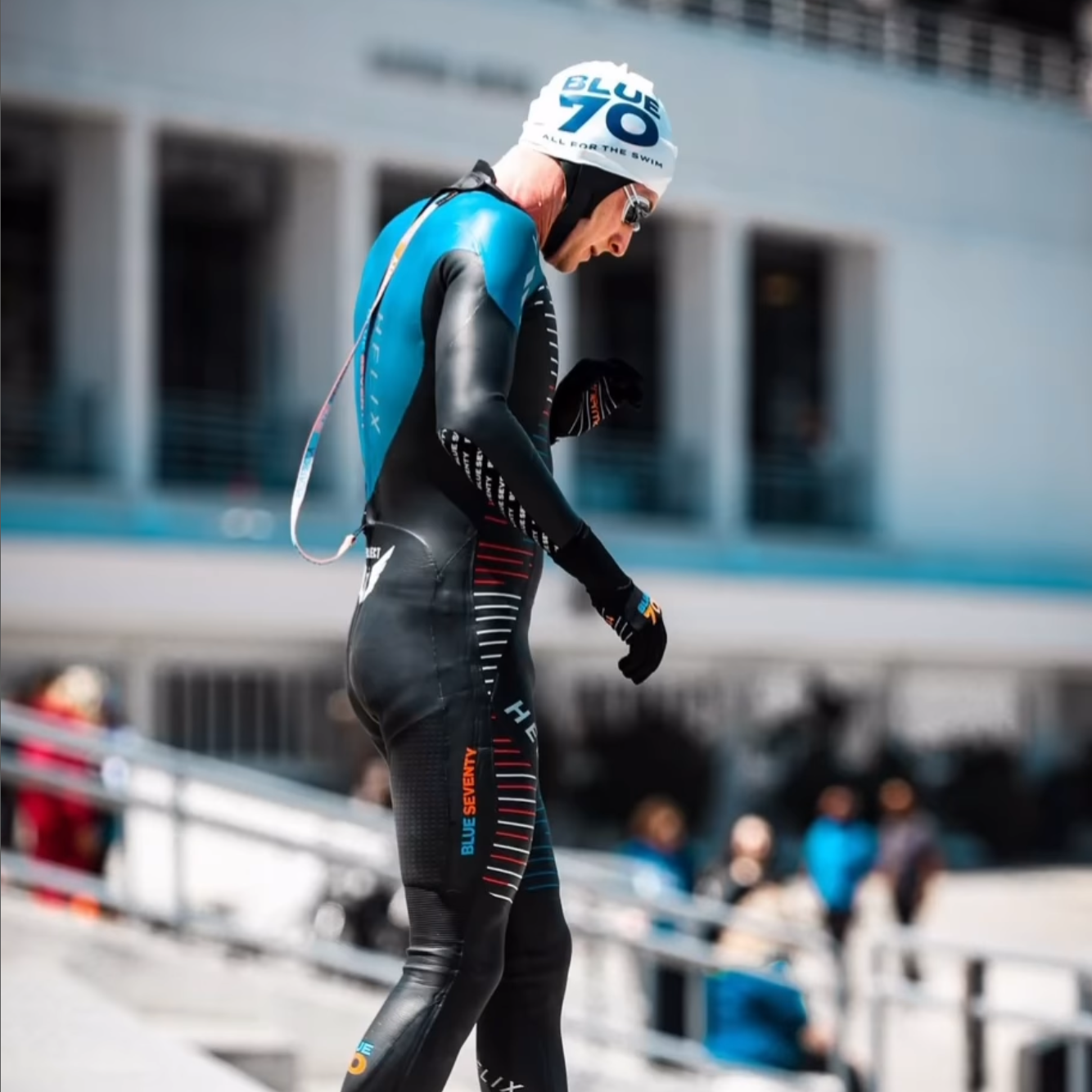
The suit's construction changes the difficulty, too. A suit built with a thicker, more durable back panel - the kind designed for frequent training - is usually more straightforward to re-zip than a suit built with very thin, highly flexible neoprene through the shoulders and torso, which is exactly what you want in a race-day suit chasing every ounce of feel for the water. That flexibility is a feature on race morning, but it does mean a repair job takes a more careful hand.
Repair or Retire? A Better Way to Think About It
Most swimmers ask "how much will this cost to fix," when the better question is "does fixing the zipper actually get me more useful life out of this suit, or am I just delaying the inevitable?"
A few things worth weighing honestly:
- How old is the suit, and how hard has it worked? A suit that's done two seasons of open-water training twice a week has probably picked up wear elsewhere too - at the ankles, underarms, or wrist entry points - even if the zipper is the only visible issue right now. Repairing the zipper on a suit that's tired everywhere else buys you a lot less time than repairing it on a suit that's otherwise in good shape.
- What was the suit designed to do? A suit built for frequent training, with tougher neoprene, tends to be a better repair candidate than one built with the thinnest, most flexible neoprene for pure race-day performance. Not because the repair itself is different, but because the rest of the suit likely has more life left in it.
- Is this a one-off, or a pattern? Tape that separated because of one hard yank is bad luck. Tape that separated because the suit's been left balled up wet in a bag, or gone without a rinse after chlorine exposure, might show up as a problem again somewhere else, even after a good repair.
If your suit is under two seasons old, you've taken reasonable care of it, and the zipper is the only real issue, repairing it is very often worth it. But if you're staring at a broken zipper on a suit that's already showing wear at the seams or losing its snap in the neoprene, it's fair to ask whether you're paying to extend a suit that's already on its way out.
The Repair Angle Nobody Mentions: How You Put the Suit On
Most wetsuit care advice is about rinsing and storage, and that's all true and important. But almost nobody talks about the connection between zipper lifespan and how you actually get in and out of the suit. This part gets overlooked constantly.
Zipper pulls are attached to a cord specifically so you can reach up behind your back and operate it one-handed. But think about what actually happens under race-morning nerves or cold fingers in transition: swimmers yank that cord at an angle instead of straight down the track, which forces the slider sideways against the teeth. That sideways force, repeated over time, is a bigger contributor to slider separation and bent teeth than simple age or number of swims.
The fix costs nothing. Practice donning and removing your suit in training the exact way you plan to do it on race day, and if you can, have a training partner or coach glance at your zipper hand position while you do it. Pulling the zipper straight along its track, even quickly, puts far less strain on it than yanking at an angle under pressure. It's a small technical habit, not unlike clean stroke mechanics, that quietly protects your gear over a full season.
Catching Trouble Before It Becomes a Full Repair
A zipper rarely fails out of nowhere. There are usually signs first:
- It's getting harder to zip, especially partway up
- You need two hands where one used to work fine
- You notice the tape lifting even slightly at the top or bottom of the zip line
- The pull tab feels loose or wobbly at its attachment point
Catching any of these early is the single biggest thing you can do to control cost down the line. A stiff zipper caught early might just need a silicone-based, wetsuit-safe lubricant or a small cement touch-up. A zipper ignored until it fully separates mid-swim becomes a full specialist repair, and possibly a missed training session or a stressful race morning scramble.
Make It Part of Your Season, Not Just Your Race Week
The swimmers who never get caught off guard by this aren't doing anything special. They just check the zipper before the suit goes into off-season storage, rather than discovering the problem two weeks out from race day. If you're training through open-water season regularly, get in the habit of checking your zipper the way you'd check a bike drivetrain: on a schedule, not just when something feels wrong.
If you're ever not sure whether what you're looking at is a quick DIY fix or something that needs a specialist, Blue70's support team is a good place to start. A photo of the zipper before you commit to a repair path will save you time and guesswork. And if you're in the market for a new suit and zipper durability matters to you based on how often you're actually swimming, it's worth thinking through your training frequency and typical conditions before choosing a model. A suit built for frequent training use is generally going to be kinder to its zipper, and to itself overall, across a long season than one built purely to shave every possible second off race day.
Happy swimming, and don't let a ten-dollar slider problem turn into a much bigger one.