


Most swimmers treat a wetsuit size chart like a t-shirt chart: find your height and weight, land in a box, order that size. That works for cotton. It falls apart often enough with neoprene that it's worth slowing down before you check out.
A size chart is built from two numbers, height and weight, plotted against an average body. Few swimmers actually have average proportions. Two people can both stand 5'10" and weigh 165 pounds and still have completely different torsos, arm lengths, and shoulder widths. Both land in the same box on the chart. Only one of them walks away with a suit that fits the way it should.
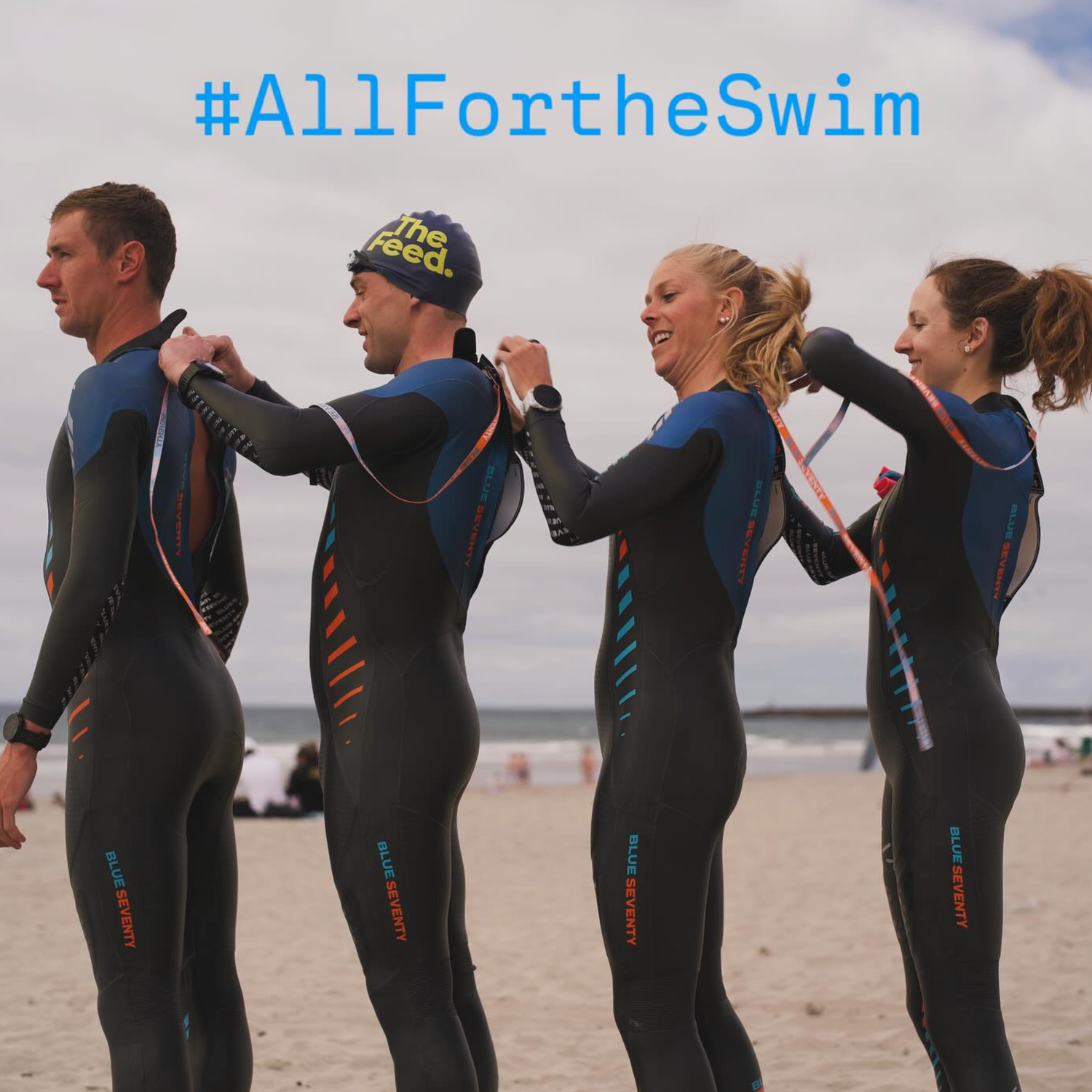
Blue70 splits its wetsuit patterns by gender rather than offering one unisex cut, and the women's Femme Fit sizing accounts for differences in bust, torso, wrist, and ankle shape. That's a real improvement over guesswork. But no chart, from any brand, replaces checking the suit against your own body once it's in your hands.
What Height and Weight Measure
Height and weight are stand-ins for three things a two-column chart can't measure: torso length, the taper from shoulder to hip, and limb circumference. Neoprene barely stretches compared to fabric. Yamamoto neoprene, the material Blue70 uses across its line in 38, 39, and 40-cell grades, flexes well for what it is, but flexibility in the material doesn't fix a bad cut. A suit that's a half-size off in torso length will ride up at the crotch with every stroke, or bunch at the shoulders and cut your reach short. Either mistake costs you energy by the last quarter of a swim, well after the initial discomfort fades.
This is why coaches give advice that sounds backward to first-time buyers: a wetsuit should feel snug, almost restrictive, standing on dry land. In the water it should feel easier. Once the suit settles against your skin and takes on the thin layer of water it's designed to trap and warm, the fit relaxes. A suit that feels easy in your garage will almost always feel loose and draggy once you're actually swimming in it.
Torso Length: The Variable No Chart Asks About
Torso length relative to height is the blind spot. Two swimmers of identical height and weight can differ by two or three inches in torso length, and that gap decides whether the shoulder seams sit where they belong or creep toward your neck the moment your arm extends overhead mid-stroke.
If you've bought a wetsuit that measured correctly on the chart but felt like it was choking you at the top of your recovery, this is probably why. The chart put you in the right box for your weight. Your torso put you in the wrong suit for your stroke.
Fixing this takes a specific process:
- Measure your own torso length, base of neck to base of spine, seated upright, and compare it against any torso-specific measurements the maker provides, not just the height and weight row.
- Put the suit on and reach both arms straight overhead before deciding anything. If the shoulders pull tight enough to limit that motion, size up no matter what the chart said for your weight.
- Squat and rotate your torso the way you would to sight toward a buoy. A correctly sized suit lets you do this without the neoprene fighting you across the ribs.
Sizing Differs for Beginners and Racers
A first-time triathlete and a competitive age-grouper are solving different problems, and that changes how much room to build into a sizing decision.
Beginners prioritize confidence and a feel for body position in the water over marginal drag reduction. Buoyancy equals speed, and a slightly looser suit that still holds its structure delivers most of that lift anyway. If you're new to open water and stuck between two sizes, size up. Feeling free to move matters more on race morning than shaving off a few seconds of drag.
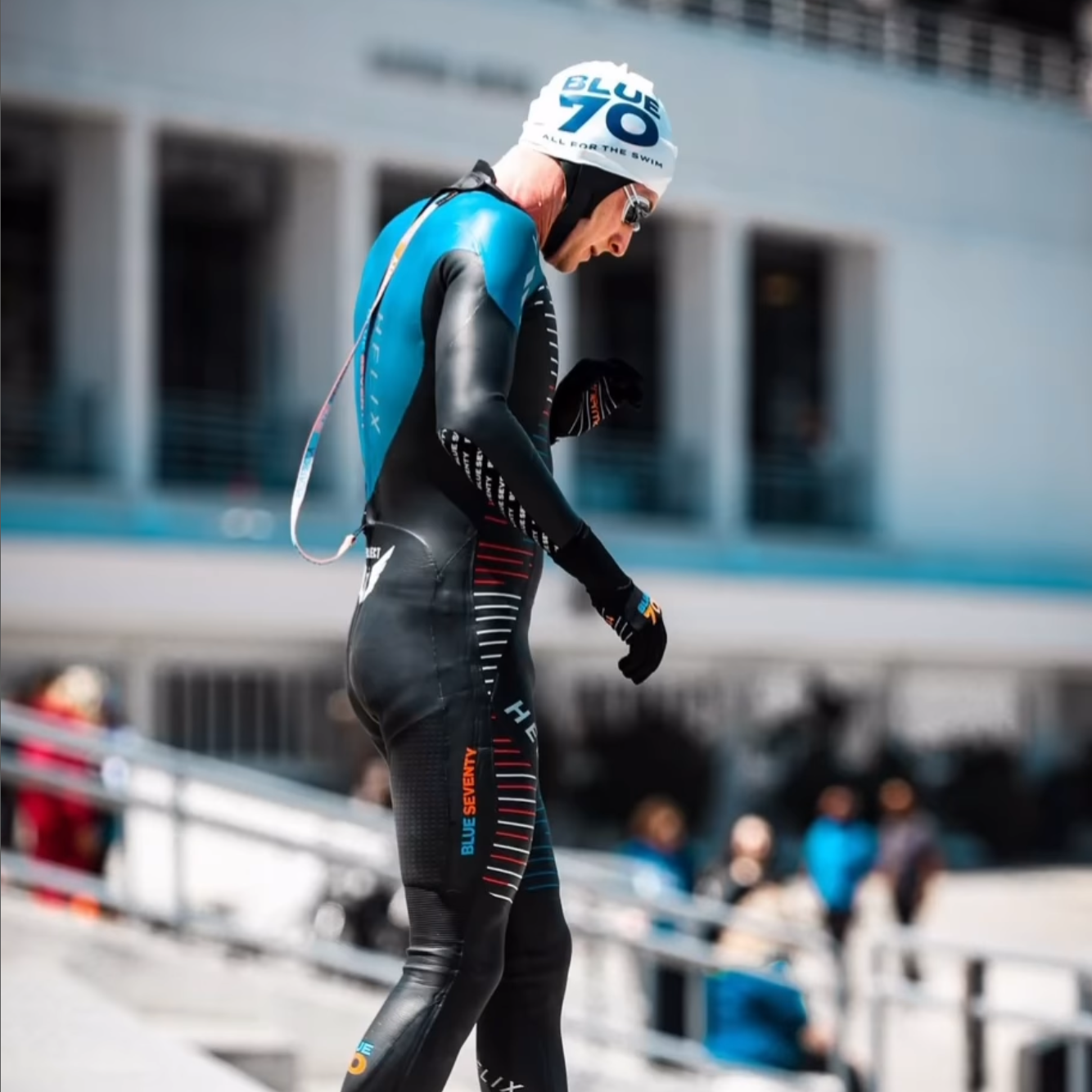
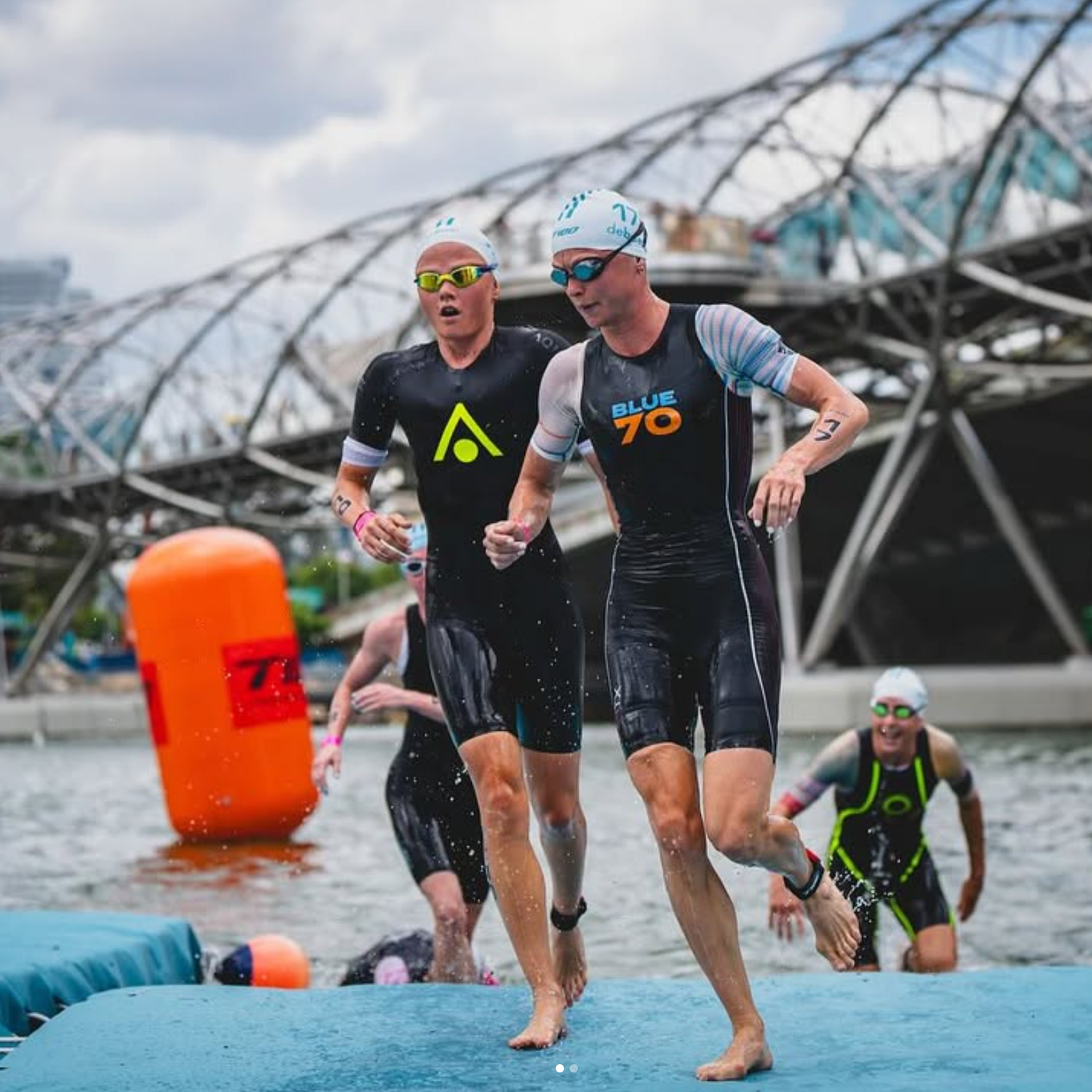
Racers want the opposite: the tightest fit their body and range of motion can tolerate. Any slack in the suit is water moving on its own, separate from your body, and that's drag. Blue70's flagship Helix uses thinner, more flexible neoprene through the shoulders and arms specifically so a racer can size down for a snug fit without losing the overhead reach a strong catch requires. Blue70 is also upfront that the Helix's thin panels aren't built for heavy training use, week after week. A race-day suit and a training suit solve different problems, and they call for different sizing decisions.
How Sleeveless and Thermal Suits Shift the Numbers
A sleeveless suit fits differently at the shoulder because there's no sleeve seam to work around. The sizing question moves almost entirely to torso length and armhole size. Cut the armhole too wide and water flushes through on every stroke. Cut it too narrow and it chafes over an hour in the water. If you're moving from a full suit to a sleeveless model, whether for warmer conditions or more shoulder freedom in training, size on torso fit first and treat the height and weight row as a starting point, not the final answer.
Thermal suits flip a different assumption. A suit like Blue70's Thermal Reaction, fully lined with Zirconium jersey for added warmth, carries a bit more bulk than an unlined race suit. A swimmer who normally sizes down for a tight race fit may need to size true-to-chart, sometimes even up, in a thermal model. Restricted circulation matters far more in 55°F water than it does in a 78°F lake.
Check Your Donning Technique Before You Blame the Size
A good share of "wrong size" complaints are actually donning problems. A suit put on carelessly, arms shoved in without gradually working the neoprene up the limb, shoulders not fully seated, feels wrong no matter how accurate the sizing is. Bunched neoprene at the armpit or a shoulder seam sitting an inch off center reads exactly like a too-small suit if you've never worn one before.
Before you decide the size is wrong, redo the process slowly. Work the suit up your legs and torso in small pulls instead of one big yank. Seat the shoulders last: reach both arms overhead and roll them into place. That one step resolves a surprising number of first-time fit complaints, and it costs about two extra minutes.
Let the Chart Get You Close, Then Test It in Water
The best move for any swimmer stuck between two sizes is to treat the chart as step one of two. Step two is getting the suit wet before committing to it. That's the reason Blue70 offers a Test Swim: you can swim in the wetsuit and still exchange or return it, as long as it comes back clean, dry, and with tags and accessories attached. It's the mechanism that reconciles a flat, two-dimensional chart with your body in the water.
A chart gets you close. The water tells you if you're right.
If you're caught between two sizes, Blue70's size charts and fitting guide walk through torso and limb measurements beyond height and weight, and the support team can help interpret a borderline measurement before you order. Get the fit right once, and every swim afterward is easier.