


You've probably typed some version of "wetsuit discount" into a search bar before a race season. Fair enough. But a marked-down price tells you almost nothing about whether that suit will actually work for the swimming you do. A suit in the wrong size, the wrong neoprene grade, or the wrong temperature range isn't a deal at any price. It's a suit you'll be replacing by next season.
This isn't a pitch to buy the most expensive thing on the rack. It's a rundown of the four or five specs that actually determine value, so the next time you're staring at a price tag, you know what you're paying for.
Two Suits Can Look the Same and Cost $500 Apart
Stand two wetsuits side by side and they can look nearly identical: black neoprene, a back zip, panels stitched along the arms. The differences that separate a $325 suit from a $995 one live below the surface, and almost nobody explains them before you swipe a card.
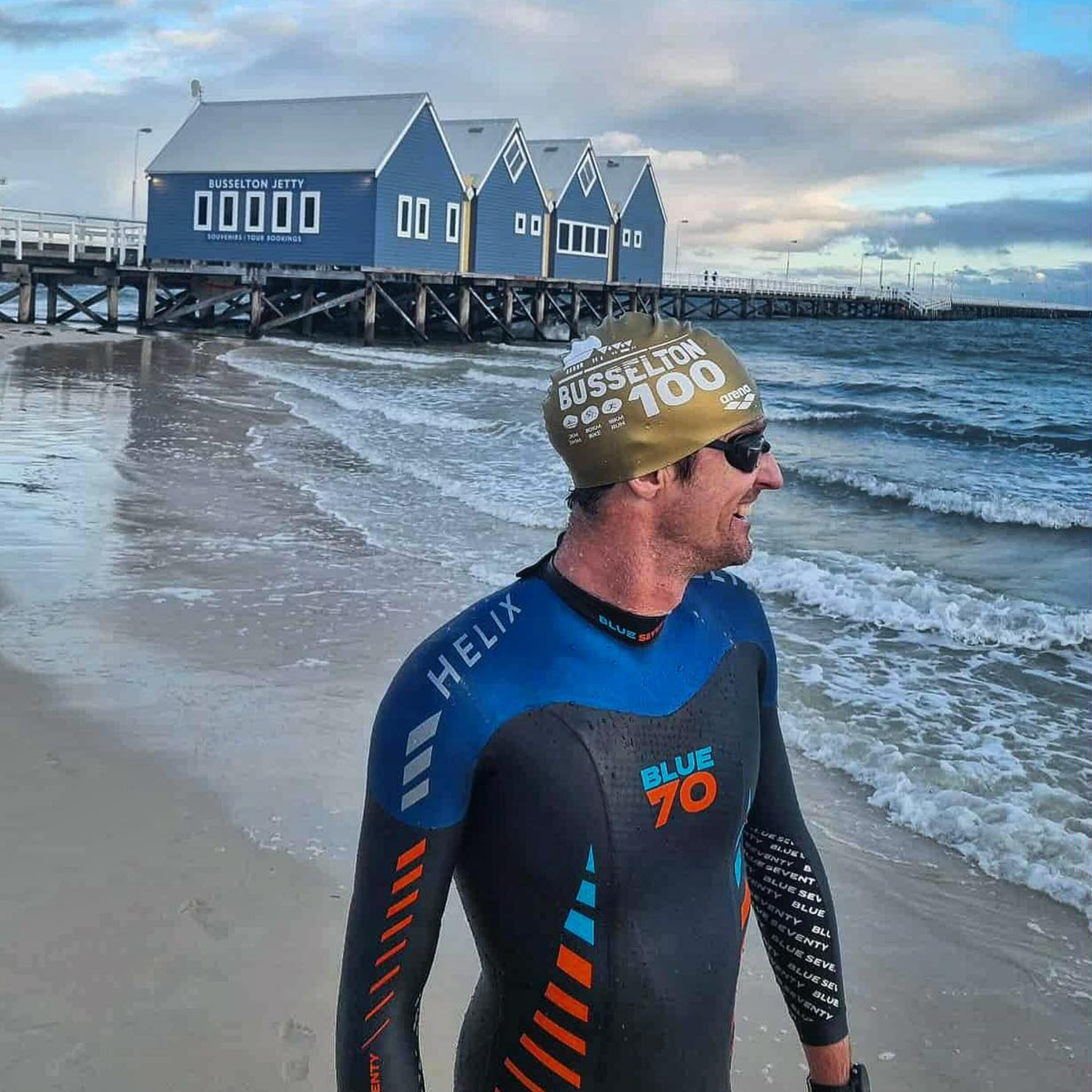
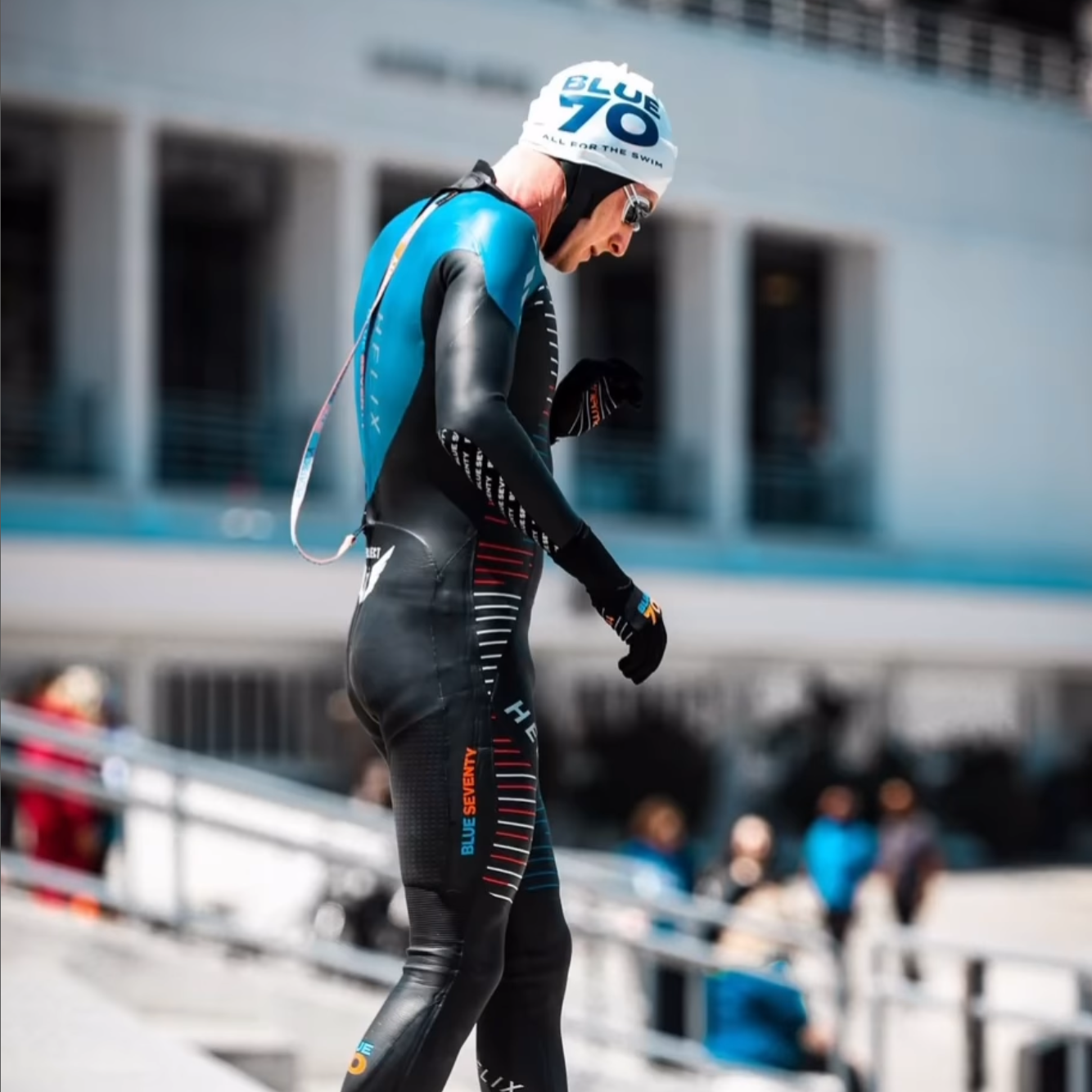
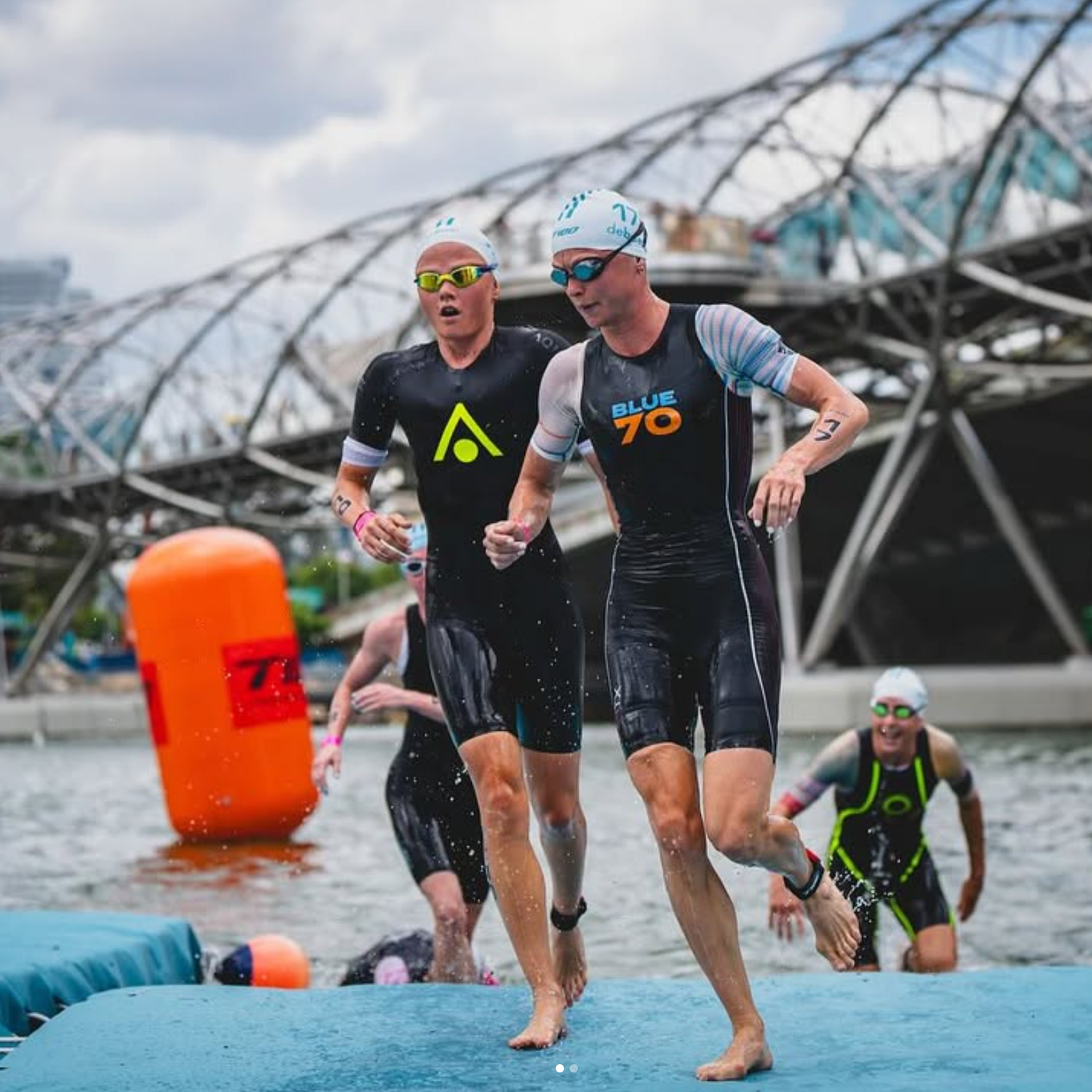
Every Blue70 wetsuit is built from Yamamoto neoprene, graded in cell counts of 38, 39, and 40. Higher cell numbers trap more nitrogen gas per unit of rubber, which makes the material more flexible and more buoyant. That's the grade used through the shoulders and arms of a flagship race suit like the Helix, where flexibility during the catch phase has a direct effect on stroke rate and fatigue late in a swim. It's also the most delicate neoprene in the lineup. Blue70 says as much about its own suit: heavy training use breaks it down faster than a suit built for durability.
A suit like the Reaction or the Fusion strikes a different balance. Slightly heavier neoprene, built to survive two or three training swims a week without falling apart by August. Neither approach is inferior. They're built for different jobs, and the price difference reflects real material and construction choices, not a number picked to look impressive once it gets slashed for a sale.
The Trade-Off Discount Hunting Usually Misses
Here's what gets lost when you're focused purely on finding the lowest number: the thinnest, most flexible neoprene is also the neoprene that wears out fastest.
Race twice a year and train mostly in a pool? A discounted flagship suit is a smart purchase. It gets worn a handful of times, under exactly the conditions it was built for, and that delicate high-end neoprene never takes the repeated donning and doffing that would wear it down.
Train in open water once or twice a week for months before your race? That same discounted flagship might not make it through the season as well as a full-price Reaction would. The comparison that matters isn't sticker price. It's cost per season of actual use.
- A $680 suit that lasts three seasons of weekly training beats a $500 discounted flagship that needs replacing after one.
- Run the math against your own training calendar before you run it against a sale banner.
Fit Changes Your Swim More Than Price Does
A wetsuit's whole job is improving your body position in the water. Buoyancy equals speed, and beginners tend to gain more from that lift than advanced swimmers who already hold a tight body line. None of that matters if the suit doesn't fit, and fit is exactly where discount shopping goes sideways.
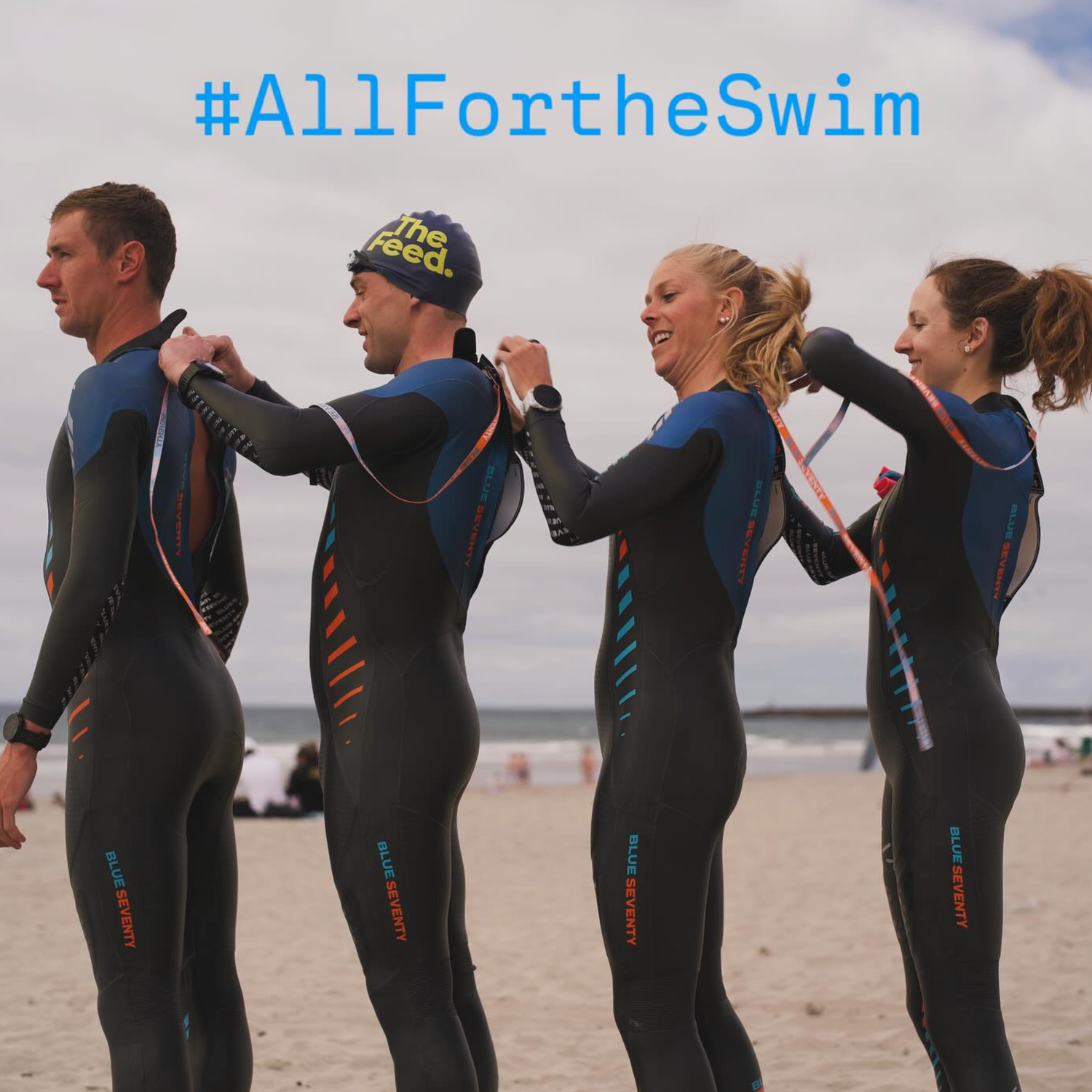
The rule hasn't changed: a wetsuit should feel snug, almost restrictive, standing on dry land. Once you're in the water, the neoprene hydrates and your body warms it, and that tightness eases into something workable. Shoppers chasing a sale price sometimes size up because it feels better standing still in a shop. That single choice lets water flush in at the neck, wrists, and ankles, adds drag through every stroke, and can slow you down more than any suit's marketing copy promises to speed you up.
A properly fitted mid-range suit beats a discounted flagship in the wrong size every single time, in comfort and in the water. Check the size chart against your actual measurements before you check the price.
Water Temperature Sets a Real Floor and Ceiling
Not every discounted suit fits every swim. Below roughly 56 to 58°F, a purpose-built thermal suit like the Thermal Reaction, fully lined with a synthetic wool jersey called Zirconium, adds warmth a standard suit simply doesn't have. Above roughly 70 to 72°F, a full suit over a long swim gets uncomfortably warm, and a sleeveless option becomes the more practical call.
A discount on a non-thermal suit won't help you much if your race season opens in a 54°F lake. Match the suit's thermal design to your actual water conditions first. Worry about price after.
Check the Safety Net Before You Buy
When a suit is marked down, confirm the return policy still applies. Clearance and outlet listings sometimes carry different, more limited terms than a full-price purchase.
Blue70's Test Swim policy lets you actually swim in a new wetsuit and still return or exchange it, provided it comes back within 30 days of the ship date, clean, dry, unmodified, with tags and accessories attached. That single policy removes most of the risk that pushes people toward familiar full-price suits over an unfamiliar discounted one.
Worth knowing too: the one-year manufacturing warranty covers material and construction defects, not fingernail punctures, heel tears, zipper damage from forcing a stuck zip, or heat and chlorine exposure. That's true no matter what you paid.
Four Questions Before You Buy Anything on Sale
- How many times will this suit actually get worn this season? A suit worn twice for races has different durability needs than one worn forty times in training.
- What's the coldest water I'll swim in this year? Under 58°F regularly, and a non-thermal suit isn't the right match at any price.
- Does the size match my actual measurements, pulled from the current size chart, not the size that felt comfortable standing still in a shop?
- Does this listing still include the full return window and Test Swim protection, or is it final sale?
A lower number on a wetsuit is only a good deal if the suit still matches how often you'll wear it, what water you'll swim in, and the body it's going onto. Blue70's range, from the entry-level Sprint through the Fusion and Reaction up to the flagship Helix, reflects real differences in neoprene grade and construction. None of it is priced to be discounted down to some "true" number later.
Buy for the swim you're actually going to do this season. Check the fit against the chart. Confirm the return policy before you commit. That beats chasing a percentage-off banner every time.
Happy swimming.