


Ask most swimmers why they'd bother with a neoprene hood in cold water and you'll hear the same line almost every time: "to stop losing heat through my head." It's not wrong, exactly. It's just not the whole story - and the gap between the two has led a lot of swimmers to pack the wrong gear, put it on in the wrong order, or skip the hood entirely on days when it would have made a real difference.
Let's get into what a hood is actually doing for you, because it's more interesting than a heat-loss stat, and more useful too.
Where the "50% of Your Heat" Claim Actually Comes From
You've probably heard some version of this: you lose half your body heat through an uncovered head. It's one of those facts that gets repeated so often nobody questions where it came from. The short answer: older cold-exposure studies where test subjects were fully insulated except for the head. In that setup, sure, most of the measurable heat loss happens through the one part left exposed - it's the only place it can escape. That doesn't mean your head is some uniquely leaky body part under normal conditions. Heat loss tracks pretty closely with exposed surface area and blood flow, and your head just isn't as large a share of your total surface area as that old number suggests.
So if that framing overstates things, why do experienced open-water swimmers and triathletes still treat a hood as essential kit once the water turns cold? Because the head and neck aren't really a heat-loss story. They're a comfort and control story - and that's a much bigger deal than it sounds.
The Real Vulnerability: Ears, Face, and Airway
Three things happen fast when cold water hits your head, and none of them are primarily about your core temperature.
- Cold shock. Sudden cooling of the face and airway - not your torso - is one of the strongest known triggers for that involuntary gasp reflex, plus a spike in heart rate and breathing rate in the first minute of immersion. This is exactly why coaches push for a slow, controlled entry instead of a dive-in start. A hood covering your ears, temples, and the back of your neck cuts down the exposed surface area driving that shock response, and it genuinely helps in those first disorienting 60 to 90 seconds.
- Ear and balance discomfort. Cold water flooding the ear canal doesn't just sting - it can mess with your vestibular system enough to cause a mild, hard-to-place dizziness. Swimmers describe it as trouble sighting cleanly, or just feeling slightly "off" in cold water for no obvious reason. A hood that fully covers the ears (paired with plugs if you're especially sensitive) deals with this head-on. Pound for pound, it might be the single biggest comfort payoff a hood offers.
- Breathing rhythm. Cold splashing directly on the jaw and face tends to shorten and tighten your breath. Swimmers often find their usual bilateral breathing pattern gets harder to hold onto once the water's cold - not because of fitness, but because the face is cold and distracting. Covering more of that area helps you keep the rhythm you actually trained.
None of this is about banking some large percentage of your body heat. It's about protecting the reflexes and senses that let you swim with real technique - instead of swimming tense, distracted, and defensive from the first stroke.
The Fit Detail Almost Nobody Talks About: Where the Hood Meets the Collar
Here's the part that gets skipped in most cold-water advice: a hood doesn't do its job in isolation. It works - or doesn't - right at the point where it meets your wetsuit's neckline.
Any gap between the bottom of the hood and the top of your wetsuit collar becomes a flushing point. Cold water cycles in and out of that gap with every stroke, quietly undoing the insulation you're paying for on both pieces of kit. And it's not a fixed seam - it's a joint that flexes every time you turn your head to breathe, which is often.
A few things worth building into your routine:
- Overlap, don't just meet. The hood should sit down over the top of the wetsuit collar, not simply line up against it. Even half an inch of overlap cuts down on flushing noticeably.
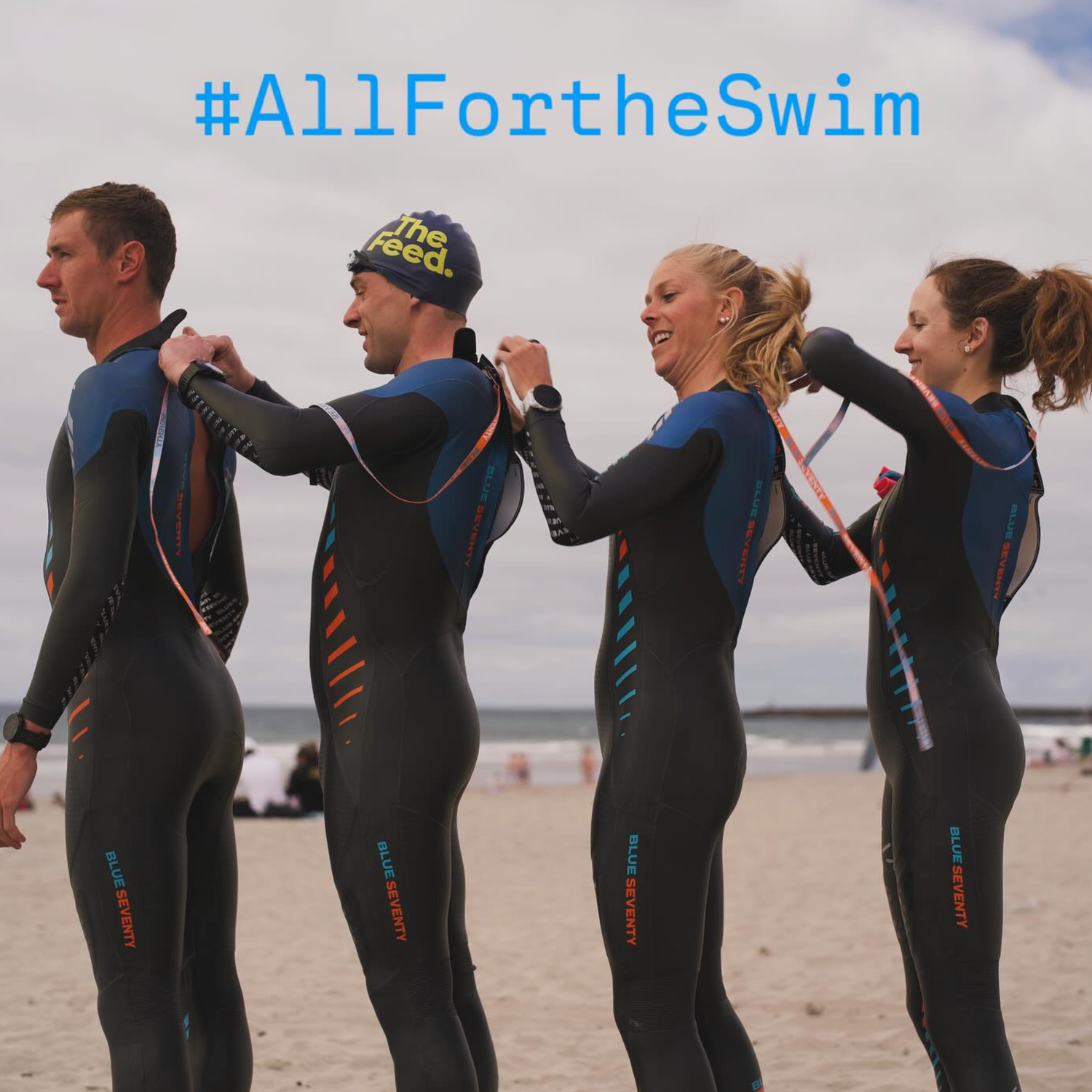
- Pay attention to how the two pieces sit together. Blue70 wetsuit necklines are shaped to stay comfortable while keeping a watertight seal at the collar - but that seal only holds up if your hood is positioned correctly against it. A hood riding high while the collar sits low leaves a cold gap right at the base of your skull, which is about the worst place for one.
- Test it dry before you test it wet. Pull the hood on, settle the wetsuit collar over it, and physically check for gaps before you're in the water. Thirty seconds on land beats a nasty surprise three hundred meters into a cold swim.
Putting It On in the Right Order Actually Matters
The sequence you use for hood, goggles, and cap changes how well each one performs - and almost nobody explains this clearly.
Here's an order that works well for a lot of swimmers:
- Hood first. Get it positioned so the ears are covered evenly and the front edge sits just above your eyebrows without dropping into your eye line.
- Goggles next, strap over the hood. Not underneath it. Running the strap under the hood lets the hood shift during the swim and loosens your goggle seal - a common, avoidable cause of mid-race leaking.
- A separate swim cap over everything, if you're wearing one, to lock the goggle strap in place and add a bit of extra coverage at the start.
You don't have to use this exact order, but whatever you land on, keep the goal in mind: your goggle strap needs something stable to anchor against, and the hood shouldn't be the piece you have to mess with mid-swim to fix a leak.
The Sound Thing Nobody Warns You About
One side effect of a snug hood that catches people off guard: it muffles sound. Other swimmers, safety boats, race announcements - all of it gets quieter, and reactions to this are genuinely mixed. Some swimmers find it calming. Others find it disorienting, especially paired with the narrower peripheral awareness a tight hood also brings.
Either way, don't find out how you feel about it on race morning. Wear the hood in at least one open-water training swim beforehand so the altered soundscape isn't one more new thing to process on a day that already has enough of those.
When a Hood Is Actually Worth Wearing
As a rough guide, a neoprene hood starts earning its place around the same water temperatures where a purpose-built thermal wetsuit is already doing real work - once conditions get cold enough that exposed skin genuinely matters. Once you're above that range, most swimmers find a hood traps more heat than they want for the effort they're putting in.
A hood isn't a substitute for proper cold-water acclimatization, and it doesn't make cold water risk-free. If you're new to swimming in colder conditions than you're used to, ease into it, swim with others, always know your exit point, and treat heavy shivering, confusion, or numbness as your cue to get out and warm up. A hood gives you added thermal protection - that's it, and that's enough.
Looking After It
Treat a neoprene hood the same way you treat the rest of your wetsuit kit. Rinse it in fresh water after every swim, whether it was salt, lake, or chlorine. Skip the direct sun and heat when drying it - both break neoprene down faster than you'd think. And flip it inside out now and then so both sides actually get to dry. Grit and salt buildup in the ear openings and seams is one of the most common, and most preventable, causes of a hood wearing out early.
The Bottom Line
A wetsuit hood earns its spot in your kit bag through what it does for your ears, jaw, and the collar of your wetsuit - not through some oversized heat-loss number. Get the overlap right at your wetsuit's neckline, put your gear on in an order that protects your goggle seal, and give yourself a training swim to adjust to how it changes what you hear and feel before you count on it when it matters.
If you're not sure how a hood should sit against your wetsuit's collar, our fitting guide walks through neckline fit step by step. And if you want to talk through your specific cold-water setup, our team's always glad to help - reach out at us@blueseventy.com.
Happy swimming, even when the water bites back a little.