


Your wetsuit spends most of its life in the sun. The swim itself is a small part of that. The hours it hangs over a transition rack, a car mirror, a fence, or a deck chair while you eat, stretch, and pack up do more to shorten a suit's life than chlorine or salt water. A UV spray cannot undo what direct sunlight has already started. The first step is to understand what that damage looks like and why it happens.
Sunlight Is a Wear Problem for Neoprene
Neoprene is a flexible foam built from chloroprene rubber. The stretch that lets you rotate through a catch also gives ultraviolet light an easy target. UV radiation breaks the polymer chains that give neoprene its rebound. When those chains snap, the material stiffens, fades, and eventually cracks. Heat speeds up the reaction. A black suit left on a hot car roof in July can feel stiffer by August. This process is known as photo-oxidation, and it continues every hour the suit sits in light.
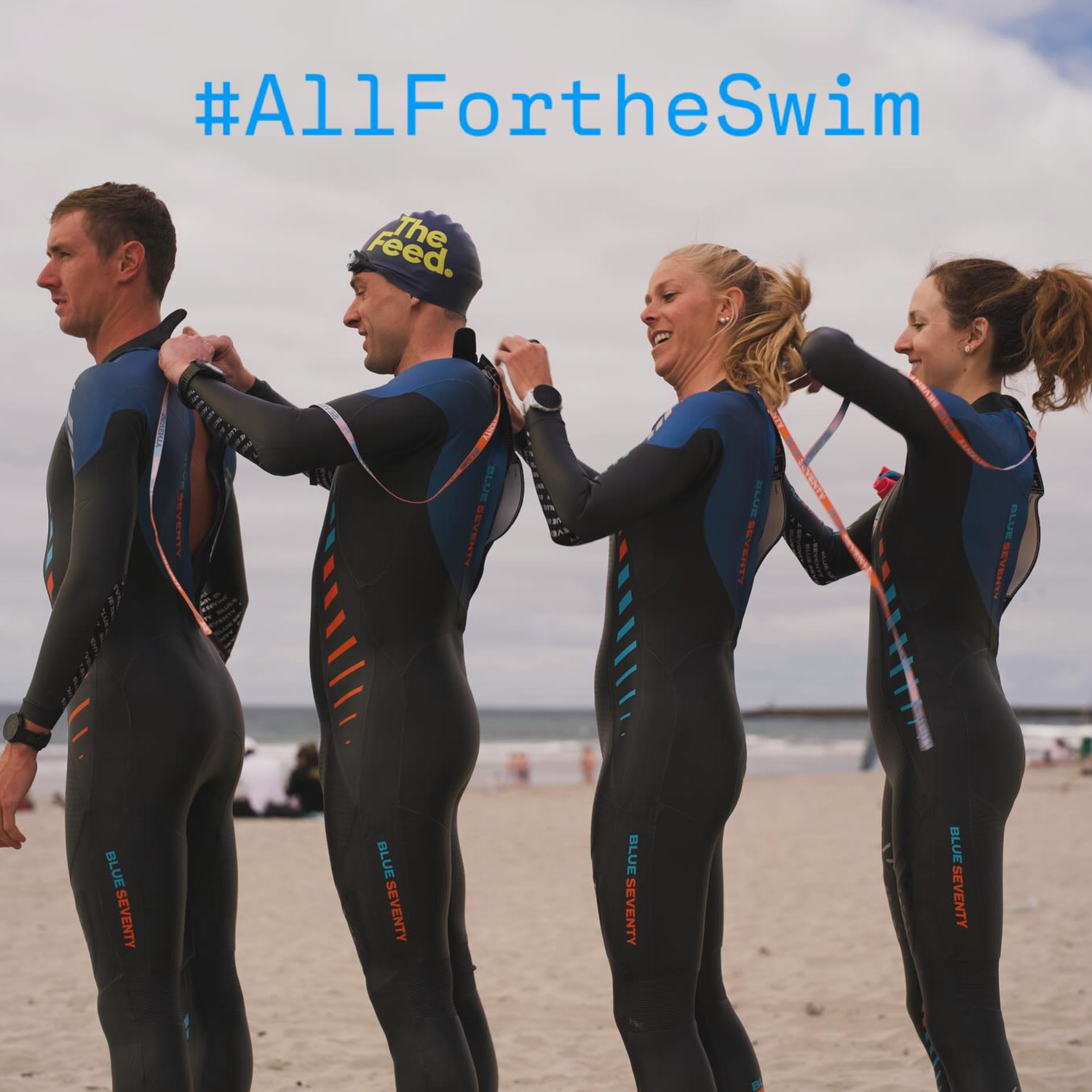
Blueseventy uses Yamamoto neoprene in 38, 39, and 40 cell grades. Higher cell counts mean more flexibility. Thinner, more flexible panels have less material to absorb UV before the stretch changes. A race suit left in the sun pays a higher price than a thicker training suit because there is less foam between the surface and the parts that flex.
The Transition-Area Habit
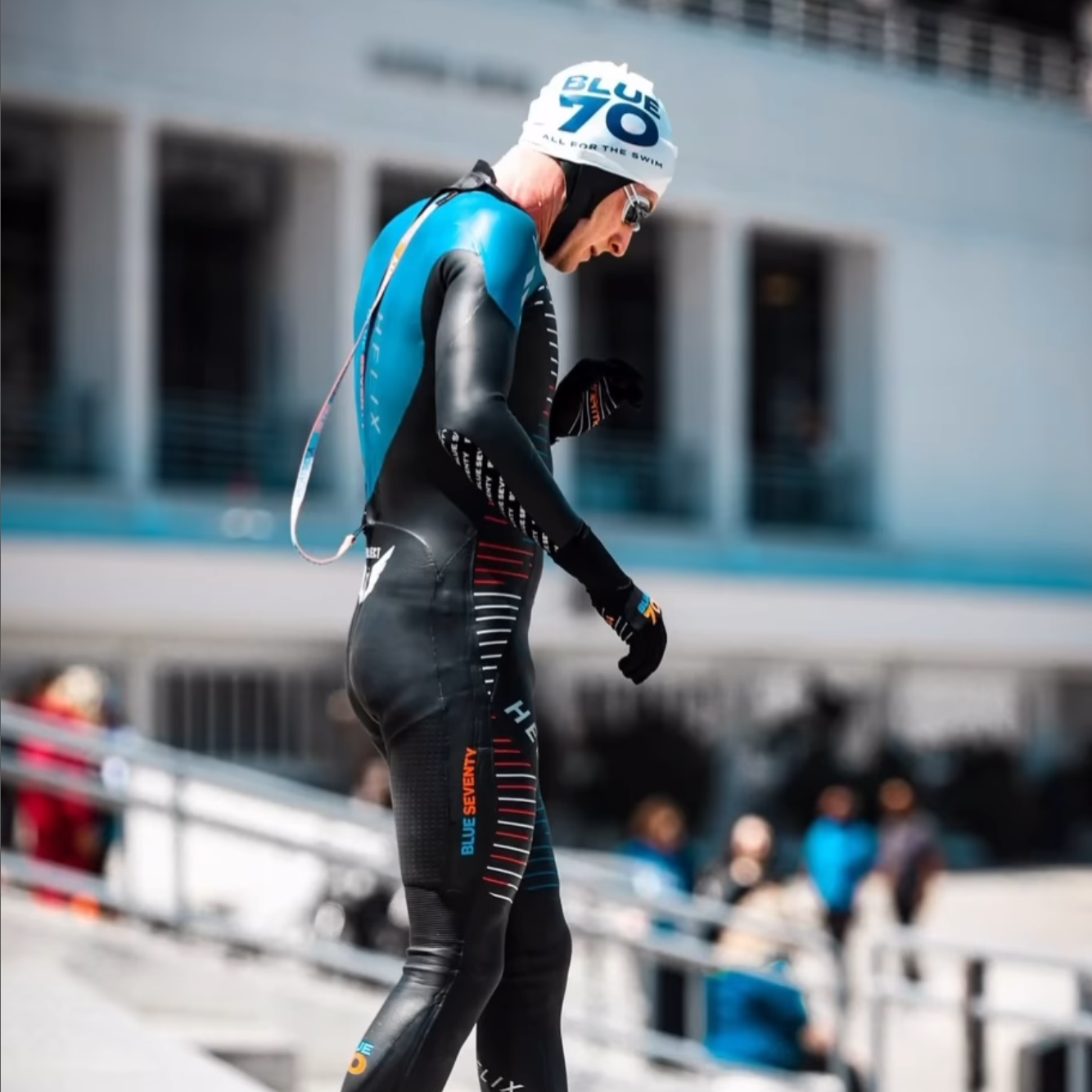
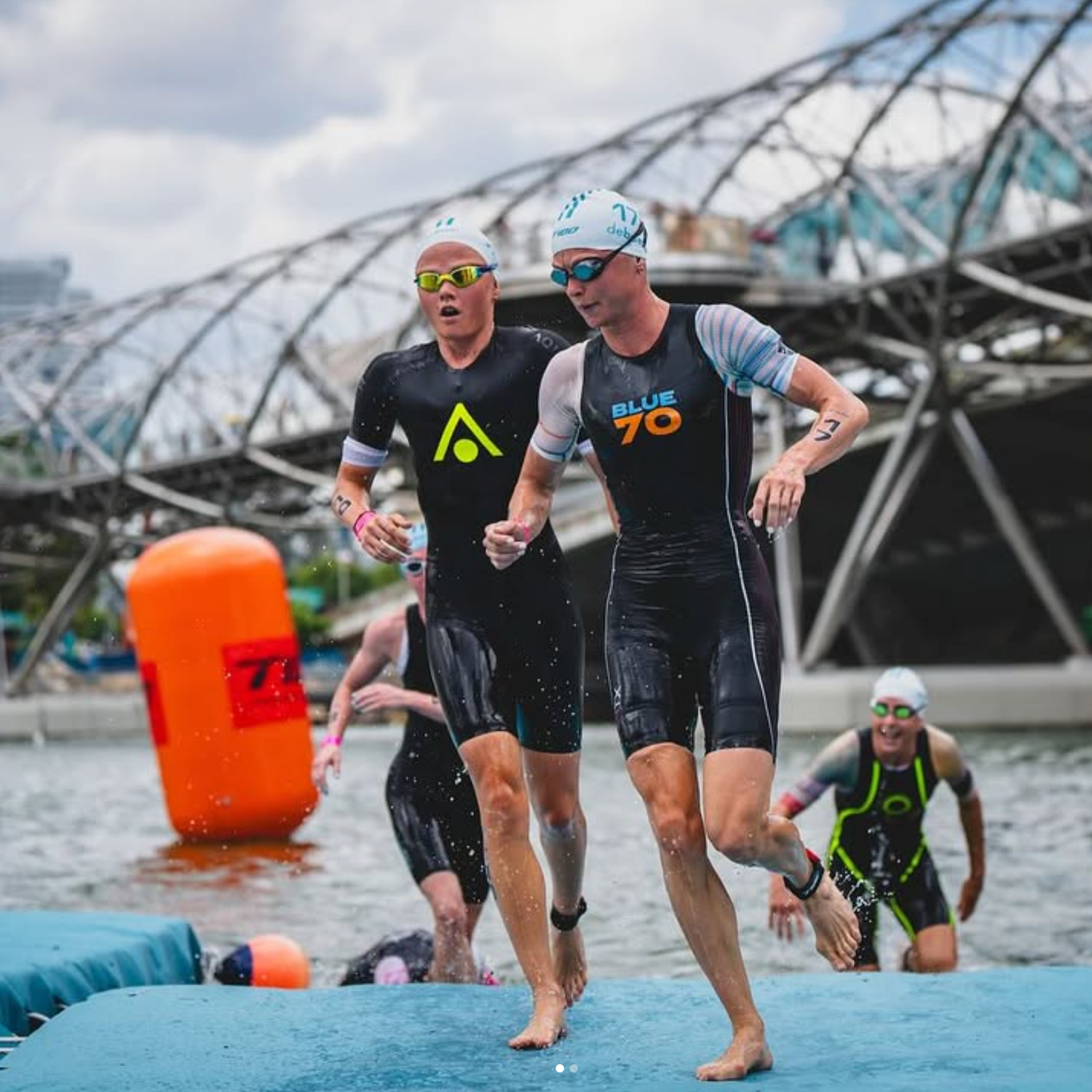
Triathlon wetsuits have been around since the early 1990s. Blueseventy's history page traces one of the first triathlon wetsuit designs to 1993. The post-swim routine has not changed much since. You pull the suit down to your waist, walk through transition, strip it off, and drop it near a bag or hang it over the rack. That suit then sits in direct sun while you start the bike. At a hot summer race, the transition area can stay bright for hours. The suit is no longer cooling in the water. It is baking on land. The real UV exposure happens after the swim, when the suit lies in transition and heats up.
Rinse, Shade, Store
A UV protectant spray can help after the basics are in place. The basics are low-tech and take less than five minutes.
- Rinse the suit inside and out with fresh water after every swim. This removes salt, chlorine, and sunscreen residue before they combine with UV at the surface.
- Dry the suit in the shade. If you dry it inside out first, the inner lining gets air. Direct sun on wet neoprene is the worst combination because water conducts heat into the foam.
- Store the suit flat or draped over a wide rail, away from windows and car trunks. Heat and light degrade neoprene even when you are not training.
- Keep the suit out of a closed car between sessions. A closed car turns into an oven on a sunny day.
These steps matter more than any product because they control the two drivers of UV damage: time and temperature. A suit that gets rinsed and dried in the shade after every session will outlast a sun-baked suit with a UV coating applied once a month, because exposure volume controls how fast the neoprene loses its flexibility.
Where a UV Spray Fits
A neoprene-safe UV protectant supplements your care routine. It does not repair damage. It can reduce surface fading and slow some oxidation on colored panels. It does not restore lost flexibility and it does not fill cracks. If the suit still bakes in transition after every race, a spray only adds a thin layer over material that is still being heated and oxidized underneath. Fix the storage and drying habit first. Then a UV spray becomes a reasonable extra step for swimmers who train at altitude, live in high-UV climates, or race long-course events where the suit sits in transition for extended periods.
Before You Spray
Not every UV protectant is safe for a swim wetsuit. Products made for rubber, vinyl, or automotive trim often contain solvents that attack neoprene adhesives or change the way the outer surface beads water. Wetsuits are designed to let a thin layer of water in, where your body warms it. A heavy waterproofing product can interfere with that design. Before using any spray on a wetsuit, check the label for four things, because a product intended for a dashboard or boat seat will not behave the same way on the flexible foam of a swim wetsuit.
- It states neoprene-safe or wetsuit-safe.
- It is a wetsuit care product, not a tire, dashboard, or boat-vinyl protectant.
- You are willing to test it on a wrist cuff or ankle cuff first and check for stiffness or tackiness after 24 hours.
- It does not claim to make the suit waterproof.
For tears, blueseventy sells Aquaseal neoprene cement. That product repairs cuts and punctures. It does not protect against UV.
Recognizing Sun Damage Early
Early UV damage shows up as a chalky or dull surface, stiffness at the shoulders or underarms, and small cracks at high-flex points. Cracks at the neck or shoulder grow. Those cracks are structural. They widen under load. If the suit has lost its rebound, no spray brings it back. At that point, the practical choices are to reserve the suit for warm-water sessions if the cracks are minor, or replace it if the cracks go through the outer layer. Blueseventy's warranty covers manufacturing and material defects for one year, but it does not cover UV or heat damage. That line reflects how predictably neoprene fails under extended sun exposure.
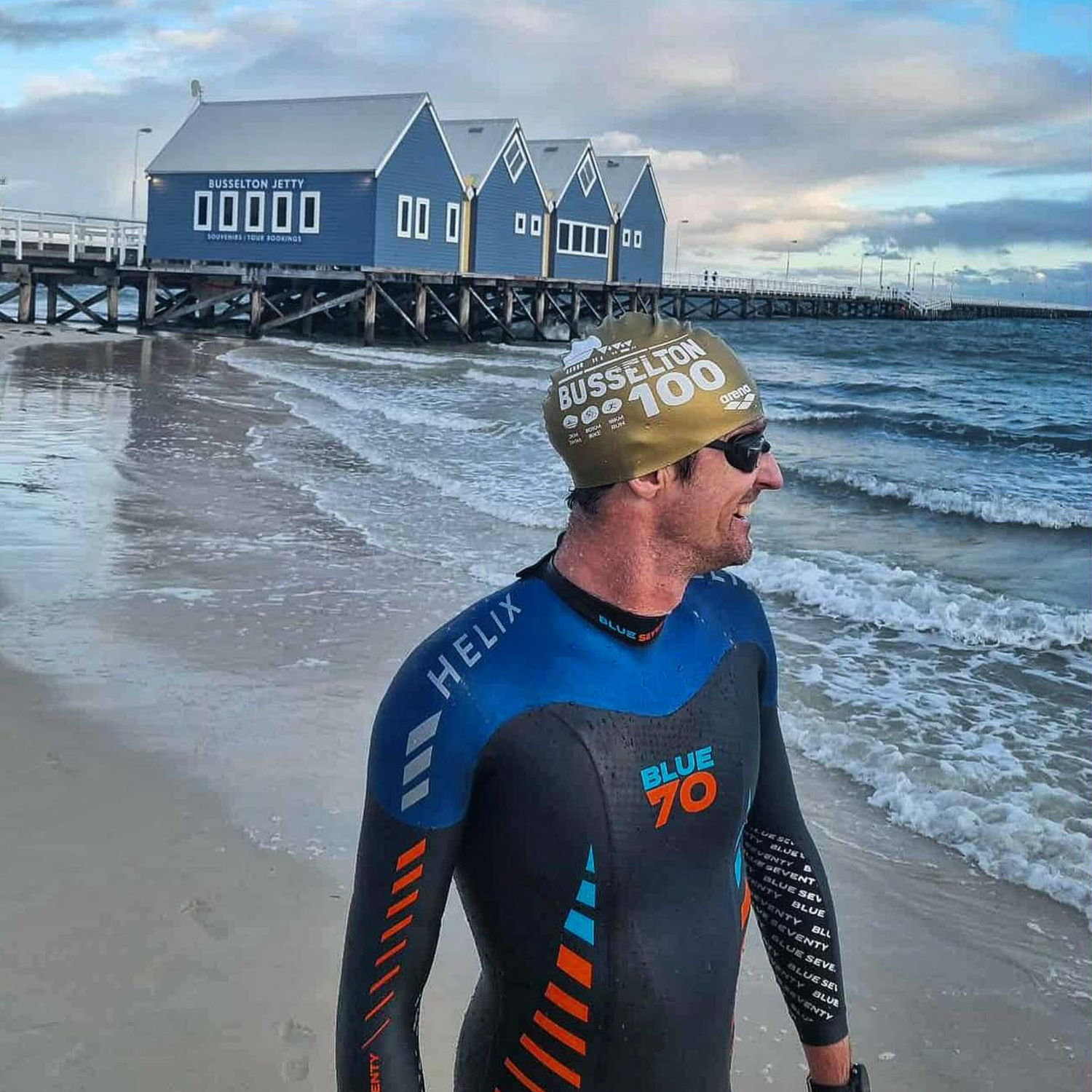
If you replace the suit, match the next one to your training frequency. A swimmer who trains frequently in open water will get more life from a Reaction or Fusion than from a delicate race suit. The Helix uses thin, flexible neoprene in the arms and shoulders. Blueseventy notes that this construction is not ideal for heavy training use because the thin material breaks down more quickly with repeated sessions.
Shade Is the Strongest UV Protection for a Wetsuit
Shade, fresh water, and smart storage do more for a wetsuit's lifespan than any spray. A suit that never dries in direct sun after a swim will outlast a sprayed suit that bakes every weekend. Control the hours your suit spends hot and wet, and you control the UV damage before it starts. Happy swimming.