


Cold-water gear usually gets sold on a single word: warmth. Warmer neoprene, warmer linings, warmer promises stacked on the label. But the physiology of a cold-water entry has less to do with warmth in the abstract and more to do with what happens to your nervous system in the first 60 to 90 seconds after skin meets cold water. A neoprene hooded vest sits right at that junction. It covers the head, neck, and trunk, and leaves the arms free. That combination isn't random, and once you understand the reasoning behind it, you'll know a lot more about cold-water swimming than any warmth claim on a hangtag could teach you.
Why Water Steals Heat Faster Than Air
Start with the physics. Water conducts heat away from the body roughly 25 times faster than air at the same temperature. That's why 60°F water feels like a slap while 60°F air just feels brisk. Skin doesn't lose heat gradually in cold water. It loses heat fast, and the rate depends on two things: how much skin sits in contact with the water, and how well that skin is insulated.
This single fact explains why coverage area matters more than swimmers usually assume. A hood and vest combination targets the scalp, ears, neck, and torso, the regions where skin sits closest to major blood vessels and vital organs, while leaving the arms bare so your stroke doesn't pay the price.
Two Distinct Cold-Water Reflexes
Swimmers tend to talk about "cold shock" as one event. Physiologically, it's two separate reflexes, and a hood interacts with them in very different ways.
The first is the cold shock response itself. Sudden cooling across the skin, especially the trunk, triggers an involuntary gasp followed by a spike in breathing rate. This is the mechanism behind the standard warning against diving headfirst into cold water without easing in first. Mike Tipton, a cold-water physiologist at the University of Portsmouth whose research underpins much of the UK's open-water safety guidance, has spent years documenting how this reflex peaks within seconds of immersion, right when a swimmer most needs steady, controlled breathing.
The second is the mammalian diving response. Cold water hitting the face, particularly the nose and forehead, activates the trigeminal nerve and slows the heart rate. It's a separate mechanism from cold shock, and no garment can blunt it, because the face has to stay exposed for breathing and sighting.
Here's the practical piece. A hood cuts down the skin surface driving the trunk-and-scalp side of the cold shock response by insulating the neck and head. It does nothing for the diving response, since that reflex fires through the face. A hood won't erase the jolt of a cold entry. What it does is shrink the total surface area sending alarm signals to your brainstem during that first rough minute, which is a narrower claim than "keeps the cold out," but a more honest one.
The Core-Shell Model and Why Arms Stay Bare
The body manages cold exposure through what physiologists call a core-shell model. Blood flow redirects away from the skin and limbs toward the trunk, protecting organs that can't tolerate temperature swings: heart, lungs, liver, kidneys. The arms and legs, meanwhile, generate their own heat through muscular work. A swimmer's arms, mid-stroke, are producing real metabolic heat on their own.
That's the logic behind a vest cut instead of a full-sleeve design. Insulating the trunk protects the organs the body is already prioritizing. Leaving the arms uncovered, or lightly covered, preserves shoulder mobility for the stroke while accepting that the arms can partly heat themselves through the work they're already doing. It's a decision built around where the body needs help, not a compromise made for flexibility's sake.
When a Hooded Vest Earns a Spot in Your Kit
This isn't gear for every swim. It earns its place in a handful of specific situations:
- Shoulder-season acclimatization swims, when water sits in the high 50s to low 60s and you're building tolerance gradually rather than racing, benefit from added head and neck coverage without the bulk of a full thermal suit.
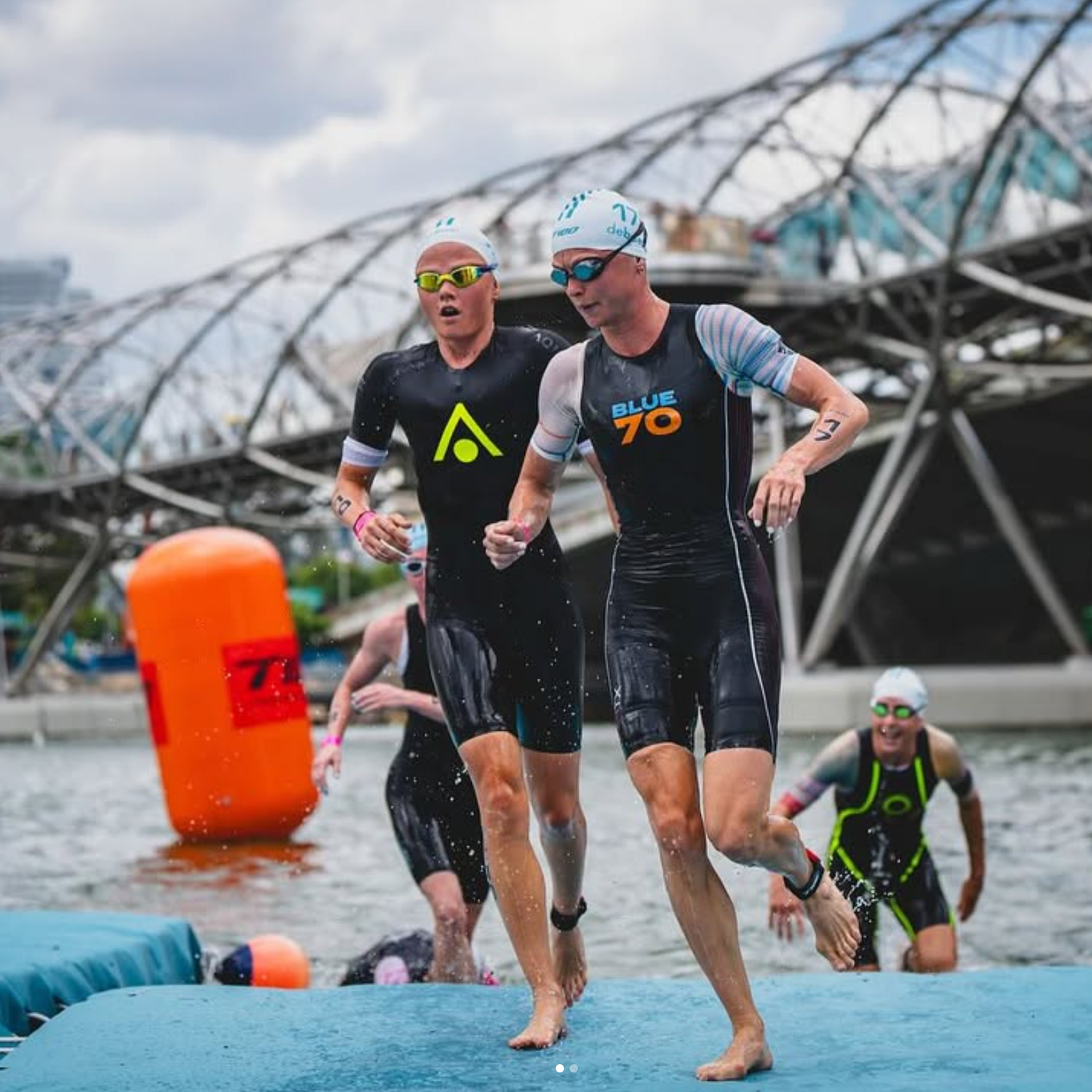
- Race-morning warmups at cold-water venues, where standing in a lake at dawn waiting for a wave start drains core heat before the gun even fires. A hooded vest worn over your wetsuit, then stripped off right before the start, helps hold onto that heat during the wait.
- Sessions that mix pool and open water through cooler months, where you want head and neck protection without changing your whole wetsuit setup.
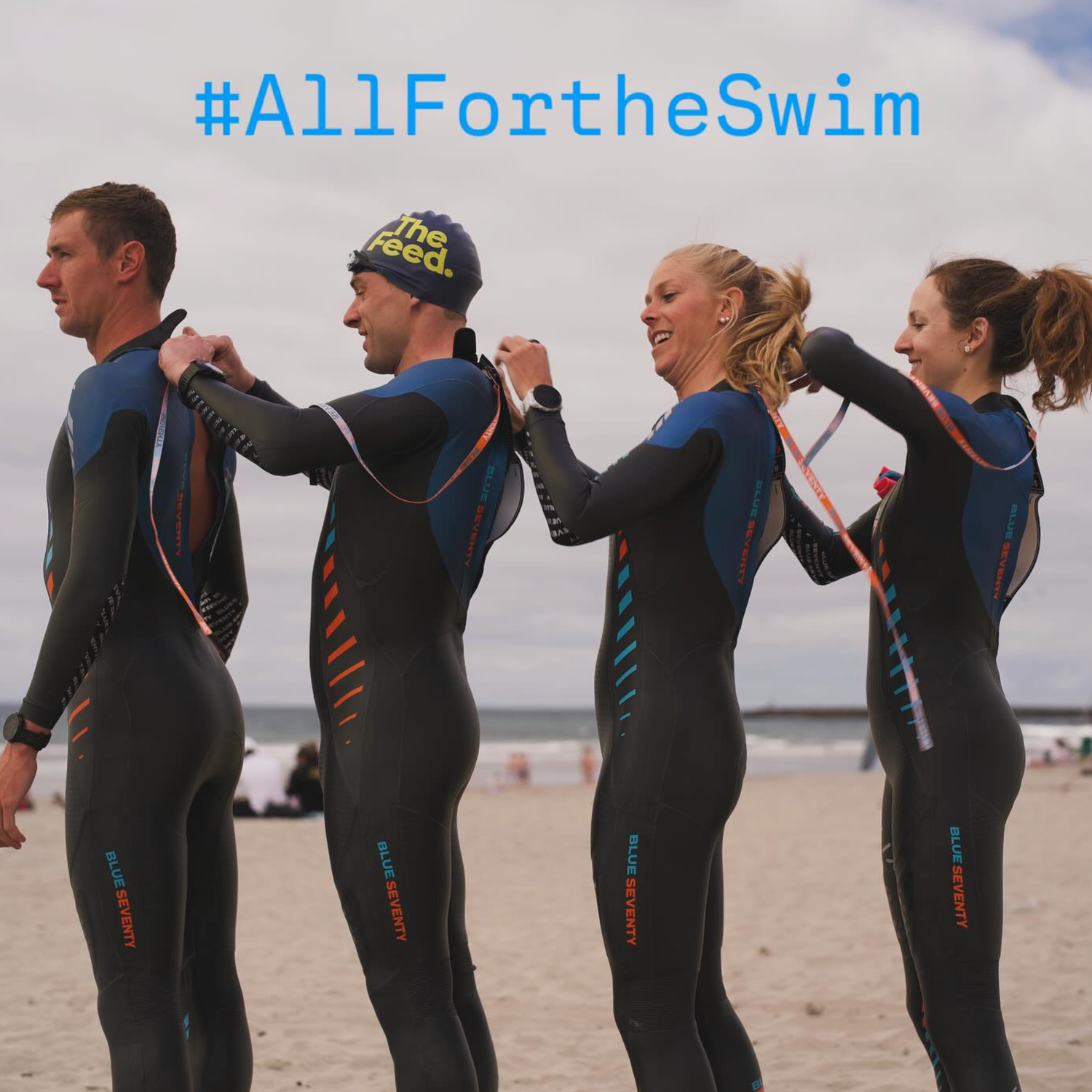
It isn't a substitute for a full thermal wetsuit once conditions turn genuinely cold. Blue70's Thermal Reaction, built with a Zirconium jersey lining through the body, is designed for that job and provides added thermal protection where a full suit is the right call. Treat a hooded vest as a layering piece, not a replacement, and the decision gets a lot simpler.
Fit Details Worth Checking Before Race Day
Three fit points separate a vest you'll actually reach for from one that ends up at the bottom of your gear bag.
- Neck seal. This matters more than anything else on the garment. Too loose, and cold water flushes in and out with every stroke, defeating the whole point. Too tight, and it restricts head rotation for breathing, which is worse than skipping the vest if you're still building a comfortable bilateral rhythm.
- Ear coverage. A real trade-off, not a pure upgrade. Full coverage adds warmth but muffles sound, which matters if you're tracking a kayak escort or other swimmers by ear during a group session. Some swimmers prefer a hood that covers the crown and neck while leaving the ears more open, specifically to hold onto that awareness.
- Jaw mobility. Check this on land, under the chin strap and around the neck seam, before testing it in open water. A seam that feels fine standing still can bind once your head starts turning through a race-pace breathing pattern.
Keeping Neoprene Accessories in Good Shape
Hoods and vests take more abuse than the main wetsuit body. They get folded, stretched over the head repeatedly, and often packed away damp in a smaller compartment where they can't fully dry. A few habits extend their life considerably:
- Rinse in fresh water after every ocean or chlorinated swim.
- Dry inside-out, away from direct sun and away from a hot car trunk, since both UV exposure and heat break down neoprene's cell structure over time.
- Grip the body of the fabric when pulling a hood on or off, not the seams. The stitching around the neck and face openings is usually the first place these garments fail.
What This Garment Won't Do
Worth stating plainly. A hooded vest provides added thermal protection for the head, neck, and trunk. It doesn't prevent hypothermia, it isn't a substitute for gradual cold-water acclimatization, and it won't eliminate the physiological stress of a cold entry, particularly the facial diving response, since no current garment addresses that mechanism. If you're extending your season into colder water, build exposure gradually, swim with a buddy or safety cover, and know the warning signs of afterdrop and cold impairment before you lean on any single piece of gear to manage that risk.
Putting together a cold-water kit and not sure how a hooded vest fits alongside a full thermal wetsuit for your water temperatures and swim duration? Blue70's fitting guide walks through the layering logic in more detail. Worth a look before the water temperature drops out from under your current setup.