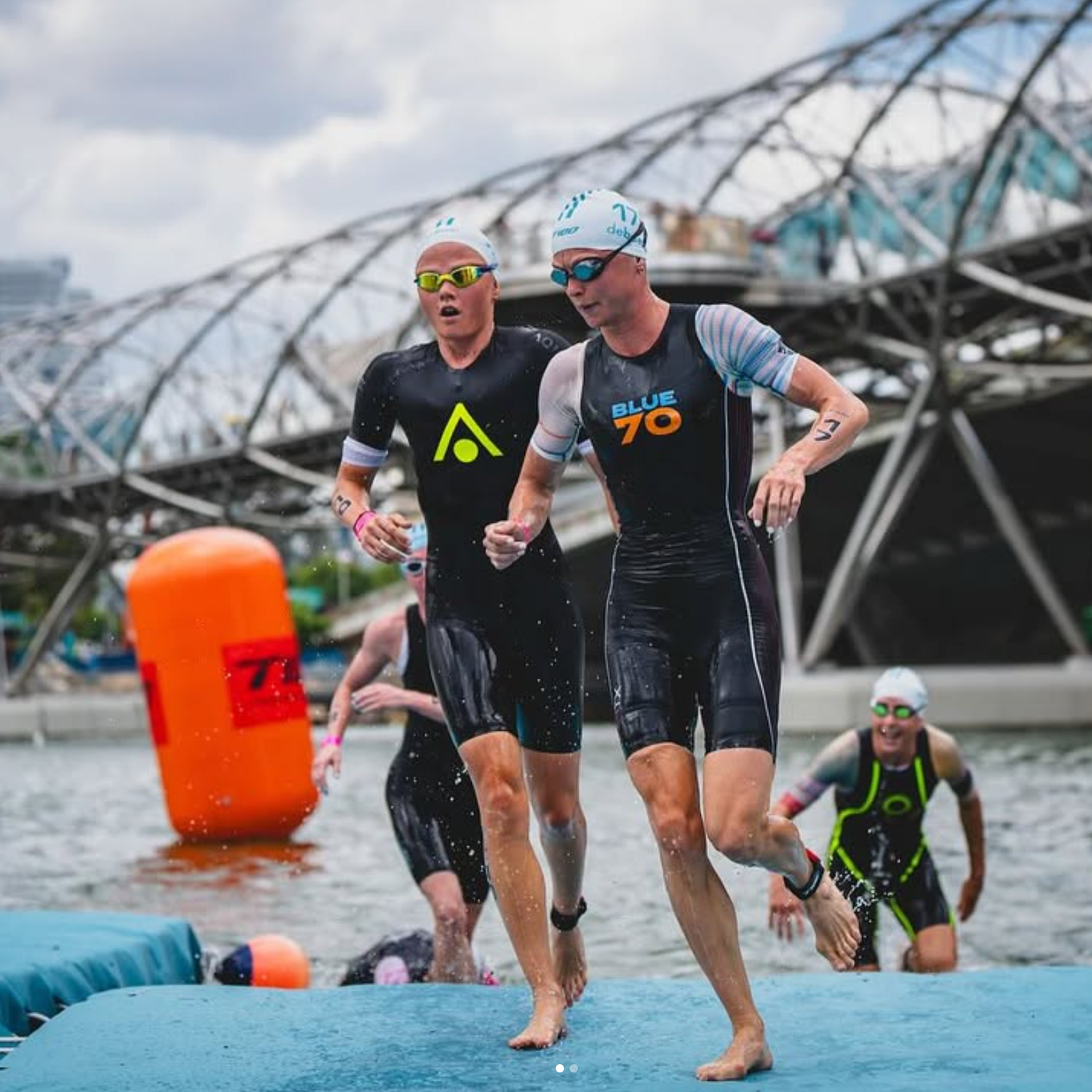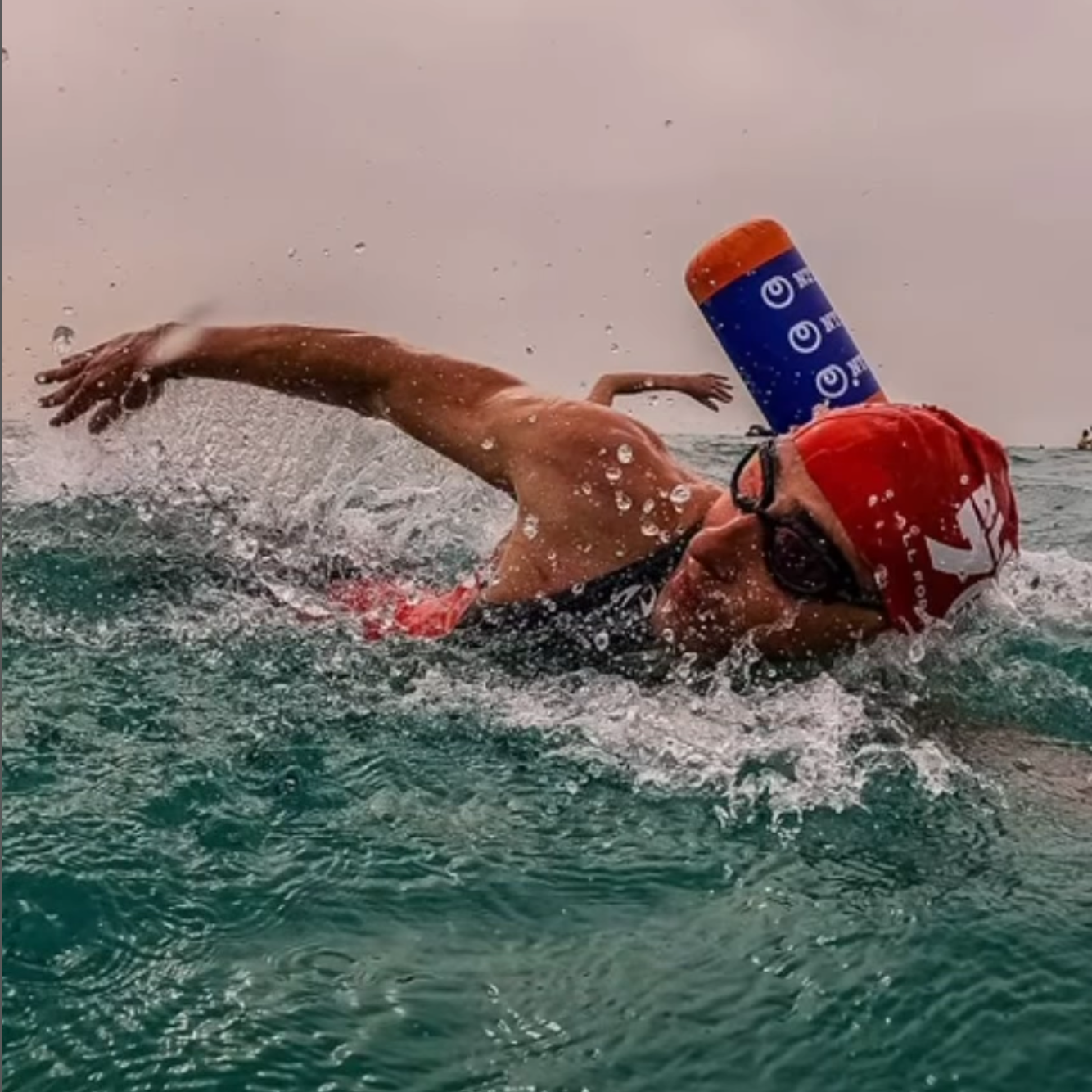



Walk into any wetsuit conversation and someone will eventually ask, "how thick is it?" The answer comes back as a single number. 3mm. Maybe 4mm. That figure ends up on the box, the product page, and half the buying guides on the internet. It's a real spec, but it's also an incomplete one. A swim-specific wetsuit is rarely one thickness from collar to ankle. It's built from panels, and each panel has a job. Some are there for lift. Others are there to get out of the way so your shoulder can rotate through a full stroke without a fight.
The number on the label usually describes an average, or sometimes just the biggest panel in the suit. It doesn't describe what's happening at your shoulder, your underarm, or the back of your knee. Understanding that gap changes how you shop, how you judge fit, and how you take care of the suit once it's yours.
What "3mm" Is Actually Measuring
Neoprene is chloroprene rubber, foamed with tiny gas cells. Those cells trap air, and that's what gives the material both insulation and buoyancy. More material between you and the water generally means more warmth and more lift. It also means more resistance every time you try to bend it.
When a wetsuit gets marketed as "3mm," that number almost always refers to the torso or back panel, the largest single piece of neoprene in the suit and the one doing the most work for flotation. The shoulders and underarms are cut thinner in the same suit, sometimes by more than half, because stiffness in that zone turns directly into fatigue by the time you hit the second buoy. Legs and hips often sit close to torso thickness, since extra lift there helps flatten your whole body in the water.
So when you see "3mm" on a spec sheet, treat it as a reference point on one panel. Not a claim about the entire garment.
Why Manufacturers Vary Thickness Panel by Panel
This zonal build didn't happen overnight. Early triathlon wetsuits borrowed heavily from surf construction: thicker, more uniform neoprene meant to survive impact with a board or a reef, not to support a high-turnover freestyle stroke. As the category grew into something genuinely built for swimming, thickness started coming out of the shoulders and moving toward the places where flotation actually helps.
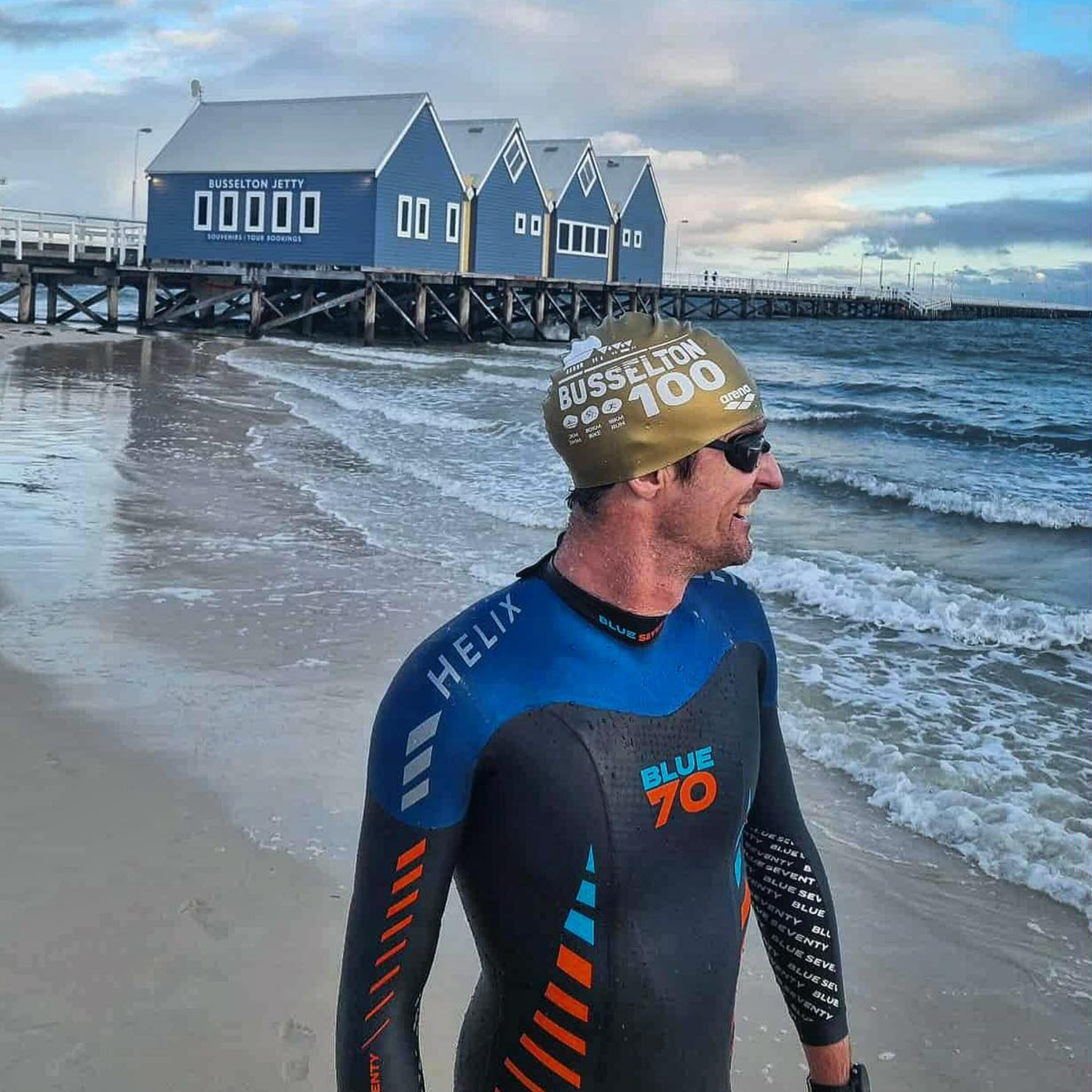
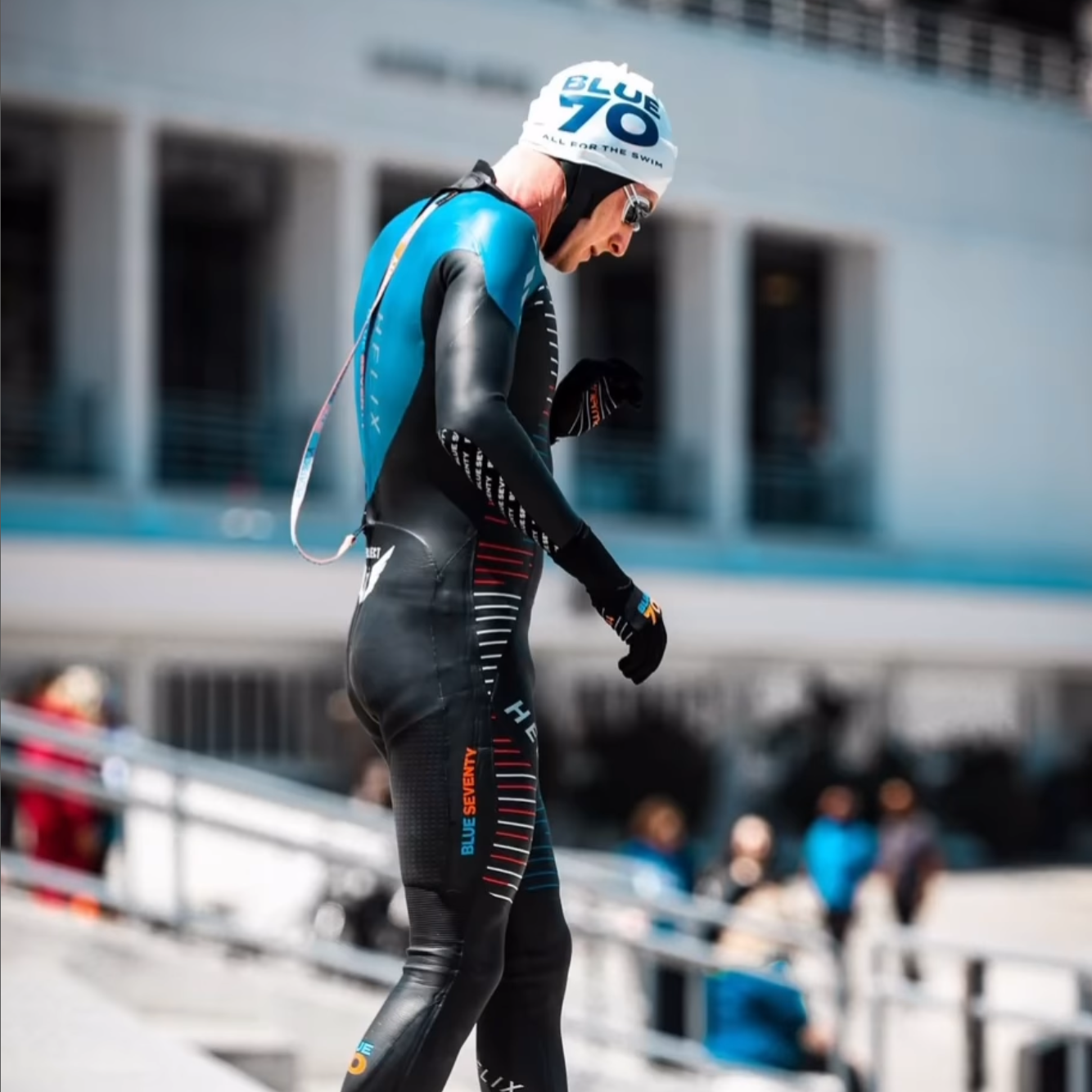
Blue70's Helix is a good example of that thinking in practice. It uses very thin, highly flexible neoprene through the arms and shoulders, paired with a permeable catch panel on the forearm, first introduced in 2010, meant to preserve feel for the water instead of insulating it away. LIFT buoyancy panels, added to the Helix in 2018, concentrate lift through the hips and legs instead of spreading it evenly across the whole suit.
- Torso and back panels: built primarily for buoyancy
- Shoulder and arm panels: built primarily for flexibility and stroke feel
- Hip and leg panels: built to lift the lower body into a flatter position
Two very different jobs. Two very different thicknesses. One wetsuit.
The Variable the Millimeter Number Hides
Thickness tells you how much neoprene is there. It doesn't tell you how that neoprene moves, and that comes down to cell structure.
Blue70 wetsuits use Yamamoto neoprene, available in different cell grades, most commonly referenced as 38, 39, and 40 cell. The higher the cell number, the more flexible the material at a given thickness. A 3mm panel cut from 40-cell neoprene will move with your shoulder far more freely than a 3mm panel cut from 38-cell neoprene, even though both list at the exact same thickness on paper. Two suits can share an identical mm rating and swim like completely different garments. If you're comparing wetsuits by thickness alone, you're missing the variable that decides how the suit actually feels mid-stroke.
Thickness, Buoyancy, and Body Position
Here's the physiology behind why any of this matters. A 1989 study in Medicine and Science in Sports and Exercise, led by researcher H.M. Toussaint, measured drag on swimmers wearing a triathlon wetsuit and found that most of the drag reduction came from improved horizontal body position, not from any change in surface friction against the water. Extra buoyancy through the hips and legs lifts the lower body, flattening the swimmer's line and cutting the drag created by trailing legs.
That's the mechanism behind Blue70's own shorthand: buoyancy equals speed. It's also why panel placement matters more than total thickness. A suit that's uniformly thick doesn't necessarily lift your hips more than one that's thick only where lift counts and thin everywhere else. It just weighs more and moves less.
Beginners tend to notice this effect most. A swimmer with a weaker natural body position starts from a lower baseline, so the same buoyancy gain produces a bigger relative improvement than it does for a swimmer who's already close to flat in the water.
The Durability Trade-off Worth Knowing Before You Buy
Thin, flexible neoprene comes with a cost. Blue70 is upfront about it: the Helix's thin shoulder and arm panels are built for race-day performance, not for the daily friction and repeated flexing of a training block. Swimmers logging multiple sessions a week are steered toward the Reaction or Fusion instead, both built with heavier-grade neoprene through the high-wear zones so they can handle frequent, longer use.
A 3mm panel cut from a durable-grade neoprene, swum twice a week for months, will outlast a thinner, higher-flex panel designed for one fast race. Neither suit is better. They're built for different training loads, and picking the wrong one for your weekly volume is the quickest way to shorten a wetsuit's life.
What to Feel For Once You're in the Water
Fit only makes sense once you understand the panel map underneath it. A wetsuit should feel snug, almost restrictive, on dry land. Once you're actually swimming, buoyancy and the way the neoprene settles against your skin should make that same suit feel noticeably easier to move in. If a suit still feels tight or binding through the shoulders once you're in the water, the fit is off. Not just the thickness.
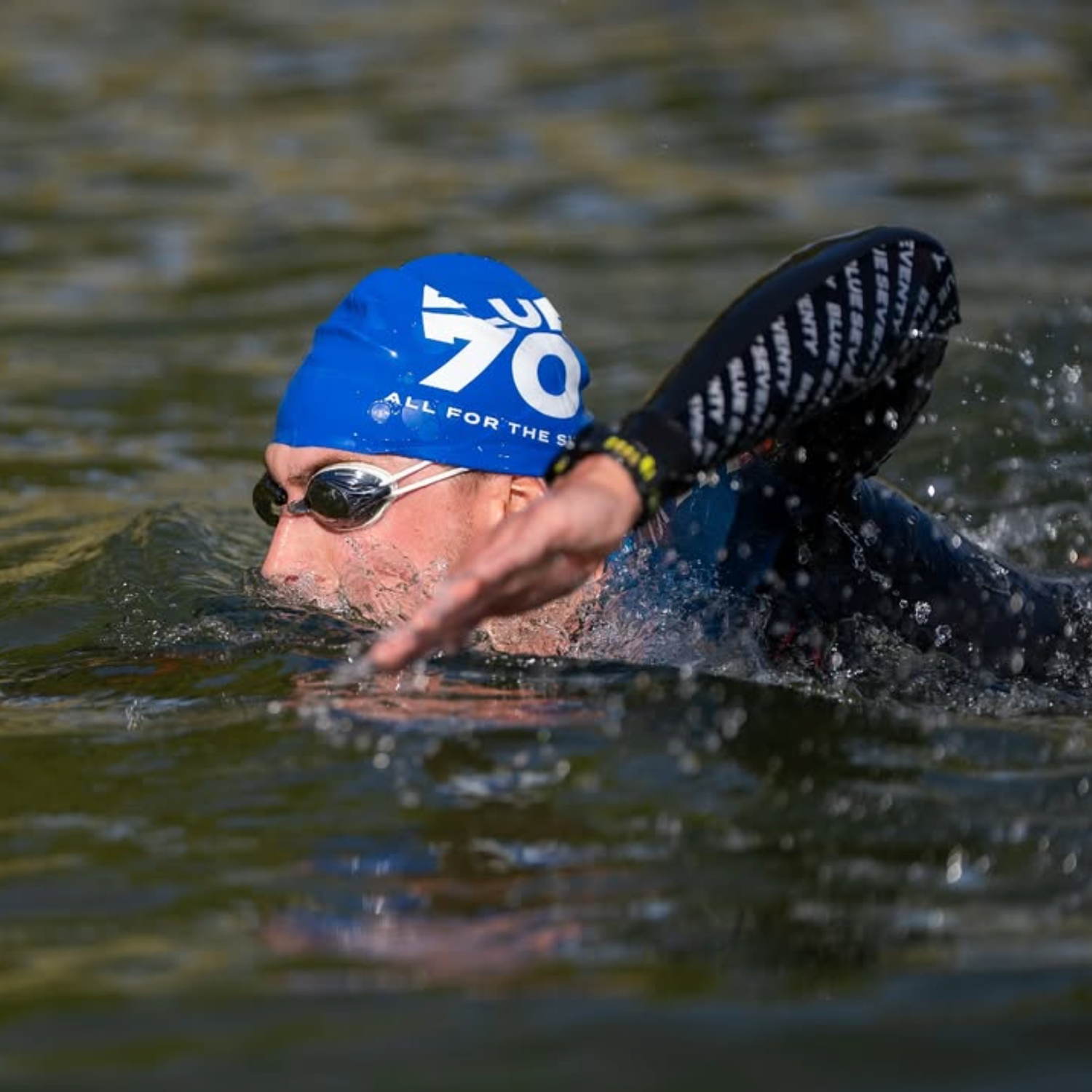
Pay attention to your catch, the moment your hand reaches forward and starts pressing back. A properly built shoulder panel should offer almost no resistance there. If it does, that's a sign the neoprene is either too thick for what you're using it for, or too low a cell grade to flex the way it needs to, no matter what the label claims.
Water Temperature Still Sets the Boundaries
Panel thickness and cell grade matter, but they don't override water temperature. Below roughly 56 to 58°F, a purpose-built thermal suit with lined interior neoprene, like the Thermal Reaction, adds warmth that a standard suit's thickness alone won't match. Above about 70 to 72°F, even a well-built 3mm suit can run too warm over a long swim, and a sleeveless design or swimskin becomes the more comfortable option.
Race-day thickness limits are their own separate question, and one worth confirming directly with your event's sanctioning body rather than assuming a fixed cutoff. USAT, Ironman, and World Aquatics rules can differ from each other, and they change from season to season.
Protecting the Thin Panels Once You Own the Suit
Thin, high-flex neoprene needs more care than thicker panels, not less.
- Rinse with fresh water after every ocean or lake swim, and after chlorine exposure too
- Dry the suit inside out first, then right-side out, away from direct sun and heat
- Avoid folding or storing it near heaters, radiators, or hot car interiors
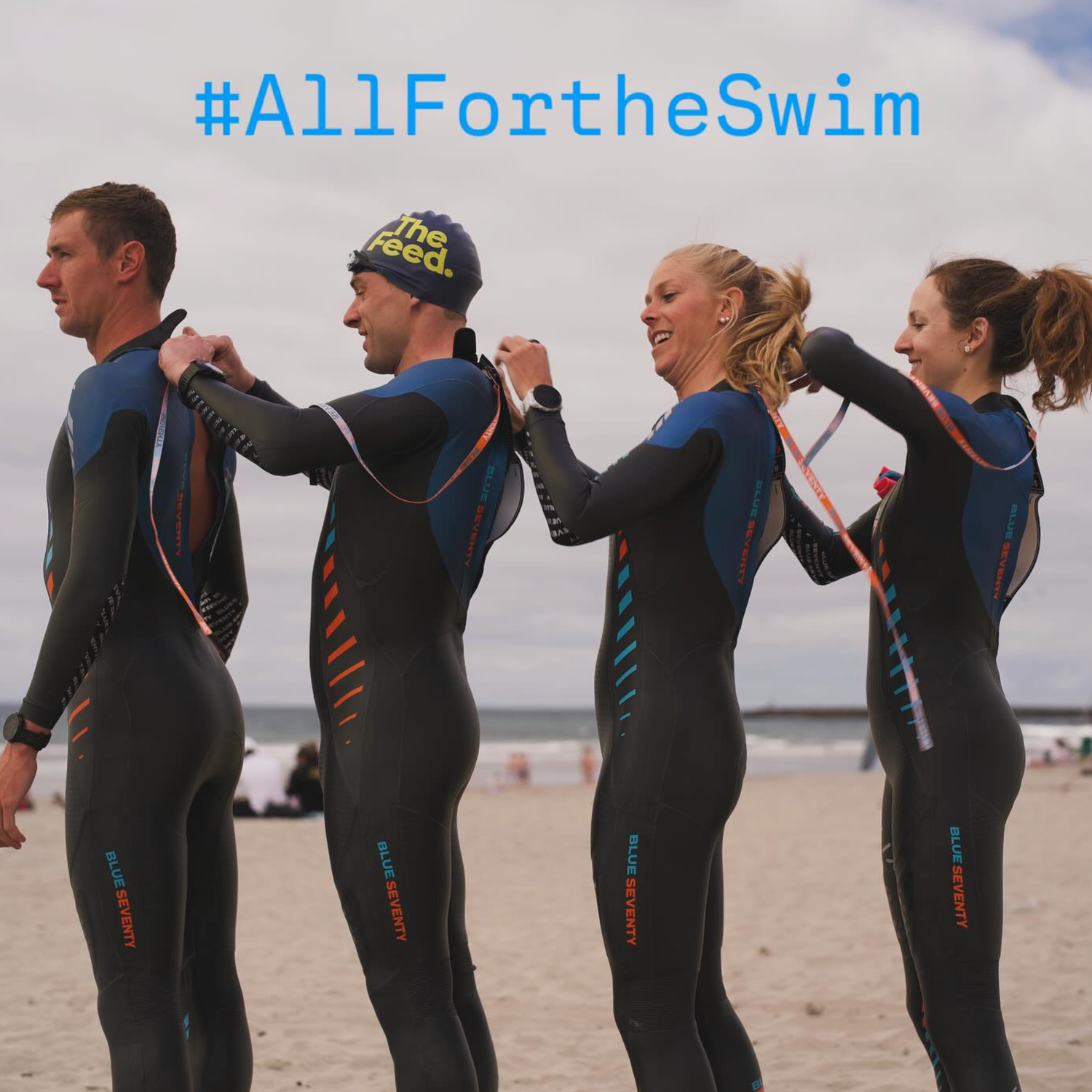
Heat and chlorine damage fall outside manufacturer warranty coverage, so this isn't optional upkeep. Fingernail punctures and heel tears cause most of the damage that happens to a brand-new wetsuit, and both usually happen in the same ten seconds: pulling the suit on or off. Use plastic bags over your hands and feet, or thin gloves, for the first several swims until you've learned exactly how much give the neoprene has.
Choosing by Panel Map, Not Just the Number on the Box
When you're comparing wetsuits, ask what the thickness is doing in each zone, not just what the headline spec claims. A competitive swimmer chasing every second out of a short-course race benefits from a suit like the Helix or Reaction, where shoulder flexibility takes priority even at some cost to long-term durability. A swimmer training year-round in open water is better served by a suit built for repeated wear, like the Reaction or Fusion, where neoprene grade through the high-friction zones matters more than shaving flex out of the shoulder.
If you're not sure how a suit's construction will actually feel once you're moving through water instead of standing in a fitting room, that's exactly what Take a Test Swim is for. Blue70 lets you swim in a wetsuit and still return or exchange it, as long as it comes back clean, dry, and with tags attached. That way you can judge the fit and flex where it actually counts: mid-stroke, not on dry land.