


Most wetsuit fit advice starts at the shoulders. That makes sense on the surface. Swimmers care about freedom through the catch, and triathletes notice shoulder fatigue fast. But athletes with muscular calves often run into the real fit problem much earlier. The lower leg decides whether the rest of the suit can settle into place the way it was designed to.
That changes how you should evaluate fit. A swim-specific wetsuit is not a loose outer layer. It is a tensioned piece of equipment. If the suit gets stuck at the calf or never comes fully into position through the knee and thigh, the torso sits low, the shoulders feel tighter than they should, and the whole suit can feel wrong even when the size chart looked right.
For athletes with strong calves from running, cycling, kicking, or years of open-water swimming, that is a common pattern. The mistake is assuming the problem begins and ends in the lower leg. In practice, calf fit affects entry, comfort, body position, and how fast you can get the suit off in transition.
Why muscular calves change the fitting process
Calf fit is not only about size. It is about shape. Many athletes have a lower leg that narrows quickly at the ankle and then rises sharply to the widest point of the calf. A wetsuit leg has to pass over that shape during donning, sit smoothly against it in the water, and still peel off without a fight after the swim.
That creates a real fitting challenge. The lower leg should feel snug. Loose neoprene through the calf is not a good result. But there is a difference between a close, performance-oriented fit and a lower-leg section that pulls the whole suit downward because it never got fully seated.
This is why two athletes with the same height and weight can have completely different experiences in the same wetsuit. One slides in, sets the knees correctly, and feels balanced through the torso. The other gets hung up below the knee, loses length through the hips, and ends up blaming the shoulders.
Why shoulder restriction often starts lower down
This is one of the most useful things to understand when fitting a wetsuit for muscular calves: if the suit stays low through the lower body, the upper body pays for it. The neoprene has a fixed amount of usable length. If the calves and thighs do not let the suit travel high enough, the torso cannot settle properly. Then the shoulders take the strain.
That is why a swimmer can put on a suit, feel immediate tightness through the upper body, and assume the suit is too small, when the real issue is that the knees are sitting low and the hips never came fully into place. The feedback from the shoulders is real. It is just not always the first problem.
Start your fit check at the ankle, not the neckline. That one shift solves a lot of confusion.
How to tell what kind of calf-fit problem you actually have
“This wetsuit does not fit” is usually too broad to help. You need to identify where the process breaks down. Most lower-leg problems fall into one of three categories.
1. Entry is the problem
The suit is hard to get over the feet, ankles, or calves, but once it is fully on, it feels balanced and swims well. That usually points to donning technique more than final fit.
2. Compression during the swim is the problem
The suit goes on, but the lower leg feels overly tight, uneven, or distracting once you start swimming. That calls for a closer look at how the suit shape is matching your build.
3. Removal is the problem
The swim feels fine, but the suit gets trapped around the ankles and calves when it is time to get out. That is partly a fit issue and partly a transition skill issue. You need to practice it.
Those are different scenarios, and they need different fixes.
What to check before you decide the size is wrong
Muscular calves often make a first try-on feel worse than the final swim will. Before you abandon a suit, check the details that actually tell you whether it is in the right position.
- Knee placement: if the knee panel is sitting low, the suit is not fully in place.
- Crotch height: if the crotch hangs lower than expected, the lower body has likely not been pulled up enough.
- Left-right symmetry: if one side feels tighter, the suit may be unevenly loaded through the calves or thighs.
- Shoulder tension: if the shoulders feel restricted before the lower body is fully set, do not judge the fit yet.
A wetsuit should feel snug on land. That part is normal. The key is knowing the difference between normal snugness and a suit that is still out of position.
How to put on a wetsuit when your calves are the sticking point
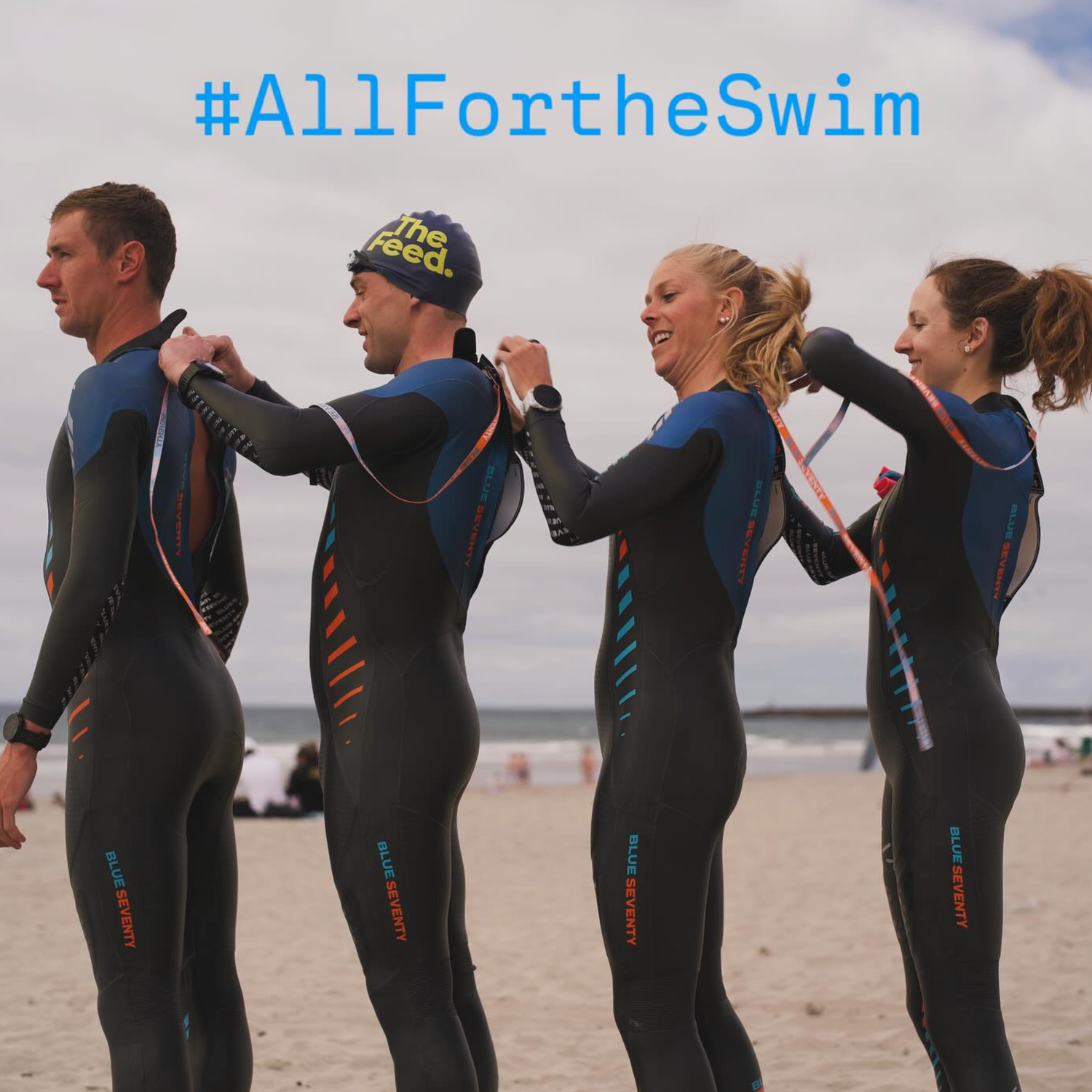
Technique matters more than force. In fact, force is often what causes the next problem. blueseventy’s warranty does not cover fingernail punctures or heel tears, and those are two of the most common ways swimmers damage a suit during rushed donning.
- Take your time at the foot and ankle. Do not try to pull a long section of neoprene upward in one motion.
- Use your fingertips carefully. Keep fingernails off the neoprene and work the material upward in small increments.
- Set the lower leg first. Bring the suit up gradually until the calf section feels evenly distributed.
- Place the knee correctly. The knee panel needs to sit where it was designed to sit before you assess the rest of the fit.
- Match both legs before moving to the torso. If one side is higher than the other, the suit will feel wrong all the way up.
- Judge the shoulders last. Upper-body feedback only matters once the bottom half is truly in place.
This is slower than most first-time buyers expect. It is also the difference between a suit that feels impossible and a suit that suddenly makes sense.
Why this matters on race day
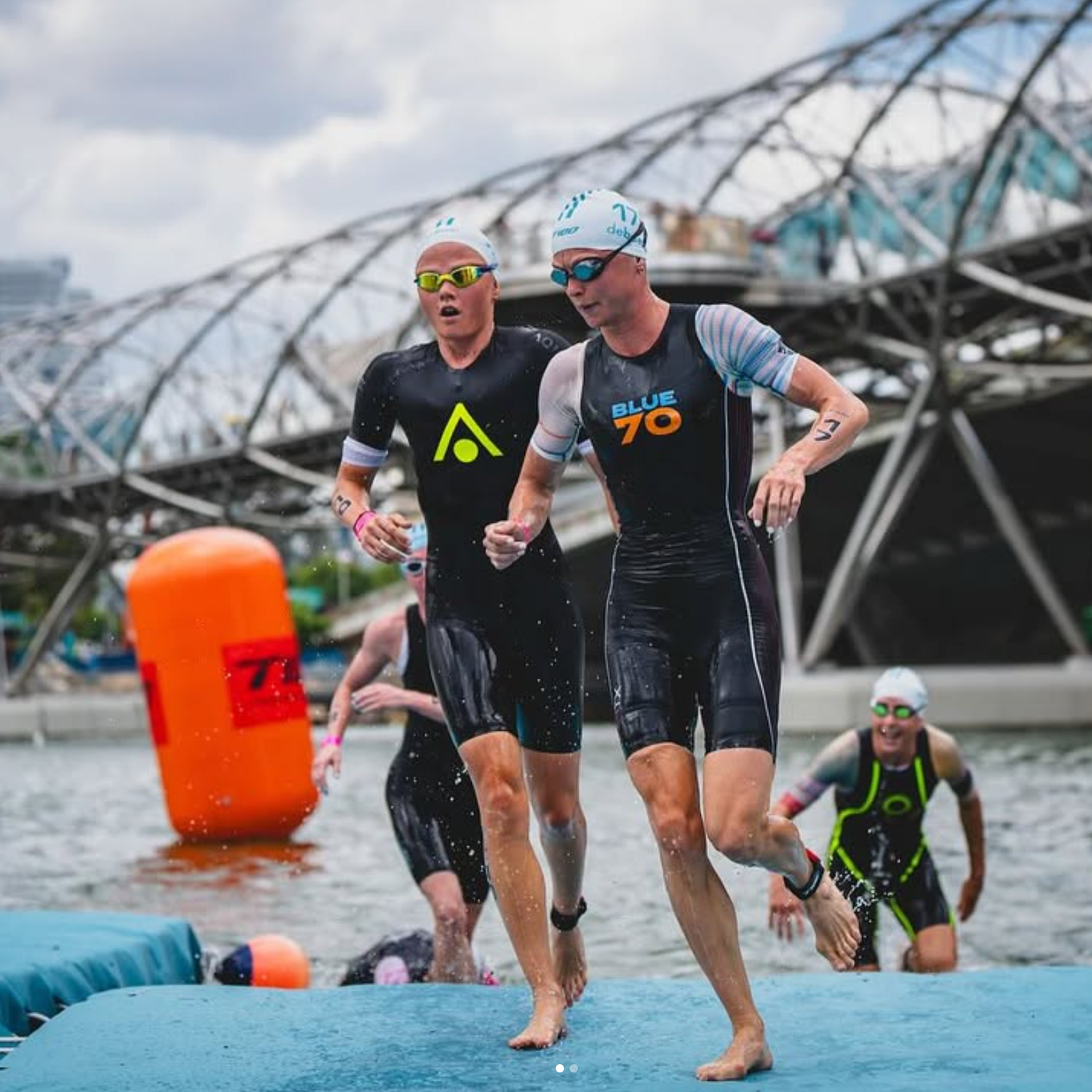
Muscular calves do not only affect comfort. They affect transition. A suit that catches at the ankle can cost time when your heart rate is high and your hands are wet. That is one reason lower-leg fit deserves more attention in triathlon than it usually gets.
If your calves are the main resistance point, practice getting the suit off before race morning. Do it after open-water sessions. Do it when you are breathing hard. Learn exactly where the material sticks and how to deal with it cleanly.
- Get the suit to your waist early.
- Do not thrash at the ankle opening.
- Step on the leg material near the heel and pull with control.
- Repeat the movement until it becomes automatic.
T1 problems often show up at the bottom of the suit, not the top.
How blueseventy’s fit philosophy helps
Swim-specific wetsuit design has become more precise over time. That matters because athletes do not come in one standard shape. Some have broader shoulders. Some have longer torsos. Some carry more shape through the hips. Some have powerful calves that make the lower leg the hardest part of the fitting process.
blueseventy’s product development has reflected that move toward more body-specific fit. The company was founded in 1993, became blueseventy in 2005, and expanded Femme Fit to 15 women’s wetsuit sizing options in 2014. That kind of refinement matters because fit improvements do not come only from materials. They also come from better patterning for real swimmers and triathletes.
For women, this point is especially important. Lower-leg fit problems often show up alongside issues through the bust, torso, hips, wrists, or neckline. blueseventy’s Femme Fit system addresses those fit zones with refined pattern design, a lowered neckline for comfort, and an extended zipper length for easier entry and faster transitions.
Which blueseventy wetsuit options deserve a closer look
The right suit depends on how often you swim, the water temperature, and what you need on race day.
For frequent, longer swims, blueseventy recommends the Reaction. For shorter frequent swims, the Fusion is a strong option, and its 2021 redesign added a lower-sitting neckline for comfort without losing the watertight seal. Athletes looking for an entry point often start with the Sprint. In warmer conditions, a sleeveless option can also make sense for athletes who want an easier overall fit and removal process.
Temperature matters here too. blueseventy’s published guidance notes that above about 70 to 72°F, a full suit can feel too warm over longer swims. Below about 56 to 58°F, a purpose-built thermal suit adds thermal protection. Those ranges help narrow the field, but event rules vary, so always check the rulebook for your race. [VERIFY: current sanctioning-body rule]
If your calves tend to make every full suit feel like a wrestling match, that does not mean full suits are off the table. It does mean you should be honest about the conditions you race in, the distance you swim, and how much transition speed matters to you.
Why a test swim matters more for this issue
Lower-leg fit often reveals its real character in the water. A suit that feels difficult on dry land can settle beautifully once you start swimming. Another suit may feel manageable in the shop, then turn distracting once the kick starts and the exit gets rushed.
That is where blueseventy’s Take a Test Swim policy becomes useful. You can swim in the wetsuit and still return or exchange it, provided it comes back clean, dry, unmodified, with tags and accessories. For athletes with muscular calves, that is one of the best ways to make a smart decision, because the lower-leg story is rarely complete until you have actually swum and removed the suit.
A better way to think about wetsuit fit for muscular calves
The usual reaction to calf tightness is to size up. Sometimes that works. Often it creates a new set of problems through the hips, torso, and shoulders. Extra material in the wrong places can undo the close, swim-specific fit that helps with body position and freedom in the water.
A better approach is more disciplined.
- Assess the lower leg first.
- Get the knees into the right place.
- Pull the suit fully into position.
- Judge the upper body only after the bottom half is set.
- Practice removal before race day.
Muscular calves do not make you difficult to fit. They simply make the fitting process more specific. Once you understand that the fit problem often starts at the ankle, the rest of the wetsuit gets much easier to evaluate.
If you want to sort out sizing before your next race or open-water block, start with blueseventy’s size charts or review the fit guide. A little patience at the bottom of the suit usually leads to a much better result everywhere else.