


You finish a cold lake swim, wet hands, tired shoulders. You grab the zipper cord and pull sideways while the suit is still bunched at your waist. That is the moment most zipper damage begins. The teeth rarely fail first. The seam where the zipper tape meets the neoprene gives way.
Swim and triathlon wetsuits rely on flexible neoprene, but a zipper track is rigid, and every time you pull a suit over your shoulders, the neoprene stretches while the zipper stays fixed, which loosens the stitching over dozens of sessions. The failure is predictable.
Before You Replace, Check the Actual Failure
A zipper that has separated at the seam often looks worse than it is. The slider may still work. The teeth may still mesh. The weak point is the stitching where the zipper tape meets the neoprene panel. If you keep yanking at that stage, the tear grows and the job moves from restitching to a full replacement.
Open the suit flat and ask three questions:
- Are the zipper teeth intact, with none pulled away from the tape?
- Does the slider move freely along the full track?
- Is the damage limited to stitching or a small tear at the tape-to-neoprene seam?
If the answer to the first two questions is yes, the repair is a seam job, not a zipper swap. If the teeth have pulled away from the tape, the slider has cracked, or several teeth are missing, the zipper needs to go.
The Donning Error That Causes Most Zipper Trouble
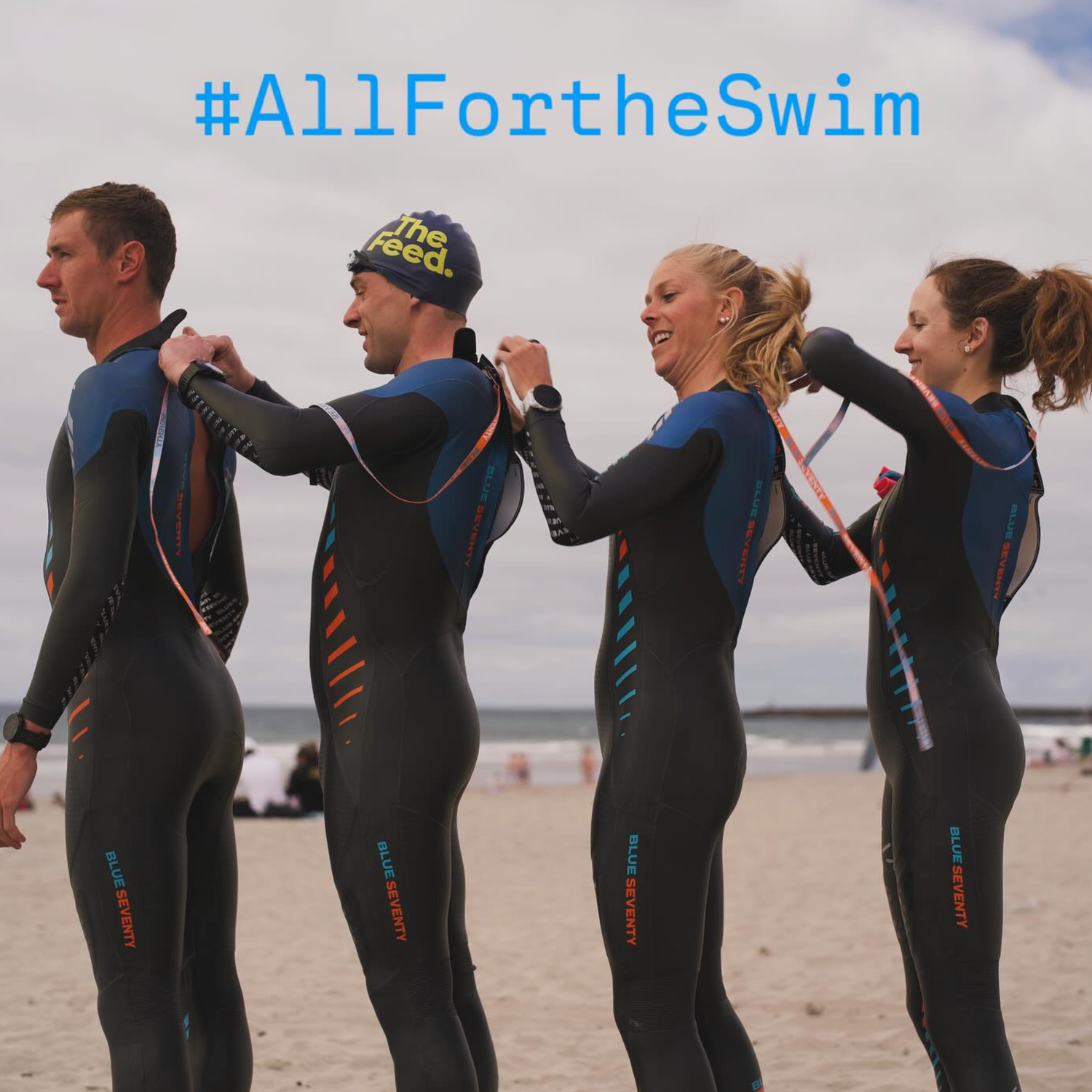
Put the suit on before you reach for the zipper. The habit that kills zippers is pulling the lanyard while the zipper base is twisted. On a back-zip suit you cannot see the track, so you are more likely to pull at an angle.
- Hold the suit at the base of the zipper with one hand.
- Guide the slider with the other hand, keeping the pull in line with the track.
- Stop if the slider catches. Do not force it.
Forcing the slider past a snagged liner or a folded edge is how sliders crack and zipper tape tears.
Warranty: What Applies and What Does Not
blueseventy warranties cover manufacturing and materials defects for one year from purchase for the original owner, with repair as the remedy. The warranty does not cover zipper damage from force, including a yanked slider, torn zipper tape, or a zipper forced past a snag.
If the zipper separated cleanly along a seam on a nearly new suit and you did not force it, email us at us@blueseventy.com with photos. The full terms are on the warranty page.
What a Proper Replacement Involves
Aquaseal neoprene cement seals a small puncture at the zipper base. It will not reattach a torn zipper track. A proper replacement means opening the neoprene seam, removing the old zipper tape, cementing and stitching a new zipper in place, then sealing the back of the seam.
The repair person should match the original zipper length and keep the new tape flat against the neoprene. If a shop only topstitches over the gap, the suit will leak and the zipper will fail again. If the neoprene around the zipper is thinning, delaminating, or losing flexibility, a zipper repair will not fix a tired suit. A good repair person tells you that before they sew.
Why Flexible Neoprene Changes Zipper Wear
blueseventy wetsuits use Yamamoto neoprene in 38, 39, and 40 cell grades. Higher cell numbers mean more flexibility. The zipper track is not elastic. When you stretch the suit over your shoulders, the tape has to sit still while the neoprene around it flexes. Over many cycles, that mismatch loosens stitching.
Rinse the zipper area after every swim and store the suit flat so the seam does not dry under tension. Fresh water is the cheapest zipper insurance. Chlorine dries out the zipper tape. Salt leaves abrasive crystals in the teeth.
After a swim, rinse the zipper with fresh water, work the slider once while it is wet, then leave the zipper open and dry the suit flat. Do not fold the suit with the zipper kinked or stuff it into a transition bag while it is still bunched.
Send Us Two Photos
If you are not sure whether your zipper needs a seam repair or a full replacement, email us at us@blueseventy.com with a photo of the zipper. Take two photos. One should show the full zipper with the suit laid flat. The other should show the point where the tape meets the neoprene, with the teeth separated if they have split.
A clear picture of that junction tells us more than a description of the noise the zipper made.