


Most articles on wetsuits and drysuits start with warmth. Swimmers should start somewhere else: stroke quality. In open water, the gear you wear does more than change how cold you feel. It changes your body position, your shoulder range, your catch timing, and the amount of energy you spend holding form when the water gets rough or the temperature drops.
That is why a wetsuit and a drysuit are not interchangeable for swimming. They solve different problems. A swim-specific wetsuit is built to help you move through the water with less restriction while adding buoyancy and thermal protection. A drysuit is built to create a barrier between you and the water, with warmth coming from the layers you wear underneath. Both have a place around water. Only one is built around the demands of freestyle swimming.
Start with the job the suit needs to do
If the session is a swim, the suit has to support swimming first. That sounds obvious, but it gets lost once the conversation turns into a simple question of which option feels warmer on shore.
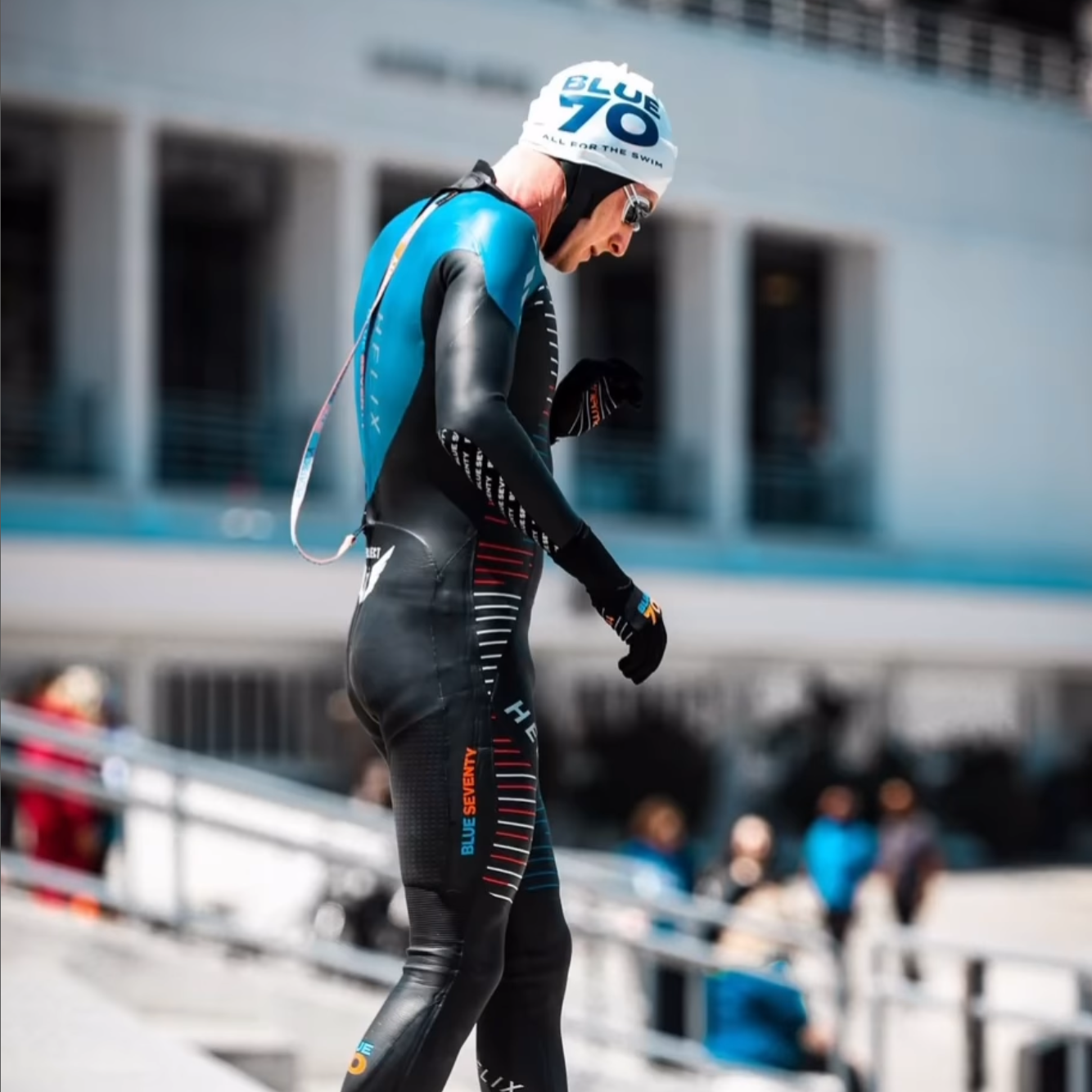
A swim-specific wetsuit has a tight design brief. It needs to support body rotation, allow a full recovery, reduce drag, and help the swimmer hold a better line in the water. At blueseventy, that logic runs through the whole wetsuit range, from the Sprint to the Fusion, Reaction, Thermal Reaction, and Helix. Each model serves a different swimmer, but all of them are built around the same priority: swimming well.
A drysuit answers a different brief. It is designed to keep the wearer separated from the water and to work with insulating layers underneath. That makes sense for many cold-water activities. Swimming is a tougher test because every stroke asks the garment to move overhead, rotate through the torso, stay stable while horizontal, and do it all without disrupting rhythm.
How each system handles cold water
A wetsuit works by letting in a thin layer of water, which your body warms. The neoprene slows heat loss and provides insulation. That is how the system is supposed to work. A good wetsuit does not keep you dry, and it should not be described that way. What it does is provide added thermal protection while still allowing the freedom of movement a swimmer needs.
A drysuit works differently. The shell is designed to keep water out, and the warmth comes from the air space and the clothing layers inside the suit. For a swimmer, that setup can introduce tradeoffs. The underlayers add bulk. The seals at the wrists and neck matter more. Air inside the suit can shift as the body rolls and changes position. Those are not small details when you are trying to hold form through a sustained swim.
Why body position matters more than most swimmers think
Buoyancy equals speed in the water. That principle sits at the heart of swim-specific wetsuit design because better body position reduces drag. When the hips and legs ride higher, you waste less energy trying to keep yourself aligned and more energy moving forward.
Newer swimmers tend to feel this change right away. The wetsuit helps lift the lower body, which can make the stroke feel smoother and more controlled. Experienced swimmers feel it too, though often in subtler ways: easier alignment, a cleaner platform for the catch, and less need to kick for balance.
A drysuit can provide buoyancy, but buoyancy alone is not the same as swim position. In the water, swimmers need stable rotation. If the suit shifts, feels loose, or changes where buoyancy sits during the stroke, you start spending effort correcting posture and timing. That effort adds up quickly over distance.
Shoulder freedom is a swimming issue, not a comfort issue
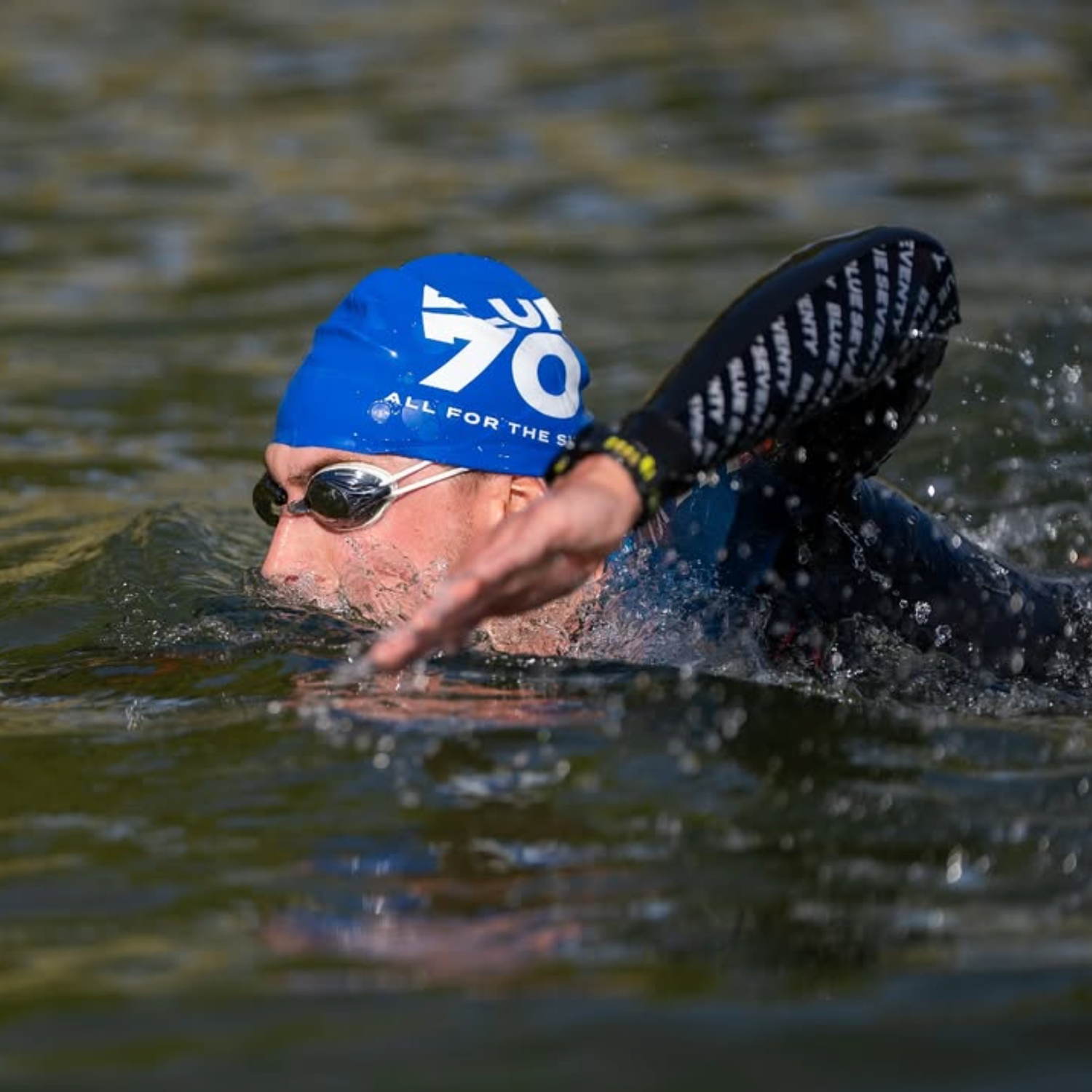
Freestyle depends on repeatable overhead motion. If the suit limits shoulder extension or rotation, the problem shows up with every stroke. A garment can feel acceptable when you are standing on shore and still become tiring once you have been swimming for ten minutes.
This is one reason neoprene quality matters. blueseventy wetsuits use Yamamoto neoprene in 38, 39, and 40 cell, with the higher cell numbers providing more flexibility. In practice, that means less resistance through the recovery and less fatigue across the front of the shoulders.
Swimmers usually notice restricted movement in the same few places:
- tightness across the front of the shoulders
- a shorter reach out front
- a catch that feels late or disconnected from body roll
Once that sequence changes, the stroke starts to lose shape. You can still move forward, but you are doing it less efficiently.
The catch is where the difference becomes obvious
Fast swimming is not only about floating higher in the water. The swimmer still needs to place the hand well, anchor the forearm, and direct force backward. That is what swimmers mean when they talk about feel for the water.
Swim-specific wetsuits try to preserve that sensation. The blueseventy Helix uses a permeable catch panel, introduced in 2010, to preserve feel for the water during the front end of the stroke. That detail reflects a broader design truth: extra buoyancy helps, but it does not replace a useful catch.
A drysuit is not usually built around that priority. If the suit dulls the front end of the stroke, the swimmer often feels flatter in the water and less precise in rough conditions. In open water, that matters because conditions already force small adjustments in timing, hand path, and rhythm.
Cold water fatigue is partly a technique problem
Cold water challenges more than comfort. It can change breathing rhythm, shorten the stroke, and drive up stroke rate. Swimmers often think of thermal gear only as insulation, but the better question is how long the suit helps you keep your mechanics intact.
Below about 56 to 58°F, a purpose-built thermal wetsuit adds meaningful warmth for swimming. The blueseventy Thermal Reaction is fully lined with Zirconium jersey, a synthetic wool lining designed for cold-water swimming. That matters because the suit is not just warm for its own sake. It is built to add thermal protection while still supporting swim movement.
If the suit adds warmth but forces you into a shorter, tighter stroke, the tradeoff is hard to justify. The best cold-water swim gear does both jobs at once.
A point many swimmers overlook
The garment that feels more protective before the swim is not always the one that works better once the swim begins. For swimmers and triathletes, economy matters. A small loss in shoulder range, body stability, or catch timing can cost more energy than most athletes realize.
That cost becomes more obvious over distance. In triathlon, it affects the rest of race day. In open-water training, it changes how controlled you feel when the swim gets longer or the conditions get worse. The wrong system does not just make the swim harder. It changes the quality of the swimming itself.
Why swim-specific wetsuits developed the way they did
Wetsuits built for swimmers evolved around one demand: move better through the water. Over time, that pushed design toward more flexible neoprene, smarter buoyancy placement, lower-friction surfaces, and more refined neckline and shoulder construction.
blueseventy’s own history reflects that progression. The company traces its roots to 1993, adopted the blueseventy name in 2005, introduced the Thermal Helix in 2015 as a purpose-built cold-water model in the line, and added LIFT buoyancy panels to the Helix in 2018. Each of those developments tracks back to the same standard: does this help the athlete swim better?
Drysuits followed a different path because they were built to answer a different set of needs. That is why the categories diverge so sharply once the swimmer starts looking at stroke mechanics instead of simple warmth.
How to choose for open-water swimming and triathlon
If your day revolves around swimming, choose gear designed for swimming. From there, the right blueseventy wetsuit depends on water temperature, training frequency, and your goals in the water.
- Choose the Thermal Reaction for cold-water swimming below about 56 to 58°F, when added thermal protection becomes a bigger part of the decision.
- Choose the Reaction if you swim frequently and want a strong balance of performance and durability for longer swims.
- Choose the Fusion if your swims are shorter and frequent, and you want a mid-range suit with a lower-sitting neckline from the 2021 redesign.
- Choose the Sprint if you are entering open water or triathlon and want an entry point into a proper swim-specific wetsuit.
- Choose a sleeveless option in warmer water, or when you want easier entry and a freer upper-body feel. Above about 70 to 72°F, many swimmers find a full suit too warm over longer efforts.
Fit still decides the outcome
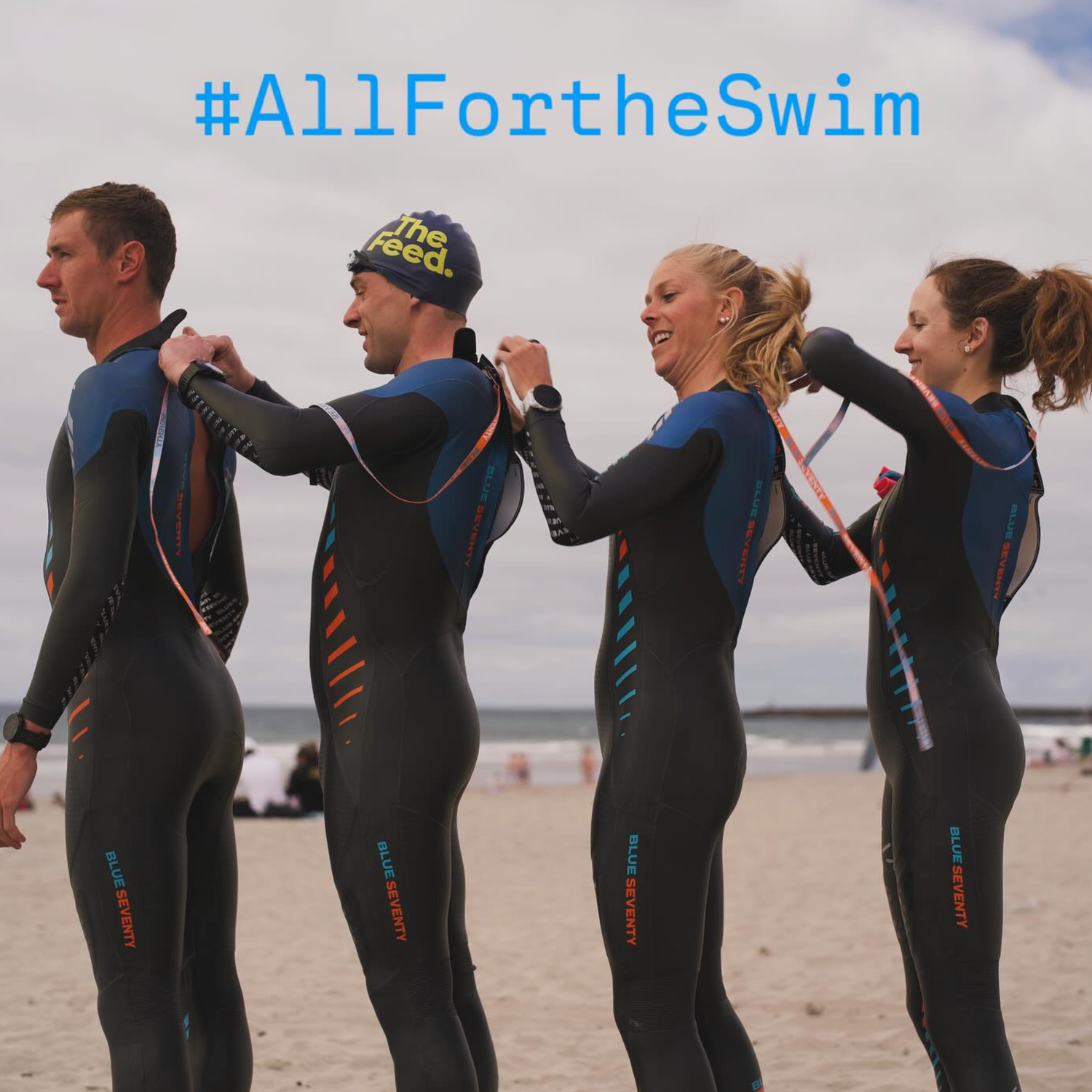
Even the best wetsuit model can feel wrong if the fit is off or the suit has not been put on properly. A wetsuit should feel snug on land and more natural once you are in the water. One of the most common mistakes is leaving too much material low in the legs and hips, which pulls tension into the shoulders and creates fatigue that the swimmer blames on the suit.
Before you judge the fit, check the basics:
- pull the suit high through the legs before you zip it
- make sure the hips and crotch are fully seated
- work material up through the torso so the shoulders are not being dragged down
- check that the neckline feels secure without harsh pressure
- test the suit in the water, where fit becomes clear fast
Women who have struggled with generic fit should also look closely at pattern design. blueseventy’s Femme Fit adjusts key fit areas including the bust, torso, wrists, and ankles, and it uses a lowered neckline and extended zipper length to improve comfort and entry.
The practical answer
If your goal is swimming, a swim-specific wetsuit is the right tool. A wetsuit and a drysuit both address cold water, but only one is shaped around freestyle mechanics, open-water body position, and the need to keep your stroke working once the swim is under way.
That is the real difference. For swimmers and triathletes, the best option is the one that supports movement, not just insulation.
If you want help finding the right fit, start with blueseventy’s size charts, fitting guide, or the Take a Test Swim program. The best way to judge a swim-specific wetsuit is in the water, where stroke, buoyancy, and comfort all become clear.