


Most swimmers don’t think about wetsuit shampoo and conditioner until their suit starts to smell off, feel stale, or spend a little too long fermenting in the trunk. By then, the conversation is usually about cleaning. The better conversation is about preserving how a swim-specific wetsuit feels and performs over time.
That distinction matters. A wetsuit built for swimming is not just a neoprene shell. It is designed around body position, buoyancy, shoulder freedom, and comfort. blueseventy wetsuits use Yamamoto neoprene in 38, 39, and 40 cell, and that range matters because higher cell numbers deliver more flexibility. When swimmers talk about a suit feeling great through the shoulders or feeling less restrictive on longer efforts, that material choice is part of the story.
Care is the next part of the story. Salt, chlorine, sunscreen, body oils, lake residue, sweat, and poor drying habits all affect how a suit ages. Not all at once, and not always dramatically, but gradually. That’s why wetsuit shampoo and conditioner deserve more credit than they usually get. They are not just about odor. They are part of how you protect comfort, consistency, and race-day confidence.
Why this matters more than most athletes realize
Swimmers are unusually sensitive to feel. We notice when the neckline sits a little differently. We notice when the shoulders feel a touch less free. We notice when the inside lining feels fresh, or when it doesn’t. A runner may not think twice about a shirt feeling slightly off. A swimmer absolutely will.
That sensitivity is one reason wetsuit care matters so much. Small changes in feel can become small changes in movement. If a suit starts to feel sticky, stale, or slightly less supple, athletes often compensate without realizing it. They may shorten the stroke, carry more tension through the neck and upper back, or rush their turnover instead of settling into rhythm.
No shampoo can guarantee better swim performance, and no conditioner can promise faster splits. But good care can help preserve the qualities that support efficient swimming: comfort, flexibility, and freedom from restriction.
The contrarian view: conditioner is really about feel
A lot of athletes hear the word “conditioner” and assume it is mostly about scent. That misses the point. The biggest benefit is often tactile rather than cosmetic.
A well-cared-for wetsuit tends to feel better when you pull it on, settle into the water, and start swimming. That matters more than it sounds. In triathlon and open-water swimming, comfort is not a luxury. Comfort influences breathing, tension, and confidence. If you are distracted by how your suit feels, you are no longer focused on pacing, sighting, or swimming cleanly through the first few minutes of the effort.
So if you want the short version, here it is: wetsuit shampoo and conditioner are best understood as performance-maintenance tools, not fragrance products.
What is actually building up in your wetsuit?
Not all residue behaves the same way, and that is where many athletes get tripped up. A suit can look clean and still hold onto the things that make it feel less fresh over time.
Salt water
Salt tends to leave behind crystals as water evaporates. If the suit is not rinsed thoroughly, those deposits remain in the lining, seams, and surface. The result is often subtle at first: a rougher feel, a stiffer sensation, or a general sense that the suit is not as comfortable as it was a few weeks ago.
Chlorine
Chlorine deserves respect. blueseventy’s warranty does not cover heat or chlorine damage, which tells you a lot about how important prompt rinsing is after pool exposure. If you train in neoprene gear in the pool, don’t let chlorinated water sit in the material any longer than necessary.
Sunscreen, sweat, and anti-chafe products
These are the classic slow-build offenders. They collect in the neck, underarms, hips, and lower legs, and they often create the “it’s probably fine” illusion. The suit may not smell terrible, but the lining can still feel less clean and less pleasant against the skin.
Lake and ocean residue
Open-water swimmers know that some of the messiest residue is invisible. Organic matter, algae, and that general post-swim lake or harbor funk can linger quickly, especially if the suit stays damp in a bag for hours.
When a rinse is enough, and when it isn’t
You do not need to deep-clean your wetsuit after every swim. In fact, overdoing any care process is not especially helpful either. The goal is not perfection. The goal is consistency.
A fresh-water rinse is usually enough after:
- a short swim in clean fresh water
- a brief open-water session with minimal residue
- a race warm-up
- light use when the suit can dry fully right away
A wetsuit shampoo and conditioner are worth using when:
- the suit smells musty or sour
- you have swum in salt water several times in a short period
- you used sunscreen or anti-chafe products
- the suit sat damp in a bag or car
- you used neoprene gear in chlorinated water
- the inside lining feels less fresh than it should
- you are cleaning the suit before storing it for a while
That’s the simplest way to think about it: rinse after every swim, clean more thoroughly when the suit has actually earned it.
What proper cleaning helps preserve
It helps to be specific here. Good cleaning does not reset an old wetsuit to factory-fresh condition, and it does not guarantee any performance outcome. What it can do is help preserve the qualities swimmers care about most.
- Flexibility feel: especially through the shoulders and arms, where swimmers notice restriction first.
- Comfort against the skin: which matters more the longer you swim.
- Odor control: often a sign that moisture and residue are not lingering as long.
- Storage condition: a clean, dry suit is better prepared for downtime.
- Consistency: the suit feels more predictable from session to session.
Consistency is the underrated one. A predictable suit is easier to trust on race morning.
How to clean a wetsuit without overthinking it
The best care routine is the one you can actually repeat. It does not need to be complicated.
- Rinse the suit first. Use fresh, cool water inside and out to remove salt, sand, and loose surface residue.
- Use a wetsuit-specific cleaner when needed. Follow the product directions. More soap is not better, and extra product only creates more rinsing work.
- Focus on the high-residue areas. Pay attention to the neck, underarms, wrists, ankles, hips, and lower legs.
- Rinse thoroughly again. Any cleaner left behind becomes its own residue problem.
- Dry the suit correctly. Turn it inside out first, hang it in a shaded, ventilated area, then turn it right-side out once the inside is dry.
One point that is always worth repeating: wetsuits are not waterproof and they are not designed to keep you dry. They allow in a thin layer of water that your body warms for insulation. That is exactly why thorough drying matters so much after use and cleaning.
What not to do
Most avoidable wetsuit problems come from impatience, not from swimming too much.
Avoid the following:
- household detergents
- bleach
- fabric softeners
- hot water
- washing machines
- dryers
- direct heat
- leaving the suit in a hot car
- storing it damp
- hanging it in a way that overstretches the shoulders
It is also worth remembering that common damage like fingernail punctures, heel tears, zipper damage from force, heat damage, chlorine damage, and normal wear are not the same thing as a manufacturing defect. Smart care habits help you avoid a lot of those issues before they start.
Different wetsuits, different care priorities
Every wetsuit should be rinsed and dried properly, but not every suit lives the same life.
Race-focused suits
A high-end race suit puts a premium on flexibility and race-day feel, often using very thin neoprene in the arms and shoulders. That freedom from restriction is exactly what strong swimmers and triathletes want, but it also means careful handling matters. Cleaning is part of that handling.
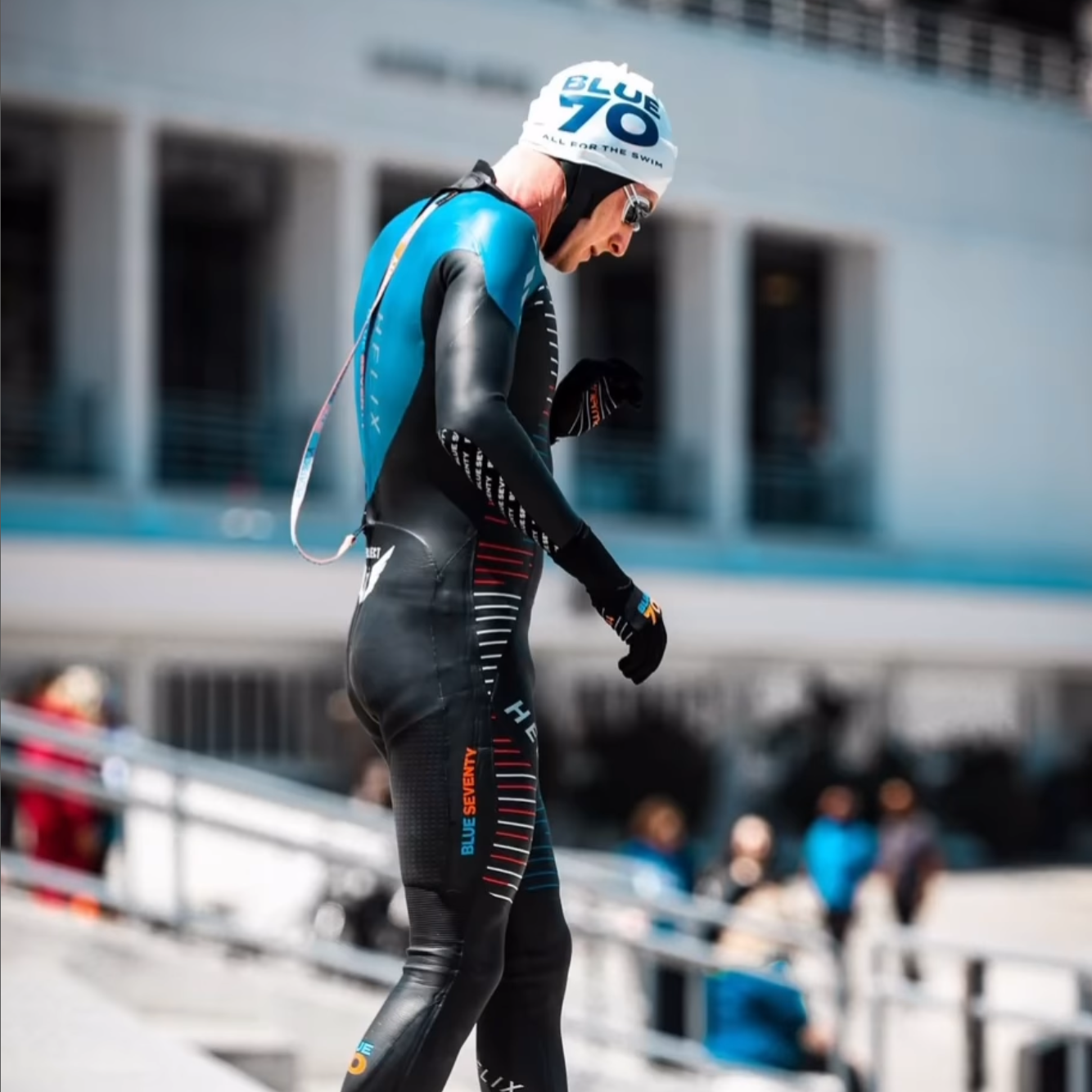
blueseventy is refreshingly honest about this trade-off. The Helix is built for total race-day performance, but its delicate neoprene means it is not ideal for heavy training use. That kind of candor is useful because it reminds athletes that the right suit is about use case, not just ambition.
Frequent training suits
If you swim in open water regularly, durability becomes a bigger part of the decision. The Reaction is recommended for frequent, longer swims, while the Fusion is recommended for shorter frequent swims. In both cases, a steady cleaning routine helps preserve comfort and feel over the course of a full season.
Thermal wetsuits
Cold-water swimmers need to be especially disciplined. The Thermal Reaction is fully lined with Zirconium jersey for added thermal protection in cold water. Below about 56-58°F, a purpose-built thermal suit adds meaningful warmth. It also tends to hold more moisture than a stripped-down race suit, which means complete drying becomes even more important.
Cold water always deserves caution. Gear can provide added thermal protection, but water temperature, exposure time, conditions, and individual tolerance all matter.
The pool habit many triathletes overlook
Even athletes who race exclusively in open water often pick up their worst neoprene-care habits in the pool. If you use buoyancy shorts or any neoprene swim gear in chlorinated water, prompt rinsing should be automatic.
Do not leave it sitting wet in a bag all day. Do not assume a rinse hours later is basically the same thing. It isn’t.
This is where wetsuit care becomes more interesting than it first appears. It is not just about hygiene. It sits at the intersection of:
- materials care
- comfort in the water
- confidence before a race
- consistency across a training block
Experienced swimmers understand that gear care is not separate from preparation. It is part of preparation.
A simple care schedule that works
If you want a routine you can actually follow, keep it straightforward.
After every swim
- Rinse the suit inside and out with fresh, cool water
- Dry it fully away from direct sun and heat
Every few swims, or after heavy residue exposure
- Use wetsuit shampoo and conditioner
- Rinse thoroughly
- Dry completely before storing
Before long-term storage
- Clean the suit properly
- Make sure it is fully dry
- Store it in a cool, dry place
- Avoid tight folds that create hard creases
The routine is not glamorous. That is fine. Most good gear habits are boring, and that is exactly why they work.
Final takeaway
Wetsuit shampoo and conditioner matter because they help preserve the parts of a swim-specific wetsuit you actually notice in the water: supple shoulders, skin comfort, freshness, and consistency.
That may sound less dramatic than talking about speed, but it is the more honest and more useful perspective. A clean wetsuit does not guarantee a faster swim. What it can do is help protect the feel and comfort that let you focus on your stroke, your breathing, your sighting, and your race execution instead of thinking about your gear.
Take care of your wetsuit the way you would take care of any serious piece of swim equipment. Rinse it promptly. Clean it gently. Dry it thoroughly. Then it is ready for the next session, the next start line, and the next cold morning when you want your gear to feel exactly the way it should.