


A volunteer at bag check tells you the water hit 78 degrees overnight and your full sleeve suit is no longer legal. Or you left your wetsuit in the car because it's July, and the lake reads a shocking 61 degrees at dawn. Both scenarios play out at races every season, and neither one is really about temperature. It comes down to the fact that no single organization controls wetsuit legality in triathlon and open water swimming.
USA Triathlon, Ironman, World Triathlon, and World Aquatics each set their own rules. Those rules shift from year to year. A cutoff you memorized two seasons ago at one venue might not hold at your next start line, even at the same lake.
Why Anyone Regulates a Wetsuit
Wetsuits do two things that matter to race officials. They add buoyancy, and they add insulation. Officials treat both as variables worth controlling rather than a free equipment choice.
The buoyancy question is about fairness. Neoprene lifts your hips and legs, improving body position and cutting drag. In warm water, where insulation doesn't matter but the flotation boost still does, that's an edge some athletes have and others don't. This is why upper temperature cutoffs exist, and why some elite fields keep wetsuit-wearing athletes out of prize money above a certain threshold.
The insulation question is about safety. Drop water temperature far enough and hypothermia risk climbs, judgment slips, and muscles stiffen in ways that wreck stroke mechanics. That's the reasoning behind mandatory wetsuit rules at the cold end of the scale.
The Numbers Move. Check Every Time.
Specific degree cutoffs differ by organization, and they get revised. A number that was accurate last season can be wrong this one.
- USA Triathlon publishes wetsuit rules in its annual competitive rules document.
- Ironman and Ironman 70.3 races issue event-specific wetsuit guidance, sometimes adjusted for the venue.
- World Triathlon sets separate rules for its sanctioned elite and age-group championship racing.
- Open water events outside triathlon governance, including channel swims and marathon swim organizations, often run their own frameworks. Some ban wetsuits outright for solo or unassisted categories.
Read the rulebook for your specific race. Every time, even if you've raced it before. Organizers usually confirm final water temperature and wetsuit status at check-in or the morning briefing, sometimes as late as race morning, because wind and current alone can shift a lake's temperature several degrees overnight.
Pack a Range, Not a Bet
Because legal status can change hours before your start, the safer approach is packing gear that covers a spread of conditions instead of betting on one suit.
- A full sleeve wetsuit for your primary cold-to-moderate range. This is the workhorse for most race mornings, adding sleeve propulsion through the catch phase along with warmth through the shoulders.
- A sleeveless wetsuit for borderline-warm mornings, when you want buoyancy through the torso and hips without overheating your shoulders and upper back, where thermal stress usually builds first during a hard warm-up.
- A swimskin for wetsuit-illegal conditions, so you're not stuck racing in a tech suit alone when the forecast points above the upper threshold.
Nobody needs three wetsuits before a first triathlon. Most swimmers build this range over a season or two, as their race calendar starts covering a wider spread of conditions.
Legal and Warm Enough Are Two Different Questions
Legality is a fixed line in a rulebook. Personal cold tolerance is not fixed at all, and conflating the two causes trouble on race morning.
Two swimmers standing on the same dock, facing the same water temperature, can have completely different physical responses depending on body composition, how acclimatized they are, and how many cold swims they've logged that season. A wetsuit built specifically for cold water, Blue70's Thermal Reaction with its Zirconium jersey lining is one example, adds meaningfully more warmth than a standard race suit at the same water temperature. That difference tends to show up hardest in the final third of a long swim, once core temperature has had time to drop and your hands and feet start to stiffen.
A general range applies: below about 56 to 58 degrees, a purpose-built thermal suit adds real value no matter what the rulebook says. Above about 70 to 72 degrees, a full suit over a longer swim can get too warm, which is when a sleeveless design or swimskin becomes the smarter choice on comfort alone, separate from whatever the race's legality cutoff happens to be.
Acclimatize with shorter cold swims before race day arrives. Learn your own threshold instead of assuming the rulebook's threshold matches your body. And don't treat a wetsuit as protection against cold exposure that removes the need for common sense about how long you stay in the water.
Fit Decides More Than Any Rulebook
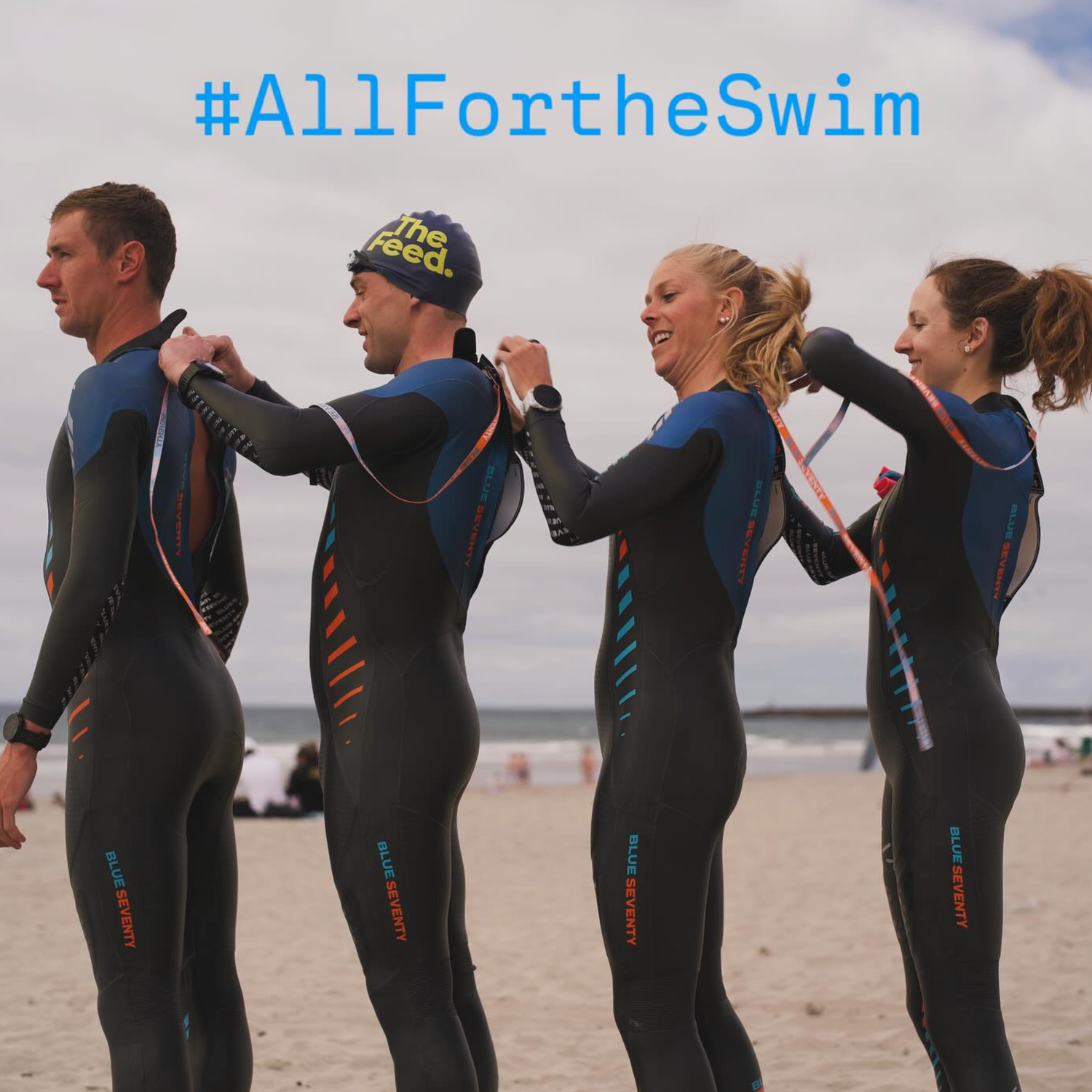
None of this matters if the suit doesn't fit. A wetsuit that's technically legal for the water temperature but loose through the shoulders will still let water flush through, stealing the insulation you're counting on, and it will tire your arms faster over the swim leg. Blue70 wetsuits are built to feel snug on dry land and settle into a more comfortable range once the neoprene compresses against your body in the water. If a suit slides on without any resistance, it's probably too big, regardless of what the thermometer says that morning.
Women swimmers have long been underserved by unisex patterns built around a men's torso and shoulder line. Blue70's Femme Fit sizing was designed to fix that: a lowered neckline for comfort and less chafing, a refined pattern through the bust, torso, wrists, and ankles, and a longer zipper for easier entry and faster transitions. It's a fit built from the ground up for a woman's body, not adjusted from a men's block.
One Habit Worth Keeping
The most useful habit isn't memorizing degree cutoffs. It's checking the rulebook for your specific race, every season, and packing gear that gives you options instead of a single guess. Water temperature is a local, morning-of variable. Your response to it should be too.
Take a Test Swim in your suit before race day. Blue70's Test Swim policy lets you swim in the wetsuit and still exchange or return it if it doesn't feel right, so there's no reason to stand on a beach guessing about fit.
Happy swimming.