


Most wetsuit removal advice starts in transition. The better place to start is the last minute of the swim.
A smooth, fast exit usually has less to do with a clever trick at the bike rack and more to do with what happened on the way to shore. If you hit shallow water breathing hard, stand too early, and reach for the zipper while off balance, the suit will feel slower coming off. If you arrive under control, the same suit usually peels away with far less effort.
That is the part many triathletes overlook. Wetsuit removal is not only a T1 skill. It is a swim-exit skill.
Blue70 builds swim-specific wetsuits for open water swimming and triathlon, with a focus on freedom from restriction, buoyancy, and race-day performance. Those qualities matter during the swim, but they also shape how the suit behaves once you start stripping it off on the run to transition. A clean exit comes from fit, preparation, and sequence.
The fastest removals usually look calm
Athletes often assume that speed in T1 comes from moving their hands faster. In real races, the bigger gains usually come from removing hesitation and wasted motion.
The common pattern is easy to spot. An athlete charges the final stretch, pops up in water that is still too deep to run well, stumbles through the shallows, fumbles for the zipper cord, and reaches the bike with both sleeves still on. No single mistake ruins the transition. Small errors pile up and cost time.
The cleanest exits tend to come from four choices:
- staying horizontal a little longer in shallow water
- keeping the final minute of the swim controlled
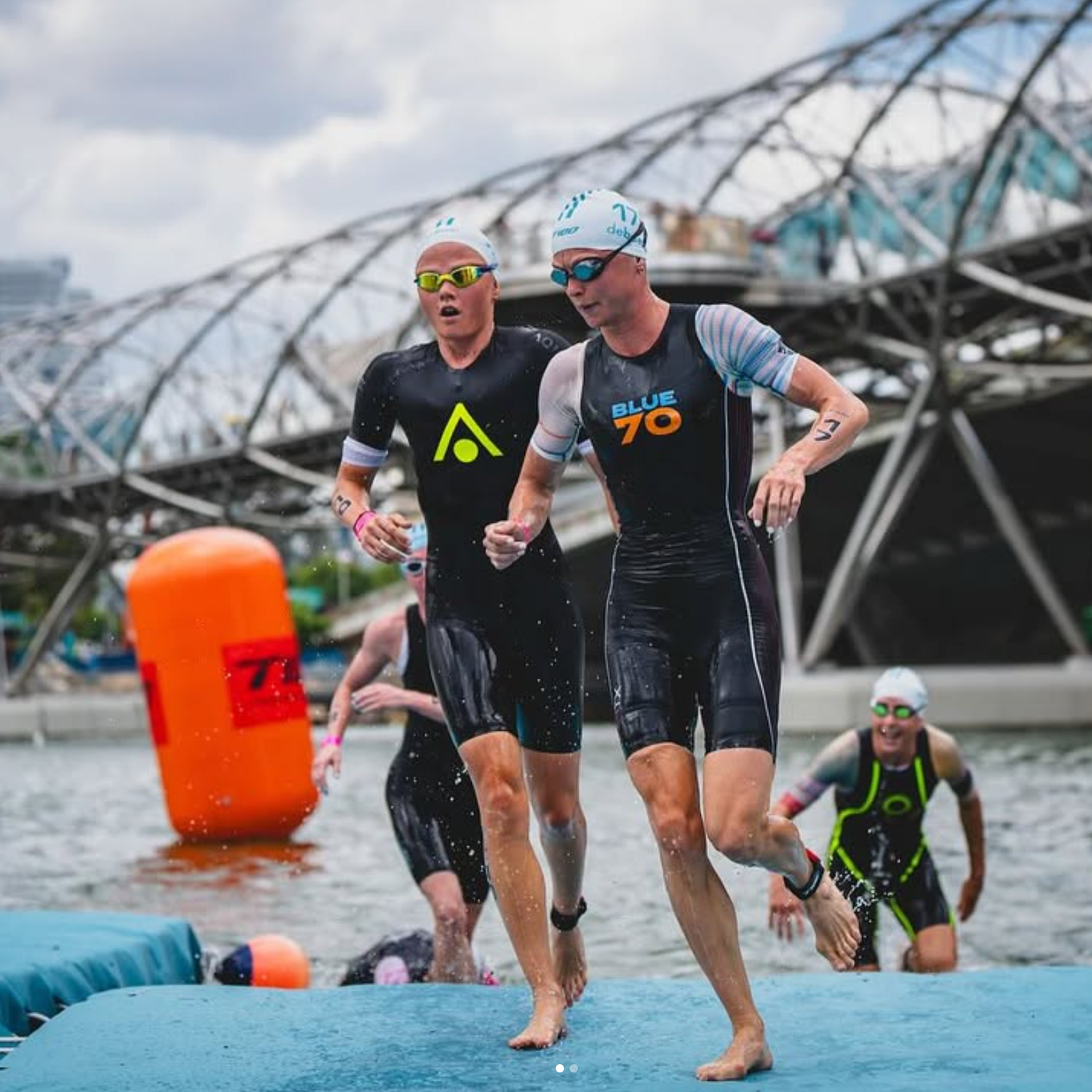
- unzipping and peeling the top half while moving
- stepping out of the legs with balance instead of force
That sequence looks simple from the outside. Under race effort, it takes practice.
Do not stand up too soon
Standing early is one of the easiest ways to slow yourself down. When the water is still around mid-thigh, running is awkward and expensive. Your stride shortens, your balance gets worse, and the water resists every step.
In that depth, a few more strokes or a couple of well-timed dolphin dives often carry you farther than trying to slog forward upright. You keep more momentum, and you come to your feet in a better position to move cleanly.
The goal is not to stand as soon as you can. The goal is to stand when running becomes the faster option.
The last minute of the swim sets up T1
Many athletes treat the shoreline as a cue to sprint. That often creates more problems than it solves. Breathing rate jumps, sighting gets messy, and coordination drops right when you need clean hand work.
A better finish is controlled and deliberate. In the final stretch, hold your line, keep the kick active without turning it frantic, and start thinking through your first moves on land. You are not backing off. You are preparing to act well.
One simple habit helps here. As you rise to stand, give yourself one full exhale. Then take a controlled breath and go to work. That short reset often makes the unzip cleaner and the shoulder peel smoother.
Get the top half off before the rack
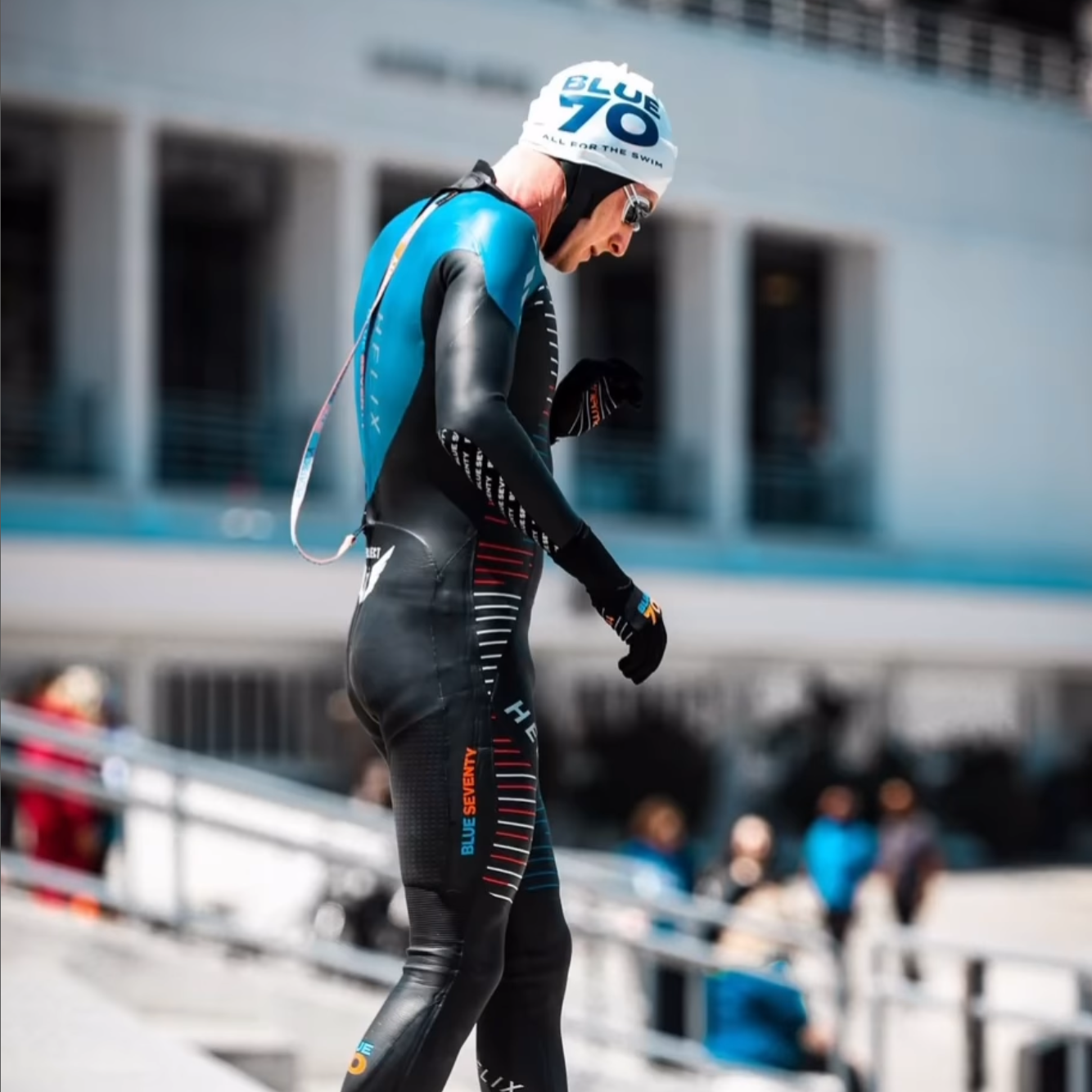
If race conditions allow safe running, the top half of the wetsuit should usually be at your waist before you reach your bike. That turns the run to transition into working time instead of dead time.
A reliable sequence looks like this:
- Find the zipper cord and unzip the suit.
- Peel the collar away from the neck.
- Strip one shoulder and arm free.
- Strip the other arm free.
- Push the suit down to your waist while you keep moving.
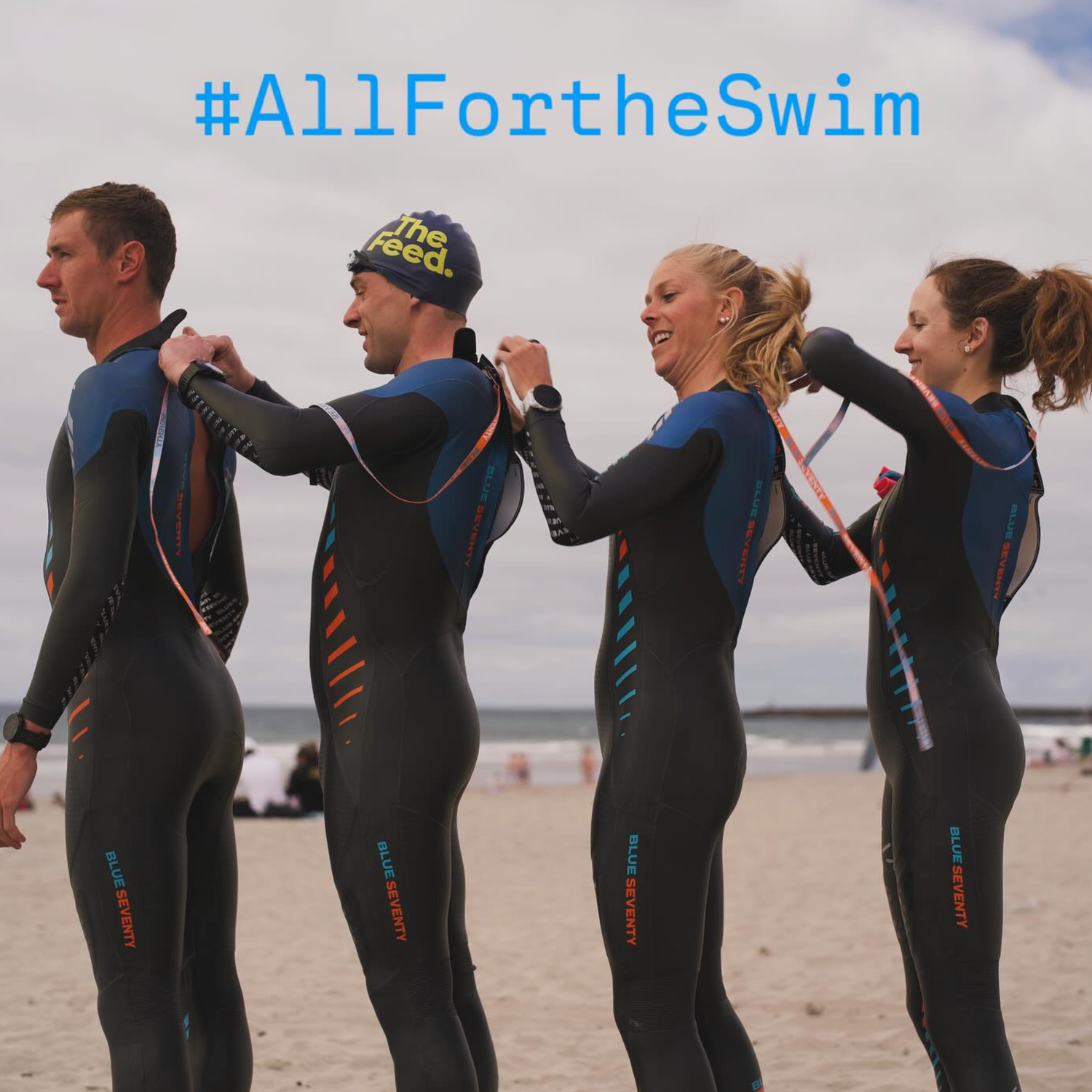
This is where good donning pays off. If the suit was pulled fully into the shoulders before the start, it usually comes down more cleanly. If the upper body sat low during the swim, the neoprene tends to bunch and resist removal.
Most of the real delay happens at the ankles
The zipper gets attention because it feels technical. The ankles and heels are where transitions usually bog down.
Once you reach your spot, the goal is to use body weight and foot placement, not a frantic upward tug. Push the suit down first. Then step on one leg of the wetsuit with your opposite foot and pull that foot free. Switch sides and repeat.
That approach works because it pins the neoprene to the ground. Your foot slides out instead of fighting against material that is lifting with you.
A few details make a difference:
- step on a flat section of neoprene, not a twisted fold
- keep your weight centered
- lower the suit as far as possible before trying to free the foot
- avoid hopping on one leg if the heel catches
Balance saves more time than aggression.
Removal problems often start with fit
When athletes say a wetsuit is hard to get off, the issue is not always transition technique. Sometimes the problem started before the gun went off.
A wetsuit that is not fully seated can feel tight in the wrong places and loose in others. That affects the swim, then shows up again during removal. Shoulders catch, forearms stick, and the lower legs twist around the heel.
Before any race or training swim, check these points:
- the crotch is fully seated
- the torso panel is pulled high
- the underarms sit close without extra space
- the shoulders are loaded correctly
- the wrist and ankle cuffs lie flat
Blue70’s fit approach is straightforward: the suit should feel snug on land and more comfortable in the water. That only works if the neoprene is positioned correctly before you start swimming.
Race-day suits reward clean handling
Different wetsuits can feel different during removal, even when the sequence stays the same. Blue70’s Helix, for example, is built for race-day performance with very thin, flexible neoprene through the arms and shoulders, a permeable catch panel to preserve feel for the water, and LIFT buoyancy panels added in 2018.
Blue70 also notes that the Helix is not ideal for heavy training use because that thin neoprene will break down more quickly with frequent use. On race day, though, that flexible upper body can feel fast and free when the suit is fitted well and removed carefully.
Suits chosen for frequent training, such as the Reaction or Fusion, still benefit from the same exit habits. The point is not that one routine changes everything. The point is that clean technique and careful handling matter more when you are working with high-performance neoprene.
The overlooked limiter is breathing, not hand speed
Here is the contrarian part: many athletes do not need a better removal trick. They need a better first breath out of the water.
If you reach shore gasping, your hands usually get sloppy. You yank before the zipper is fully open. You catch the sleeve on your watch. You step on the wrong part of the leg panel and end up hopping beside the rack.
Athletes who look fast in transition are often just more settled. They start the removal sequence with enough control to do each step once.
Practice the full chain, not one isolated move
Standing in a parking lot and stepping out of a dry wetsuit has some value, but it misses the hardest part of the skill. The hard part is linking the end of the swim to the first seconds on land while you are breathing hard and thinking fast.
A better practice session includes the whole sequence:
- swim at race effort for several minutes
- approach shallow water under control
- stand when the depth supports efficient running
- jog while unzipping and peeling the top half down
- step out of the legs at a marked point
That kind of rehearsal shows you where time actually slips away. Some athletes stand too early. Some cannot find the zipper cord cleanly. Some leave too much neoprene bunched at the calves and then fight the heel opening.
You only need a few repetitions to learn which part needs work.
A race-day sequence you can repeat
If you want a simple routine, use this one:
Before the start
- Pull the suit fully into place through the crotch, torso, shoulders, wrists, and ankles.
- Check that the zipper is closed securely.
- Make sure the pull cord is easy to find.
In the final stretch of the swim
- Hold form.
- Keep the kick active and controlled.
- Pay attention to depth and shoreline conditions.
When it is time to stand
- Stand decisively.
- Do not try to run while the water is still slowing every step.
On the run to transition
- Unzip early.
- Strip the top half to your waist while moving.
- Keep the sequence clean and simple.
At the rack
- Push the suit down to the ankles.
- Step on one leg panel and free the opposite foot.
- Switch sides and finish without hopping.
Why this matters beyond a few seconds
A clean wetsuit exit does more than shorten T1. It lowers stress. It reduces the chance of forcing the suit with bad hand position. It makes the whole race feel more under control from the moment you leave the water.
That is why wetsuit removal belongs in your swim training, not only in your transition planning. The final part of the swim and the first part of T1 are connected. Train them that way, and the exit starts to feel smoother, calmer, and more repeatable.
If your suit still feels stubborn coming off, check fit first. Then practice the sequence in real open water conditions. Blue70’s sizing tools, fit guidance, and Take a Test Swim program can help you sort out fit and feel before race day.