


Most triathletes ask which is faster: a swimskin or a wetsuit. That's the wrong question to start with. The right one is narrower. What does the water temperature on race morning actually allow you to wear, and once that's settled, what suits your stroke?
Sanctioning bodies set wetsuit-legal temperature cutoffs, and those cutoffs vary by race and shift from season to season. The rulebook decides your options before your stroke technique or personal preference gets a vote. Once both categories are legal for your race, the decision gets more interesting. That's usually where the gear guides stop.
Check the Rulebook Before You Check the Gear Wall
Before you think about neoprene grades or panel construction, pull the current wetsuit rules for your specific race. USAT, Ironman, and World Aquatics each set their own temperature thresholds, and those thresholds get revisited from year to year. Don't trust last season's number. Don't trust a forum post either. Check the current rulebook, or just ask the race director.
That one check resolves most of the debate on its own. A few things worth confirming before you shop for anything:
- The current wetsuit-legal temperature cutoff for your specific race and sanctioning body
- Whether that cutoff has changed from the previous season
- Whether your race allows a wetsuit-optional window, where you can wear one but forgo a competitive ranking bump if you do
If the water's cold enough that a wetsuit is legal, and probably mandatory, you're not choosing between categories at all. If it's warm enough that wetsuits are banned, the swimskin decision is the only one left. The real gray zone, where both are legal and preference genuinely matters, is smaller than most triathletes think.
What a Wetsuit Actually Does for Your Stroke
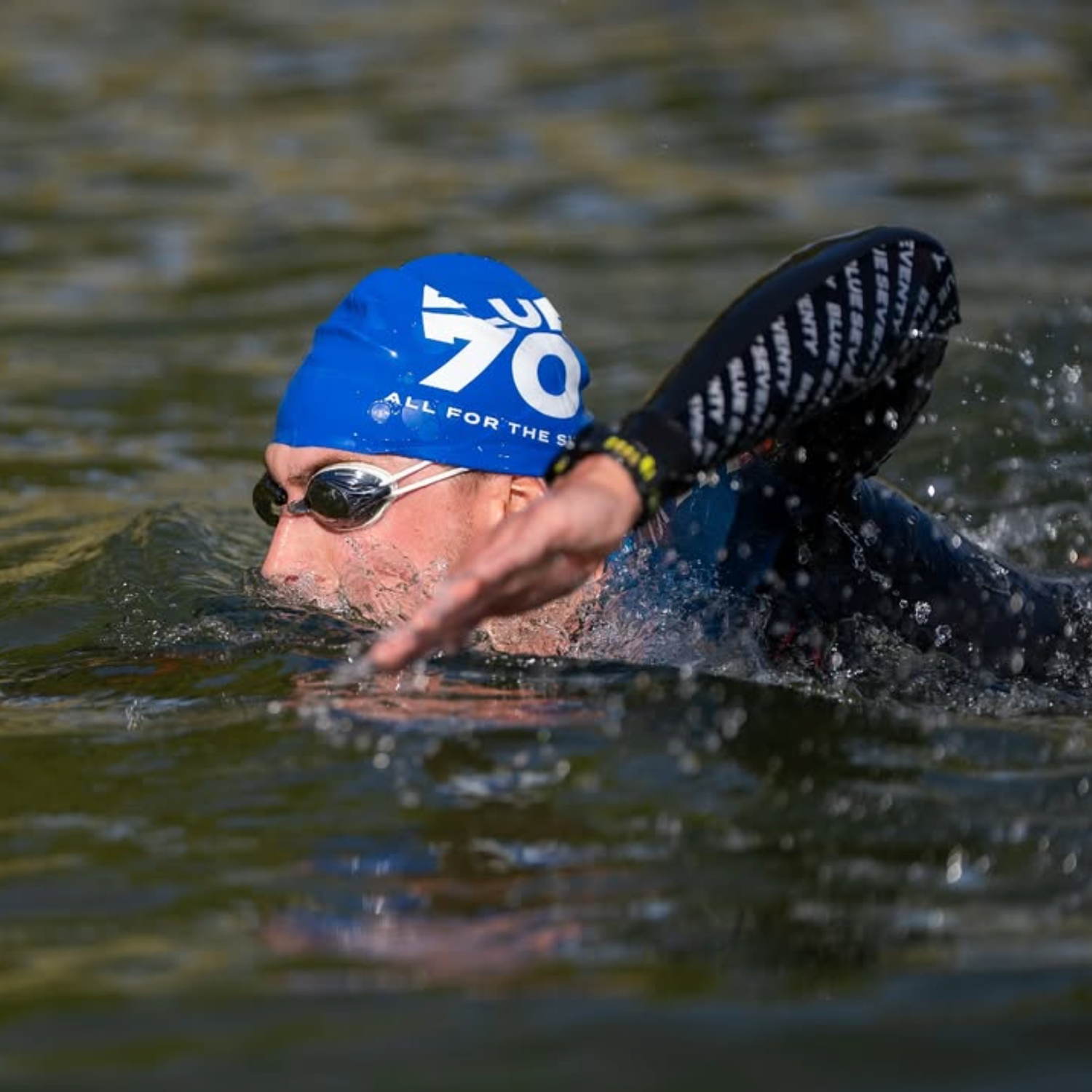
A wetsuit's job in triathlon isn't warmth. It's body position. Neoprene floats, and that buoyancy lifts your hips and legs toward the surface. That lift cuts the frontal drag you'd otherwise create by swimming with a sinking lower body, which is exactly what happens to most age-group swimmers without a strong kick or a naturally flat position in the water. For a lot of triathletes, that lift is the single biggest change a wetsuit makes to how the swim leg feels.
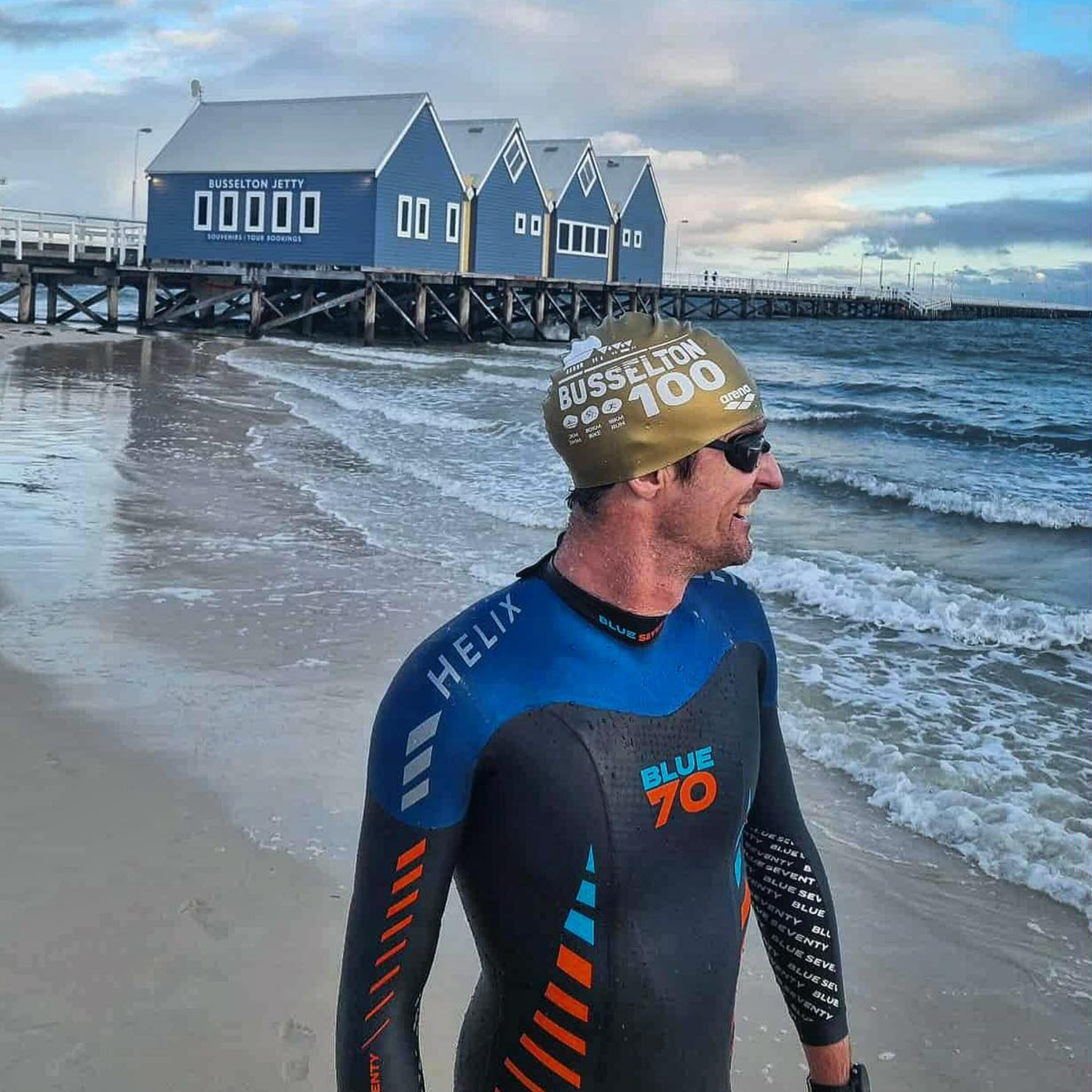
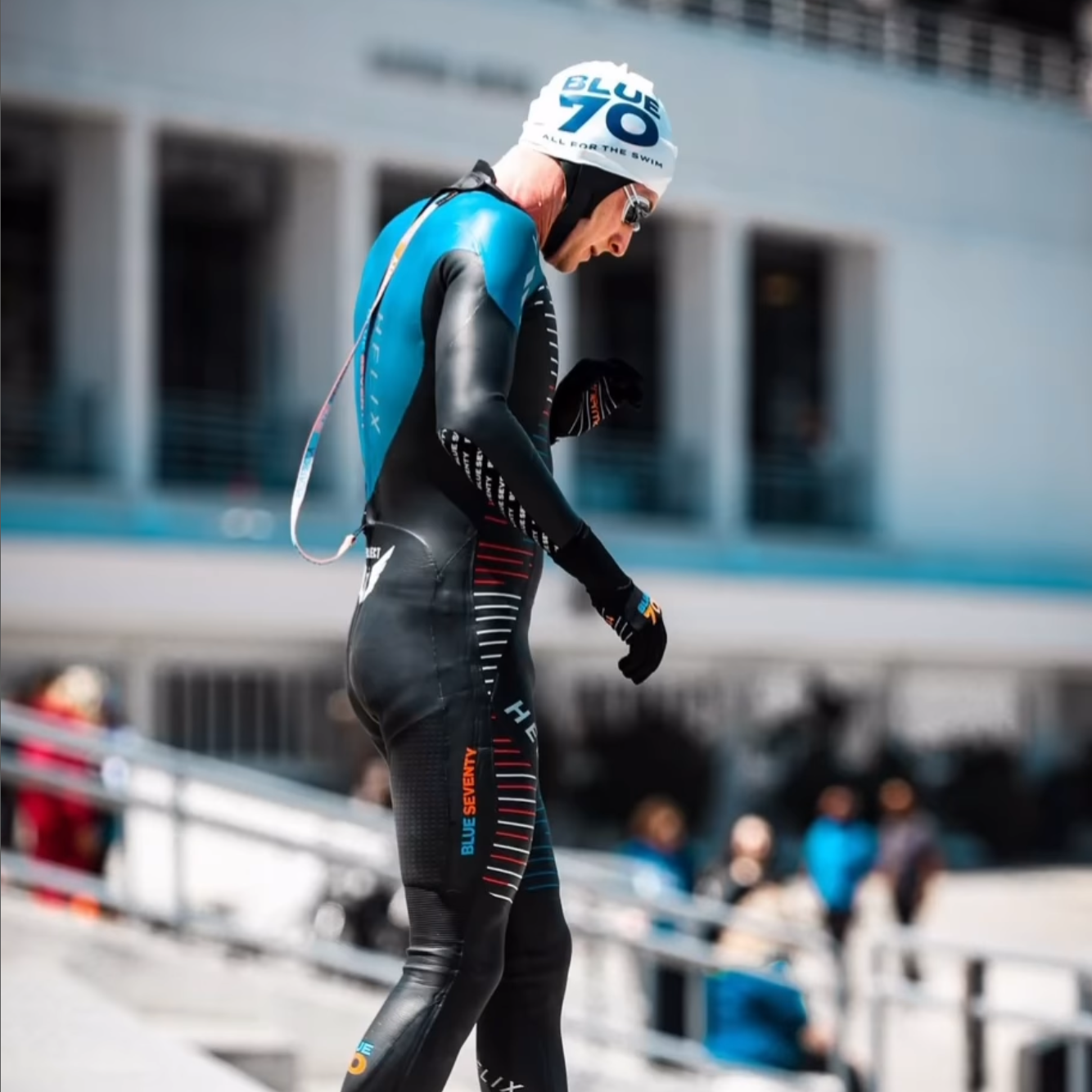
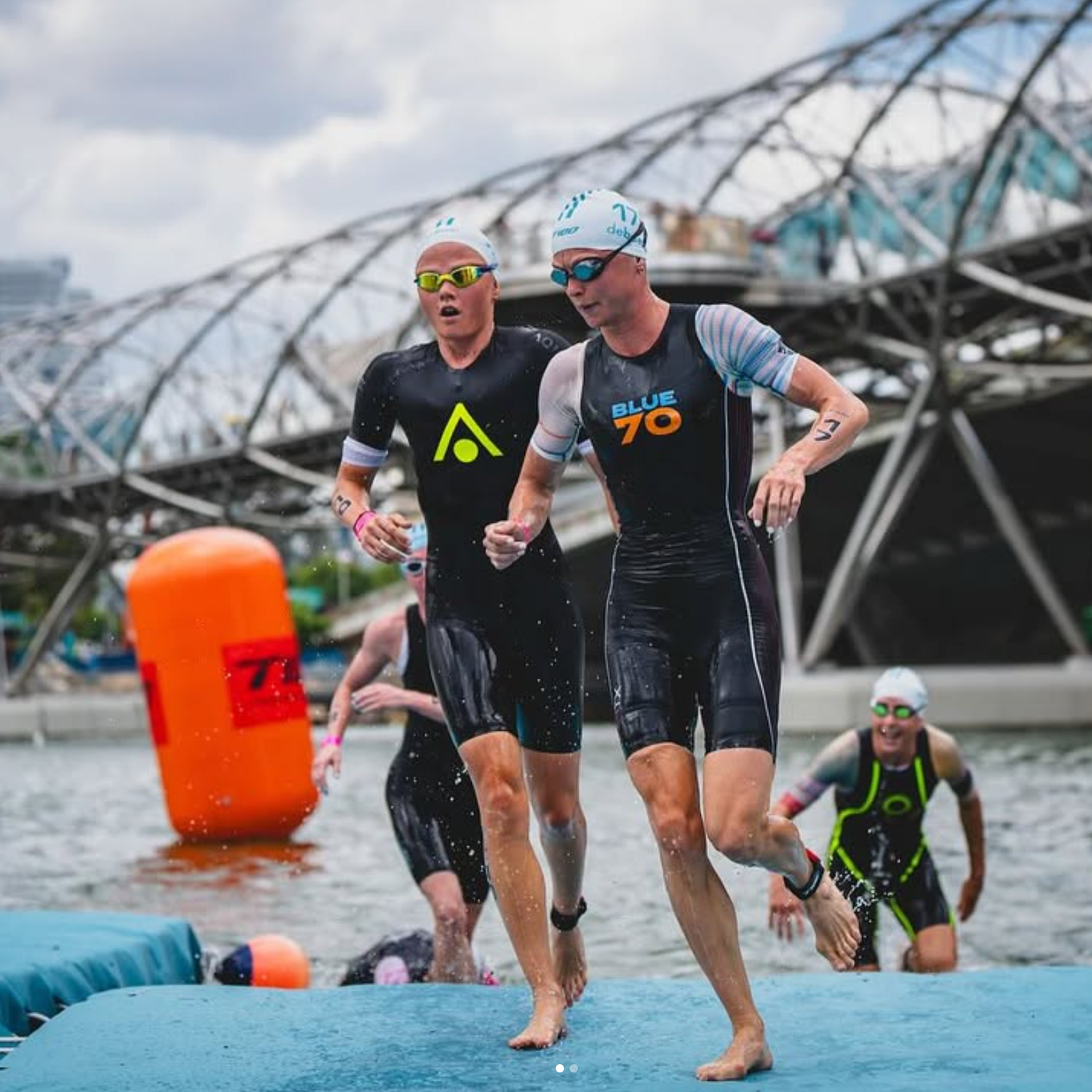
Blue70 wetsuits are built around that idea. Every Blue70 suit uses Yamamoto neoprene in 38, 39, or 40 cell grades. The cell count isn't a marketing number, it's a functional one: higher cell counts mean a more open-cell structure and more flexibility. That's why the panels across the shoulders and lats on a race suit like the Helix use the most flexible neoprene in the line, while thicker panels through the core and legs carry the buoyancy.
The Trade-Off Nobody Puts on the Box
There's a real cost to that flexibility, and Blue70 says so directly. Thinner, more supple neoprene, the kind that makes a race suit feel almost weightless through the shoulders, breaks down faster with repeated use. That's exactly why swimmers training in open water once a week or more get steered toward the Reaction or Fusion lines instead of the Helix. The Helix is built to win a swim leg. Reaction and Fusion are built to survive a training season first.
What a Swimskin Asks of Your Kick
A swimskin adds zero buoyancy. It isn't neoprene, and it was never meant to change your body position. What it changes is surface friction and how water moves across the fabric at speed. Because it does nothing for flotation, a swimmer who's used to a wetsuit holding their legs up will feel the difference fast, especially in the final third of a swim when fatigue starts pulling the legs down anyway.
Here's the part most gear comparisons skip: swimskins reward a strong, engaged kick and a stable core, because there's no external buoyancy compensating for a sinking lower half. If your current technique leans on wetsuit-assisted body position, a warm-water, non-wetsuit-legal race isn't just a gear swap. It's a technique test. Plenty of triathletes who've only ever trained and raced in a wetsuit find this out the hard way at their first sleeveless or swimskin event, when a swim they expected to feel familiar suddenly demands a lot more from their kick and rotation.
The training takeaway is simple. If warm-water, non-wetsuit races are on your calendar, some of your open water sessions should be swum without a wetsuit. That's the only way to rebuild the kick and body-line habits the neoprene normally handles for you.
The Sleeveless Middle Ground
Between a full wetsuit and a swimskin sits the sleeveless wetsuit, and it deserves more attention than it usually gets. A sleeveless suit keeps buoyancy through the core and legs while freeing the shoulders completely. That matters in water warm enough to make a full wetsuit feel restrictive, but still cool enough, or still wetsuit-legal, to make some buoyancy worth having.
Blue70's Reaction Sleeveless is built for exactly that window. It also happens to be a solid entry point for swimmers whose main open-water anxiety is the shoulder restriction of a full suit. Take the sleeves away, and you take away the sensation most beginners describe as feeling locked in.
Fit Changes This More Than the Category Does
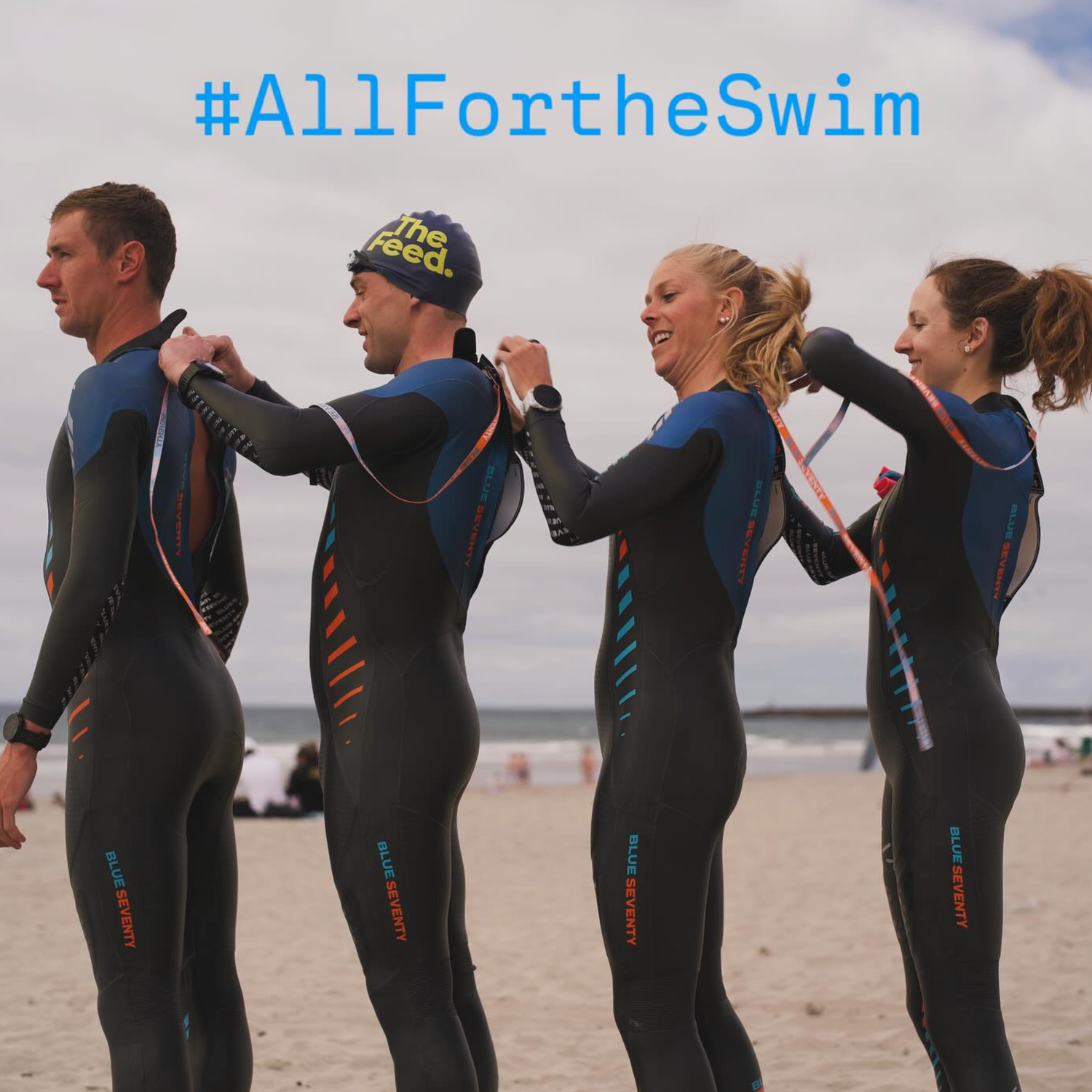
A wetsuit that fits poorly through the shoulders will cost you more in stroke fatigue than the material difference between a Helix and a Fusion ever will. Blue70's fit guidance is blunt about this: a wetsuit should feel snug, almost restrictive, on dry land, and should feel more comfortable once you're in the water and the neoprene starts moving with your stroke. A suit that already feels comfortable standing on the beach is very likely too big. And an oversized wetsuit, especially around the shoulders and armpits, will wear out your stroke long before the neoprene's flexibility grade ever becomes the limiting factor.
Swimskins fail a different way. Since they add no buoyancy and depend on close contact with the body for their friction-reducing properties, a loose swimskin doesn't just look sloppy, it creates fabric drag that can undo the entire reason you picked one. Sizing down slightly on a swimskin is usually the right call, which runs against the instinct most triathletes bring over from fitting a wetsuit.
If you're not sure which category, or which size, is right for an upcoming race, that's exactly what a Test Swim is for. Blue70 lets you swim in a wetsuit and still return or exchange it, as long as it comes back clean, dry, and with tags and accessories attached. That takes most of the risk out of comparing a full wetsuit against a sleeveless model, or dialing in fit, before race day actually arrives.
Build a Season-Long Kit, Not a Single Answer
The framing that actually holds up for anyone racing more than once a year isn't wetsuit versus swimskin. It's accepting that most competitive age-groupers eventually need both, because their race calendar spans different water temperatures and different rulebooks. A spring race in 58°F water and a late-summer race in 76°F water aren't the same swim leg in different outfits. They're two separate physiological problems. One rewards buoyancy and thermal protection. The other rewards drag reduction and a body position you can hold on your own, without help from the neoprene.
Treating that as one decision misses the point entirely. Treating it as two separate questions, one per race, based on that race's actual water and its actual rules, is the version of this that holds up across a full season. Check the rulebook first. Match the suit to the water in front of you. And train your kick on the days the wetsuit won't be there to do the work.