


Ask ten triathletes about wetsuit lubricant and most will give the same answer: it helps the suit come off faster. That is true, but it is only part of the story. On the legs, lubricant affects comfort during the swim, friction at the ankle and calf, and how smoothly the suit clears the heel when the swim is over. For open water swimmers, it can prevent a small hotspot from turning into a raw patch after an hour in the water. For triathletes, it can make the difference between a clean T1 and a wrestling match at the bike rack.
The mistake is treating leg lubricant like a magic fix. It is not. If your wetsuit is sitting too low, bunching at the calf, or twisted around the ankle, no product will solve the real problem. Good use starts with a swim-specific wetsuit that fits properly, followed by careful donning, then a light, targeted application only where friction costs you comfort or control.
Why the legs matter more than most athletes think
Shoulders get the attention because shoulder restriction is obvious. Leg friction is quieter. It builds one kick at a time. The back of the knee flexes thousands of times in a swim. The inner thigh rubs on longer efforts. The ankle opening has to stay comfortable in the water, then peel over the heel when you are trying to get to your bike without wasting time.
That is why lower-leg setup matters. If the neoprene is pooled at the ankle or bunched at the calf, you feel the consequences in two places: during the swim, when the suit rubs, and during removal, when it sticks.
The real jobs of leg lubricant
Leg lubricant does two different things, and it helps to separate them.
- Skin protection: It reduces rubbing in known hot spots such as behind the knee, at the inner thigh, or near the ankle opening.
- Cleaner suit removal: It helps the lower leg slide out more easily, especially around the ankle, Achilles, and heel during T1.
Those jobs overlap, but they are not identical. An athlete training for long open water swims may care more about preventing chafing behind the knee. A triathlete racing an Olympic-distance event may care more about getting the suit off cleanly at the ankle. Same product category, different purpose.
The contrarian truth: many lubricant problems are really fit problems
Athletes often blame friction on the lack of lubricant when the real issue is that the suit was never pulled fully into place. If the lower body is not worked up in small increments before the torso is adjusted, extra material collects where you do not want it. The crotch can sit low. The calf can feel crowded. The ankle area can wrinkle. Once that happens, the suit starts fighting you.
This is one of the least glamorous parts of wetsuit performance, but it matters. A properly fitted suit should feel snug on land and settle more naturally once you are in the water. If you rush the donning process, lower-leg friction usually gets blamed on product choice when it started with setup.
Where to apply lubricant on the legs
The best applications are small and deliberate. More is rarely better.
Ankles and Achilles
This is the highest-value zone for most triathletes. A light layer around the ankle bones and Achilles can help the suit release more cleanly when you step out of it in transition.
Lower calf
If your suit tends to catch just above the ankle, a small amount here can help. Keep it thin. You want slip, not a heavy coating.
Behind the knee
This is a common chafe point for swimmers who train often in their wetsuit or spend longer stretches in open water. If that area finishes red or irritated, this is a smart place for a little protection.
Inner thigh
Some swimmers need lubricant here on longer swims, especially in salt water. If this is not one of your friction zones, skip it.
Where not to use it
Do not coat the whole leg. Heavy application makes the suit harder to grip while you are putting it on and leaves residue where you do not need it. Target the known problem spots and stop there.
Use a lubricant that is safe for neoprene
This part is simple. Use a product that is intended for wetsuit use and safe for neoprene. Petroleum-based products can break down neoprene over time, so they do not belong in your routine.
That matters across the Blue70 line, and it matters even more when you are dealing with high-performance materials. Blue70 wetsuits use Yamamoto neoprene in 38, 39, and 40 cell, with higher cell numbers bringing more flexibility. Those materials are chosen for swimming performance, body position, and freedom from restriction. They should be treated with the same care you give any piece of performance equipment.
How this plays out on race day
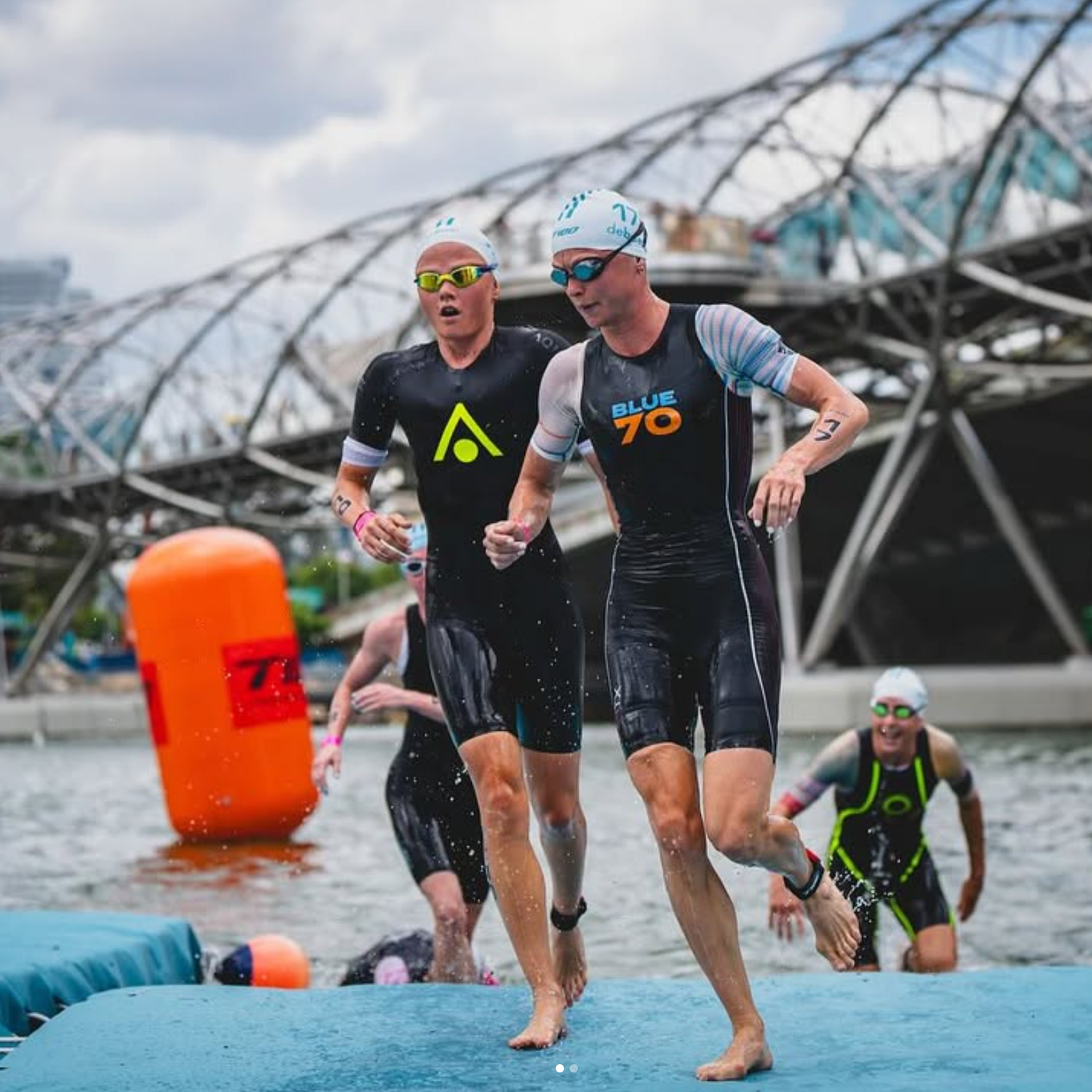
For triathletes, the lower leg is where wetsuit removal becomes real. The shoulders and torso may come down quickly, but the ankle and heel are the places where an otherwise smooth exit can stall. That is why leg lubricant has a place in race prep, though it works best when it supports a process you have already practiced.
A cleaner T1 starts before the horn. It depends on fit, donning, and removal mechanics as much as product choice. If you have never practiced stepping out of your suit after an open water swim, race morning is a rough time to learn where your ankles tend to trap.
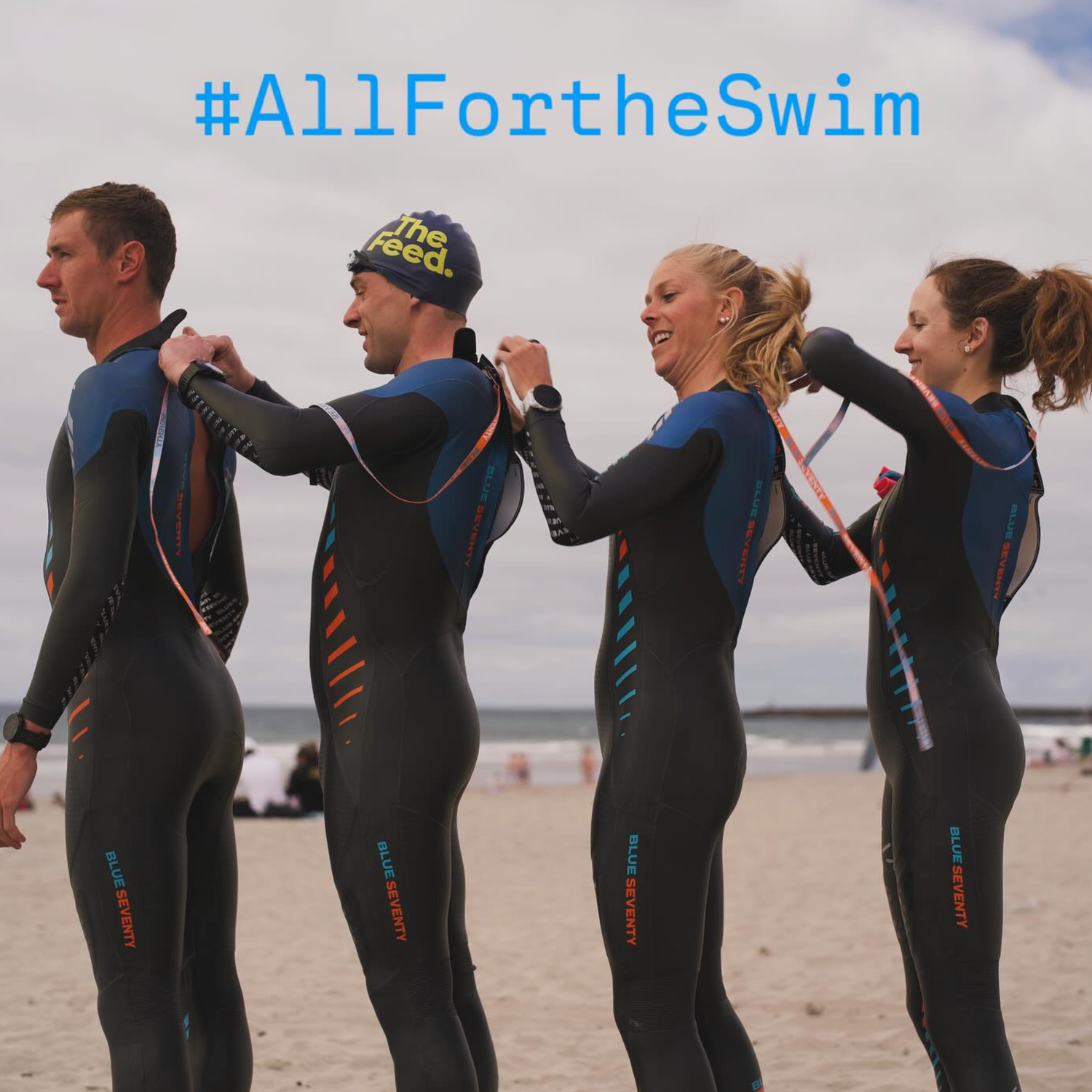
- Pull the suit fully into place before zipping it.
- Apply a thin layer of lubricant at the ankles and Achilles.
- Add a small amount behind the knee only if that area rubs.
- After the swim, strip the suit down promptly and step out with intent.
That sequence does more than a thick layer of product ever will.
Open water swimmers should think about comfort over time
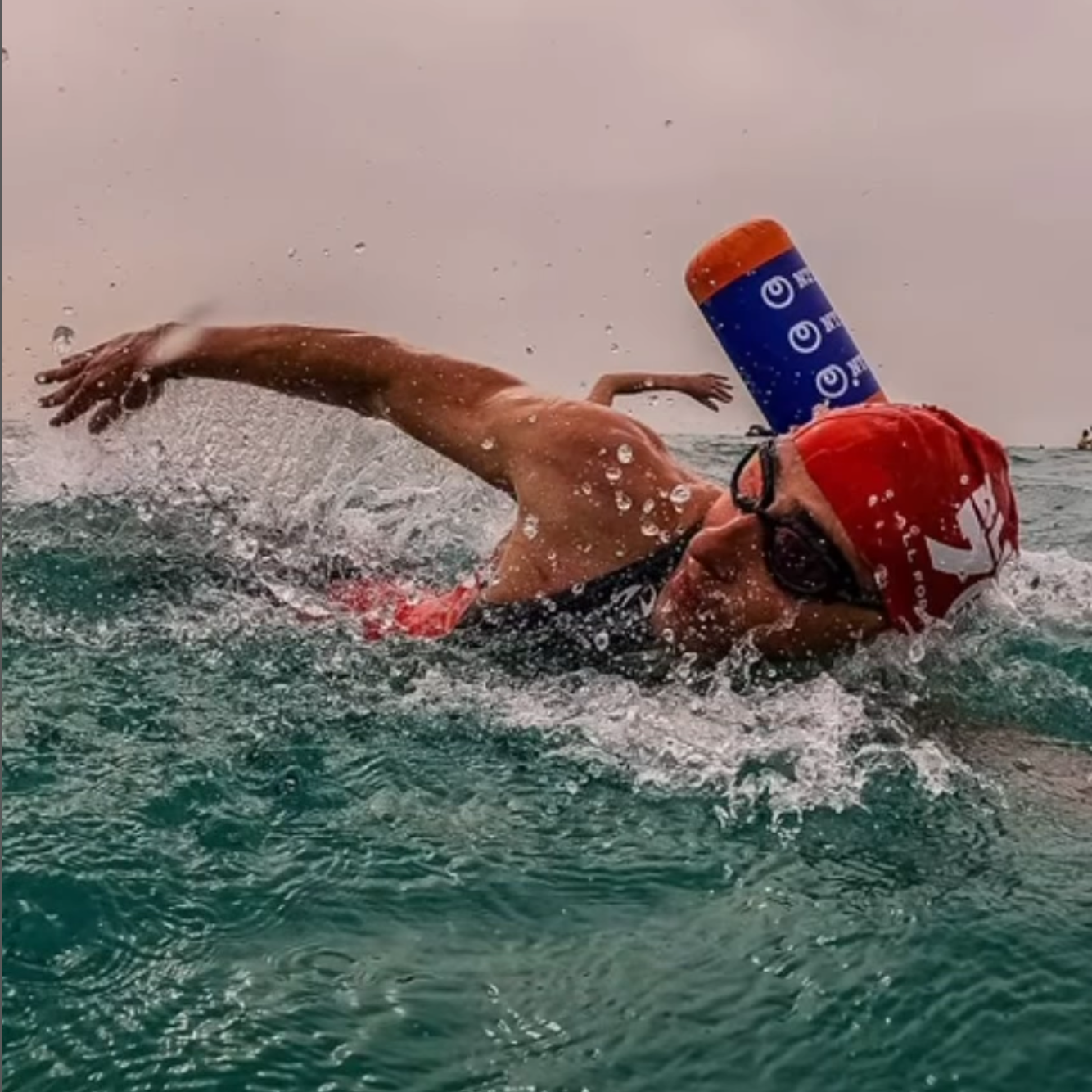
If you are not racing triathlon, the equation changes. You are less concerned with transition speed and more concerned with repeated friction over distance. A hotspot behind the knee may seem minor for the first twenty minutes, then become all you can think about later in the swim. A small amount of lubricant in that exact location can keep your focus on your stroke instead of your skin.
Water temperature changes the context too. Blue70’s guidance puts the threshold for a purpose-built thermal suit at about 56 to 58°F. Below that range, a model such as the Thermal Reaction is designed to add thermal protection for cold-water swimming. Above about 70 to 72°F, a full suit can become too warm over longer swims, which is why some swimmers shift toward sleeveless options depending on the session. Lubricant does not solve temperature management, but it can reduce avoidable friction within the setup that makes sense for the conditions.
A simple routine that works
If you want a repeatable system, keep it narrow.
For triathlon
- Apply a thin layer at the ankles.
- Add a little around the Achilles.
- Extend lightly onto the lower calf only if the suit catches there.
- Use behind the knee only if you know that area chafes.
For open water training
- Use lubricant only at proven hot spots.
- Behind the knee and inner thigh are the most common.
- Skip broad application across the full leg.
After the swim
- Rinse the suit.
- Note where friction actually happened.
- Adjust placement next time instead of adding more everywhere.
When lubricant is the wrong answer
Some problems point back to fit, not friction management. If the suit is hard to pull high enough on the legs every time, if the crotch keeps sitting low, or if the calf feels over-compressed, pause before changing products. Those are signs to reassess sizing, model choice, or how you are putting the suit on.
Blue70’s model guidance reflects that same practical approach. Athletes who train frequently often do better in the Reaction for longer swims or the Fusion for shorter frequent swims, while the Helix is built for top-end race-day performance. The right suit for your actual use matters more than any accessory decision.
Final take
Leg lubricant works best when you stop thinking about it as a shortcut. It is a finishing detail. It protects skin in known friction zones, helps the suit clear the ankle and heel more cleanly, and supports a good wetsuit routine. It does not replace fit. It does not rescue a rushed donning job. It does not belong all over your legs.
Use a wetsuit-safe product. Apply it lightly. Put it where the problem actually is. Then test your system in the water, not in theory. If you want to dial in your setup, start with fit and take a practice swim before race day. That tells you more than any guesswork ever will.