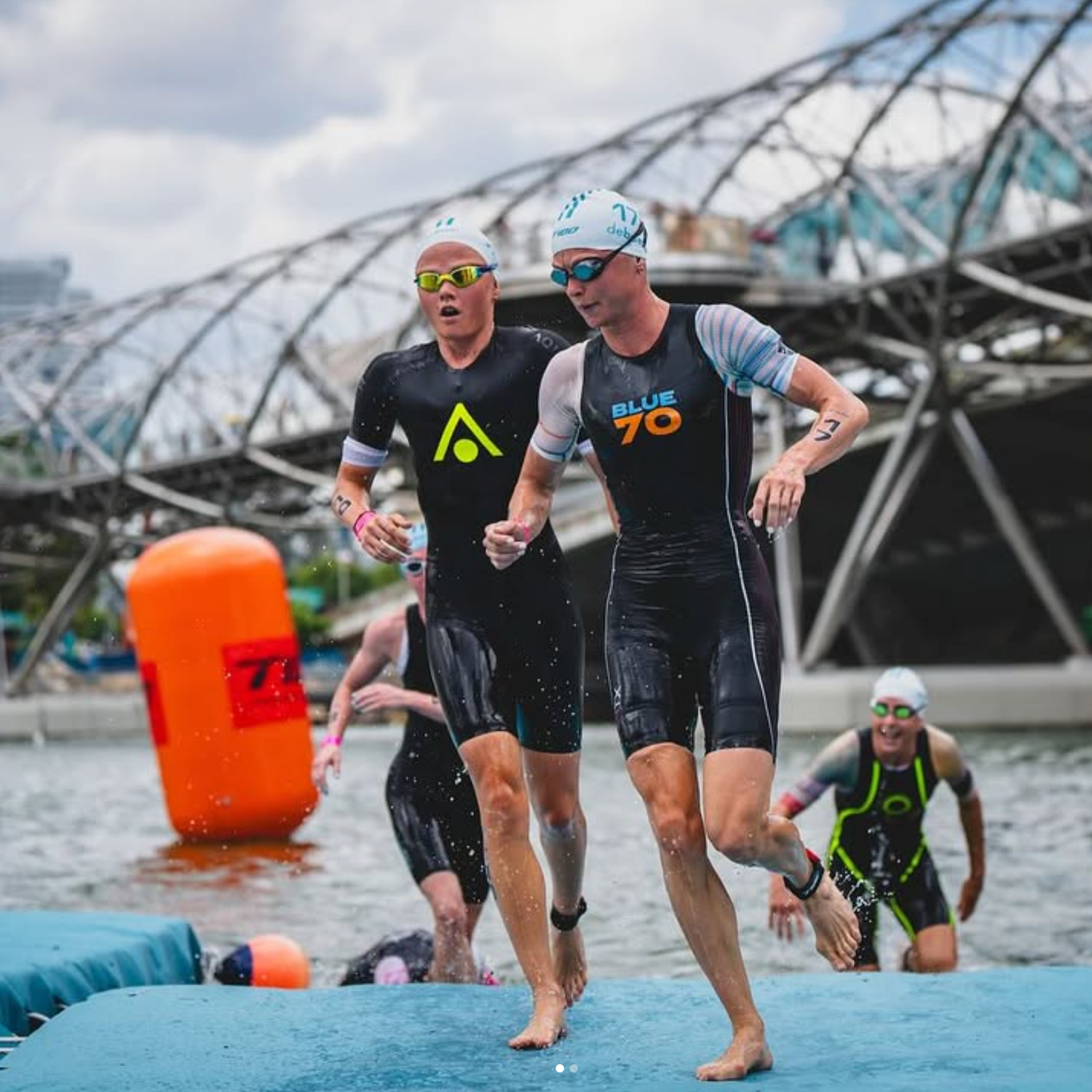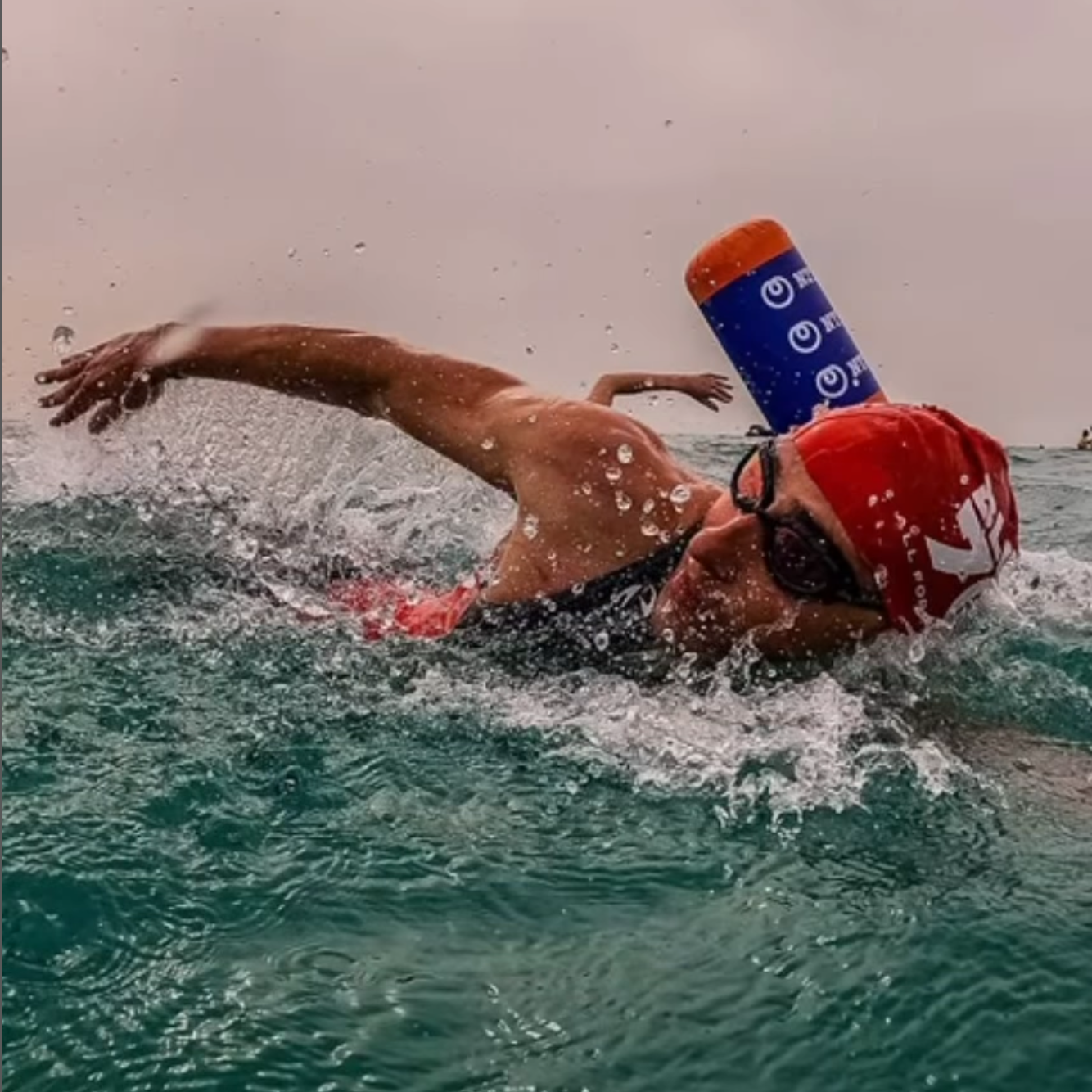



Your wetsuit is supposed to lift your legs. A suit that holds your hips and thighs high helps you swim flatter and faster, especially in open water. The trouble starts when your feet and ankles ride so high that your kick loses contact with the water. Swimmers often call this heavy legs, but what they are really feeling is a lower body that has floated past the point where the kick can do useful work.
This feeling usually comes from one of two places. The suit may be sitting too low or too loose through the thighs and calves, or your kick has not yet adjusted to the new hip position. Both are fixable. Neither requires buying a different wetsuit, at least not right away.
What Heavy Legs Means in a Swim Wetsuit
The term heavy legs describes excessive elevation through the lower legs, not actual heaviness. In a swim-specific wetsuit, the torso and hips get the most lift. If the suit fits correctly, the lower legs should still have enough connection to the water for a normal kick. When the feet and ankles float too high, the kick loses purchase. You may not feel slower, but you will feel less stable, and you will notice the extra effort in your shoulders and core as you fight to stay balanced.
blueseventy suits are cut for a horizontal body position. They are not surf suits or scuba suits built for a more upright posture. The panel shapes and necklines assume you will be swimming face-down at speed. That is why most buoyant-leg complaints trace back to one of two things: the suit is sitting too low or loose in the lower body, or the kick has not adapted to the higher hip line.
Panel Placement and Lower-Body Lift
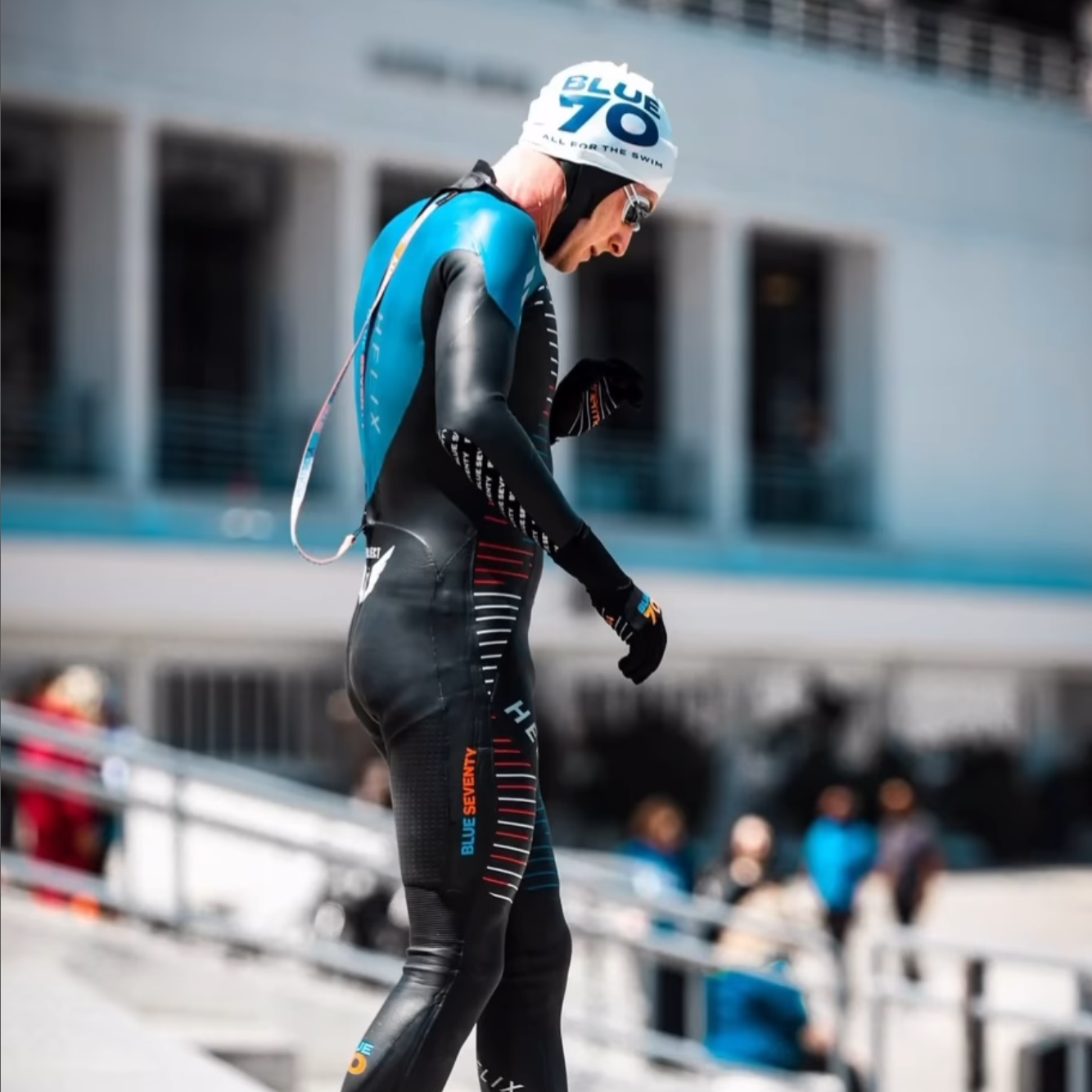
Modern swim-specific wetsuits use graduated panels instead of uniform neoprene through the legs. blueseventy builds with Yamamoto neoprene in 38, 39, and 40 cell, with higher cell numbers indicating more flexibility. The Helix, at $995, pairs thin, flexible neoprene in the arms and shoulders with LIFT buoyancy panels added in 2018, plus a permeable catch panel on the forearm that has been part of the Helix since 2010. The intent is targeted lift through the hips and torso while the upper body and catch stay free.
Extra neoprene below the knee changes the balance. If your suit bunches above the knees or rides low in the crotch, the effective coverage shifts. You end up with more material through the calves, and that shifts lift downward. That is the root of the floating-heel feeling.
Fit Checks Before You Change Your Kick
Fit is the first lever to pull. A suit that sits too low in the crotch leaves extra neoprene through the thighs and calves. That extra material adds surface area and lift below the knee, exactly where you do not want it when you are trying to keep your kick connected to the water.
- Pull the suit up until the crotch sits high and the ankle cuffs lie flat against the skin.
- Check for folds or bunching behind the knees and through the calves.
A suit that is too large through the lower legs will bunch and trap water. Remove that fold before you change the kick. blueseventy fit guidance starts from one point: a suit should feel snug on dry land and more comfortable in the water. If it feels loose before you swim, you are carrying material you do not need.
For women, the Femme Fit pattern refines the bust, torso, wrists, and ankles. The ankle refinement helps prevent extra neoprene from flaring at the lower leg, which can contribute to that floating-heel feeling. A size chart check and a test swim answer most fit questions.
Kick Timing After the Suit Lifts Your Legs
Even a well-fitted suit changes kick timing. The hips sit higher, so the leg travels through a smaller range before the foot breaks the surface. Some swimmers respond by kicking from the knee, which keeps the feet high and the knees low. That makes the floating-leg sensation worse. Instead, kick from the hip with a relaxed ankle.
- Kick from the hip with a relaxed ankle.
- If the feet still pop out, shorten the kick slightly and keep the tempo steady rather than faster.
A two-beat kick works for many swimmers in a wetsuit because the suit already provides the hip support a six-beat kick often supplies in a pool. Test it during easy 50s and notice whether the kick starts at the hip or the knee. Leg swing can also come from too little rotation. Rotate from the shoulders. A high hip position exposes a shallow body-roll habit. If the torso stays flat and the legs steer, the lift can feel like a rudder pulling the feet sideways. Let the hips follow the shoulders.
When a Short-Leg Suit Matches the Conditions
A full suit wraps the calves and ankles in neoprene. In warm water, or for a swimmer with naturally buoyant legs, that lower-leg coverage can feel like too much. The Glide Short John at $210 covers the torso and upper thighs but leaves the lower legs free. That reduces the floating-heel sensation in warm conditions. Water above roughly 70 to 72 degrees Fahrenheit can make a full suit too warm over longer swims, so the short john matches the conditions. If you swim mostly in colder water, the full suit remains the better thermal choice, and the fit and kick adjustments matter more than the cut.
Two Reactions That Make It Worse
When the feet ride high, the instinct is to add more buoyancy or kick harder. Both make the problem worse. Extra lift raises the feet further out of the water. Kicking harder from the knee adds splash, not traction. The useful direction is to remove excess lower-leg material or change the kick's source. If you swim in a short-leg suit and the feet still pop, the issue is technique or core connection, not the panel layout.
If the suit still feels wrong after the fit and kick checks, take a Test Swim in a different size or cut. blueseventy lets you swim in a wetsuit and still return or exchange it as long as it comes back clean, dry, unmodified, and with tags attached. Start there. Happy swimming.