


Most athletes hear the wetsuit ruling and think one thing: gear choice. In ITU-style racing, that call does far more than decide what you wear to the start line. It changes how the swim unfolds, how much your stroke can drift before the cost shows up, and how you should think about the first minute of T1.
That is the part worth paying attention to. A wetsuit-legal swim and a non-wetsuit swim are not just two versions of the same effort. They reward different strengths. One gives many athletes extra lift and a cleaner body line. The other exposes raw swim mechanics more quickly. If you race short course, draft-legal formats, or any event where swim position shapes the day, that distinction matters.
One note before getting into race strategy. ITU history still shapes how athletes talk about these events, but current rules sit under World Triathlon and event-specific guidance. Temperature cutoffs, athlete categories, and measurement procedures can change, so any race-day decision should start with the official event information. [VERIFY: current World Triathlon wetsuit-temperature rule and category distinctions]
Why this rule carries more weight in ITU-style racing
In many triathlons, the swim spreads athletes out and starts the day. In ITU-style racing, the swim often decides who gets the right ride. Position into the first buoy matters. A missed surge matters. Five seconds of hesitation can matter.
That is why the wetsuit ruling has a bigger tactical effect than many athletes expect. When a wetsuit is legal, many swimmers hold a higher position in the water and spend less energy trying to keep the legs from dropping. When it is not legal, the race asks for more self-supported balance through the kick, torso, and catch. Same course, same distance, different physical demands.
If you have ever felt smooth and in control in neoprene, then strangely busy and short in the stroke without it, you have felt this difference already. The rule did not only change your warmth or comfort. It changed the shape of the swim.
The temperature number does not tell the whole story
Athletes usually start with a reasonable question: will I want a wetsuit if the rules allow it? The better question is this: what happens to my stroke and race plan if the answer changes on race morning?
A legal ruling does not tell you how your shoulders will respond after a hard 300 meters. It does not tell you how much extra kick you will need if you lose buoyancy support. It does not tell you how your breathing settles when your body line sits lower in the water. Those are race-specific questions, and they are the ones that decide how comfortable or ragged you feel by the first turn.
Two athletes can look at the same temperature reading and get very different outcomes because one depends on neoprene for position while the other already holds that position without help. That difference becomes clear fast.
What changes when wetsuits are legal
A swim-specific wetsuit is built to support speed in the water by improving body position and reducing drag. That does not guarantee a faster split, but it changes the mechanics of the swim in ways most athletes notice right away.
Buoyancy is the first change. Lift through the hips and legs helps many swimmers stay longer and flatter in the water. For athletes whose legs sink as effort rises, that support can reduce wasted energy and make race pace feel more stable.
Fatigue pattern is the next change. If the suit fits well and sits correctly through the shoulders, many swimmers can hold better form deeper into the swim. That matters in races where the start is hard and the pace changes do not stop once the field sorts itself out.
Tactics also shift. A wetsuit-legal swim often gives athletes more room to be assertive early because body position is easier to maintain under stress. That does not remove the need for control. It changes the penalty for getting a little overexcited in the first minutes.
For less experienced swimmers, the benefit is often larger because the suit supports a part of the swim that is still developing. blueseventy’s own guidance puts it simply: buoyancy equals speed in the water. Athletes with less efficient body position usually feel that effect most clearly.
What changes when wetsuits are not legal
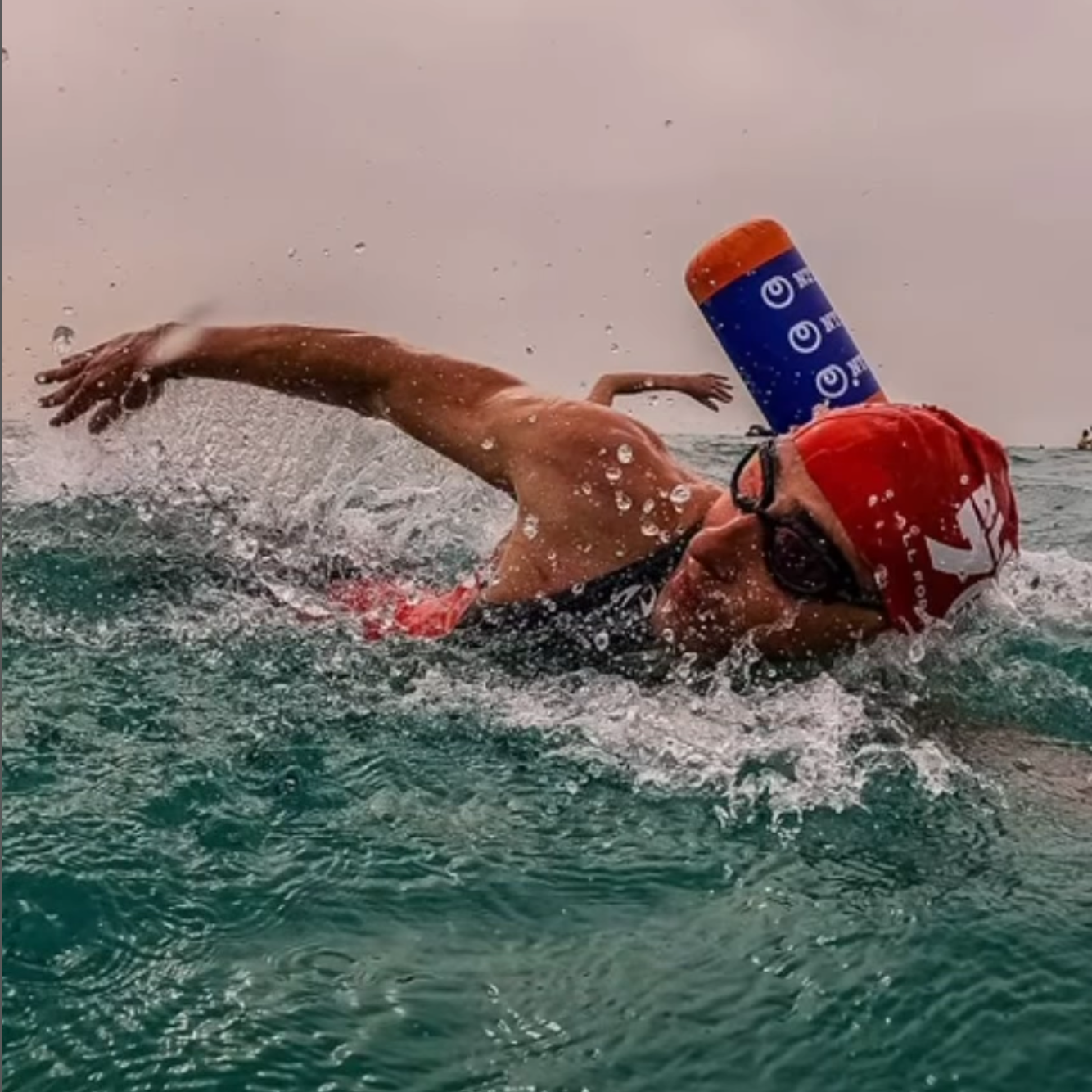
Take the suit away and the swim becomes more direct. A dropped elbow shows up sooner. A wide, wasteful kick shows up sooner. A poor start that drives heart rate too high can break the stroke apart sooner.
Non-wetsuit racing puts more weight on three things:
- holding a balanced body line without extra lift
- catching clean water early in the stroke
- pacing hard efforts without losing shape
This is where many triathletes get caught out. They do most open-water training in a wetsuit, then arrive at a race near the cutoff and discover that their non-wetsuit stroke feels rushed or flat. Confidence is part of it, but mechanics are the real story. Stroke timing changes. Rotation pressure changes. Kick demand changes. Even sighting can feel different because your body sits differently in the water.
Borderline temperatures are where mistakes stack up
The toughest races are often not the coldest or warmest. They are the ones near the line, where athletes spend race week assuming one outcome and wake up to another.
That uncertainty creates a common taper mistake. Athletes prepare only for the swim they hope to get. If the call changes, the race suddenly feels unfamiliar.
The better approach is to keep both versions in play. If conditions and safety allow, include some wetsuit and non-wetsuit open-water work in the final build toward the race. The point is not extra volume. The point is preserving the feel of both strokes so race morning does not become an adjustment session.
A wetsuit changes how early the catch connects, how high the hips ride, and how much kick you need to maintain line. If you have not felt those differences recently, you will notice them when the gun goes off.
What wetsuit design changes on race day
Once the race is wetsuit legal, design details matter. In fast triathlon swimming, especially in shorter events, a suit has to do more than float. It has to let you turn over cleanly, hold water at the front of the stroke, and stay comfortable enough that you are not fighting the suit while trying to race.
blueseventy uses Yamamoto 38, 39, and 40-cell neoprene across its wetsuit line. Higher cell numbers give more flexibility, which matters in the shoulders and arms where restriction becomes obvious early. That is part of why top-end race suits focus so heavily on freedom through the stroke.
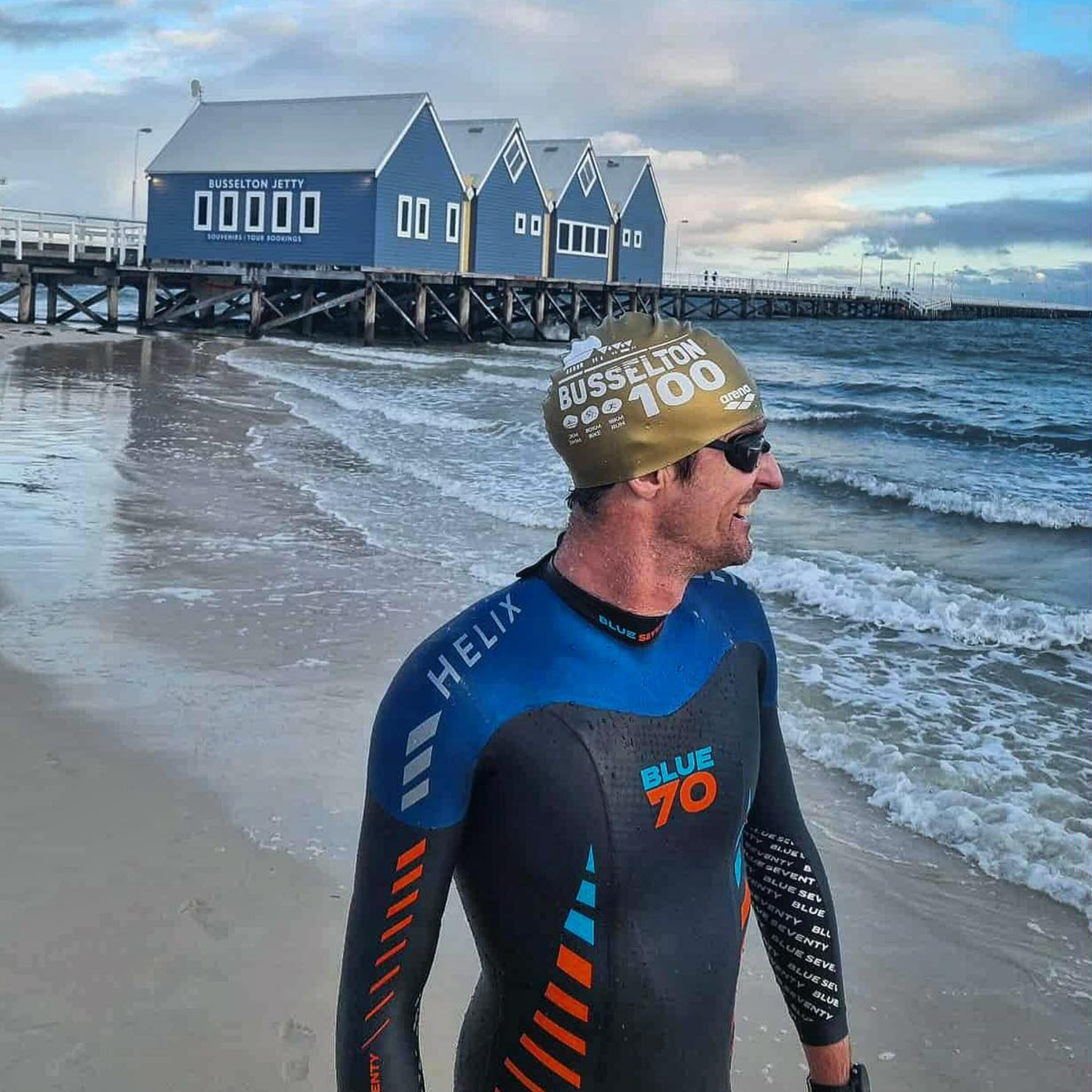
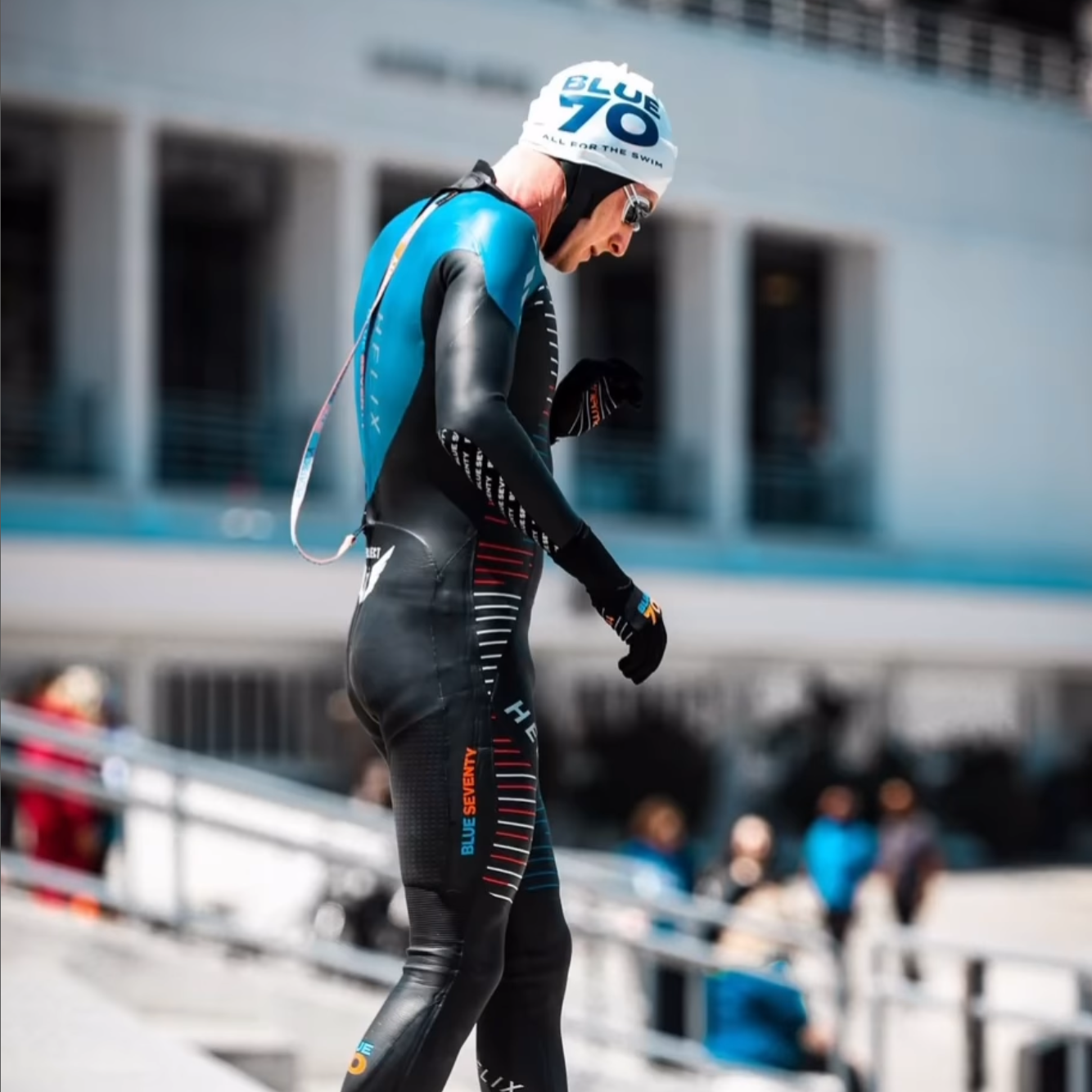
Buoyancy placement also matters. Lift is helpful, but where that lift sits matters just as much. Panels that support the lower body can improve line and reduce drag without making the stroke feel disconnected. blueseventy added LIFT buoyancy panels to the Helix in 2018 with that goal in mind.
Then there is feel for the water. Swimmers who come from a pool background often notice right away when a suit dulls the front end of the stroke. The Helix addresses that with a permeable catch panel designed to preserve feel through the catch while still serving race-day performance.
Cold-water conditions introduce another variable. blueseventy’s published guidance notes that below about 56 to 58°F, a purpose-built thermal suit adds meaningful warmth. The Thermal Reaction is built for that job with a full Zirconium jersey lining for added thermal protection in cold-water swimming. That is different from saying any wetsuit keeps every athlete warm in every condition. Water temperature, time in the water, and the swimmer all matter.
Fit decides whether the suit works the way it should
Even a well-designed suit can feel wrong if it is not put on correctly. This shows up most clearly in ITU-style racing because the intensity of the swim exposes small fit errors right away.
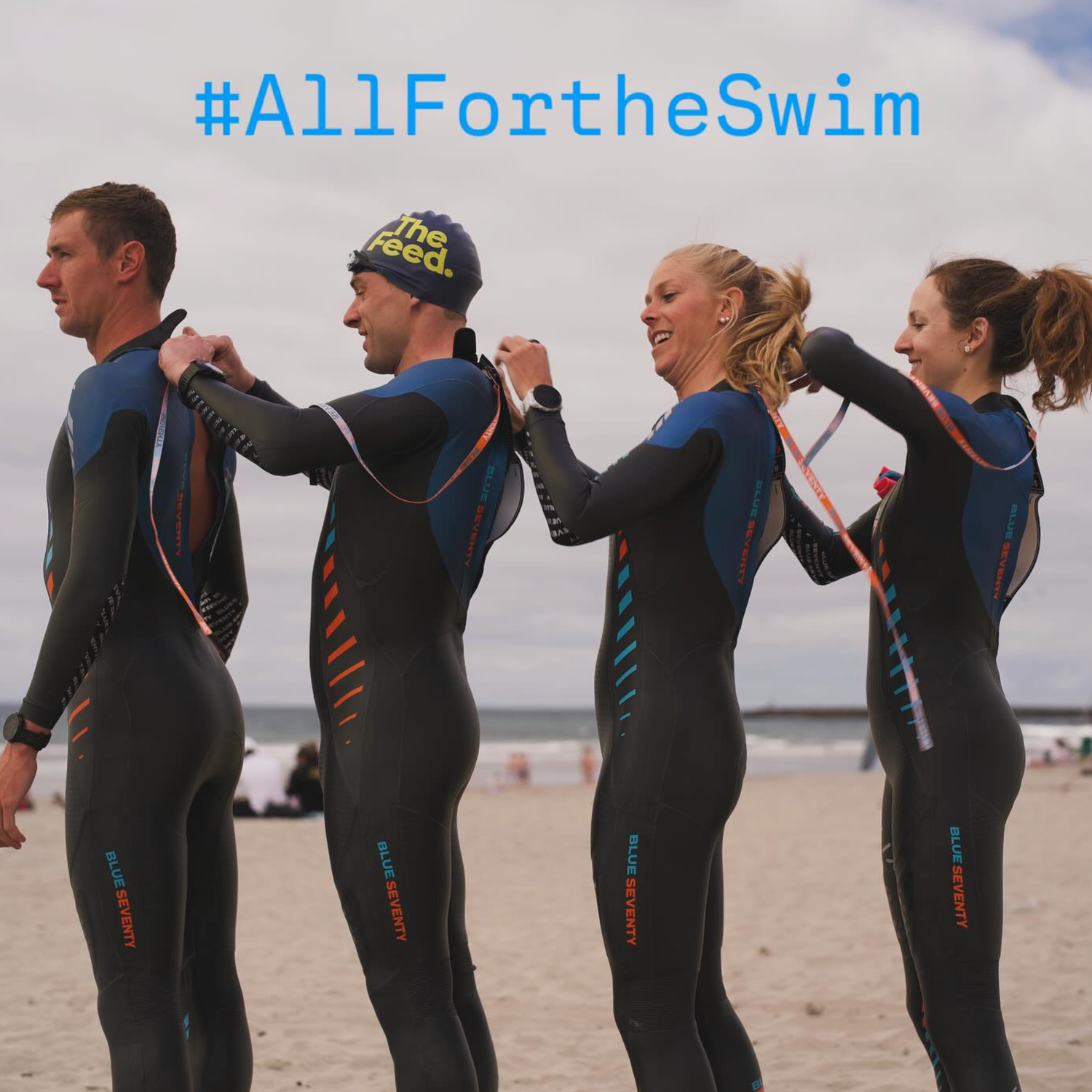
A triathlon wetsuit should feel snug on land. In the water, it should settle and move better once the neoprene is fully positioned. The most common mistake is leaving material too low through the legs and torso, which steals freedom from the shoulders. Athletes often describe this as stiffness, but poor donning is usually the real problem.
Before the start, take time to position the suit in order:
- pull the legs high enough that there is no slack around the knees
- seat the crotch fully before moving higher
- work the material up through the hips and torso
- settle the sleeves and shoulders last
- close the neckline so it lies flat and does not fold
That small routine can change how your stroke feels in the first 300 meters.
How to train for the ruling instead of reacting to it
The strongest race plans do not depend on one outcome. They build familiarity with both.
Pair key sessions
During race-prep weeks, swim one open-water session in a wetsuit and another without one if conditions and safety allow. Keep the main set similar so you can compare body position, breathing rhythm, and how stable your sighting feels at pace.
Practice the first five minutes
Many athletes spend more time thinking about average swim pace than about the opening phase that creates the race. In ITU-style formats, the first minutes are where legality changes the feel of the effort most.
- practice hard starts
- settle quickly to race effort
- sight while breathing under load
- turn around buoys without losing rhythm
- add short surges to mimic pack movement
Rehearse T1 both ways
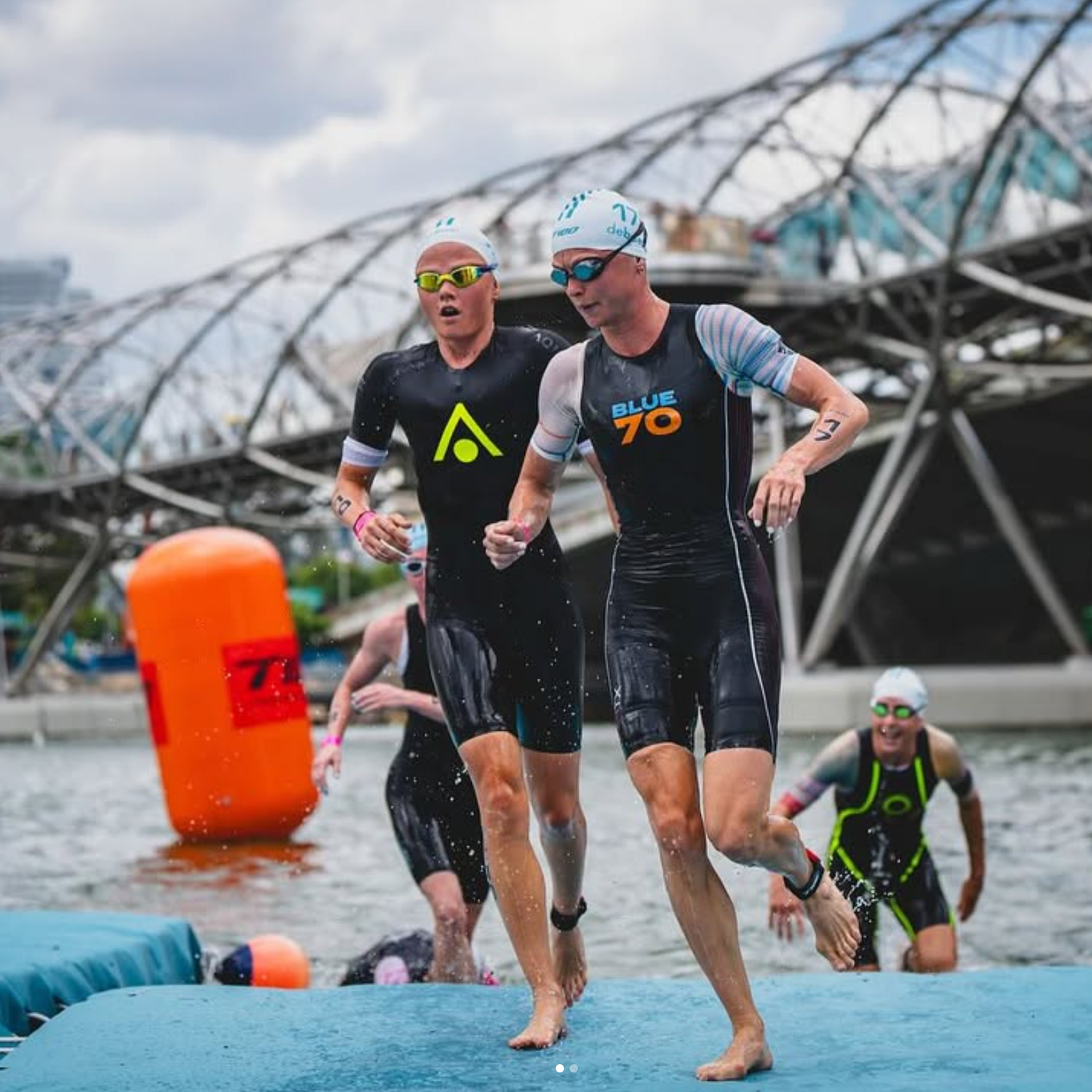
A wetsuit-legal swim creates a different transition. You have to unzip cleanly, manage cap and goggles, and peel the suit efficiently while moving. A non-wetsuit swim simplifies that sequence. Those differences affect more than comfort. They affect how you budget effort through the end of the swim and into the bike.
Keep some non-wetsuit technical work in your training year
If your stroke only feels good in neoprene, your body position still needs work. Pool sessions can help, but open-water non-wetsuit swimming gives you the clearest feedback because it ties posture, breathing, sighting, and pacing together in one place.
The race lesson many athletes overlook
The useful question is not whether you prefer the race to be wetsuit legal. The useful question is how quickly you can change your plan when the ruling becomes official.
Athletes who adapt well usually ask better questions. If wetsuits are legal, they think about where buoyancy lets them save energy and how that changes T1. If wetsuits are not legal, they think about kick demand, breathing control, and how to protect stroke quality under pressure.
That mindset is more valuable than having a strong opinion about the rule. You are not responding to a number on a thermometer. You are adjusting to a different version of the race.
Race-week checklist for events near the cutoff
If the water temperature could go either way, prepare both branches of the plan before you arrive.
- pack your wetsuit and check it for fit issues or damage
- bring anti-chafe product suitable for swimming
- pack more than one goggle option for likely light conditions
- bring warm pre-race layers for waiting around the start
- organize your non-wetsuit setup as a complete backup plan
- read the athlete guide for temperature measurement procedures
- review any category-specific rule differences [VERIFY: current World Triathlon age-group and elite distinctions]
That kind of preparation makes the ruling feel procedural instead of disruptive.
Choosing a blueseventy suit for the conditions you race in
If the race is wetsuit legal, the right suit still depends on water temperature, race demands, and how often you train in it.
The Helix is built for race-day performance, with very thin, highly flexible neoprene in the arms and shoulders, a permeable catch panel, and LIFT buoyancy panels. It is aimed at athletes chasing every available advantage in the water. blueseventy is also clear that the Helix is not the best choice for heavy training use because that thin neoprene is built with race-day priority in mind.
The Reaction and Fusion make strong sense for athletes who swim often in open water and want a training-to-racing balance. The Reaction suits frequent, longer swims. The Fusion, redesigned in 2021 with a lower-sitting neckline, is a strong option for shorter frequent swims and remains a best seller for good reason.
For colder water, the Thermal Reaction is the purpose-built option in the line. For warmer conditions, some athletes prefer a sleeveless suit when event rules and water temperatures point that direction. blueseventy’s own guidance notes that above about 70 to 72°F, a full suit can become too warm over longer swims. Those are equipment-selection guidelines, not fixed race-legality rules.
If you are still working out fit or deciding between models, you can use blueseventy’s size charts or Take a Test Swim before committing, provided the suit is returned clean, dry, and unmodified.
Final thought
Wetsuit-legal temperature in ITU racing is usually discussed as a rule. Athletes feel it more as a shift in the race itself. One version rewards the swimmer who can use buoyancy and transition efficiency well. The other rewards the swimmer who can hold shape and rhythm without neoprene support.
Both are trainable. That is the good news.
If you prepare for both versions, the race-morning announcement becomes a tactical adjustment instead of a surprise. That is a better place to start any swim.