


Most advice about a wetsuit for kitesurfing starts and ends with temperature. Cold water means more neoprene, warmer water means less. That sounds tidy, but it leaves out the part that usually decides whether a session feels smooth or frustrating: how you move in the suit.
From a Blue70 perspective, that is where the real conversation starts. A wetsuit is never just a layer for warmth. It is a piece of equipment shaped around a specific job in the water. Open-water swimmers and triathletes feel that fast because every flaw in fit shows up in the shoulders, neck, and body line within minutes. Kitesurfers have a different movement pattern, but the same rule applies. If the suit fights your movement, you notice it when the session gets messy.
Kitesurfing is not one steady mode of motion. You launch in the wind, wade out, swim, body drag, ride, crash, restart, and sometimes swim more than planned. That stop-start pattern changes what matters in a wetsuit. A suit can feel fine during the easy part of the day and still become a problem once you are cold, breathing hard, or trying to recover your board in chop.
Why movement matters more than most buyers expect
Blue70 builds swim-specific wetsuits. That means the design begins with repetitive shoulder motion, efficient body position, and comfort during sustained effort in open water. The point is not to make a suit feel soft on a hanger. The point is to make it disappear enough in the water that the athlete can focus on swimming.
That same design logic helps explain why wetsuit choice for kitesurfing is more complicated than a thickness chart. A rider does not stay in one posture for long. You reach overhead, rotate through the trunk, brace against pull, kick during starts, then climb back onto the board after a fall. A suit that binds through the shoulders or twists awkwardly across the torso can turn those small actions into steady energy loss.
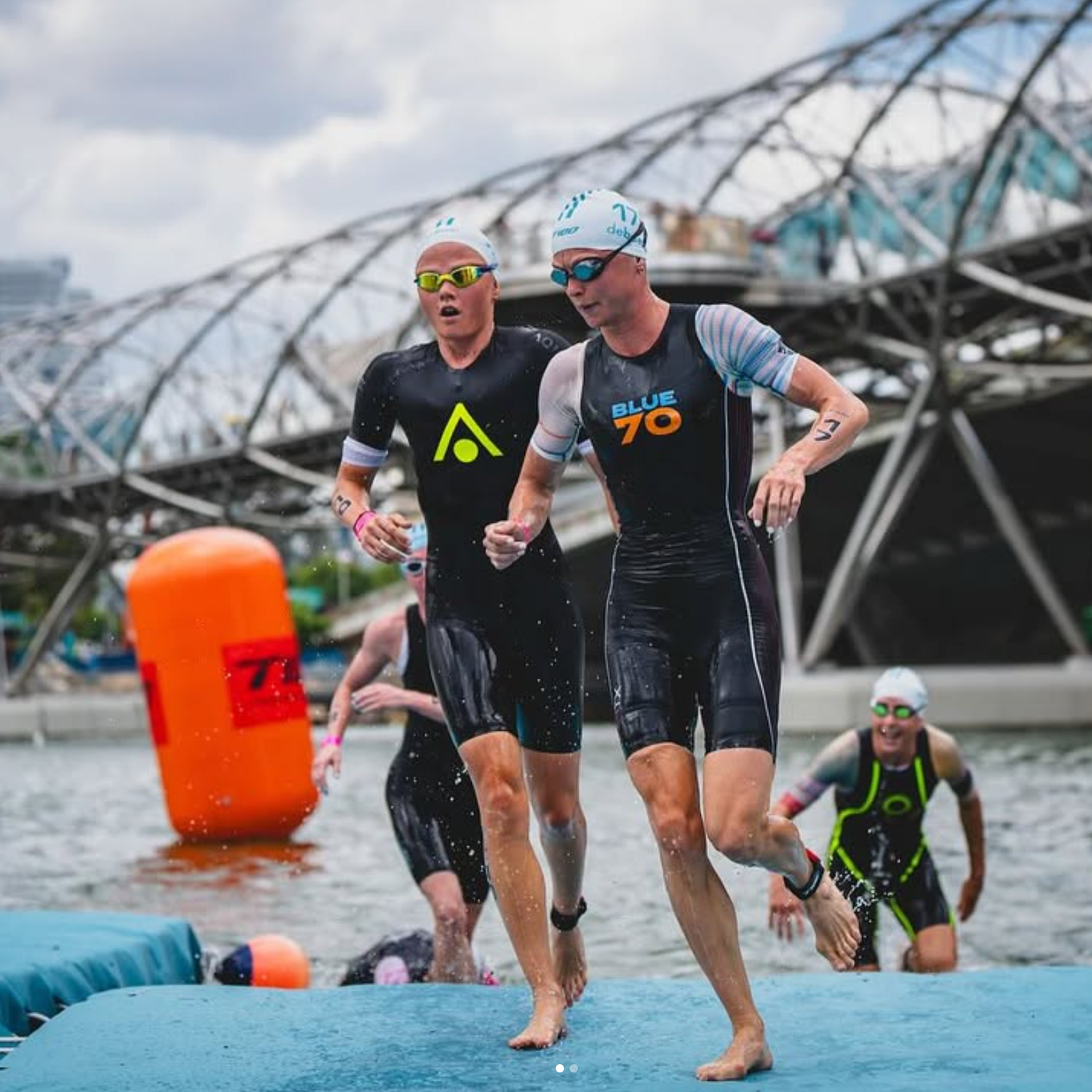
Triathletes know this problem well. A suit that is slightly off in the shoulders can make an early-race swim feel harder than it should. A neckline that sits poorly can become a distraction every time you sight or breathe. In kitesurfing, the stress lands in different places, but the pattern is familiar. The wrong fit drains energy a little at a time.
The real difference: stable swimming versus changing positions
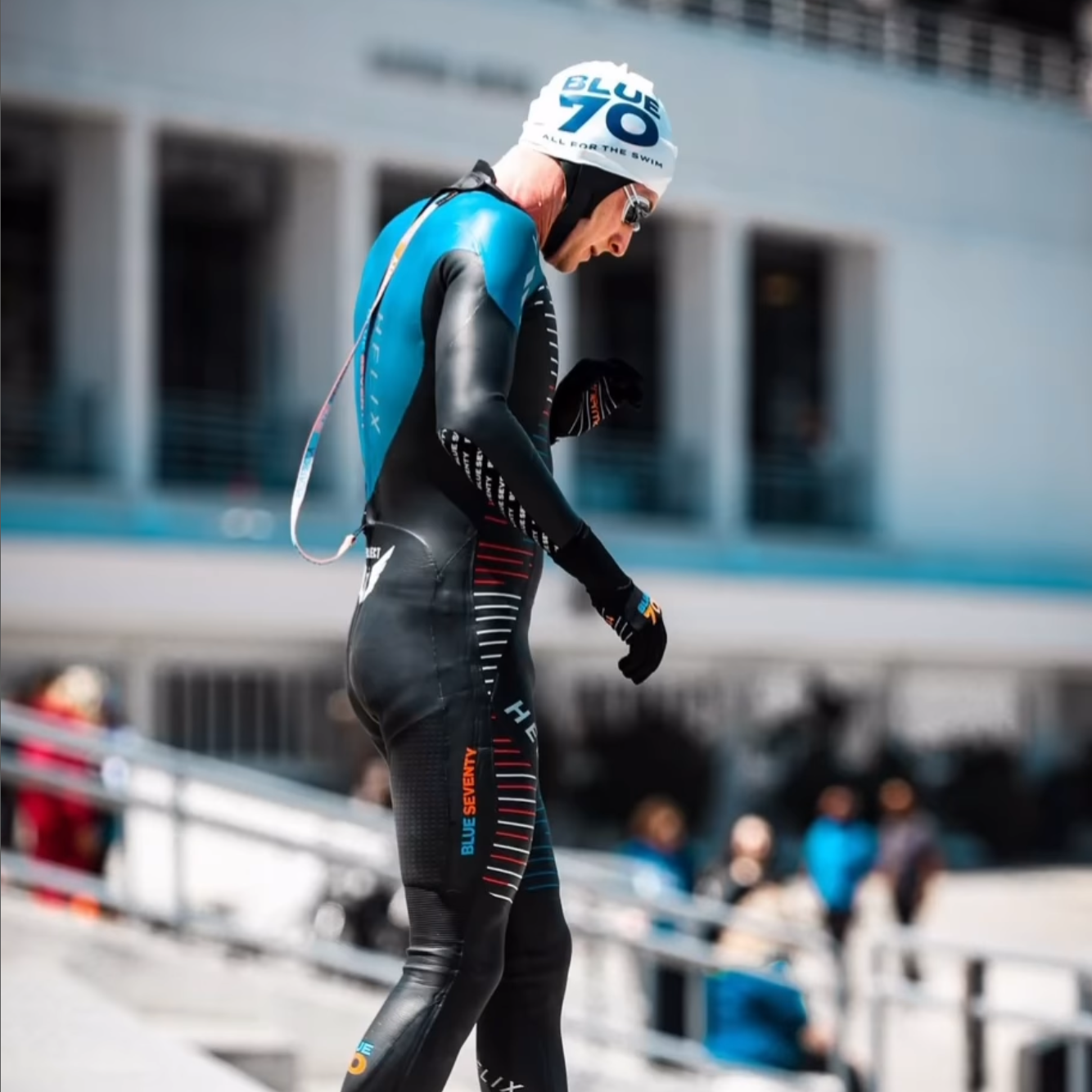
Swimming and triathlon demand long periods of horizontal motion. The athlete wants the suit to support rhythm, maintain body position, and reduce wasted effort. Blue70's wetsuit line reflects that purpose. The Helix is built for race-day performance with very thin neoprene through the arms and shoulders, a permeable catch panel for feel in the water, and LIFT buoyancy panels added in 2018. The Reaction and Fusion apply that swim-first approach with different balances of flexibility, comfort, and durability. The Thermal Reaction adds a full Zirconium jersey lining for added thermal protection in cold-water swimming.
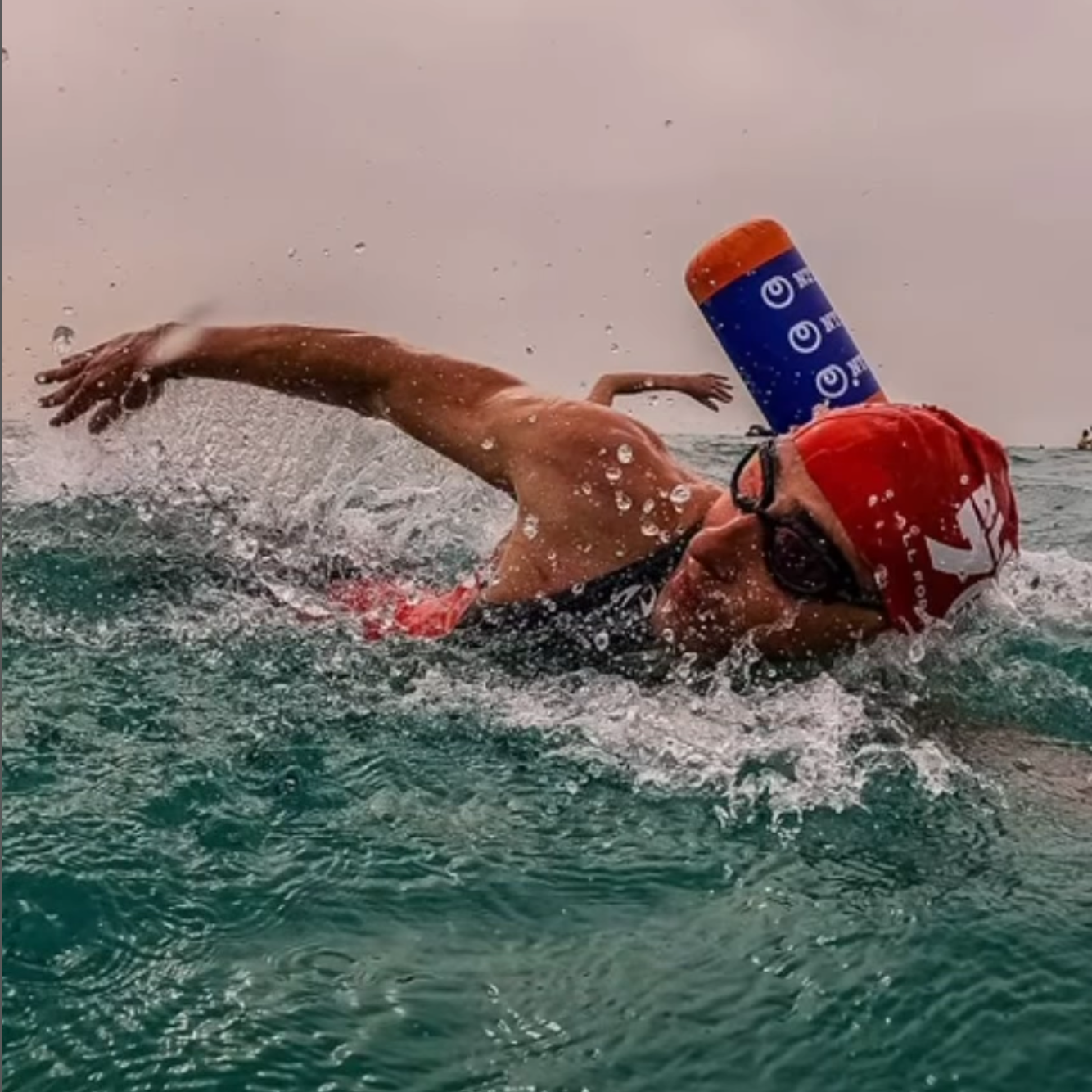
Kitesurfing asks different things from the suit. You are not repeating the same stroke cycle for an hour. You are moving between upright, crouched, twisted, and swimming positions, often within a few minutes. That means a kitesurfing session exposes a form of strain swimmers would recognize right away: the suit has to stay comfortable during transitions between movements, not just during one ideal position.
This is where many buying guides get thin. They describe warmth, then skip over how a suit behaves when your body keeps changing tasks. That is a missed opportunity, because a lot of discomfort in the water has less to do with insulation than with panel placement, shoulder freedom, and how the suit sits once it is wet and under load.
Thickness helps, but it does not answer the whole question
Water temperature still matters. It always will. But thermal performance depends on more than the number printed on a spec sheet. Blue70's published guidance for swimming makes this clear. In open-water use, a purpose-built thermal suit adds meaningful warmth below about 56 to 58°F. Above about 70 to 72°F, a full suit can become too warm over longer swims. Those numbers apply to swimming, not kitesurfing, so they should not be treated as fixed rules for board sports. They do give you the right framework.
The better question is how your exposure is distributed through the session. A kitesurfer may spend less time fully submerged than a swimmer, but more time dealing with wind on wet neoprene. Another rider may feel warm while planing and then get cold during repeated body drags or recovery swims. The suit has to match that full pattern, not one snapshot.
Before choosing a suit, ask yourself:
- How long will I be out there?
- How much of that time could turn into swimming or body dragging?
- How much wind exposure will I take before and after riding?
- Do I usually run cold?
- Am I shopping for the best-case session or the one that goes off script?
The last question tends to produce the smartest answer.
Choose for the worst ten minutes
Most athletes buy gear for the part of the session they enjoy picturing. They imagine smooth water, steady power, and no mistakes. That is understandable. It is also how people end up with a suit that feels fine when everything works and disappointing when things get complicated.
A better rule is to choose for the worst ten minutes. Swimmers and triathletes do this instinctively after enough race mornings. The suit has to work when your heart rate jumps at the start, when cold water hits your face, or when fatigue shows up late in the swim. Those moments reveal whether the fit and flexibility are right.
Kitesurfing has its own version of that stress test. Your worst ten minutes might include a missed launch, a long board recovery, failed water starts, or an unplanned swim in chop. In that stretch, the wetsuit needs to let you move cleanly. Warmth still matters, but mobility, neck comfort, and torso freedom often decide whether the session stays manageable.
What swimmers understand about shoulders and fatigue
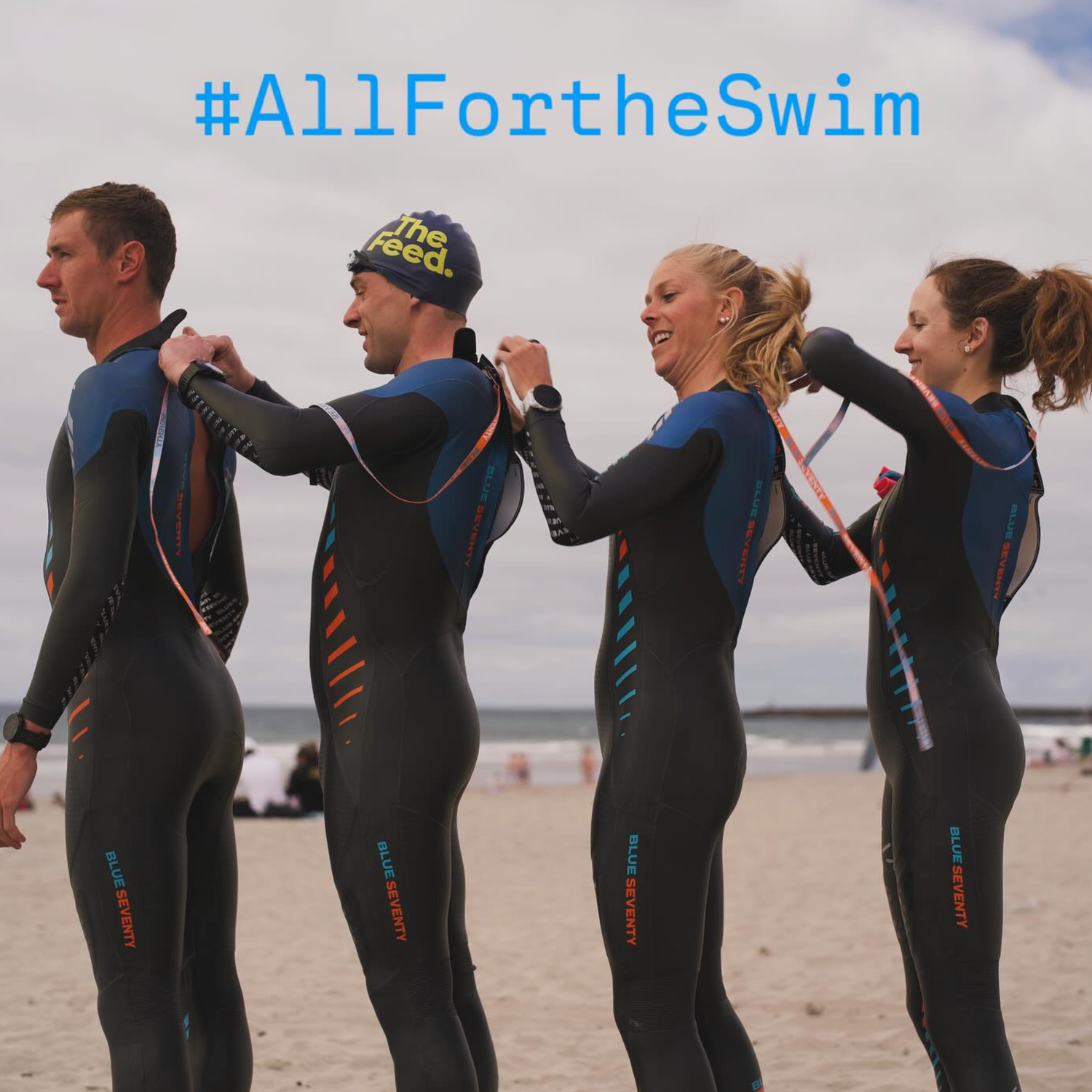
Blue70's fit doctrine is simple: a wetsuit should feel snug on land and more comfortable in the water. If the suit is not fully positioned, especially through the shoulders, fatigue shows up fast. That is one reason first impressions in a changing room are often misleading. Many athletes judge the suit before they have pulled enough material up through the legs, hips, and torso.
If you want a more useful fitting process, check movement before comfort language. Do not ask whether the suit feels nice. Ask whether it lets you work.
Fit checks worth doing before you buy
- Pull the suit up properly first. Start at the ankles and work the material up through the calves, quads, hips, and torso. A low-seated suit almost always makes the shoulders feel worse than they should.
- Raise both arms overhead. Then rotate one arm forward as if beginning a freestyle catch. You should feel range, not a hard stop at the front of the shoulder.
- Twist through the rib cage. Kitesurfing demands torso rotation. If the suit binds while dry, it usually feels tighter once wet.
- Squat and stand. This shows whether the suit is seated correctly through the hips. If it drags down on the shoulders, the setup or the size is off.
- Turn your head side to side. Neck comfort matters more than many athletes admit. Blue70 lowered the Fusion neckline in its 2021 redesign for comfort without losing the watertight seal. Details like that change how long a suit stays comfortable in motion.
These checks are simple. They also reveal more than standing still in front of a mirror ever will.
One suit cannot solve every water-sport problem equally well
This is where honest product education matters. Blue70 wetsuits are built for swimming, open water, and triathlon. They are designed around body position, shoulder rotation, and race-day or training-day performance in the swim. That is a clear design intent.
If your main goal is open-water training or triathlon racing, a swim-specific wetsuit makes sense because it is built for the movement you actually repeat. If your main goal is a session built around riding, standing posture, and board handling, you need to judge the suit by that demand profile. The useful takeaway is not that one category replaces another. The useful takeaway is that design intent matters.
Athletes who split time between sports should decide which activity drives the purchase. One suit can cover some overlap, but it rarely excels equally when the movement patterns are different from the start.
Durability belongs in the conversation
Flexibility gets attention first. Durability should not come last.
Blue70 is direct about trade-offs in its own line. The Helix is the flagship race suit, built for total race-day performance, but the very thin neoprene that gives it such freedom through the shoulders is also more delicate. That is why frequent swimmers often land in the Reaction or Fusion depending on how often they train and how far they swim. More use changes what the best choice looks like.
The same principle applies here. If a suit will see frequent sessions, repeated donning, and regular swimming or body dragging, durability has to be part of the buying decision. The best-feeling option on day one is not always the best option after a season of real use.
If swimming is part of the session, test like a swimmer
Some kitesurfers barely swim. Others spend more time in the water than expected, especially while learning or riding in variable conditions. If your sessions include real swimming, borrow a few habits from open-water athletes.
- Test the suit in the water before relying on it for a long day.
- Pay attention to shoulder comfort after fifteen or twenty minutes, not only the first minute.
- Notice how the neckline feels when you keep turning your head.
- Check how the suit feels when breathing hard, not only when standing on shore.
- Match your thermal choice to the whole session, including setup and time after the ride.
That is the value of Blue70's Take a Test Swim policy. Wetsuit fit changes in the water. The right answer usually shows up there, not in the dressing room.
The better buying question
Do not ask for the best wetsuit for kitesurfing in the abstract. Ask a narrower question: What movement and exposure does my session demand?
That question gives you something real to work with. It moves the decision away from generic shopping advice and toward fit, mobility, thermal protection, and durability in the moments that matter. It also helps explain why Blue70 approaches wetsuits the way it does. Swimming exposes every design compromise, so swim-specific construction starts with movement quality first.
If open-water swimming or triathlon is part of your week, start with a swim-specific fitting process, use the size charts, and review the fit guide before you commit. A wetsuit should match the work you ask it to do in the water.