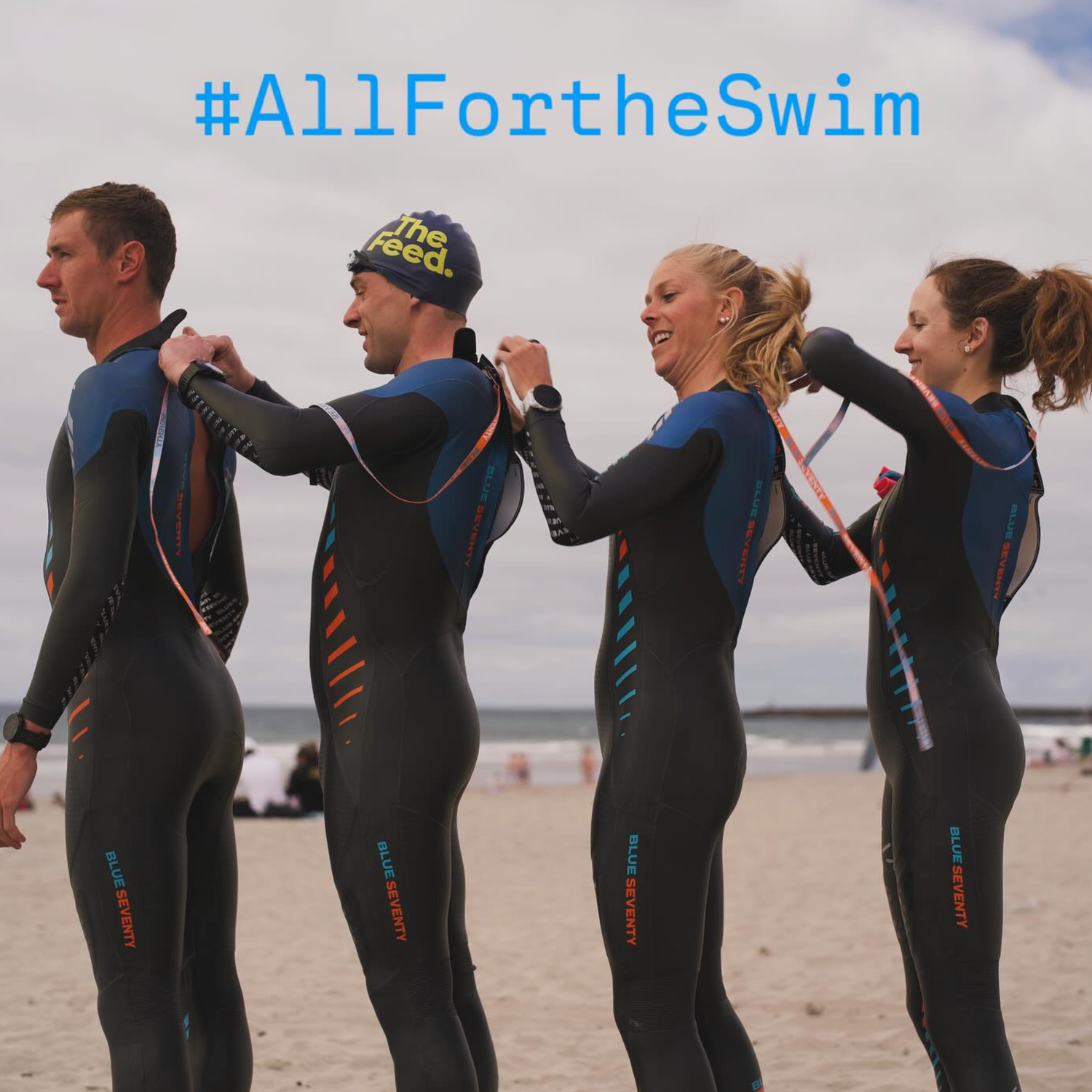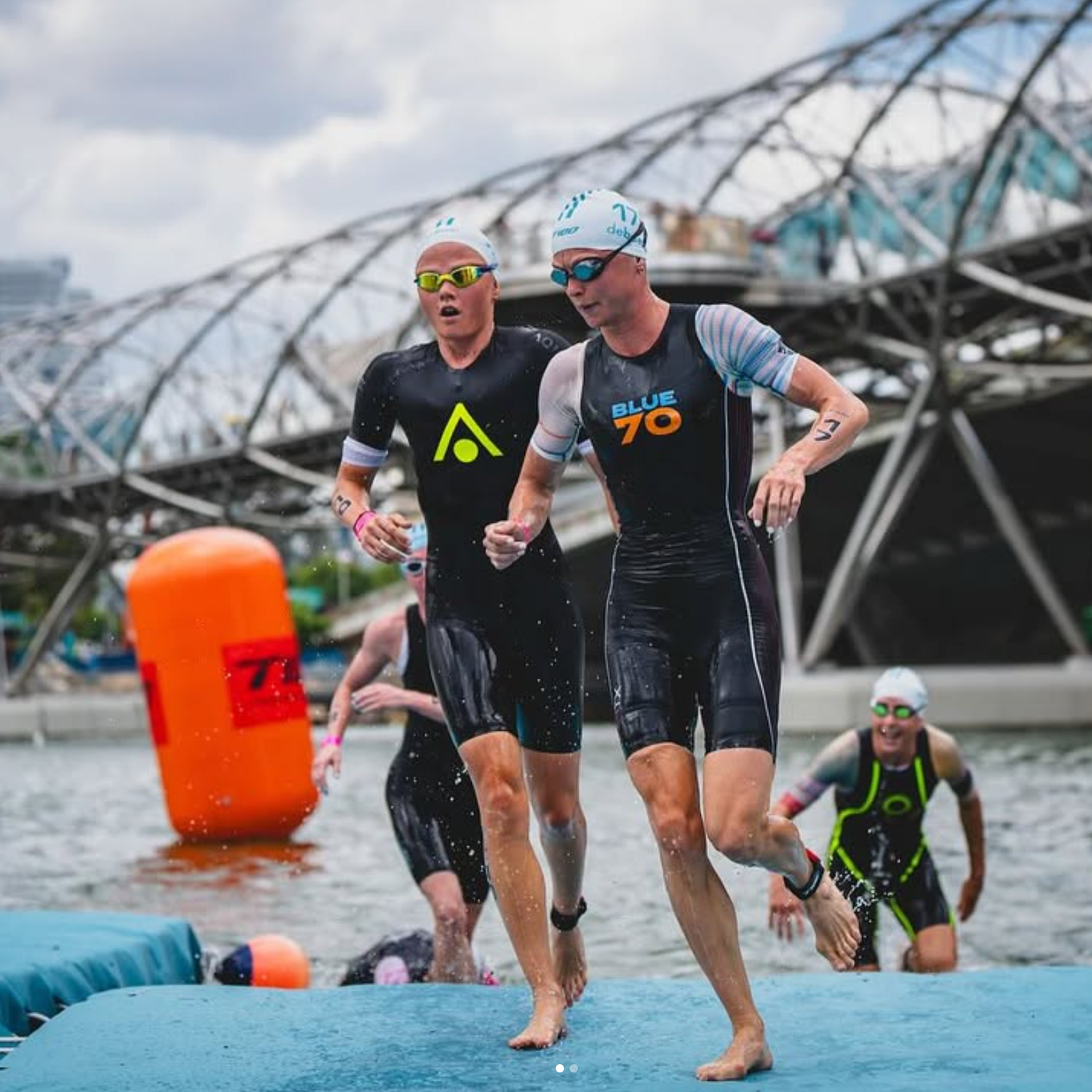



Most wetsuit fit mistakes start with one wrong idea: compression should be even. It should not. A swim wetsuit applies pressure for different jobs at the neck, chest, shoulders, hips, wrists, and ankles. When swimmers chase uniform tightness, they get shoulder fatigue, cold water flushing, and a suit that feels worse in the water than it did in the shop. At blueseventy, we treat compression as a fit outcome, not a selling point.
A wetsuit is not waterproof. It allows a thin layer of water inside, and your body warms that layer. Compression at the neck, wrists, and ankles slows the exchange of that water. It does not stop it completely, and it does not need to. The second job is to hold buoyancy panels where they belong. The third job is to stay out of the shoulder's way. A uniform squeeze fails the third job.
A smooth, well-fitted suit is designed to reduce drag by eliminating wrinkles and billowing. That hydrodynamic benefit comes from fit and panel placement, not from squeezing harder. A suit that is too tight in the wrong places creates folds elsewhere and restricts the stroke.
Where uniform compression came from
Early triathlon wetsuits often prioritized warmth and buoyancy with more uniform neoprene panels. Shoulder freedom was a secondary concern. Swimmers adapted by shortening their strokes or accepting tired arms. Over time, suit design shifted toward variable panel thickness and targeted pressure. blueseventy's roots trace to 1993 and one of the first triathlon wetsuits. By 2005 the Helix had replaced the Stealth as the flagship. The 2018 LIFT panel addition and the 2021 Fusion neckline redesign are later steps in the same direction: targeted pressure instead of uniform squeeze.
The shoulder check most swimmers skip
Dry-land fit is only half the story. A suit should feel snug on land and more comfortable in the water. The problem is that most people judge fit while standing still. Raise your arms overhead and mimic the catch. If the suit pulls down on your neck or makes you work to breathe, the shoulder panels are too thick or the size is wrong.
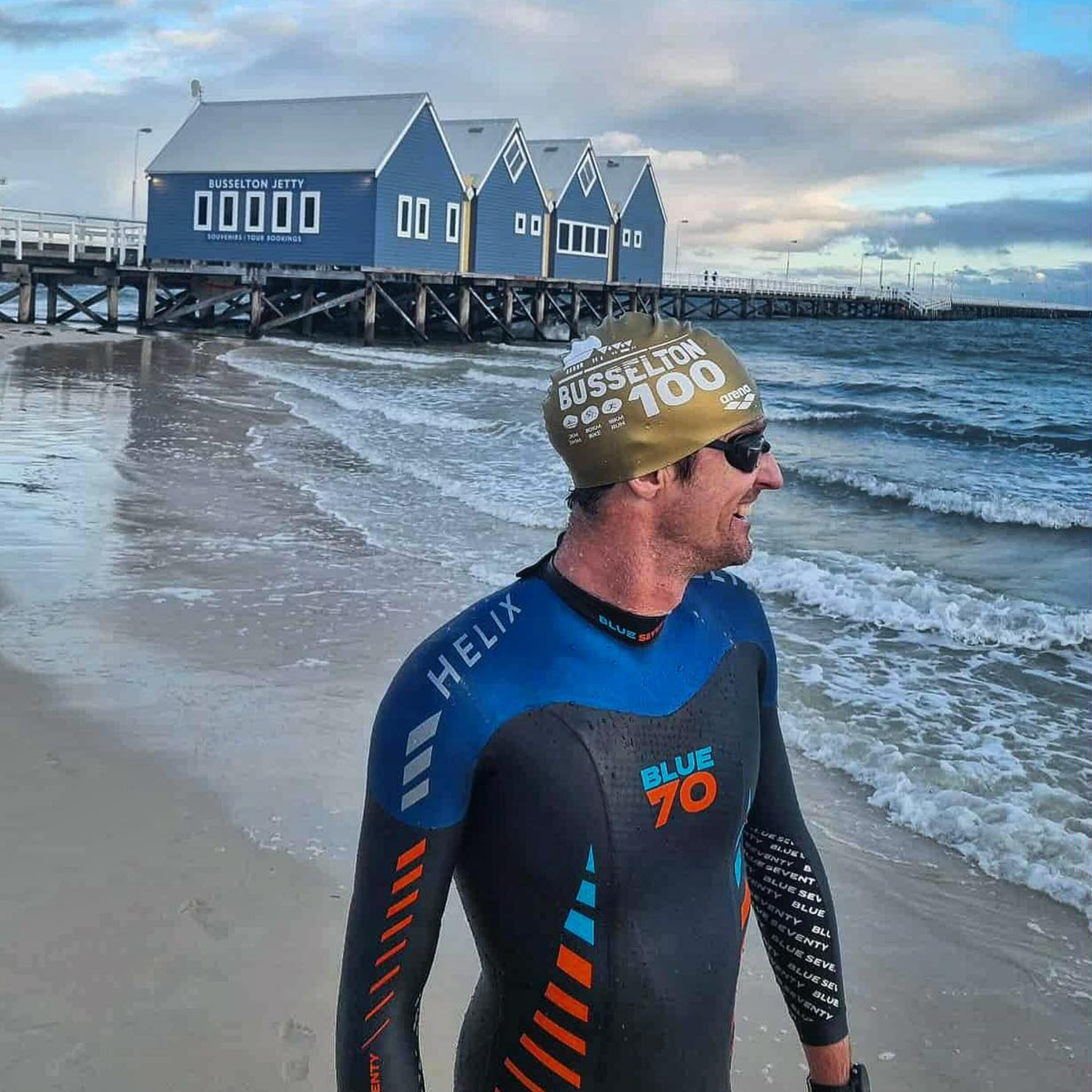
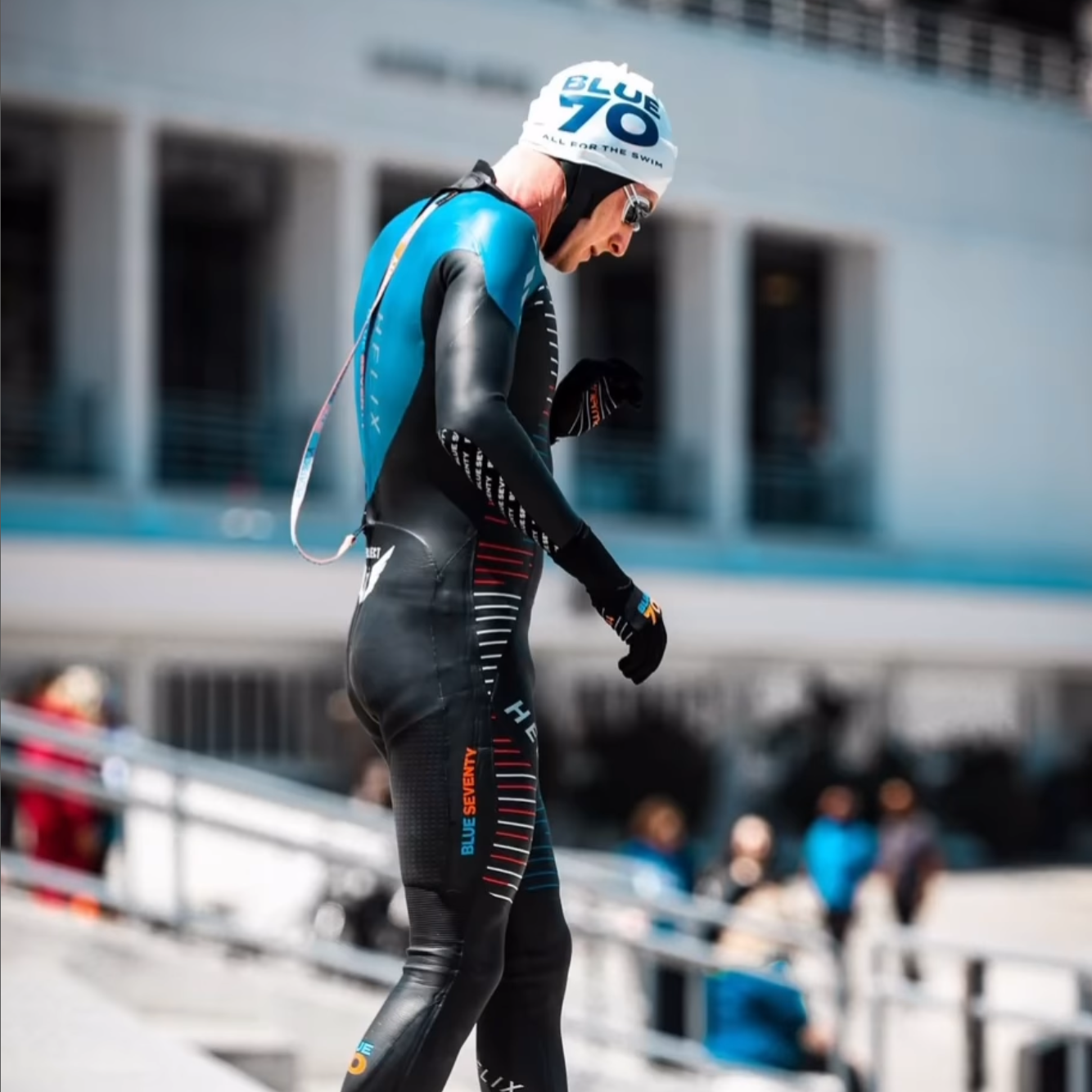
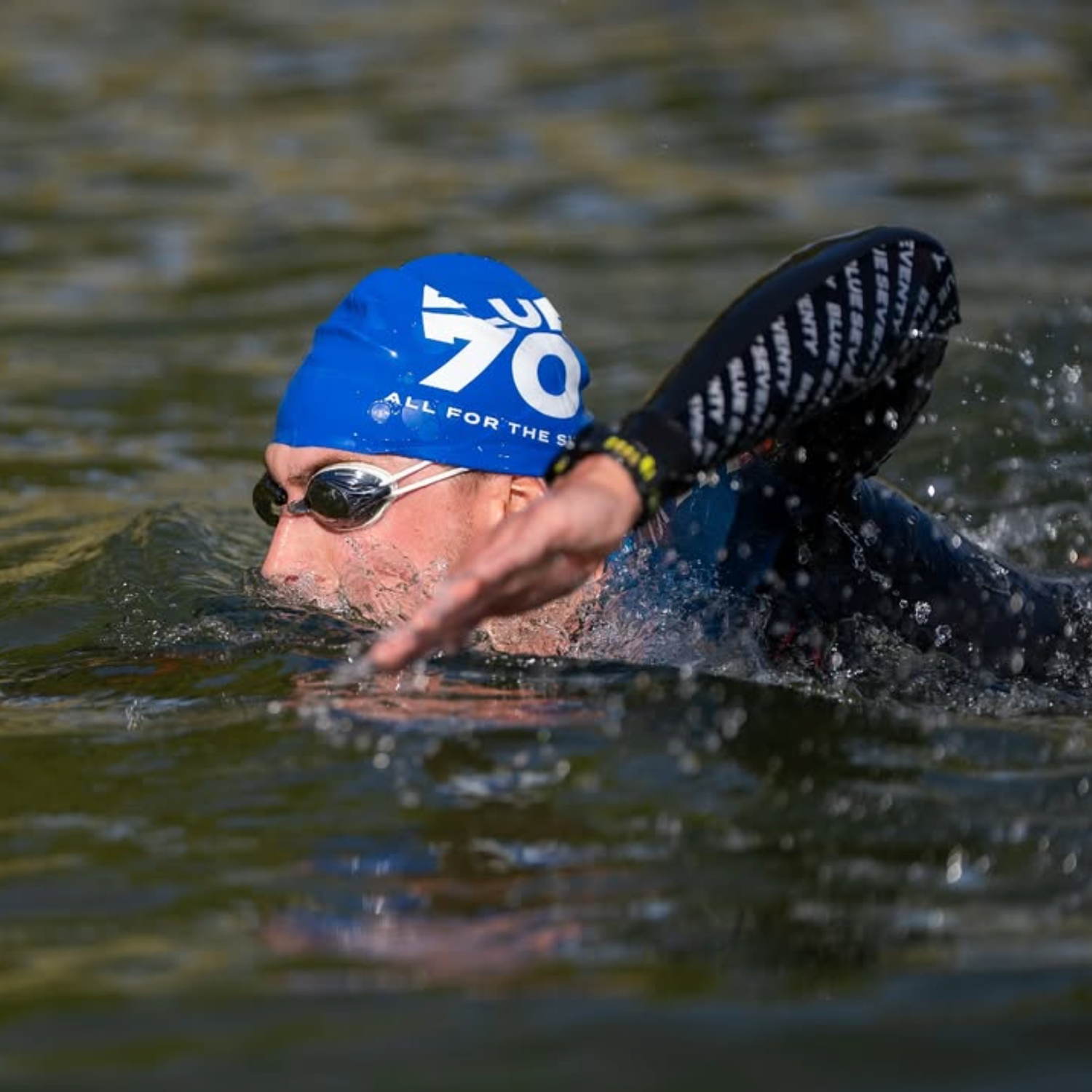
This is where swim-specific design matters. blueseventy builds suits from Yamamoto neoprene in 38, 39, and 40 cell. A higher cell number means more flexibility. A 40-cell panel flexes more than a 38-cell panel. The Helix uses thin, flexible neoprene in the arms and shoulders for exactly that reason. That panel choice is designed to reduce shoulder fatigue and preserve your feel for the water. The Helix catch panel also keeps the suit from dulling the catch. The goal in the shoulders is freedom from restriction.
Where pressure belongs: torso, hips, and lower body
In the lower body, compression serves a different purpose. Buoyancy equals speed. A wetsuit lifts the hips and legs, so you hold a flatter body position with less kicking effort. Beginners gain proportionally more from this lift than advanced swimmers do. The compression in the torso and legs keeps those buoyancy panels from shifting as you rotate. It should feel like a firm hug, not a corset.
If the suit bags at the lower back or wrinkles at the hips, cold water flushes through and the lift is inconsistent. The issue is panel placement and cut. The LIFT panels added to the Helix in 2018 and the LIFT buoyancy short launched in 2020 with NBR foam are examples of placing buoyancy where it changes body position.
Women's pressure points are different
Femme Fit exists because a suit cut for a male torso compresses the wrong places on many women. The pattern is redrawn at the bust, torso, wrists, and ankles. The neckline is lowered to reduce chafing. The zipper is extended for easier entry and to accommodate wider hips. In 2014, Femme Fit expanded to 15 women's sizing options.
A height and weight chart cannot capture the way a zipper needs to run longer across wider hips or how a neckline must sit lower to avoid chafing on a smaller frame, so Femme Fit redraws those zones instead of scaling a unisex pattern. For many women, the right compression comes from a different cut, not a smaller unisex suit. If a suit gapes at the hips or digs at the chest, a different cut corrects the pressure points.
Cold water changes the compression conversation
Water temperature changes which pressure points matter. Below about 56 to 58 degrees Fahrenheit, a purpose-built thermal suit adds meaningful warmth. The Thermal Reaction is fully lined with Zirconium jersey and priced at $785. In cold water, the neck, wrist, and ankle seals do more work because flushing is uncomfortable and costs heat. The fix is not a tighter neck. The 2021 Fusion redesign lowered the neckline for comfort without losing the watertight seal.
Above 70 to 72 degrees, a full suit can be too warm over longer swims. Sleeveless suits or swimskins become preferable. The right amount of compression changes with the season and the distance. Cold adaptation is individual. Build time in cold water gradually and swim with a buddy.
Training volume changes what pressure you can tolerate
Material choice matters as much as size. The Helix uses thin neoprene to reduce restriction. That same thin neoprene breaks down more quickly with frequent training use. A racer who trains weekly in open water will likely get more life from the Reaction, which uses higher-grade neoprene than the Fusion and is recommended for frequent, longer swims with better durability. The Fusion at $420 fits shorter, more frequent swims. The Sprint at $325 is the entry-level model.
A delicate feel is a material trade-off. Compression changes over time as neoprene ages, so a suit that fit perfectly in year one may feel looser in year two.
Most durability damage happens during donning. Fingernail punctures and heel tears come from pulling with nails. Use the pads of your fingers, not your fingertips. An improperly donned suit, especially over the shoulders, is also a common cause of early fatigue.
Pressure points to check before race day
Before race day, check the suit in front of a mirror.
- Neck: You should be able to turn your head and swallow without extra effort.
- Shoulders: You should be able to reach overhead and pull through a stroke without the suit dragging the neck down.
- Wrists and ankles: The suit should seal without leaving deep red lines or causing numbness.
- Lower back: There should be no billowing when you bend forward.
- Zipper: There should be no gaping and no load pulling the teeth apart.
Work the legs up in stages, lift the torso panel, then ease the shoulders into place. Reach back and smooth the arm panels after zipping. A suit that is pulled too low across the back will feel tight in the arms even when the size is correct.
A wetsuit is neither recovery wear nor a flotation device
Compression garments for medical or recovery use have a different purpose. A swim wetsuit is not built to deliver graduated pressure for circulation. It is not a medical device. Neoprene provides buoyancy, but a blueseventy wetsuit is not Coast Guard-certified as a life jacket. Do not treat one as a substitute for open-water safety support.
The same distinction applies after a cold swim. Get dry, warm up in layers, and seek warmth and medical help if you cannot stop shivering. Do not sit in a wet suit hoping for recovery benefits.
The test swim tells you the truth
Chest measurements and mirror checks only go so far. The real test is swimming in the suit. blueseventy permits a test swim and still accepts a return or exchange if the suit comes back clean, dry, unmodified, and with tags. If the pressure feels better in the water than it did on land, the fit is likely right. If your breathing, shoulder turn, or neck comfort gets worse after 200 meters, exchange it. Use the size chart to get close, then take a test swim.
Compression in a wetsuit works best when it targets specific zones. It seals the openings, holds buoyancy where it changes your body position, and leaves your shoulders free. Check those pressure points, and fit becomes simpler.
Happy swimming.