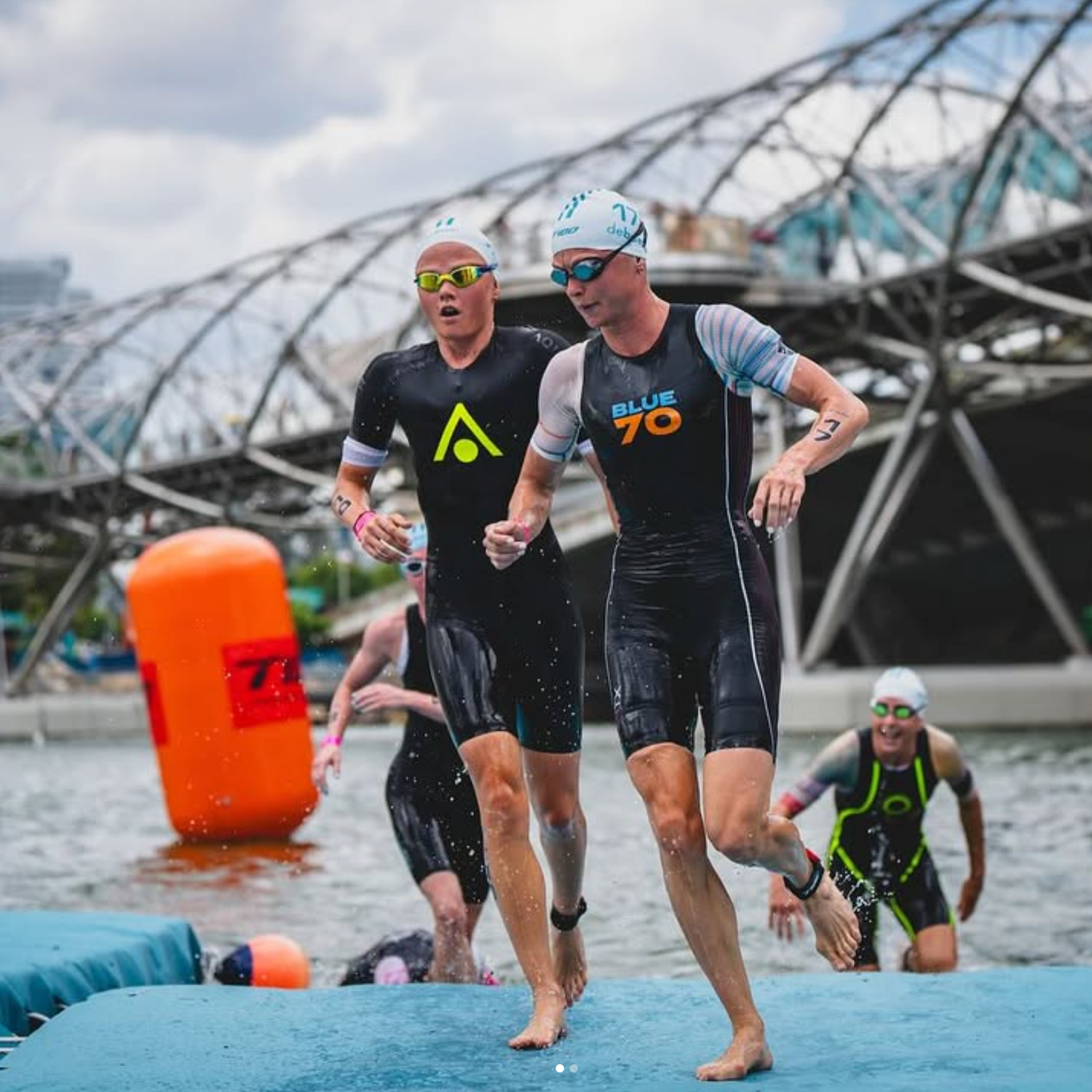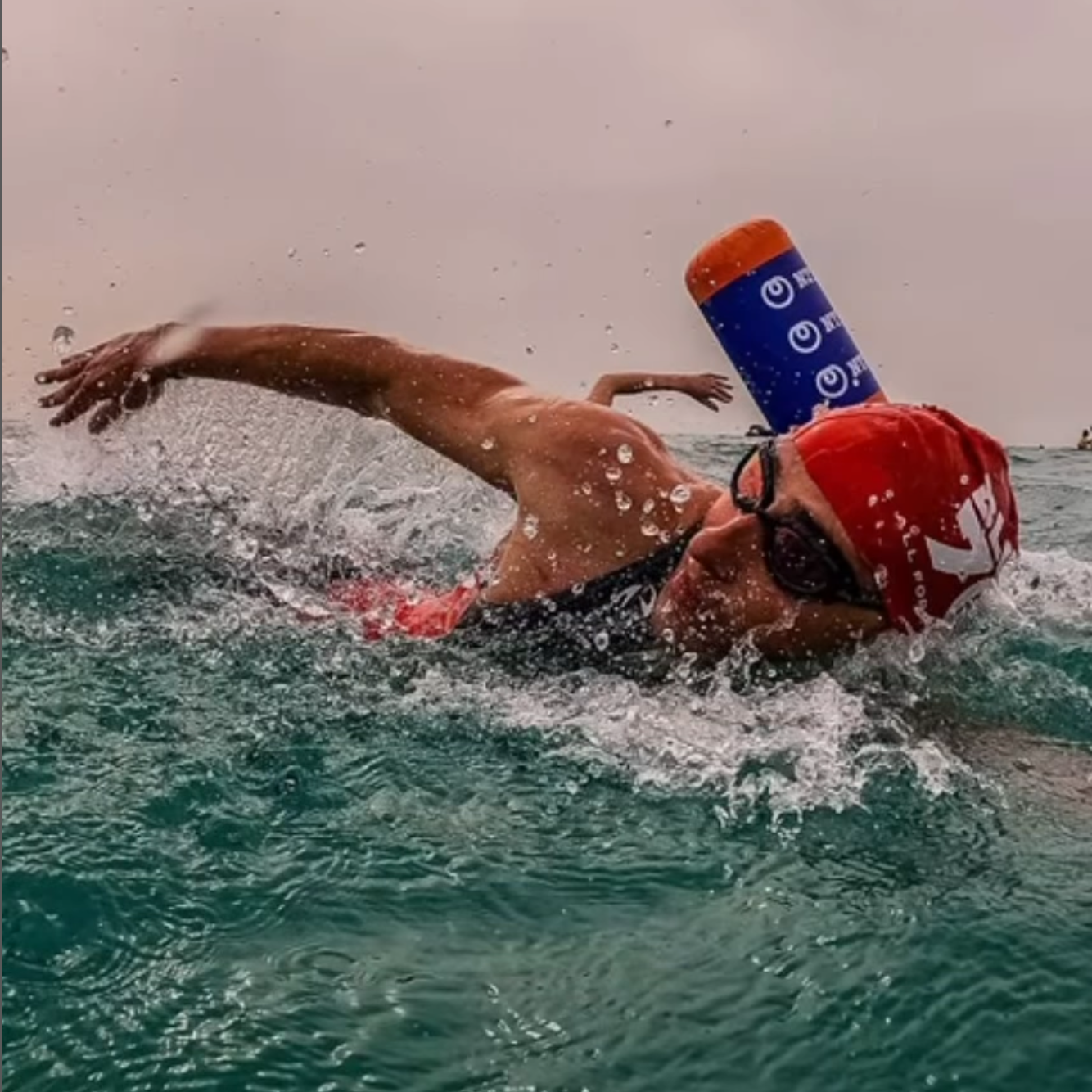



Most chafing advice starts backwards. It tells you which tape to buy, where to stick it, and how many strips to pack on race morning. But if your wetsuit rubs the same spot every swim, the tape is not the solution. The rub is a clue. The location points to exactly where the fit fails.
Chafing is friction plus time. Salt, chlorine, and sweat weaken the outer layer of skin. A seam or neckline then moves across that softened skin again and again in a single session. The neck, underarms, and shoulder seams take the most abuse because they move through your stroke. A suit that should glide with you instead tugs, shifts, or presses, and the skin pays for it.
Fit Is the Prevention You Already Own
A swim wetsuit should feel snug on land and easier in the water. Too tight across the shoulders, and the suit pulls downward every time you reach. Too loose through the torso, and the extra water lets the suit shift and rub. Both produce chafing. Tape covers the symptom. Fit removes the cause.
Blue70 suits include fit details aimed at this exact problem. The 2021 Fusion redesign lowered the neckline so the collar seals without pressing into your throat. Femme Fit uses a lowered neckline and an extended zipper for women's suits, which reduces chafing at the neck and eases donning strain across the upper back.
Before you reach for tape, put the suit on slowly. Pull the neoprene up from the legs and torso before sliding your arms in. Check the shoulders and neck. If you can swing a Test Swim before race day, do it. A suit that rubs in a 20-minute pool session will feel worse after 1500 meters of open water.
When Tape Makes Sense
Tape is a barrier. It sits between your skin and the seam that keeps finding the same spot. Three common types work, but each behaves differently.
- Rigid athletic tape stays put longer in salt water and works for long races.
- Zinc oxide tape holds well and offers a firm, non-stretchy surface.
- Kinesiology tape moves with your skin but can peel sooner on oily or sunscreen-covered skin.
Apply tape only to clean, dry skin. Rubbing alcohol removes oils and sunscreen. Cut rounded corners so edges don't lift. For neck chafing, place a short strip across the front of the neck, not wrapped all the way around. Underarm chafing needs tape on your skin, not on the suit. Never tape over broken skin.
Read the Hot Spots Before You Tape
Each chafing spot points to a different fit issue.
- Neck: A collar that rides up often means the torso is too small. Try pulling the neckline down after donning. If it creeps back, check the size chart.
- Underarms: The arm opening digging into your armpit usually signals a suit that's too small through the chest or shoulders. Raise your arms overhead after donning. It should not bite.
- Upper back: A zipper that won't sit flat can dig in. Tuck the cord, smooth the suit across your back, and check alignment before you swim.
Care Keeps Neoprene Kind to Skin
Rinse your suit in fresh water after every swim. Salt crystals and chlorine residue stiffen neoprene and make it rougher against your skin, and a damp suit left in a bag can hold sand or grit that turns the next swim into a slow abrasion session. Dry it inside out, then right side out, away from heat and sun.
Use Tape as a Race-Day Tool, Not a Weekly Habit
Some swimmers tape only on race day, when salt water, sunscreen, and a long swim combine to break skin down faster than a typical training session. That is fair. If you have corrected the fit and still get a red mark after a 5K, a small patch can get you through the race while you keep adjusting. But if you tape the same spot every swim, stop and re-examine the fit.
Fit solves chafing. Tape buys you time while you find it.
If you're not sure whether your suit fits, Test Swim lets you find hot spots before race day without giving up your return option. Fix the fit first. Save the tape for the days when conditions demand it.