


Water temperature readings are starting points, not verdicts. Two swimmers can stand on the same beach, read 62°F off the same buoy, and have two different afternoons. One finishes a 90-minute training set without trouble. The other shivers after 20 minutes. The difference is heat loss, and heat loss is personal.
Your body does not read the thermometer. It reads skin temperature and core temperature. Water pulls heat from your skin through conduction. Moving water strips the warmed layer away through convection. Wind and spray add evaporative cooling to any exposed skin when you stop to sight or adjust goggles. The number posted on the race website is a snapshot. Your actual rate of heat loss changes minute by minute.
Heat Loss Is the Number That Matters
Cold receptors in your skin fire when you enter cold water. That firing drives the sharp inhale and the urge to breathe fast during the first minute. It settles as your face gets wet and you begin swimming with a steady exhale. Open water swimmers who train through the shoulder seasons know this routine. Enter slowly, splash your face and neck, exhale continuously, then start with easy swimming before any hard efforts. The water temperature reads the same at second one and second sixty. Your body's response to the heat loss has shifted.
Heat loss also depends on what you bring to the water. Body size, body composition, pace, duration, and recent training all shift the equation. A swimmer with more subcutaneous fat retains heat longer than a lean swimmer of the same weight, at the same temperature, doing the same effort. A faster pace generates metabolic heat, but it also moves more water across your skin. The net effect varies from swimmer to swimmer.
The Variables a Temperature Chart Cannot Hold
A chart assumes still water, an average body, a steady pace, and a fixed duration. Open water rarely provides any of those. Wind chill matters before you get in and after you get out. Sun on your shoulders can offset some heat loss on a calm day. Chop increases convective heat loss because more water flows over your skin. A 62°F lake on a sunny, windless morning feels different from the same lake at 62°F under cloud, wind, and rain. Your wetsuit, your pace, and your time in the water then add to that.
Temperature charts cannot account for the difference between a 140-pound swimmer and a 200-pound swimmer. They cannot account for a swimmer who has been doing cold water sessions for six weeks and a first-timer who just drove to the lake. The chart is a starting point, not a decision.
Acclimatization Is a Training Process, Not a Number
Repeated, gradual cold water exposure changes how your body responds to the first minute and to sustained heat loss. Swimmers who build cold water sessions over several weeks often report that the same 58°F water feels less shocking in week four than it did in week one. That shift comes from familiarization and, over time, a change in the body's initial response. The process takes consistency, not bravado.
Acclimatization does not make cold water safe by itself. You still need a plan for exit, a warm change of clothes, and someone watching from shore or a kayak. Treat the first cold swim of the season as a short, easy session, even if your fitness says you can go longer. Let the heat loss tell you when to get out.
Where a Wetsuit Changes the Equation
A swim-specific wetsuit changes the equation in two ways. First, it reduces heat loss. Second, it adds buoyancy that helps keep your hips and legs higher in the water. Neither effect makes a wetsuit waterproof, and neither effect turns it into a personal flotation device. blueseventy wetsuits are not Coast Guard-certified personal flotation devices.
A wetsuit is designed to let a thin layer of water in. Your body warms that layer, and the neoprene then slows the replacement of that warm water with colder water from outside. The result is added thermal protection. The amount of protection depends on thickness, coverage, and fit. A suit that gaps at the neck, wrists, or ankles flushes cold water through with every stroke. A suit that fits close holds the warmed layer in place.
blueseventy wetsuits use Yamamoto 38, 39, and 40 cell neoprene. Higher cell numbers mean more flexibility. blueseventy introduced its first purpose-built cold water swimming wetsuit in 2015, the Thermal Helix. The cold-water line has kept that focus. The current Thermal Reaction builds on it with a full Zirconium jersey lining, a synthetic wool material that adds thermal protection. That liner does not make the suit a survival garment. It adds margin in cold water when paired with good judgment.
Shoulder freedom matters in cold water because a tight, stiff suit can fatigue your arms faster. The freedom to complete a full stroke without fighting the suit helps you maintain your pace and your heat production. It also makes breathing and sighting easier when you are cold. Buoyancy improves body position. In swimming, buoyancy equals speed. A suit that lifts your hips helps reduce drag and helps you swim with fewer wasted movements. That benefit applies in any temperature, but it shows up most when cold water makes technique fall apart.
Temperature Ranges as Starting Points
Use these ranges as a first pass, not a rulebook.
- Below about 56 to 58°F: This is cold. A purpose-built thermal suit such as the Thermal Reaction is the right tool for many swimmers. Plan for a shorter session, a warm exit, and a support person.
- Around 58 to 65°F: A full wetsuit covers most open water swimming. Duration and conditions start to matter more than the exact number.
- Around 65 to 70°F: Many swimmers are comfortable in a full suit for moderate sessions. Longer swims can start to feel warm, especially under direct sun.
- Above about 70 to 72°F: A full suit can be too warm over longer efforts. Sleeveless suits or swimskins become worth considering.
Thermal performance depends on water temperature, exposure time, and the individual. Model selection follows the same logic. The Helix is the race-day suit. The Reaction covers performance and frequent training, and it holds up to longer swims. The Fusion suits shorter, more frequent sessions. The Sprint covers entry-level budgets. The sleeveless Reaction works for warm water or swimmers who want easier shoulder mobility and a simpler fit. The temperature range narrows the list. Your training volume and race calendar pick the model.
Build a Personal Temperature Protocol
You do not need a chart to know what works. You need a log. Write down the water temperature, air temperature, wind, and what you wore. Note how you felt after 10 minutes and again 30 minutes after getting out. Over a season, that log will tell you more about your personal thresholds than any generic guide.
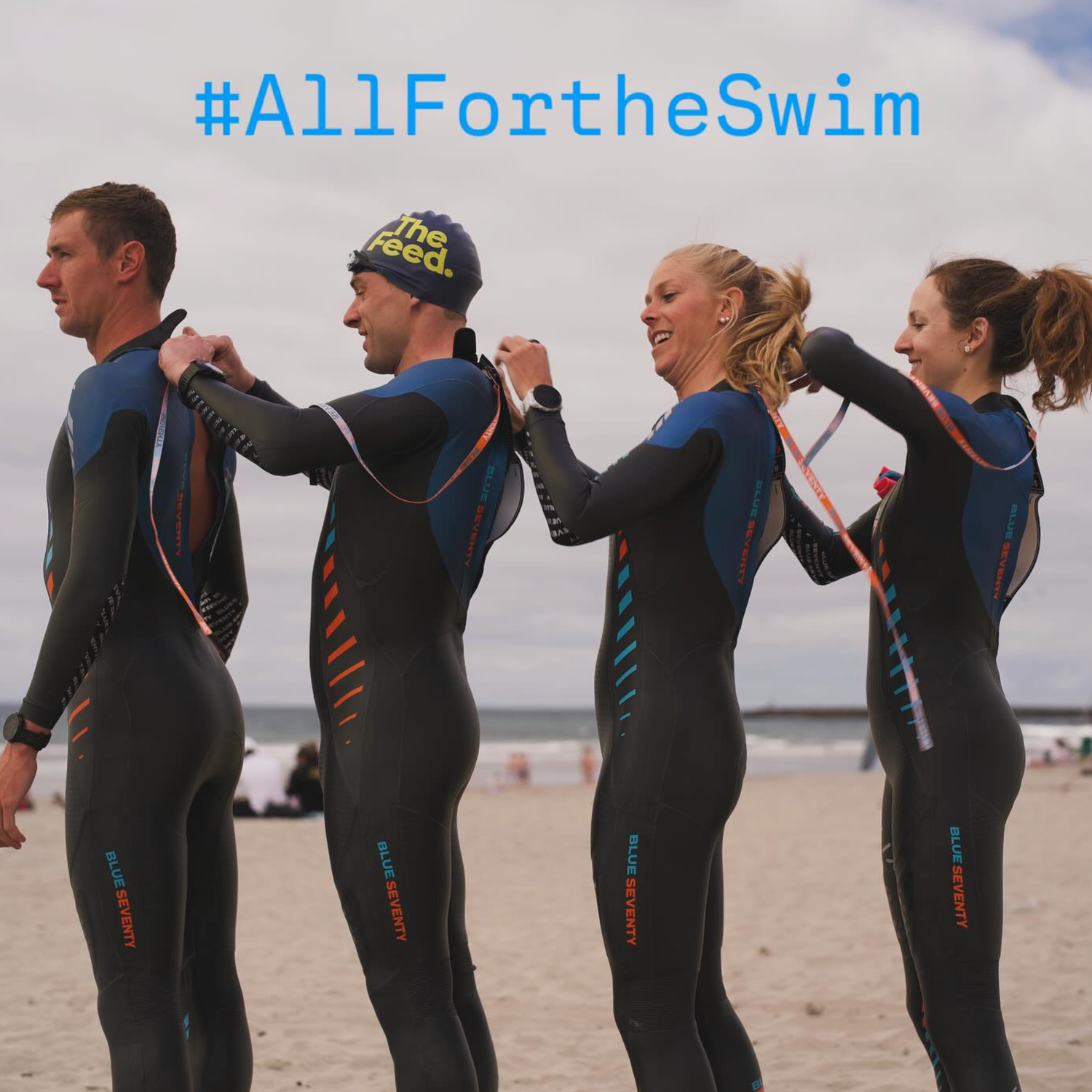
Fit sits inside that protocol. A wetsuit should feel snug on dry land and more comfortable in the water. If you cannot lift your arms without the neck pulling or the shoulders pinching, the suit is either too small or not pulled up enough around the torso and shoulders. Fix that before adding more time in cold water. Shoulder fatigue from an improperly donned suit can shorten a swim faster than the cold does.
That is why a test swim matters. You can swim in a blueseventy wetsuit and still return or exchange it within 30 days if it is clean, dry, unmodified, and has tags attached. Try the suit in real water, not only the living room. The feel on land is half the story. Take a Test Swim and see how the suit performs in the conditions you actually train in.
Cold Water Safety: The Non-Negotiables
Cold water punishes small mistakes. The non-negotiables apply whether the water is 60°F or 50°F.
- Never swim alone. Have a support person on shore or in a kayak. Tell them when you expect to exit and what to do if you do not.
- Enter gradually. The first minute can bring a sharp inhale and rapid breathing, so give yourself 60 to 90 seconds of face splashing and slow exhaling before you start swimming, and know where you can get out before you enter.
- Plan the exit before the entry. Know where you can get out, where your towel and dry clothes are, and how long it will take to warm up.
- Watch for shivering that becomes uncontrollable, confusion, loss of coordination, or an urge to stop swimming. Those are signals to get out and get warm. After-drop means your core temperature can keep falling after you leave the water. Change into dry clothes quickly, add layers, drink a warm beverage, and seek shelter. If symptoms persist or worsen, get medical help.
No wetsuit removes that risk. A wetsuit adds thermal protection. It does not make cold water safe.
A water temperature reading tells you where to start. Your own heat loss tells you where to stop. Use the thermometer as one input, not as a verdict. Match the suit to the conditions and your session length. Then get in and test it. Happy Swimming!