


The wetsuit or speedsuit question becomes simple once you separate two decisions. Water temperature and the race rulebook choose the category. Your training frequency and swimming style choose the model inside that category. A swimskin and a wetsuit solve different problems, and treating them as interchangeable is the fastest way to leave speed on the course.
Rulebook First, Then Water Feel
A wetsuit is neoprene. A swimskin is a textile suit that covers your tri kit. Neoprene traps a thin layer of water against your skin. Your body warms that layer, which is how the suit insulates. A swimskin has no neoprene buoyancy or thermal layer. It smooths the surface of your torso and reduces drag from loose seams and folded fabric.
Because the rules change from season to season and vary by sanctioning body, you should open the athlete guide for your specific event and confirm the cutoff directly rather than relying on a number you remember from a previous race. USAT, Ironman, and World Aquatics each publish their own current rules. Read the guide before you pack your bag.
Buoyancy Changes Shape More Than Surface Texture Does
Neoprene does more than insulate. It adds buoyancy. That lift raises your hips and legs, which flattens your body line. A flatter body presents less frontal area, so you spend less energy fighting drag. Buoyancy equals speed in the water. A swimskin does not add that lift. It reduces surface friction, but it will not correct a low hip position.
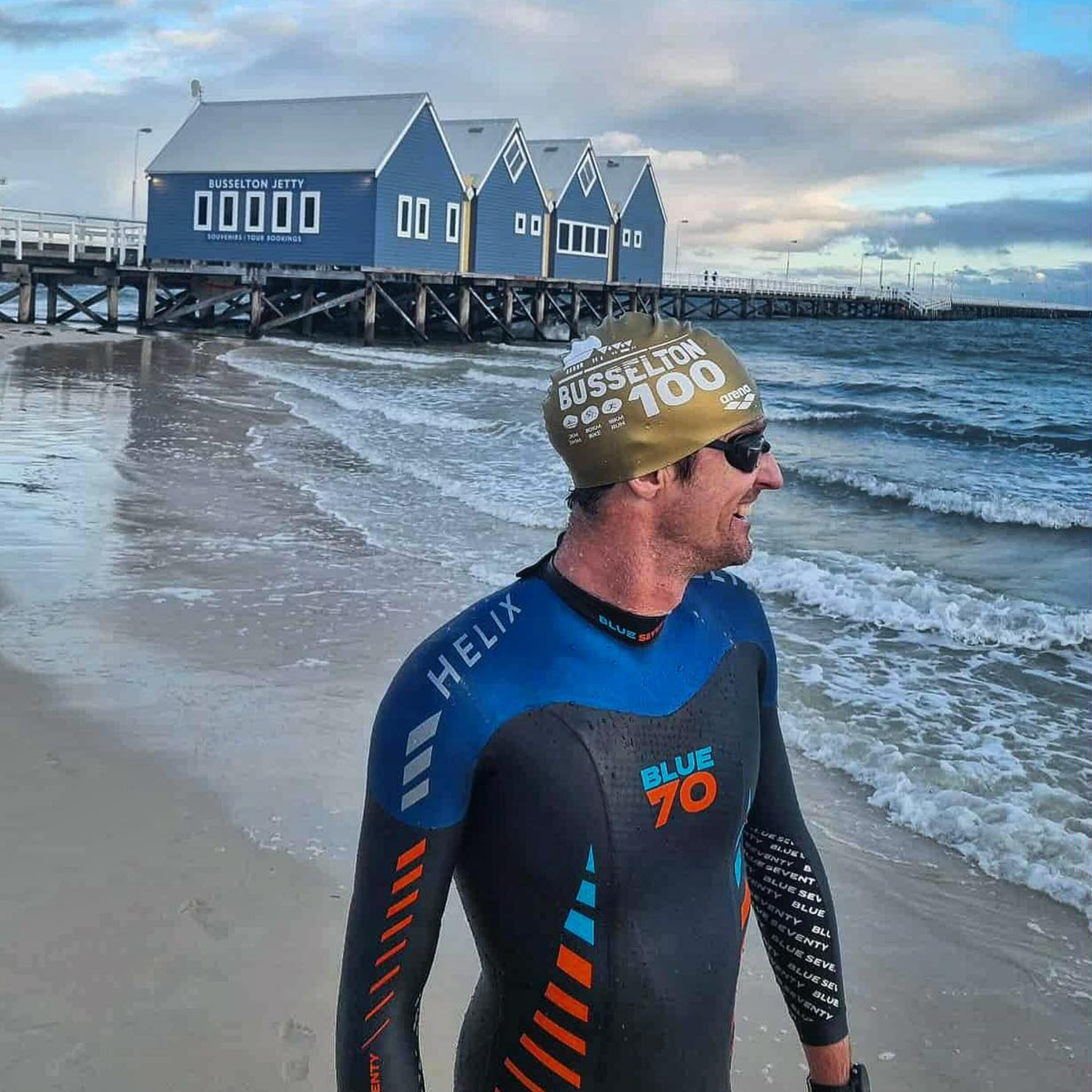
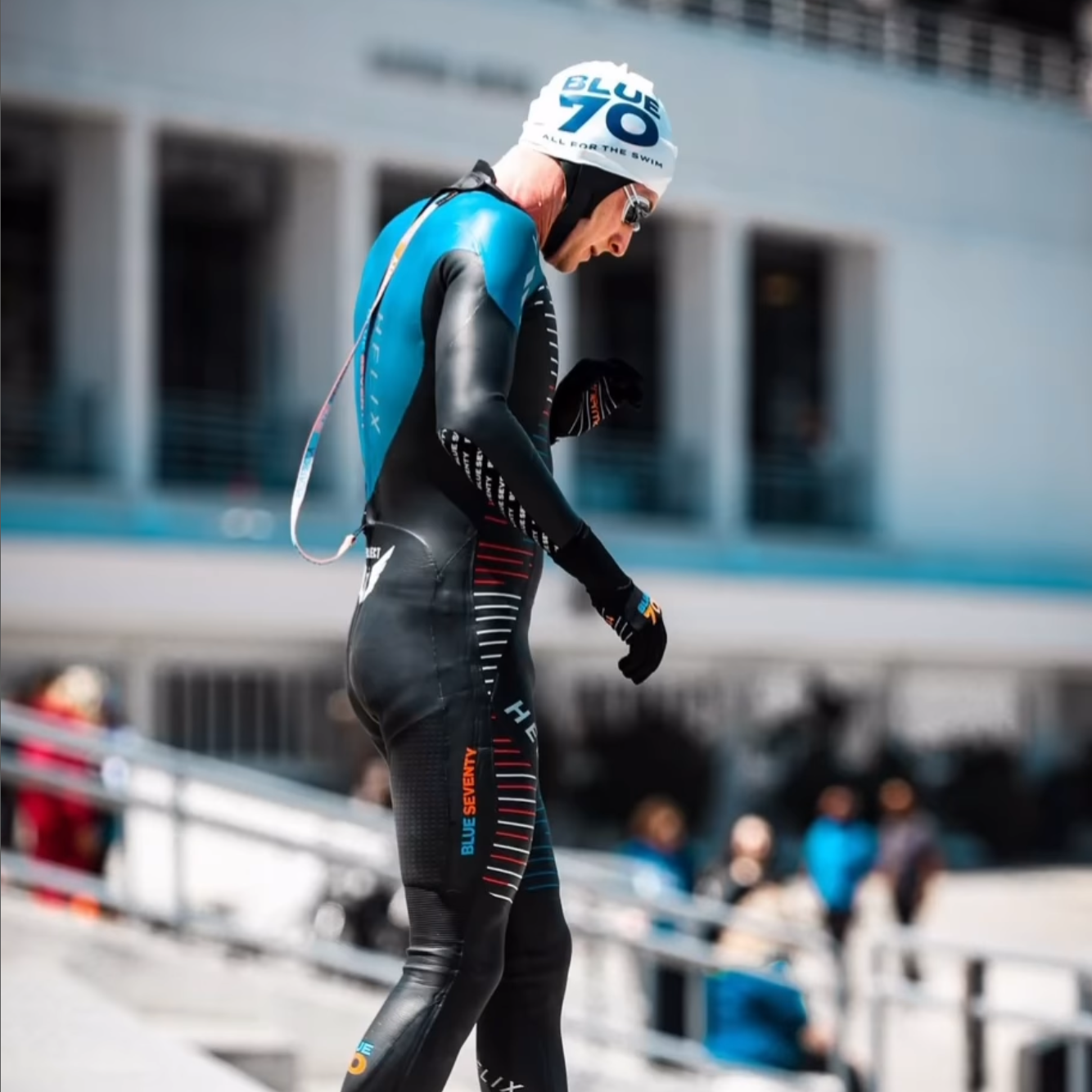
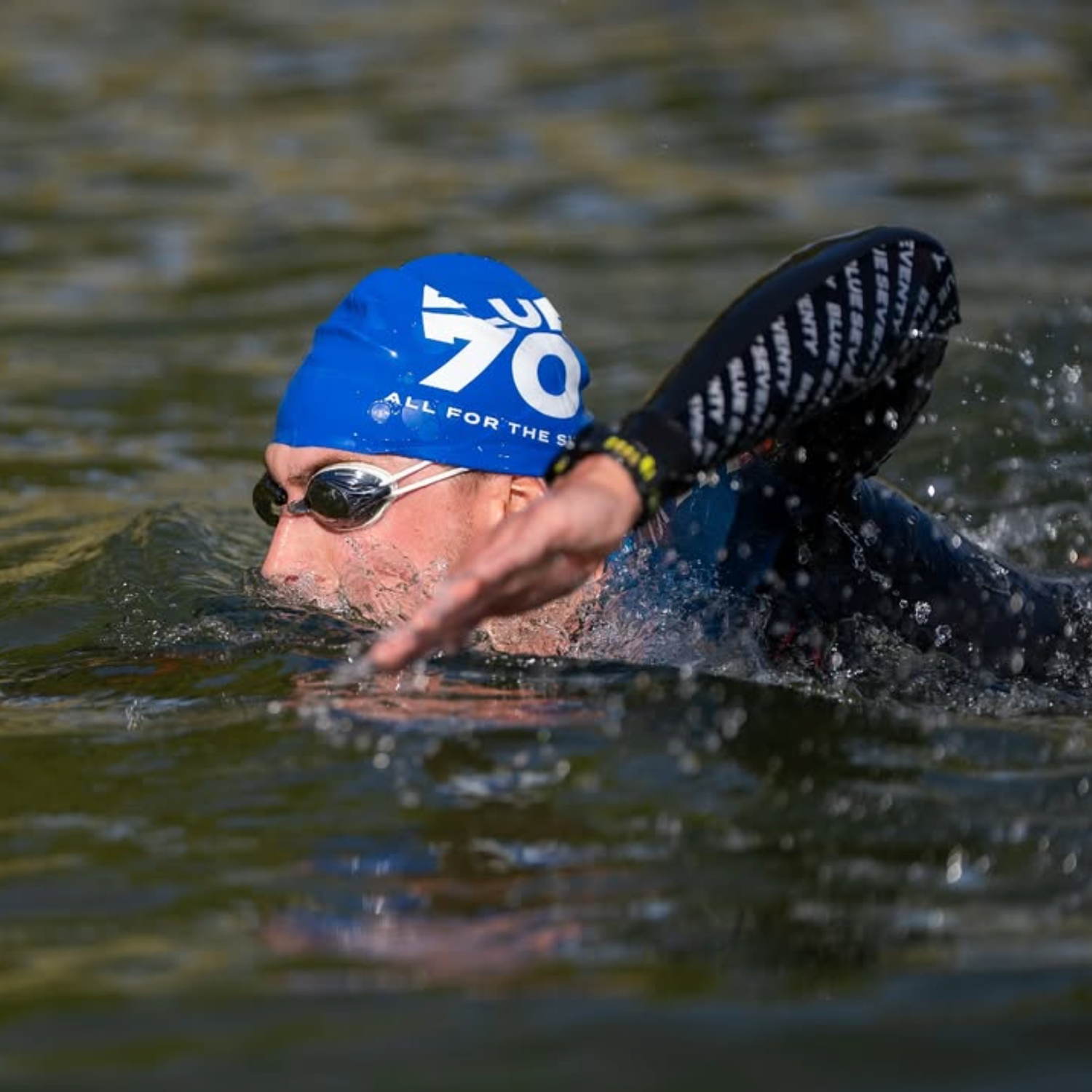
Blue70 wetsuits use Yamamoto neoprene in 38, 39, and 40 cell. Higher cell numbers mean more flexibility. The Helix places thin, flexible neoprene in the arms and shoulders, which reduces fatigue when you are 2,000 meters into a race. That matters more than the suit's surface texture for most triathletes.
Where a Speedsuit Belongs
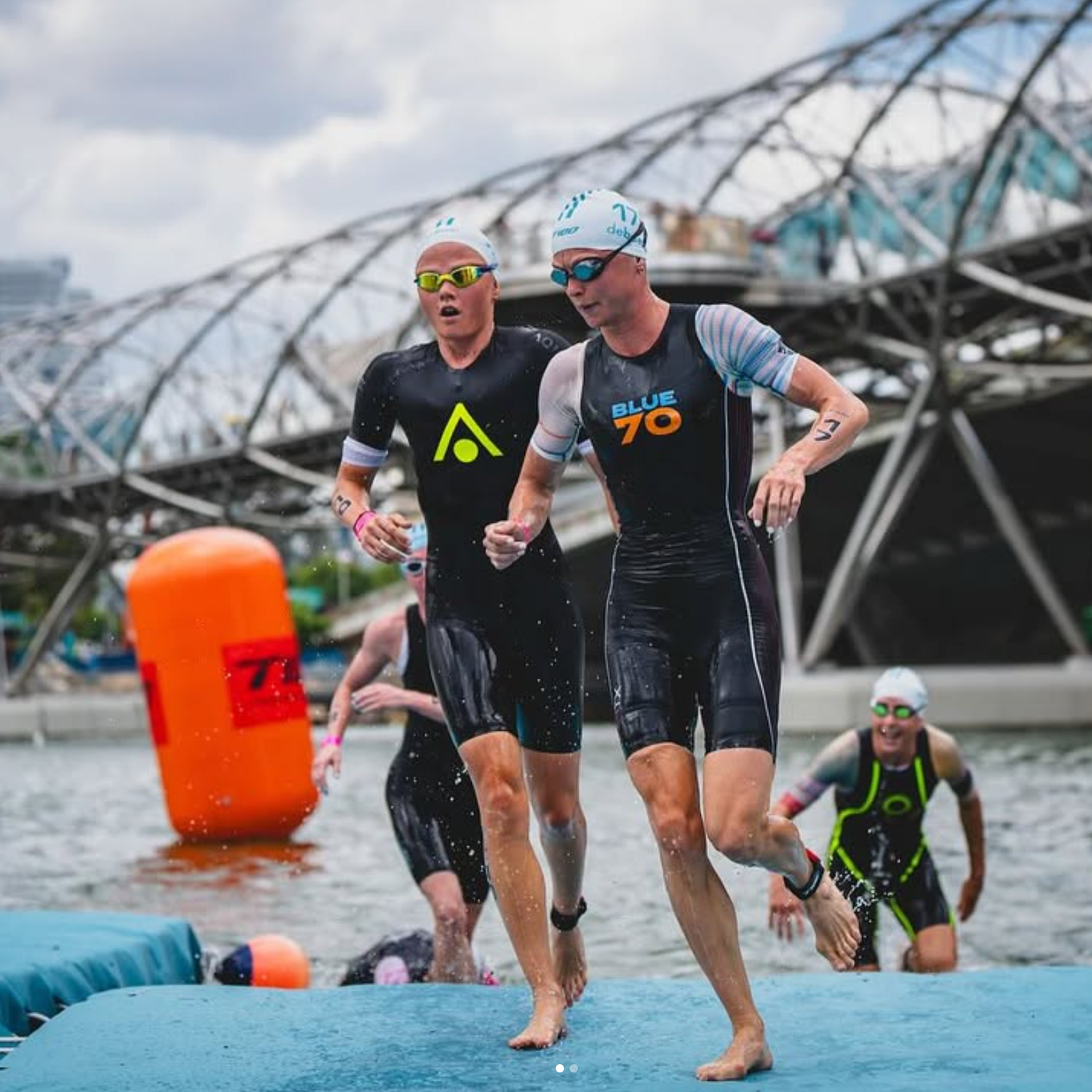
Above about 70 to 72 degrees Fahrenheit, a full wetsuit can become too warm over longer swims. This is the range where a swimskin or a sleeveless wetsuit earns its place. A swimskin covers the torso and often part of the arms or legs. It gives you a smooth surface without the thermal load.
The swimskin category has been part of Blue70's line for longer than many triathletes realize. The pointzero3 swimskin was worn by Kona winners in the late 2000s, and a short-sleeved swimskin joined the line in 2016. The design focus has stayed consistent: reduce surface drag without adding insulation you do not want in warm water.
Fit Feels Different in Each Category
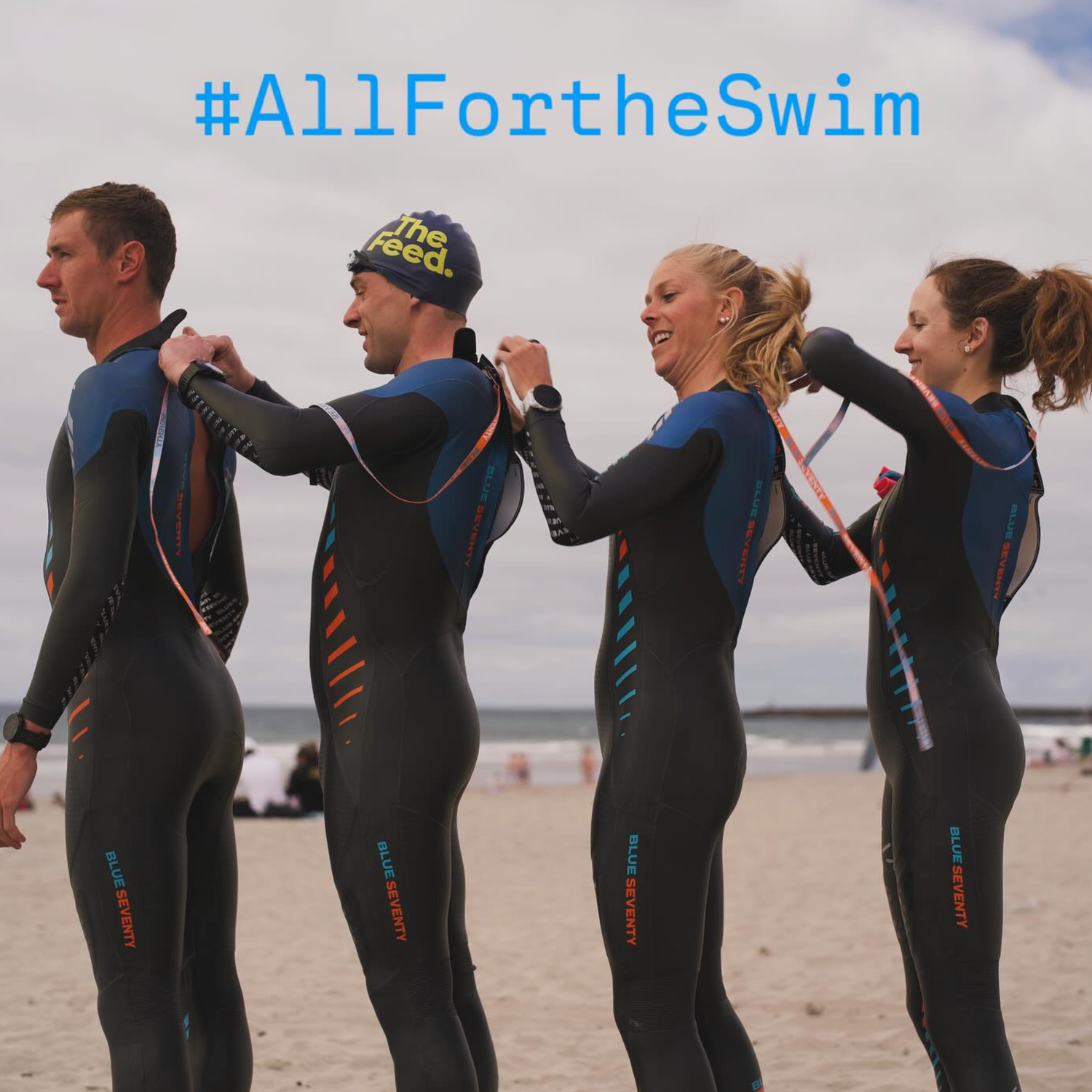
A wetsuit should feel snug on dry land and more comfortable in the water. The suit allows a little water in, and your body warms it. If the shoulders are overstretched or the suit is not pulled up correctly, you fatigue early. Take time to don it properly. Work the neoprene up over your hips and settle the shoulders before the swim.
A swimskin fits closer to a race suit: snug, smooth, no bunching at the hips or shoulders, and no water trapped between fabric layers. Women's Blue70 wetsuits use Femme Fit, which adjusts the bust, torso, wrist, and ankle patterns and extends the zipper for easier entry.
Because fit matters more than any feature, Blue70 lets you swim in a wetsuit and still exchange it if the suit is clean, dry, unmodified, and returned within 30 days of shipment. Try that. A suit that feels fine in a fitting room can ride up or restrict your shoulders in open water.
Training Frequency Chooses the Model
For race day, the Helix is the most flexible Blue70 wetsuit. The thin neoprene in the arms and shoulders and the permeable catch panel preserve feel for the water. We recommend it for race day, not heavy training. Thin neoprene breaks down faster with frequent use.
- Race day: Helix for maximum flexibility.
- Frequent training: Reaction for longer swims, Fusion for shorter sessions.
- Cold water: Thermal Reaction below about 56 to 58°F.
- Entry level: Sprint for the same category without the race-day price.
Race Week: Two Checks
- Open the athlete guide. It lists the wetsuit rule and the expected water temperature.
- Swim in your suit before race week. A suit that has not been in open water is an unknown.
If the water is cold enough to require a wetsuit but below about 60 degrees Fahrenheit, treat it as a cold water swim. Acclimatize gradually, swim with others, and get out if you feel numbness, confusion, or shivering that does not stop. A thermal suit adds protection. It does not remove cold water risk.
Care That Keeps Both Suits Working
Rinse a wetsuit in fresh water after salt or chlorine. Dry it inside and out, away from heat and sunlight. Small neoprene tears respond well to Aquaseal neoprene cement. Most damage comes from fingernail punctures and heel tears. Use your fingertips and pull from the ankle rather than the heel.
Rinse a swimskin the same way and dry it flat. Keep it away from Velcro tabs that can snag the textile.
If you are deciding between models, start with the size charts and the fitting guide. A thirty-second size check beats a race-week return.