


Water temperature gets treated like a simple threshold. Cold means full suit. Warm means sleeveless or no wetsuit. That shortcut helps at the very start, but it leaves out the part that decides how the swim actually goes. Temperature changes stroke rhythm, breathing control, body position, and how long a suit feels good once the effort rises.
A better way to think about wetsuit choice is to ask what the water will do to your swim. In cold water, the first challenge is often control. In warmer water, the bigger issue can be heat buildup and shoulder fatigue. The right answer depends on more than the thermometer. It depends on distance, intensity, fit, and how you move when conditions get harder.
That is why Blue70 builds swim-specific wetsuits around real swimming, not generic water use. Buoyancy placement, shoulder flexibility, thermal lining, and neckline comfort all affect performance, but each matters in a different way depending on the temperature and the job you need the suit to do.
Water temperature changes mechanics first
Most swimmers notice temperature when they get in. The body notices it again a few minutes later, when form starts to change. In colder water, many athletes shorten the stroke, rush the turnover, and lift the head more often. Once that happens, the hips can drop and the catch can lose pressure. Pace starts to cost more.
A swim-specific wetsuit can help by improving body position and adding thermal protection. That support often makes it easier to settle breathing and hold a cleaner line through the water. Blue70’s approach is built around that idea. The suit should help you keep your stroke together, not make you fight for it.
Warm water creates a different problem. Early on, a full suit can feel fast and supportive. Later in the swim, the same suit may feel too warm, especially if the pace is high or the session runs long. Neck comfort, shoulder freedom, and heat management start to matter more with every minute.
Why a temperature chart is only the starting point
Blue70’s published guidance gives swimmers a useful framework. Below about 56 to 58°F, a purpose-built thermal suit adds meaningful warmth. Above about 70 to 72°F, a full suit can become too warm over longer swims. Those numbers are useful because they help narrow the field quickly.
They do not answer the whole question. A short race effort and a long aerobic session are not the same. Neither are a calm lake swim and a rough open-water start. Temperature tells you where to begin. Duration and intensity tell you what will still feel right halfway through.
This is where many athletes make the wrong call. They choose a wetsuit for the first five minutes instead of the full swim. That mistake shows up most often in moderate and warm conditions, where the suit feels good on shore and less good once the body heats up.
Water temperature is also a pacing decision
One of the most useful ways to look at wetsuit choice is through pacing. Water temperature affects how hard you can swim before tension, overheating, or fatigue starts changing your stroke. That makes suit choice part of race execution, not only part of gear selection.
Take a cool-water race. A full suit often supports a harder start because buoyancy helps body position and colder water lowers the chance of overheating early. Now change only one variable and make it a long steady swim in warmer conditions. The same suit may start to feel loaded through the shoulders or too warm through the torso after twenty or thirty minutes.
That difference matters because swimmers often blame fitness when the real issue was the mismatch between temperature and suit choice. The swim did not get harder by accident. The conditions changed what the body could hold comfortably.
How Blue70’s wetsuit range fits different temperatures
Thermal Reaction for colder water
Below about 56 to 58°F, the Thermal Reaction is the right starting point for most swimmers who need added thermal protection. It uses a full Zirconium jersey lining, which Blue70 designed for cold-water swimming. That added lining matters on longer swims, early-season sessions, and any day when form tends to fall apart as the cold sets in.
Cold water still calls for judgment. A thermal wetsuit adds protection, but it does not make cold exposure risk-free. Swimmers still need conservative planning, gradual acclimatization, and a clear routine for getting warm again after the swim.
Helix for race-day focus
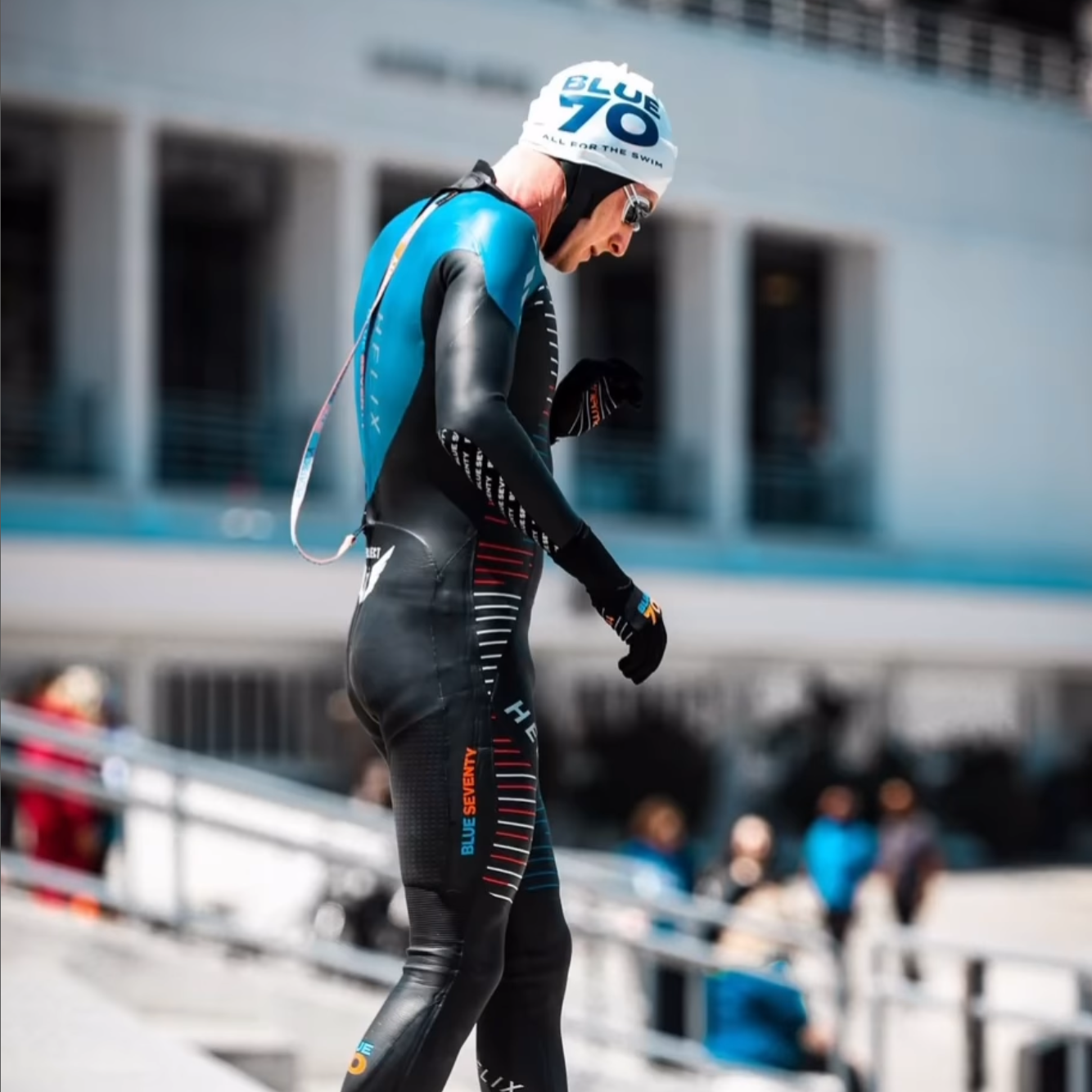
The Helix is Blue70’s flagship race suit. It is built for total race-day performance, with very thin, flexible neoprene in the arms and shoulders, a permeable catch panel that preserves feel for the water, and LIFT buoyancy panels added in 2018. Those details matter when your priority is freedom through the stroke and clean body position at race pace.
Blue70 is open about the trade-off. The Helix uses delicate neoprene and is not the right tool for heavy training use. That honesty helps swimmers choose more wisely. The best race suit is not always the best every-week suit.
Reaction and Fusion for regular use
For frequent training, the Reaction and Fusion often make more sense. The Reaction uses higher-grade neoprene than the Fusion and suits athletes doing frequent, longer swims. The Fusion is Blue70’s mid-range best seller and works well for shorter frequent swims, especially for athletes who want a strong balance of performance, comfort, and value.
The 2021 Fusion redesign added a lower-sitting neckline for comfort without losing the watertight seal. That is a useful detail in moderate conditions, where a small fit issue around the neck becomes more noticeable as the swim goes on.
Reaction Sleeveless for warmer conditions
When water rises above about 70 to 72°F, the Reaction Sleeveless deserves a serious look. A sleeveless suit still gives buoyancy through the body while reducing insulation and freeing the shoulders. For athletes who run hot, prefer more natural arm turnover, or want an easier fit, that can be the better answer in warmer water.
Fit changes how temperature feels
Two swimmers can wear the same wetsuit in the same lake and walk away with different opinions. Fit is usually the reason. If the suit is not fully pulled into place through the hips and shoulders, fatigue arrives early. If the neckline sits poorly, the swimmer feels it on every breath. If extra material bunches in the torso, the suit can feel heavy once it settles in the water.
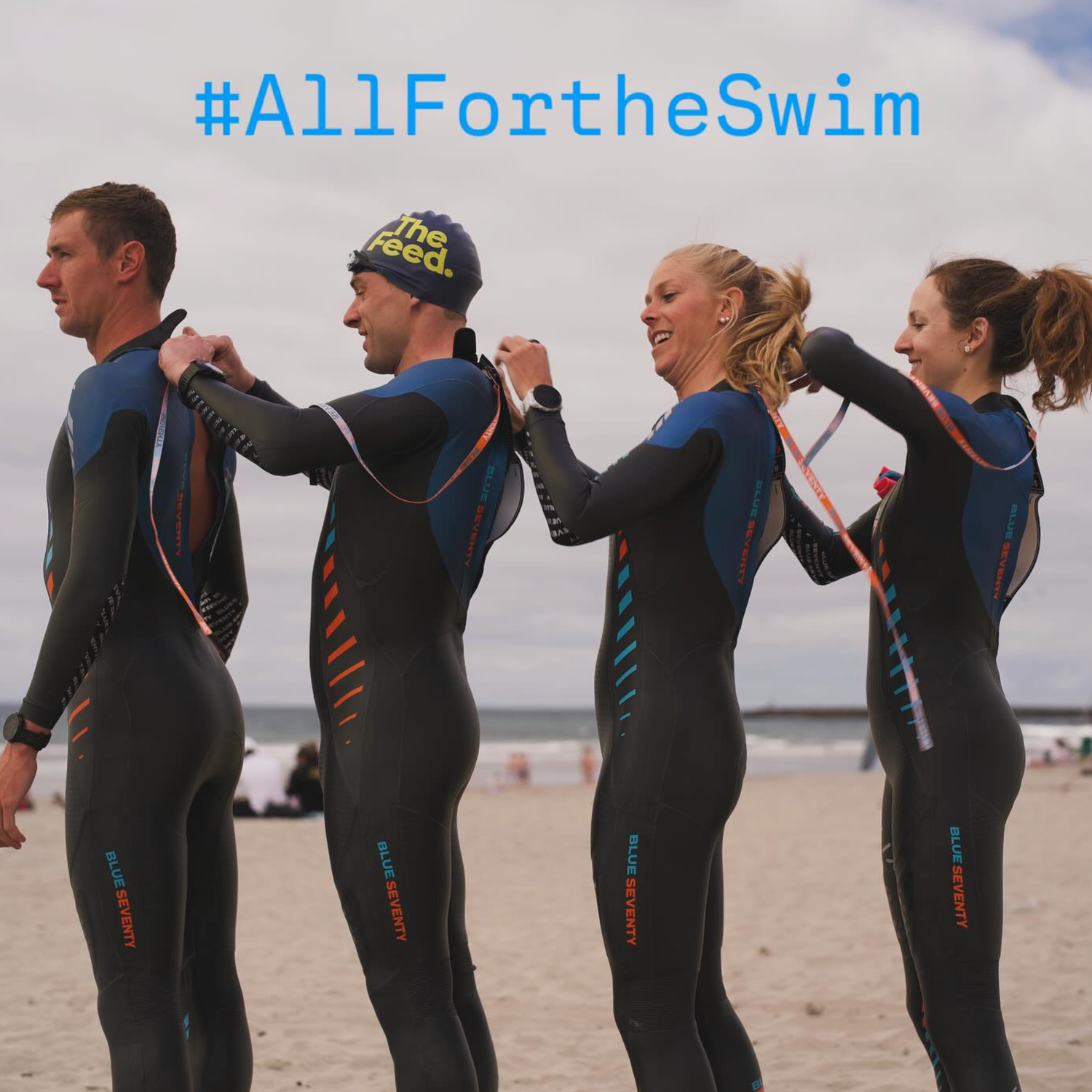
Blue70’s fit doctrine is simple: the wetsuit should feel snug on land and more comfortable once you are swimming. That is why proper donning matters so much. A suit that feels restrictive on dry land can feel right in the water if the shoulders and torso are positioned correctly.
For women, Femme Fit addresses the places where fit usually makes or breaks the experience: the bust, torso, wrists, and ankles. Blue70 also uses a lowered neckline and an extended zipper length in its women’s design approach. Those details affect comfort, entry, and transition speed in ways that matter long after the suit is zipped up.
A practical framework for choosing by temperature
Instead of choosing by temperature alone, use a short sequence that matches the suit to the swim.
- Start with the water temperature. Below about 56 to 58°F points toward a thermal suit. Between about 58 and 70°F is the broadest full-suit range. Above about 70 to 72°F, a full suit can become too warm over longer swims.
- Add the length of the swim. A 20-minute race effort and a 75-minute training swim create different demands, even in the same water.
- Add the pace. High-intensity swimming builds heat quickly. A suit that feels good at steady effort may feel too warm at race effort.
- Add your stroke tendencies. If your shoulders tighten in cold water, prioritize flexibility and correct fit. If you run hot, take warm-water choices seriously.
- Add training frequency. If you swim in neoprene at least once a week, durability needs to be part of the decision.
Race morning requires an honest read
Race-day water temperature is never just a number on a forecast. You need the official reading, your expected swim time, the likely air temperature, and an honest sense of how you handle the first minutes of the swim. If the event has wetsuit rules, check the current rule set from the sanctioning body before race day. [VERIFY: current sanctioning-body rule]
Before you zip up, ask yourself a few direct questions.
- How long will I actually be in the water?
- Do I settle quickly, or do I need help calming the first few minutes?
- Am I more likely to struggle with cold or with overheating?
- Will shoulder freedom matter more than added coverage today?
- Did I train in similar conditions, or am I making a guess?
Good race-morning decisions usually come from prior testing. Swimmers who have already trained in similar conditions know what their stroke feels like after ten minutes, thirty minutes, and a hard start. That knowledge is worth more than a last-minute hunch.
Test swims tell you more than dry-land fit
A wetsuit can feel stiff in the house and feel great in open water. It can also feel fine while standing still and become uncomfortable once the heart rate rises. The only reliable way to know is to swim in it.
Blue70’s Test Swim policy makes that process easier. You can take the wetsuit for a real swim and still return or exchange it if it comes back clean, dry, unmodified, with tags and accessories. If you want more sizing help before that first swim, the fit resources at size charts and fitting guide are the right place to start.
Match the suit to the session
Many swimmers try to make one wetsuit cover every session from early spring cold water to late-summer race rehearsals. Sometimes that works. Often it leads to compromises in comfort, stroke quality, or durability.
A better habit is to match the suit to the purpose of the session.
- Long cold aerobic swim: prioritize thermal protection and stable mechanics.
- Short race-pace open-water set: prioritize shoulder freedom and body position.
- Frequent weekly training: prioritize fit and durability.
- Warmer-water swim: reduce insulation when conditions and rules allow.
There is also room for buoyancy-specific training tools outside full wetsuit use. The LIFT Buoyancy Short uses NBR foam to add buoyancy and help swimmers work on body position in training. It is a training tool, not a flotation device, and it works best when used with a clear purpose in the session.
The best temperature choice preserves your stroke
The smartest wetsuit decision is the one that lets you hold form from the first minute to the last. In cold water, that often means added thermal protection. In moderate water, it usually means choosing a full suit that matches both your pace and training load. In warm water, it often means having the discipline to choose less coverage when more neoprene would only add heat and fatigue.
Water always gives the final answer. The more closely you match temperature, distance, effort, and fit, the more likely your wetsuit will feel like support instead of something you have to manage. That is the point of swim-specific design, and it is the reason thoughtful wetsuit choice pays off long before T1.