


Warm-water swimming exposes a mistake a lot of athletes make: they choose a wetsuit based on buoyancy alone.
Buoyancy matters. Better body position usually means less drag, and less drag usually means a more efficient swim. But once the water warms up, that is only part of the story. The more useful question becomes how much wetsuit you can wear without disrupting your stroke, your breathing rhythm, or your ability to stay composed over the full swim.
That is why warm-water wetsuit choice is not just a gear decision. It is a heat-management decision, a pacing decision, and in many cases, a technique decision. The right suit is often not the one with the most coverage. It is the one that gives you enough lift to help, without asking you to fight the suit by the halfway point.
Why warm water changes the rules
A swim-specific wetsuit is designed to help your body ride higher in the water and move more cleanly through it. For many swimmers, especially those newer to open water, that can be a real advantage. But wetsuits are also designed to provide insulation by letting in a thin layer of water that your body warms. In cold water, that is useful. In warm water, it can become the trade-off.
Blueseventy’s own guidance is straightforward here: above roughly 70-72°F, a full suit can be too warm over longer swims. That is where sleeveless suits or lower-coverage options start to make more sense.
The overlooked point is that overheating rarely announces itself all at once. Usually it shows up first in your stroke. Your reach shortens. Your shoulders get heavy. Your breathing gets sharper. The catch loses precision. You may still be moving forward well enough, but the swim starts costing more than it should.
The contrarian truth: more wetsuit is not always more performance
A lot of athletes assume that if some neoprene helps, more neoprene must help more. In warm water, that logic often falls apart.
The best warm-water setup is usually the one that lets you keep your natural stroke for the longest time. If extra coverage gives you more lift but also raises your thermal load or interferes with shoulder freedom, the benefit can shrink quickly. A suit that feels fast for the first 300 meters may feel very different 20 minutes later.
That is why less coverage is not a compromise in the right conditions. It is often the more precise tool.
What actually matters in a warm-water wetsuit
If I were helping an athlete choose a warm-water wetsuit on the pool deck or in the shop, I would narrow it down to five priorities.
1. Shoulder freedom
Warm water makes even small fit issues more obvious. If the suit limits your recovery or makes you work through the front of the stroke, you will feel it sooner than you would in cooler conditions. A good warm-water option should let you swim naturally, not ask you to compensate.
2. The right amount of buoyancy
Not every swimmer needs maximum lift. Some athletes need a lot of help through the hips and legs. Others already hold solid body position and just want a smoother, more supported swim. The goal is not to float as high as possible. The goal is to improve position without creating new problems.
3. Swim duration
This is one of the most underrated factors. A suit that feels comfortable in a short training effort may feel completely different over a full race swim. The longer the swim, the more important heat management becomes.
4. Ease of fit
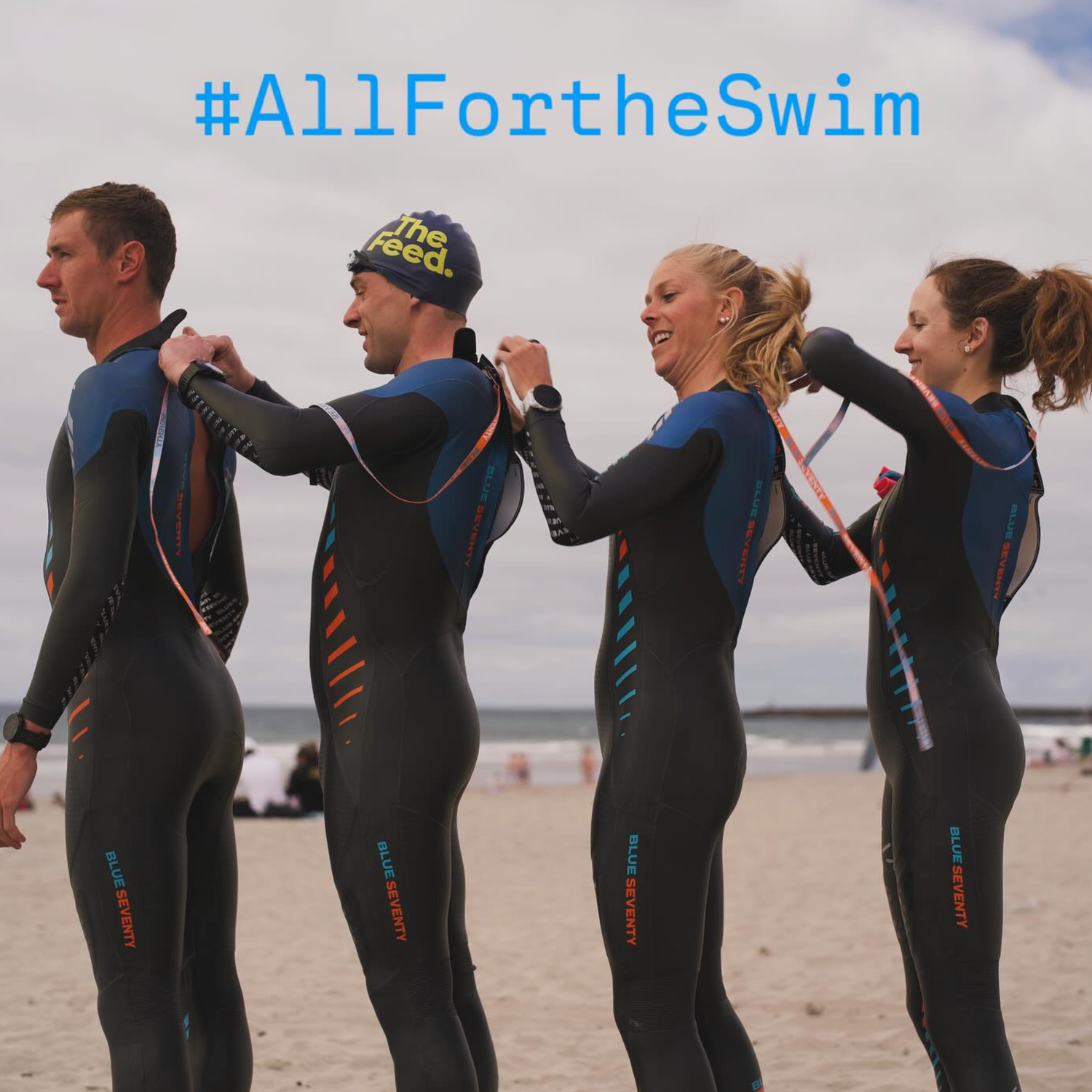
Warm-water performance depends heavily on proper donning. If the suit is not worked fully up from the legs through the torso and shoulders, the upper body takes the strain. That can lead to fatigue, a restricted stroke, and a swim that feels harder than it should.
5. Transition practicality
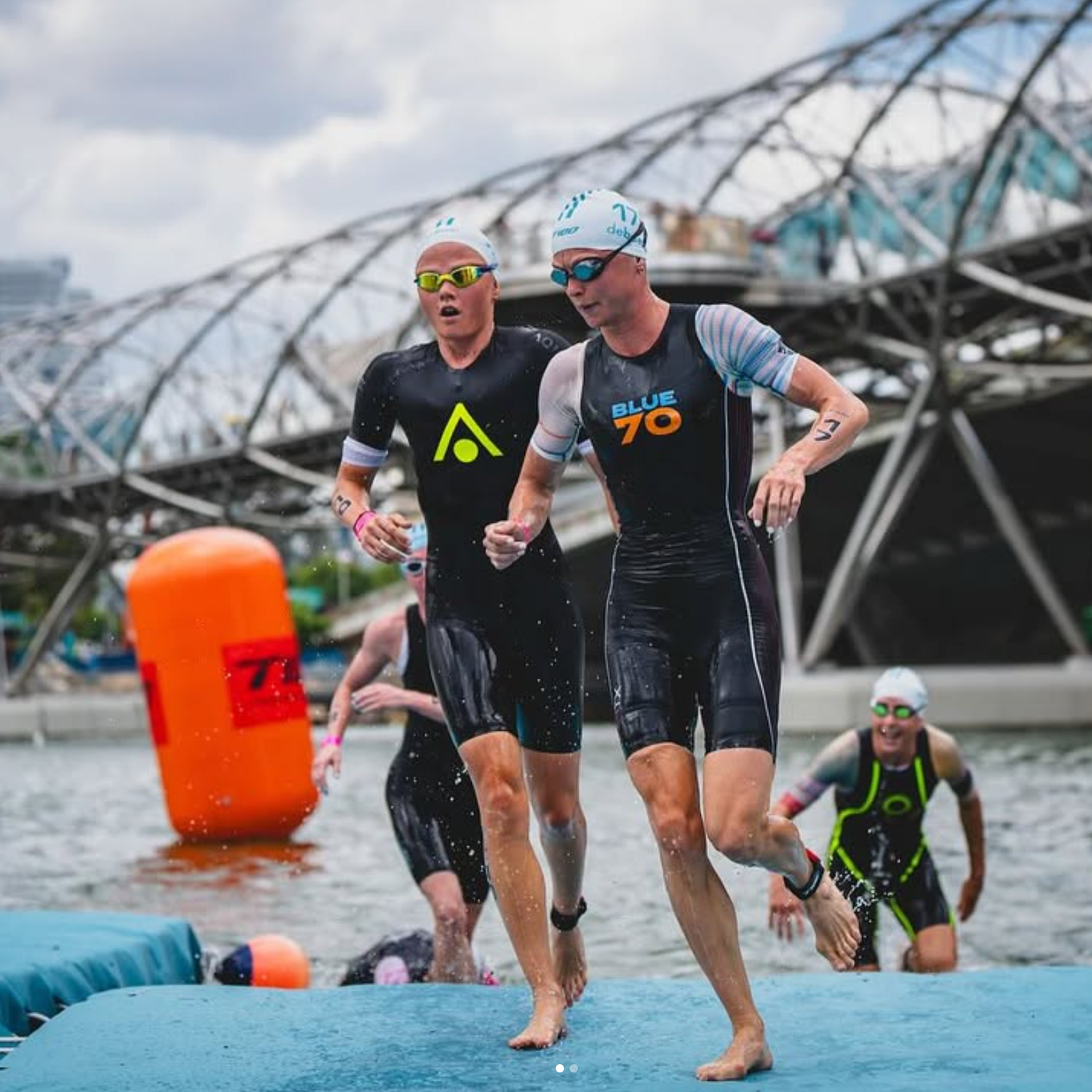
In triathlon, the swim does not end when you stand up. If a lower-coverage suit gives you a smoother exit and faster removal in T1, that is part of the performance picture too.
Why sleeveless and short john options make so much sense
Warm-water wetsuit conversations tend to focus too much on full-sleeve suits. In practice, many athletes are better served by less coverage.
A sleeveless suit can give you the body-position benefits of neoprene while preserving a more natural shoulder feel. That often means less fatigue, less heat buildup, and a stroke that stays closer to what you would swim without a suit.
A short john style can be just as smart when conditions are firmly warm and full coverage feels excessive. For swimmers who dislike feeling wrapped up in neoprene, this can be an especially useful option.
Neither choice is a fallback. Both are purpose-built answers for conditions where freedom and temperature control matter as much as flotation.
How blueseventy options fit into warm-water swimming
The right model depends on your stroke, the water temperature, and how long you will be in the water. But there are a few especially relevant blueseventy options for warm conditions.
Reaction Sleeveless
This is a strong choice for athletes who want buoyancy and swim-specific performance without arm coverage. It makes a lot of sense for swimmers who value shoulder freedom or tend to run hot once effort rises.
Glide Short John
A practical warm-water option for athletes who want reduced coverage and a simpler fit. It is a good match when a full suit feels like more insulation than the swim really calls for.
Fusion
The Fusion remains a versatile choice when swims are shorter or the conditions are warm but not pushing that upper threshold too hard. Its lower-sitting neckline redesign is especially relevant for athletes who care about comfort around the neck without giving up a secure seal.
Sprint
A dependable entry point for newer swimmers and triathletes who want a swim-specific wetsuit and are still figuring out how much buoyancy and coverage they prefer.
If you swim frequently, it is worth being honest about training volume too. Blueseventy has always been candid about trade-offs: athletes doing regular, longer swims are often better served by the Reaction or Fusion depending on use, while the Helix is built around total race-day performance with very thin, extremely flexible neoprene that is not ideal for heavy training use.
Use this decision framework before you buy
If you want a simple way to sort through your options, start here.
A full suit may still make sense if:
- the water is warm, but not so warm that you struggle with heat over the full swim
- you benefit significantly from extra lift
- your stroke stays relaxed in sleeves
- the distance is short enough that heat buildup stays manageable
A sleeveless suit is often the better choice if:
- the water is getting into the warmer range
- you tend to overheat
- you want more natural shoulder movement
- you still want meaningful buoyancy support
A short john style makes sense if:
- the conditions are firmly warm
- you want minimal coverage
- comfort and range of motion are your top priorities
- you want some wetsuit assistance without full upper-body insulation
Fit errors show up faster in warm water
A wetsuit can be the right model and still feel wrong if it is not put on properly. This is one of the most common reasons swimmers think a suit is restrictive when the real issue is placement.
If there is not enough material worked up through the hips, torso, and shoulders, the suit will pull through the upper body. That creates tension across the chest and shoulders, and every stroke costs more. In warm water, that added effort often shows up quickly as heat, fatigue, and a stroke that starts to tighten up.
A swim-specific wetsuit should feel snug on land and better once you are in the water. If it feels brutally restrictive before you ever get your face wet, something is probably off in the fit or the donning.
Test in real water, not just in your living room
Warm-water wetsuit choice is personal. Some swimmers tolerate full coverage well. Others heat up quickly. The only way to know is to swim in the suit.
When you test a warm-water wetsuit, do not just ask whether it feels fast in the first few minutes. Ask better questions.
- Can I keep my normal stroke rhythm?
- Do my shoulders still feel relaxed after 10 to 15 minutes?
- Does my breathing stay under control as effort rises?
- Do I feel supported, or do I feel trapped?
- Would I want to wear this for the full distance I actually race?
Blueseventy’s Take a Test Swim policy makes this much easier. You can swim in the wetsuit and still return or exchange it if it comes back clean, dry, unmodified, with tags and accessories.
The real takeaway
Warm-water wetsuit choice rewards restraint. The smartest setup is usually the one that helps your body position without taking too much back in heat or restriction.
That often means choosing less suit than your instincts might tell you to choose. In the right conditions, sleeveless and short john options are not second-best solutions. They are exactly what the swim calls for.
If you want to dial in the right fit before race day, start with the size charts or use the sizing tool to find your fit in 30 seconds. Then take it for a real swim. Warm water tells the truth quickly.