


The first thing many triathletes do during race week is memorize a wetsuit temperature cutoff. Then race morning arrives, the official reading lands a degree on the wrong side, and the plan falls apart. A better approach is to plan for the decision itself. That means preparing for wetsuit-legal, wetsuit-optional, and non-wetsuit outcomes before you pack.
blueseventy built one of the first triathlon wetsuits in 1993. Back then, wetsuit rules were far less formal. Over three decades, athletes and rulemakers shifted the conversation from "can I wear one?" to "which suit matches this water temperature and this race distance?" You can use the rulebook as a training and packing guide, not only a list of restrictions.
Why the Rulebook Should Shape Your Training Week
Most age groupers train almost exclusively in their wetsuit. If you train almost exclusively in your wetsuit and then discover on race morning that the water is too warm for one, the first 400 meters of your non-wetsuit swim will feel long, heavy in the legs, and harder to sight because other athletes are moving around you. That discovery arrives too late.
Try This Before Race Week
Spend one session a week in a regular training suit or swimskin if your target race carries any chance of a non-wetsuit call. Practice swimming the first 200 meters at race effort without the extra buoyancy. Then settle into your normal stroke. Do this in open water, not only the pool. Sighting and chop feel different without the suit.
What a Wetsuit Actually Changes
Buoyancy equals speed. A swim-specific wetsuit lifts your hips and legs toward the surface. That reduces the frontal area pushing through the water. The same effort moves you farther with less wasted energy over the full swim. Beginners notice the biggest difference because their baseline body position sits lower without the suit.
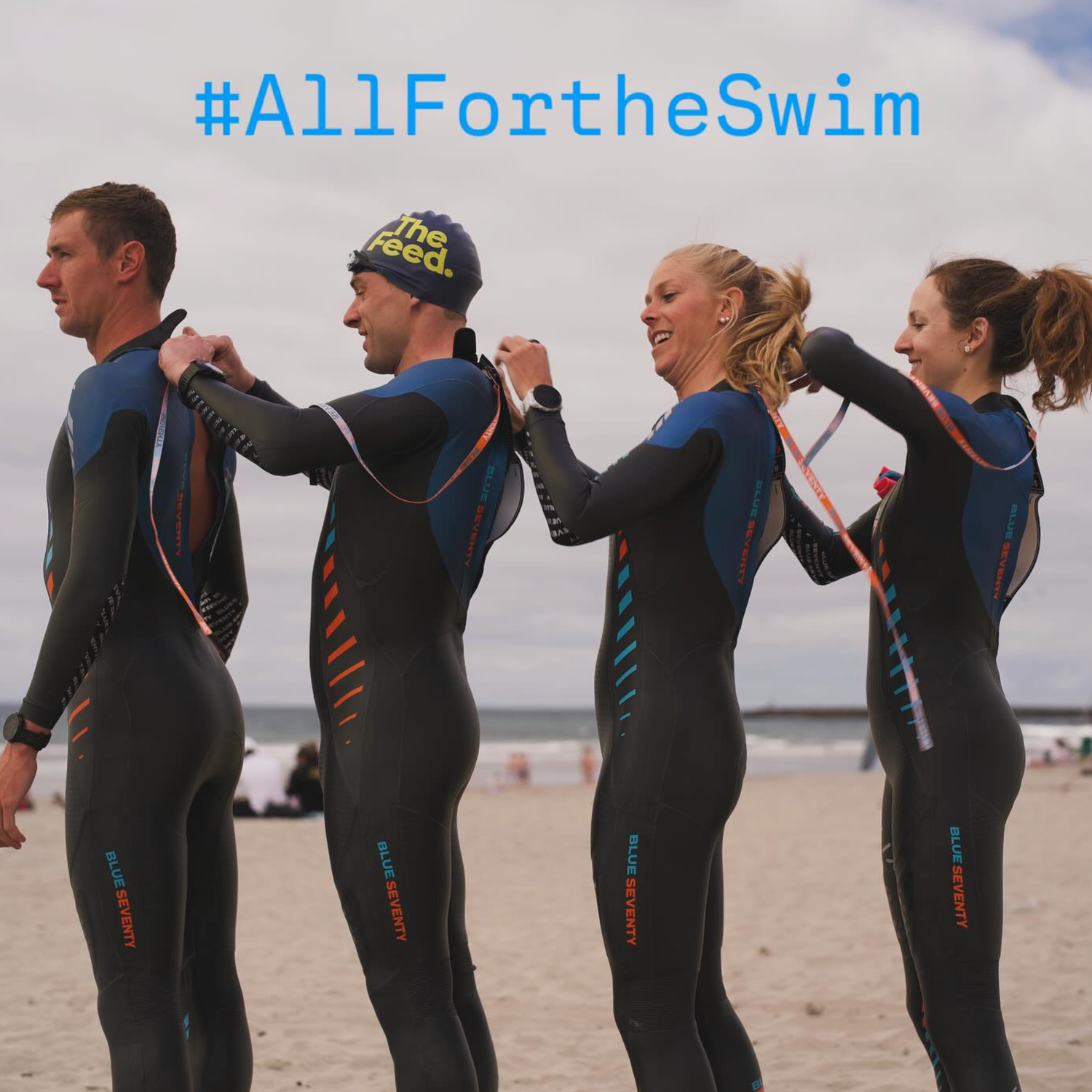
All blueseventy wetsuits use Yamamoto neoprene in 38, 39, and 40 cell. Higher cell numbers mean more flexibility. That flexibility matters most through the shoulders over a long swim.
A wetsuit also adds thermal protection. The Thermal Reaction is designed for water below about 56 to 58°F, where the fully lined Zirconium jersey adds measurable warmth. Above roughly 70 to 72°F, a full suit can trap too much heat during longer swims. Cold water demands respect. Acclimate gradually, swim with a buddy, and know your exit points before an extended cold session.
A wetsuit is not a personal flotation device. It adds buoyancy, but it does not replace swim competence, sighting, or open water safety habits.
When the Water Warms Past the Legal Range
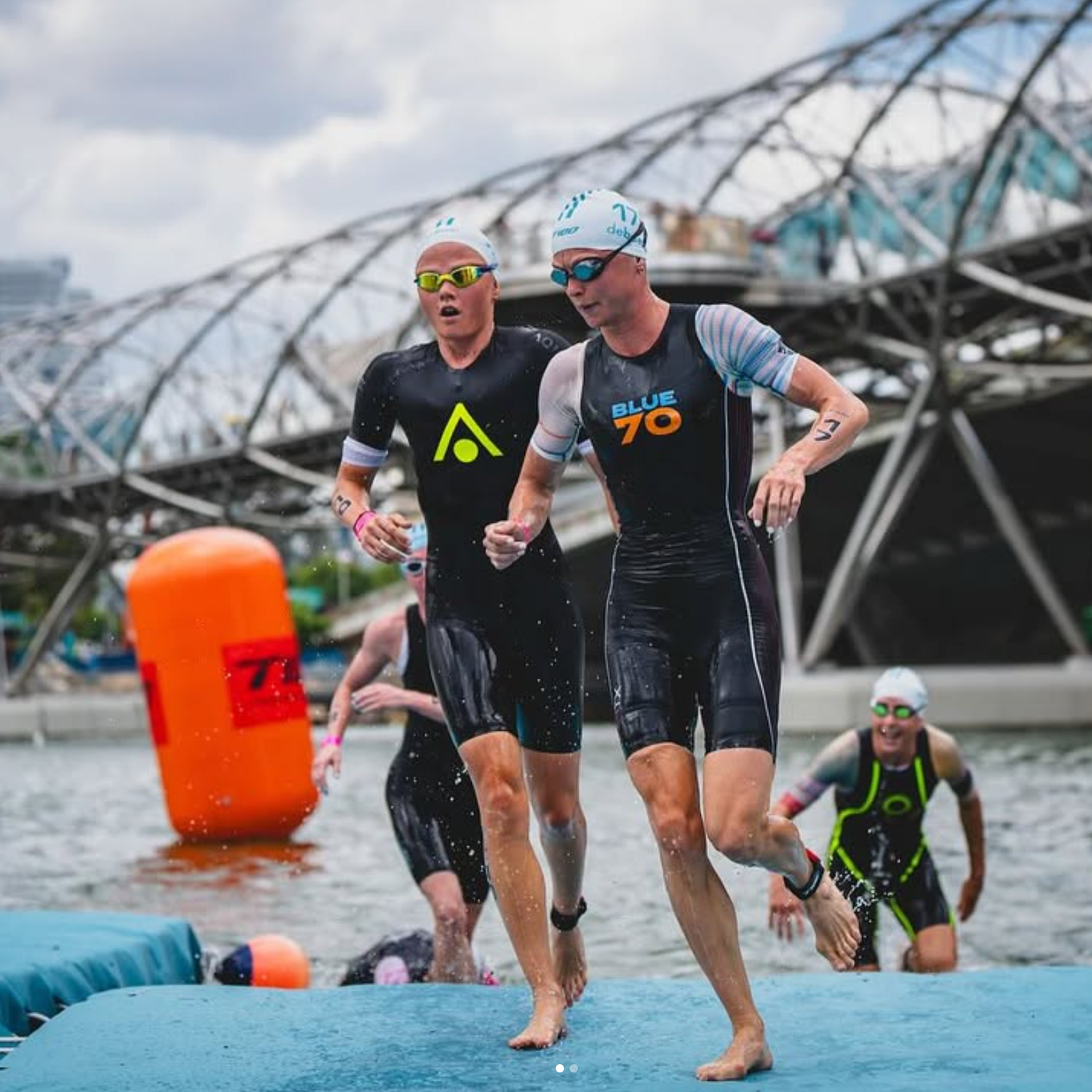
If the official water temperature moves your race into non-wetsuit territory, a swimskin becomes the main option. A swimskin is a textile suit designed to reduce drag without adding buoyancy or thermal insulation. blueseventy's swimskin line traces back to the original pointzero3, worn by Kona winners from 2006 to 2008. That suit existed because some races do not allow wetsuits but still reward a smooth surface and a good fit.
A sleeveless suit sits between a full suit and a swimskin. The Reaction Sleeveless removes arm restriction and lets heat escape while keeping a layer of neoprene over the torso. Check the current USAT rulebook to see how sleeveless suits are treated at your specific race.
Race-Morning Checklist
Print this or save it on your phone. Run through it before you leave transition.
- Read the current USAT rulebook wetsuit section during race week, not the night before.
- Check the official water temperature reading and wetsuit status announcement in race communications.
- Pack both a full wetsuit and a non-wetsuit option when travel allows.
- Decide your personal comfort threshold before you learn the official number.
- Practice one non-wetsuit open water swim in the final two weeks if conditions could go either way.
How USAT Rules Evolve
USAT will keep adjusting its wetsuit language over time. Water temperature measurement methods, safety research, and swimskin design all push the conversation forward. Athletes who treat the rulebook as a living document waste less energy being surprised. Read the current version. Find out how your race director will measure and announce the water temperature. Then build an equipment plan that covers a wetsuit-legal swim and a non-wetsuit swim without last-minute panic.
If you need a suit that matches your race-morning plan, start with the sizing tool and take a test swim. It won't affect your return.