


Triathletes often choose a race suit and then train in it every week. That approach shortens the life of an expensive piece of neoprene and leaves you with a softer, looser suit by late summer. A better method is to match the suit to your training week first, then let race-day performance follow.
Most wetsuit advice starts with a race calendar. This one starts with a different question: how many open water swims will you actually do between now and your target race? The answer changes which suit you buy, how you fit it, how long it lasts, and whether the purchase still feels right in September.
Where swim-specific wetsuits came from
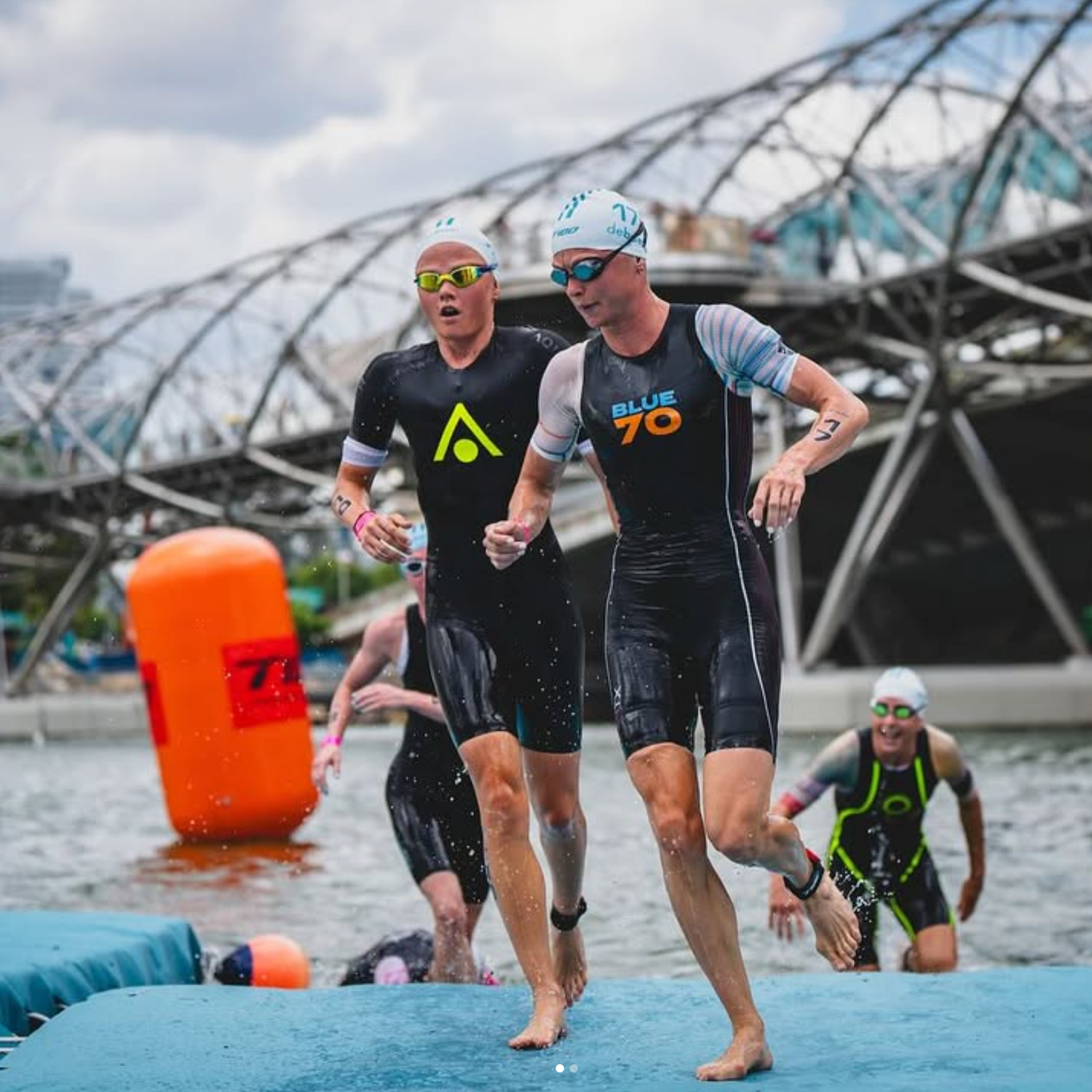
The triathlon wetsuit is a young piece of gear. In 1993, the company that later became blueseventy helped develop one of the first triathlon-specific wetsuits. By 2005, the brand had adopted the blueseventy name and introduced the Helix as its flagship race suit. Between 2006 and 2008, blueseventy swimskins and race suits appeared at world championship courses and the Beijing Olympics. In 2012, the Helix was first out of the water in both the men's and women's Olympic triathlon races in London. That same year, Alistair Brownlee won Olympic triathlon gold and Leanda Cave won both the 70.3 and Ironman World Championships.
Those milestones mark a shift from general-purpose wetsuits to swim-specific designs. A triathlon wetsuit is built for long-axis freestyle. Surf and dive suits solve different problems. The modern triathlon suit exists to support the stroke, not to keep you warm while floating.
The two jobs a triathlon wetsuit performs
A swim-specific wetsuit does two jobs. It adds buoyancy to the hips and legs, and it preserves shoulder mobility. Most swimmers' legs sit lower than the chest, which increases frontal drag. Neoprene panels in the hips and thighs help lift the legs and improve body position. blueseventy sums this up as buoyancy equals speed.
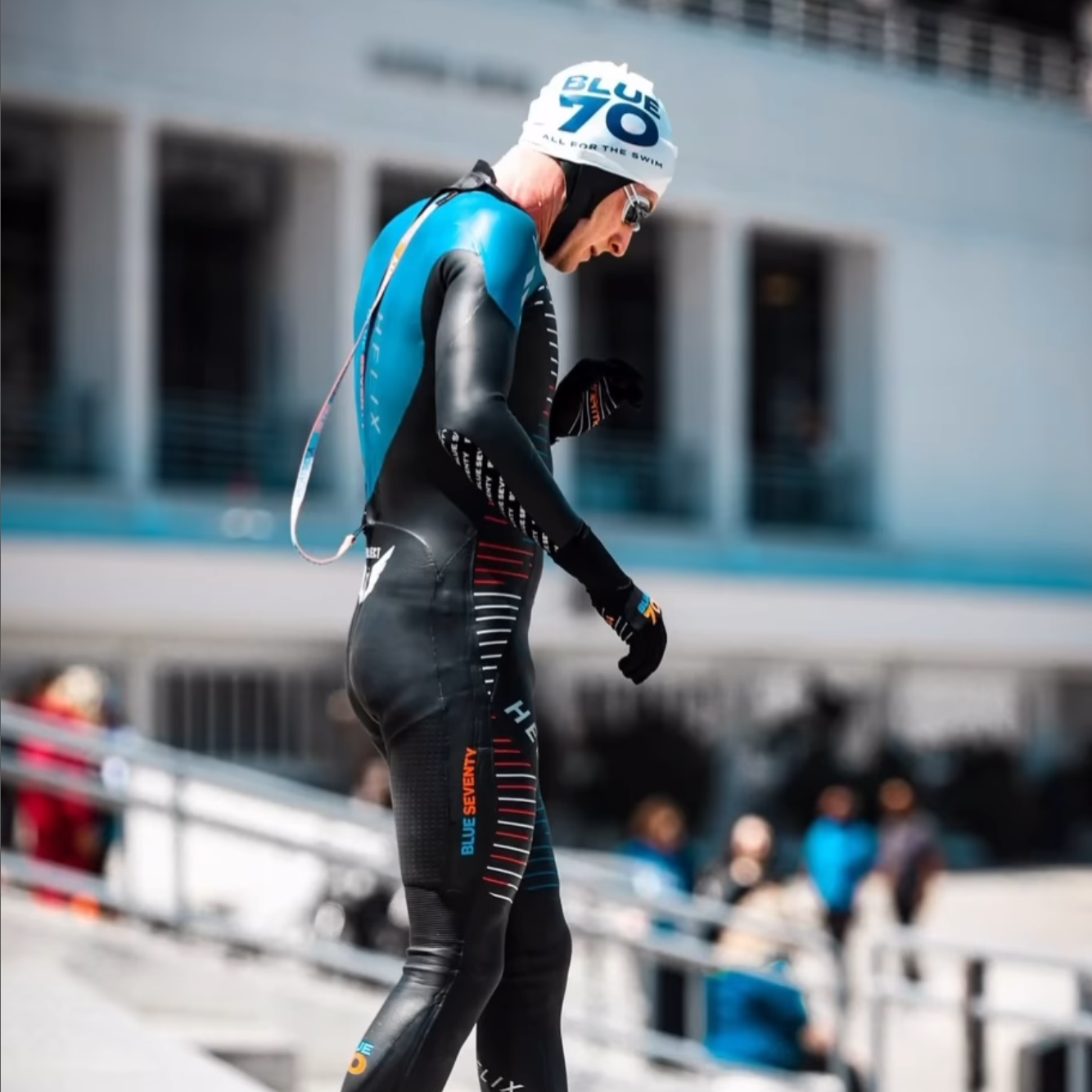
Shoulder mobility matters just as much. Freestyle requires repeated rotation over hundreds or thousands of strokes. The arms and shoulders of a triathlon suit use thin, flexible neoprene compared with the torso. All blueseventy wetsuits use Yamamoto neoprene in 38, 39, and 40 cell grades. Higher cell count means more flexibility. The Helix takes this furthest: thin neoprene in the arms and shoulders, plus a permeable catch panel added in 2010 to preserve feel for the water. In 2018, LIFT buoyancy panels were added to the Helix. A stiff shoulder panel adds resistance during the catch and recovery, which shows up as fatigue later in the swim.
A well-fit suit reduces the energy cost of holding good body position. That is where the speed comes from. Beginners often notice the biggest change in their swim because they stop fighting their legs.
Race suit or training suit: the durability trade-off
The hardest concept for many triathletes to accept is that the lightest, fastest suit is also the least durable. The Helix is blueseventy's flagship race suit at $995. It is built for total race-day performance. The neoprene in the arms and shoulders is thin and flexible, and that same thin neoprene will break down more quickly if you train in it every week. You do not need to baby it on race morning, but you should not make it your daily training suit.
If you swim in open water at least once a week from spring through fall, the Reaction at $680 is the stronger choice. It uses a higher-grade neoprene than the Fusion and is recommended for frequent, longer swims. If your swims are shorter and more frequent, the Fusion at $420 is the better durability value. The 2021 Fusion redesign added a lower-sitting neckline for comfort without losing the watertight seal. For a first season or a budget-conscious calendar, the Sprint at $325 is the entry point. Spend based on the training volume you swim.
Match the model to your training week
- Helix ($995): Race day only. Thin, flexible neoprene; not for daily training.
- Reaction ($680): Frequent open water swims, longer sessions.
- Fusion ($420): Shorter frequent swims, durable mid-range.
- Sprint ($325): First season or budget entry.
- Thermal Reaction ($785): Cold water below 56 to 58 degrees Fahrenheit.
- Reaction Sleeveless ($395): Warm water or easier fit.
Fit rules for open water speed
Fit is where swimmers go wrong. A triathlon wetsuit should feel snug on dry land. It will feel more comfortable in the water because the suit moves with you and the thin water layer creates a small amount of slip. A suit that fits loosely at the neck, wrists, or ankles lets water flush through, which weakens the thermal function and adds drag. An improperly donned suit, especially around the shoulders, causes fatigue.
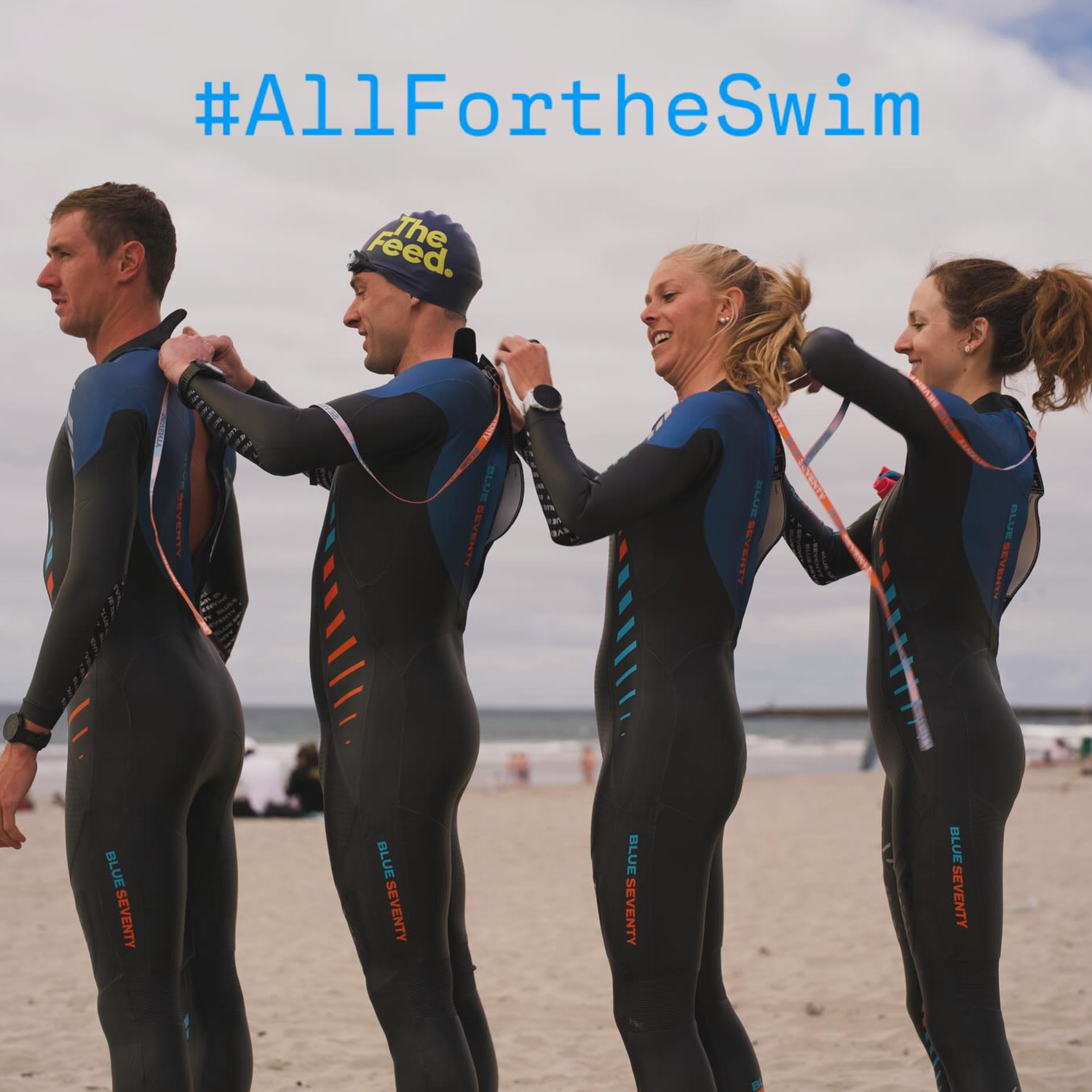
- Start at the ankles and pull the suit up in small sections.
- Work excess material toward the hips and torso as you go.
- Set the shoulders last, rolling them forward to seat the suit.
- Use the pads of your fingers, not the fingertips.
For women, the fit problem has been worse. Many wetsuits were cut from the same patterns as men's suits. blueseventy's Femme Fit takes a different approach. It includes refined pattern design in the bust, torso, wrists, and ankles; a lowered neckline to reduce chafing; and an extended zipper for easier entry, wider hips, and faster transitions. The line expanded to 15 women's sizing options in 2014. A suit that binds across the chest or rides up at the wrists wastes energy before the swim starts.
The Test Swim policy removes the biggest first-time buyer fear. You can swim in a blueseventy wetsuit and still return or exchange it within 30 days of the ship date if it is clean, dry, unmodified, and returned with tags and accessories. Use the sizing widget on the blueseventy homepage, then take the suit for a swim before race week.
Water temperature and suit choice
Water temperature determines the suit style more than air temperature. blueseventy's published guidance: below about 56 to 58 degrees Fahrenheit, a purpose-built thermal suit adds meaningful warmth. The Thermal Reaction at $785 is fully lined with Zirconium jersey, a synthetic wool material, for cold-water swimming. Above about 70 to 72 degrees Fahrenheit, a full suit can become too warm over longer swims, and a sleeveless suit or swimskin becomes preferable. The Reaction Sleeveless at $395 is the warm-water option in the wetsuit range. Between those ranges, a full-sleeve triathlon wetsuit works for most swimmers.
Cold-water swimming also requires gradual acclimatization, a swim buddy, and a conservative exit plan. The suit provides added thermal protection. It does not remove the need for cold-water judgment.
Race-day legality is a separate question. Wetsuit-legal temperature cutoffs vary by sanctioning body and change from season to season. Check the current rules for USAT, Ironman, or World Aquatics before race day. The suit you wear for a cold training swim may not be legal for a warm race.
The two most common ways swimmers damage a suit
The two most common ways swimmers damage a new suit are fingernail punctures and heel tears. Fingernail punctures happen when you grip the neoprene too tightly with your fingertips during donning. Heel tears happen when you step on the suit or force your heel through the ankle opening. Both are avoidable. Use the pads of your fingers, not the tips, when pulling the suit up. Roll the ankle cuff back to guide your foot through, or wear thin socks to help the neoprene slide. After a swim, rinse the suit in fresh water, especially if you swam in chlorine or salt. Dry it inside out first, then outside, out of direct sunlight.
For small nicks and seams, a neoprene cement like Aquaseal can repair the tear and extend the suit's life. blueseventy's warranty covers manufacturing and material defects for one year for the original owner. It does not cover fingernail punctures, heel tears, zipper damage from force, heat or chlorine damage, or normal wear and tear. Non-swimming use voids the warranty. Treat the suit as a performance wear item with a finite lifespan, and you will inspect it more carefully and repair small damage before it grows.
Race-day removal
Wetsuit removal starts in transition before the race. Pull the suit up properly so the crotch sits high and the shoulders are seated. Use a wetsuit-safe anti-chafe balm on your ankles and wrists only if it does not interfere with the suit's seal. A light coat on the outside of the ankle cuffs can help the suit slide off. In T1, unzip the suit fully, fold the top down to your waist while running, then peel the legs down as you reach your bike. Practice this in training. The goal is a clean exit that leaves the suit intact and gets you out of transition without sitting down.
Match the suit to your training week
A triathlon wetsuit should be chosen for the swims you do, not the swims you imagine. The Helix is a race-day tool. The Reaction and Fusion are training tools. The Sprint gets you through the first season. The Thermal Reaction extends your season into cold water. The Test Swim policy protects the purchase. Treat all of them as wear items, and you will train more consistently and race with a suit that still fits.
If you are between models or sizes, start with the blueseventy sizing tool and review the Test Swim policy before race week. Take a Test Swim