


Most wetsuit size charts ask for height and weight. Those two numbers tell you how the suit will fit a body that matches the chart's proportional assumptions. They don't tell you how the suit will fit your thighs. If you have large thighs from cycling, running, or years in the pool, the standard chart can put you in a suit that fits through the chest but pulls across the legs. That lower-body tension changes your kick, your body position, and the life of the suit.
Start below the waist. That's where the fit conversation should begin for swimmers and triathletes with powerful legs. Blue70 builds swim-specific wetsuits, cut for the position your body holds in the water. A suit designed for a paddle-out or a dive has a different job. Yours has to support a horizontal kick.
Cyclists and Runners Feel This Problem First
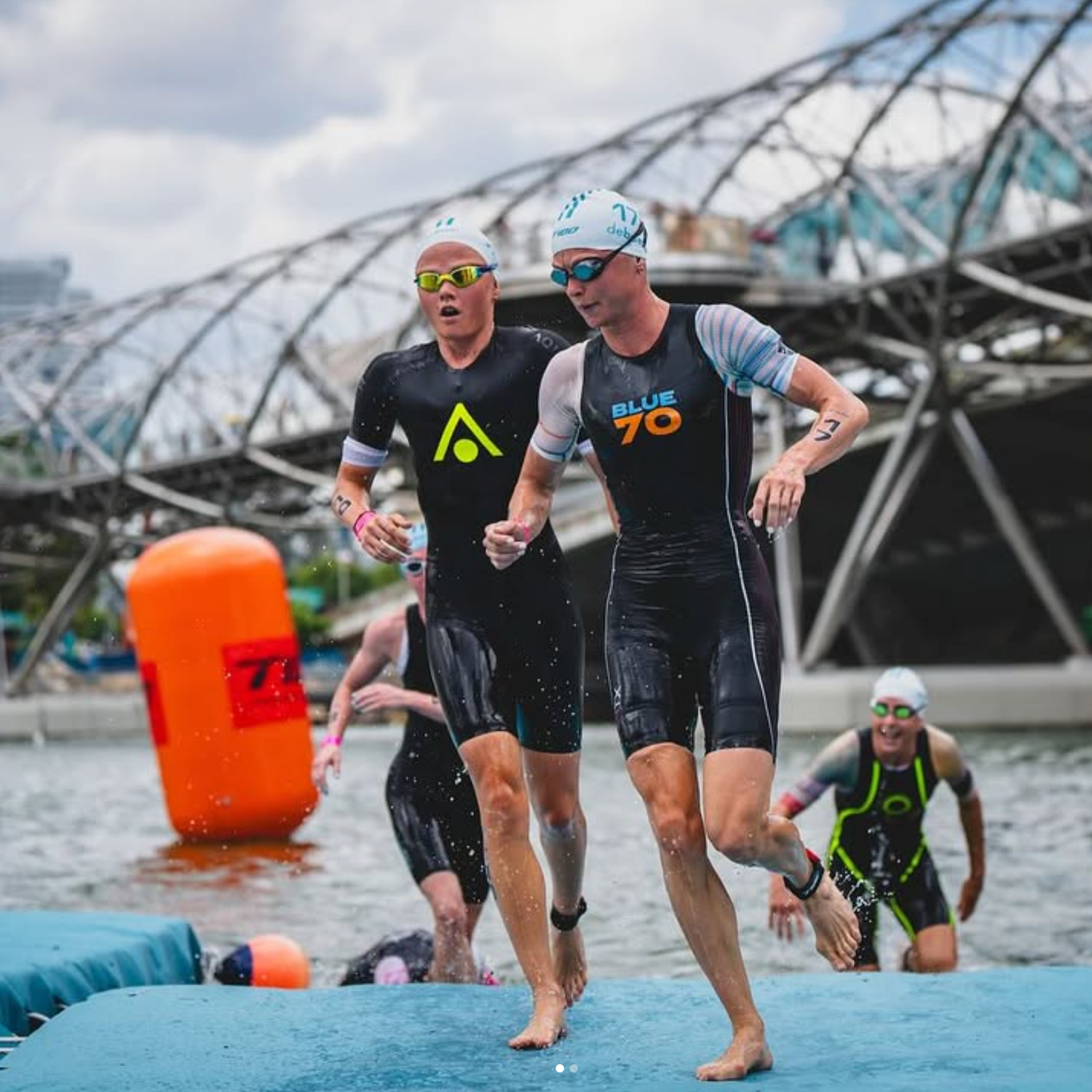
Triathletes spend hours in the saddle and on road runs. Those sports build quadriceps, hamstrings, and glutes. A size chart built around general population proportions doesn't account for that muscle. A chart cannot account for muscle built over years of cycling and running. The suit you try on in the store can feel fine standing up, then bind once you are horizontal and kicking.
A swim wetsuit works by allowing a thin layer of water inside. Your body warms that water, and the neoprene provides buoyancy. Blue70's shorthand is "buoyancy equals speed." Buoyancy supports the legs and improves body position. Better body position reduces drag. A wetsuit that fits correctly through the hips and thighs holds that support where it matters most.
A suit too tight through the thighs restricts blood flow to working muscles and shortens the kick. A suit too loose lets water pool around the quads and hamstrings. That adds drag and shifts the suit as you rotate to breathe. Lower-body fit determines body position.
Measure Your Thigh Before You Trust the Size Chart
Take two measurements before you order. Write both numbers next to your height and weight.
- Measure around the widest part of your thigh while standing with your weight even.
- Measure around the fullest part of your hips.
Most size charts don't list thigh circumference. That doesn't make the measurement useless. It tells you whether you need to try two sizes instead of one. If your height and weight place you in a medium but your thigh and hip measurements match what you would expect on a larger frame, the lower body needs more attention than the upper body.
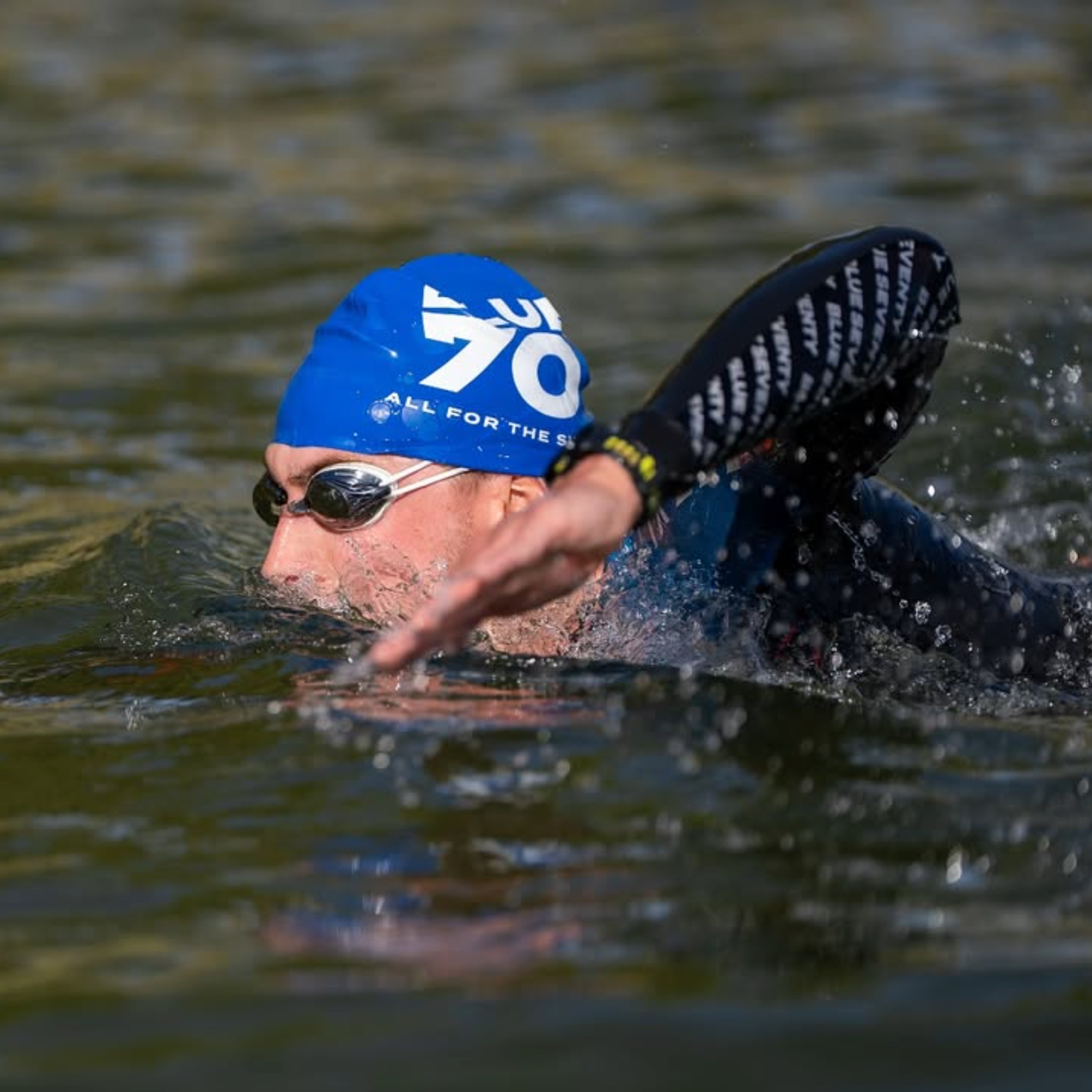
A wetsuit should feel snug on dry land. Tight thighs when standing don't mean the size is wrong. The suit will feel different once you are horizontal in the water. The real test is whether you can hold a relaxed flutter kick without the leg panels pulling down on the shoulders or bunching behind the knees.
Model Choices When Thighs Drive the Fit
Blue70 wetsuits use Yamamoto neoprene in 38, 39, and 40 cell grades. Higher cell numbers have more flexibility. That flexibility matters in the shoulders, but leg panels also need enough give to accommodate large thighs without overstretching.
If your thighs and hips are the main fit variable, a sleeveless suit removes the shoulder restriction so you can focus on lower-body fit. The Reaction Sleeveless ($395) is the warm-water choice. For full sleeves and frequent training, the Fusion ($420) is our mid-range best seller, with a lower-sitting neckline redesigned in 2021. The Reaction ($680) uses higher-grade neoprene than Fusion and suits longer, more frequent swims.
Below about 56 to 58°F, the Thermal Reaction ($785) is designed for cold-water swimming with a Zirconium jersey lining that provides added thermal protection. Cold water swimming requires gradual acclimatization and a swim partner. A thermal suit adds insulation. Safe cold water practices still apply.
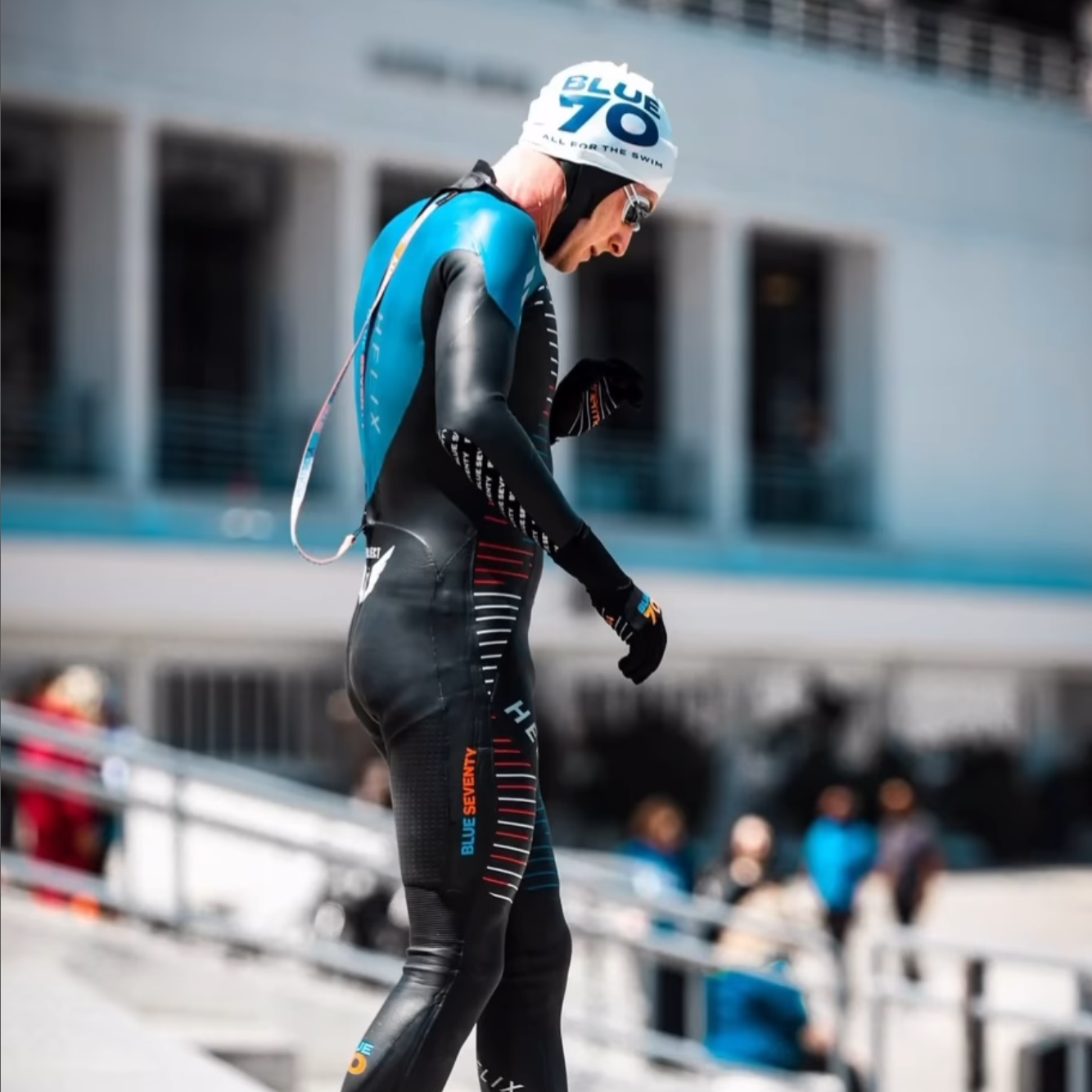
If budget is the main constraint, the Sprint ($325) is the entry point. A less expensive suit that fits well through the thighs is a better training tool than an expensive suit that pulls. The Helix ($995) is the race-day suit, built with thin, flexible neoprene. It isn't ideal for heavy training because thin neoprene breaks down more quickly with frequent use. Reserve Helix for race day and train in a more durable suit.
For warm-water training where a full suit is too much, the LIFT buoyancy short ($150) uses NBR foam to add lower-body lift. It gives you the body-position benefit without torso coverage.
Wetsuit legal temperature cutoffs vary by race organizer and sanctioning body. Check the current rules for your event before race day.
Donning a Suit Over Strong Thighs Without Ripping It
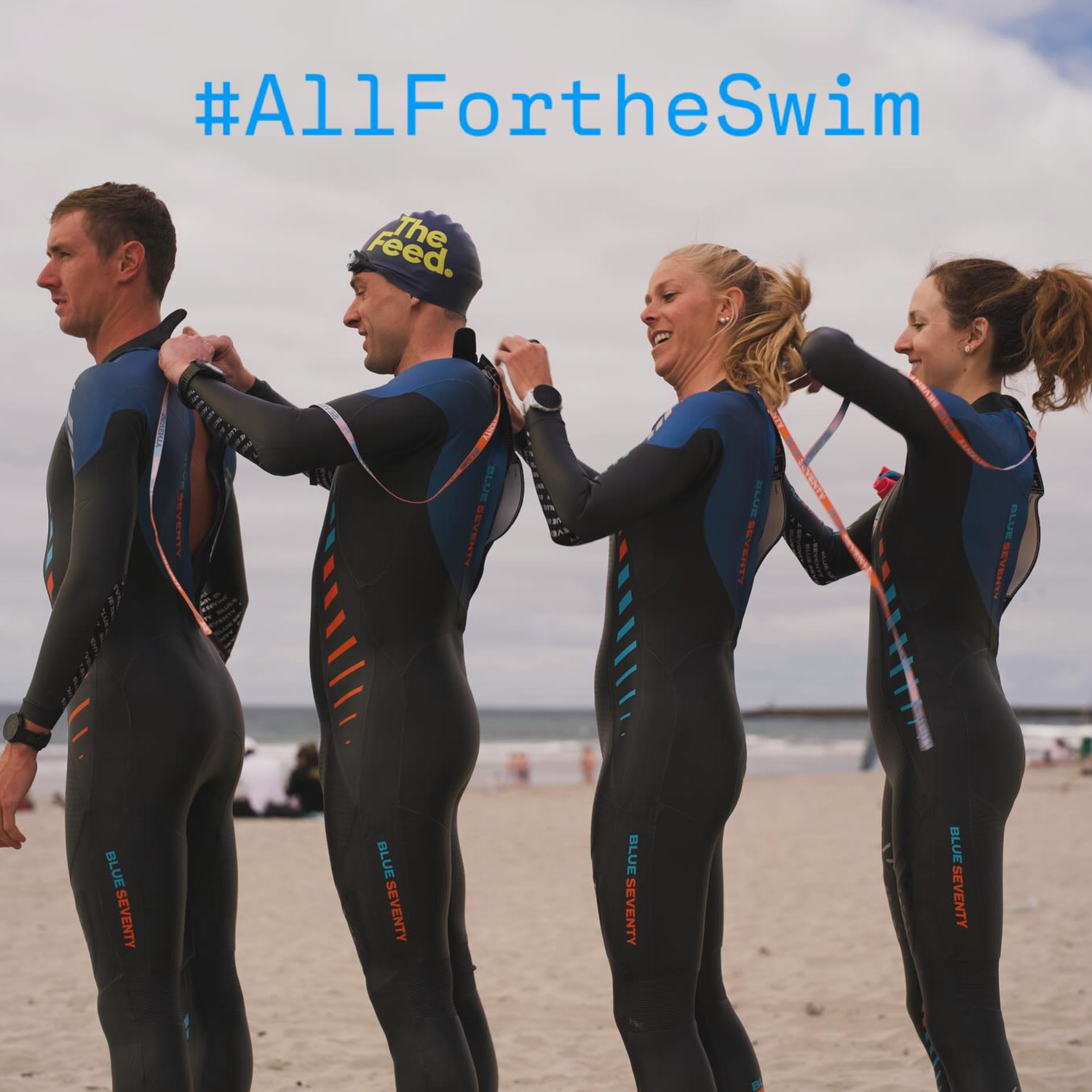
Putting on a wetsuit over large thighs takes patience. Work the leg panels up gradually. Grip the neoprene with the pads of your fingers, not your nails. Fingernail punctures are a common avoidable form of damage, and the warranty doesn't cover them.
Roll the suit up in small increments instead of yanking from the waist. Once the legs are up, bend at the knees and hips to seat the lower body. Then pull the torso up and settle the shoulders last. On women's suits, the Femme Fit extended zipper length helps with entry and accommodates wider hips.
Care After Swims When Thigh Friction Is Constant
Rinse the suit inside and out with fresh water after salt or chlorine swims. Pay attention to the inner thigh panels, where fabric rubs and neoprene can wear. Dry the suit inside and out before storing it. Keep it away from heat and direct sun.
Small nicks near the thigh seams can turn into larger tears. A neoprene cement like Aquaseal can repair small damage before it worsens. The warranty covers manufacturing defects for one year, not wear and tear from training or fingernail punctures. Inspect the leg panels regularly.
Test Swim, Then Decide
The fit test is swimming. Blue70 allows you to swim in a wetsuit and still return or exchange it within 30 days, as long as it comes back clean, dry, unmodified, and with tags and accessories. This policy matters for athletes with large thighs.
Take the suit for a short pool or open water swim. Pay attention to how the legs feel during a relaxed flutter kick.
What to feel for
- Tightness behind the knees
- Bunching at the hips
- Water pooling around the quads
If the lower body feels restrictive or loose, exchange it.
Start with a thigh and hip measurement. Try the size the chart suggests plus one up, and swim in both if you are between sizes. Find your size in 30 seconds with our sizing tool, or read the fit guide before you order. Take a Test Swim. It won't affect your return.