


Ask any triathlete what makes a wetsuit fast, and you'll get an earful about neoprene thickness, buoyancy panels, maybe how the thing feels against bare skin at 6 a.m. before a race. Almost nobody brings up the zipper. It gets treated like an afterthought - a fastener, nothing more, the zip-up equivalent of a belt loop.
That's a mistake. Zip placement is actually one of the more telling design decisions in a wetsuit, sitting right at the crossroads of three things every swimmer cares about: shoulder mobility, a watertight seal, and how fast you can peel the thing off in transition. Nail the placement and none of those goals fight each other. Get it wrong, and you're quietly trading away one for the sake of another.
Here's what's really going on at that seam - and why it matters on every single stroke.
Two Jobs, One Zipper, Constant Tension
A wetsuit zipper is pulling double duty, and the two jobs work against each other. First, it has to let you get in and out of a garment made from a material that, by nature, doesn't stretch a whole lot. Second, once you're zipped and swimming, it needs to hold a secure seal through thousands of shoulder rotations over the length of a swim.
Put that zip track anywhere near the front of the shoulder - right where your arm is rotating through its full range on every stroke - and you've introduced stiffness exactly where you need the most freedom. That's the tension baked into every wetsuit closure: the more central and mobile the zone, the more a seam there costs you.
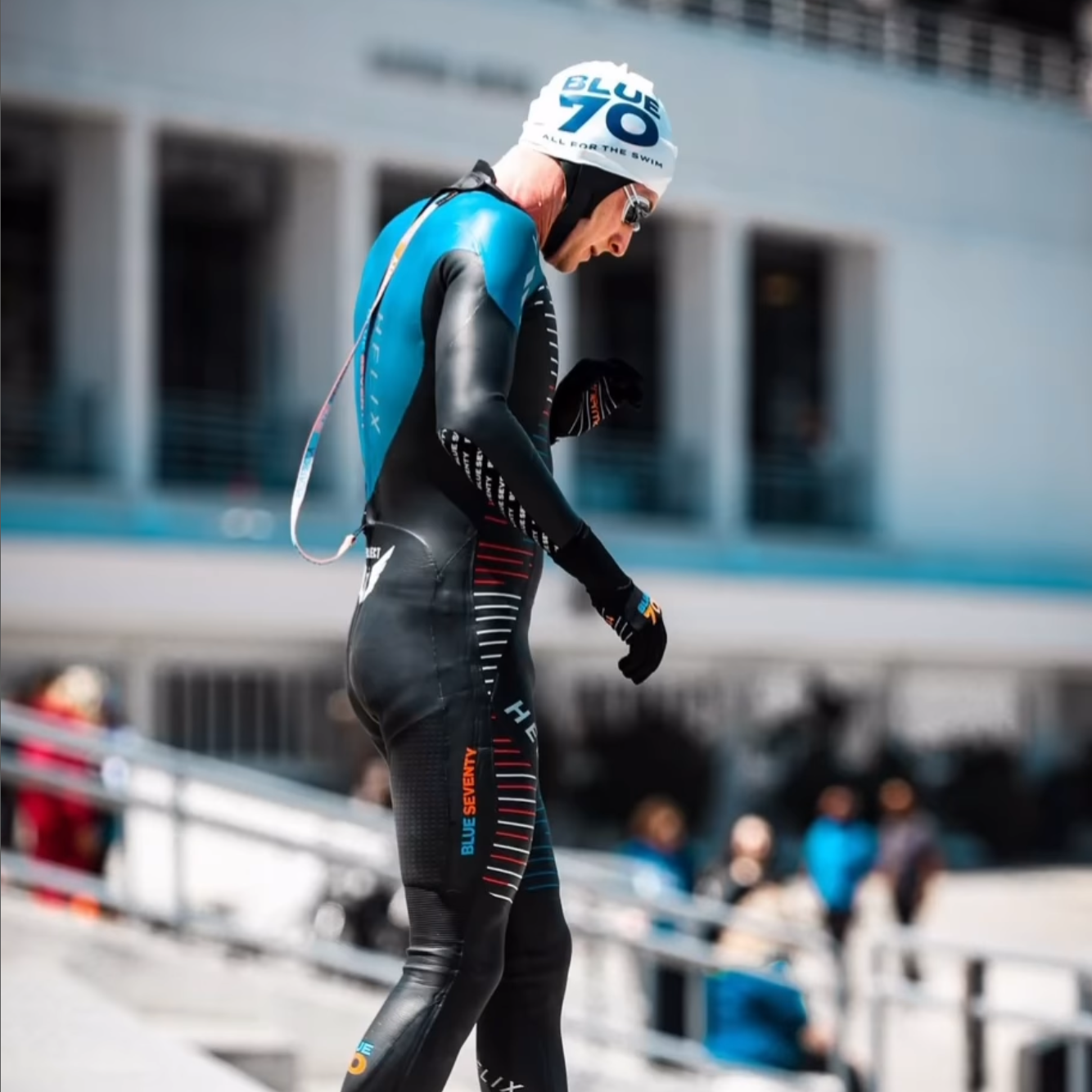
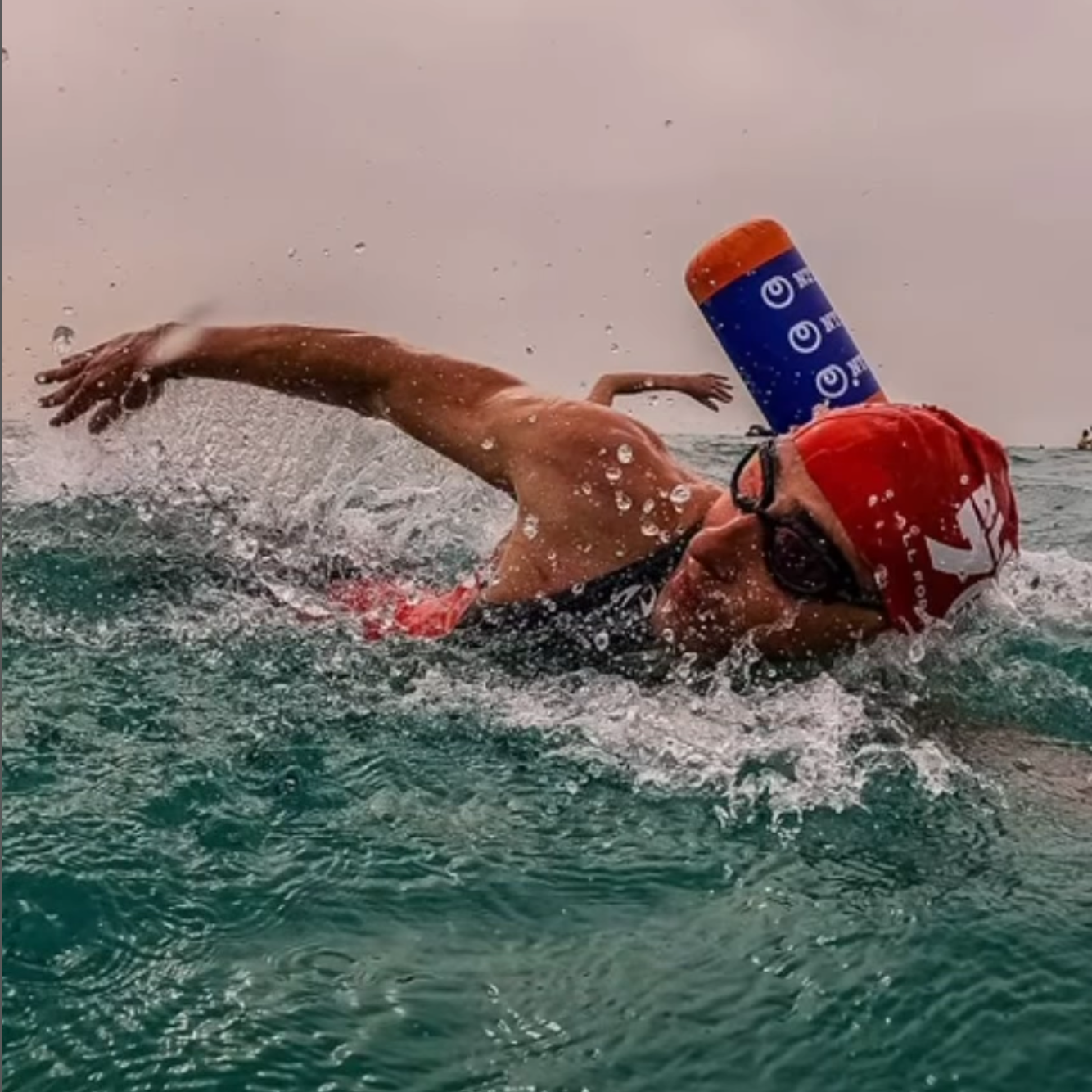
This is exactly why swim-specific wetsuits route their closures up the back and finish at the collar instead of running a track down the chest. Keeping the closure off the front of the shoulder leaves an unbroken stretch panel right where a swimmer needs it most - reaching into the catch, rotating through the pull, recovering overhead.
The Neoprene and the Zipper Aren't Working in Isolation
It's worth understanding that closure placement doesn't exist on its own - it works hand in hand with the neoprene itself.
Blue70 wetsuits use Yamamoto neoprene in 38, 39, and 40 cell, and the higher the cell count, the more flexible the panel. But a flexible shoulder panel is only as good as the seams running through it. Run a zipper anywhere near that zone and you've undercut the very flexibility the material was chosen to deliver in the first place. Keep the closure at the back, and the shoulder gets to do exactly what that neoprene was engineered for - no interruptions.
You see the same thinking show up in the forearm. Blue70's Helix has used a permeable catch panel since 2010, built specifically to preserve a swimmer's feel for the water - that tactile sense you rely on to judge whether your pull is doing what you think it's doing. That kind of design only makes sense in a suit where the torso and shoulders are already left open and unrestricted. Zip placement and catch-panel engineering are really solving the same problem from two different directions: stay out of the swimmer's way.
Where a Back Zip Actually Pays Off
A rear closure, finished off with a pull cord at the collar, earns its keep in three concrete ways over the course of a swim:
- Unbroken shoulder rotation. Every catch, pull, and recovery moves through continuous neoprene instead of crossing a seam. Multiply that across the stroke count of a 1.5K or 3.8K swim, and the cumulative savings in shoulder resistance add up to something real.
- A seal that survives repeated strain. Positioned away from the highest-flex zones, a rear zipper takes less repetitive stress over a season of swims than a closure sitting somewhere more central. Paired with a properly fitted collar, that helps minimize water intake at the neck - historically the most common leak point on any wetsuit, no matter where the closure sits.
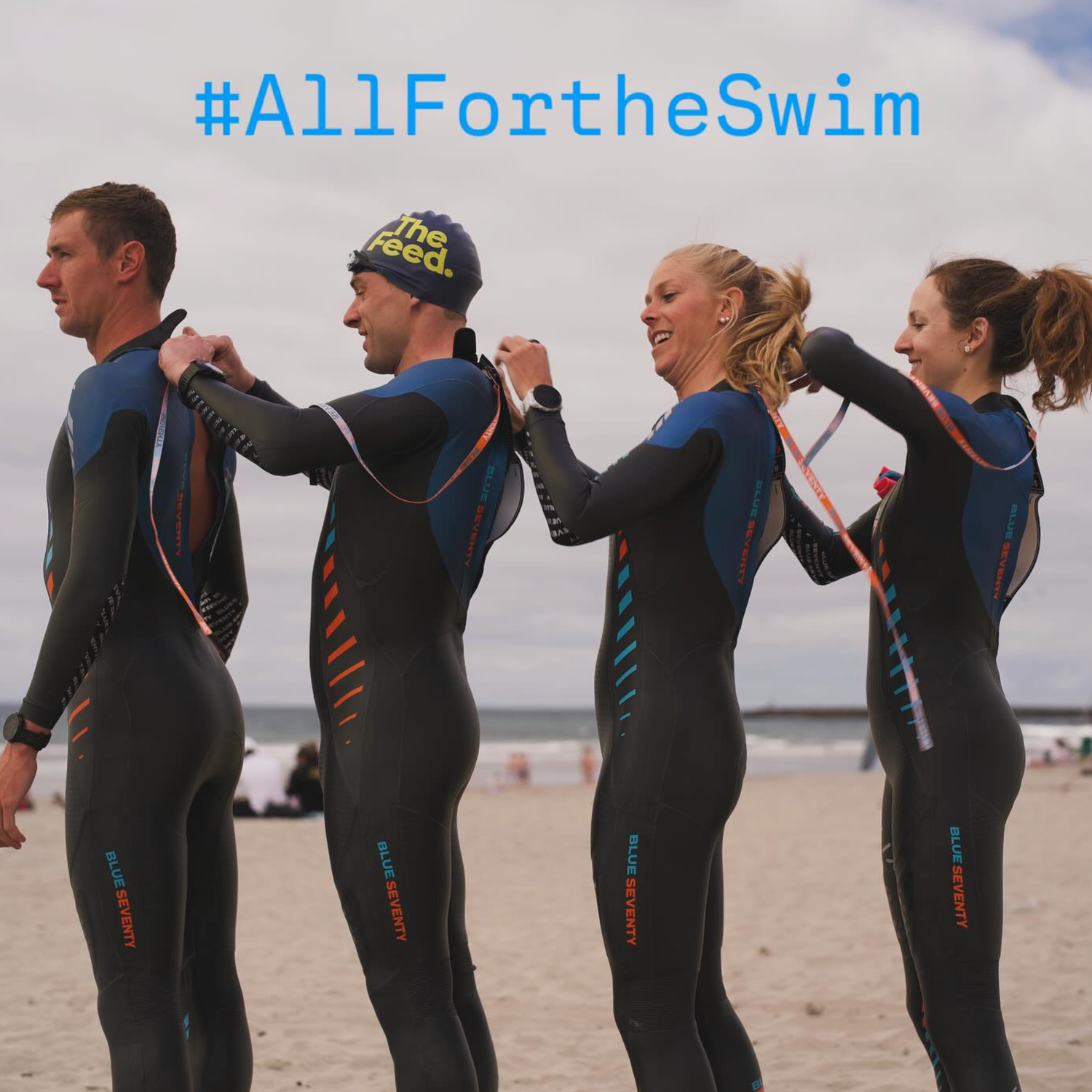
- A design built for solo donning. The pull cord lets you close the suit yourself without needing a training partner, or a favor from a stranger standing next to you in transition on race morning.
Does Zip Placement Actually Cost You Time in T1?
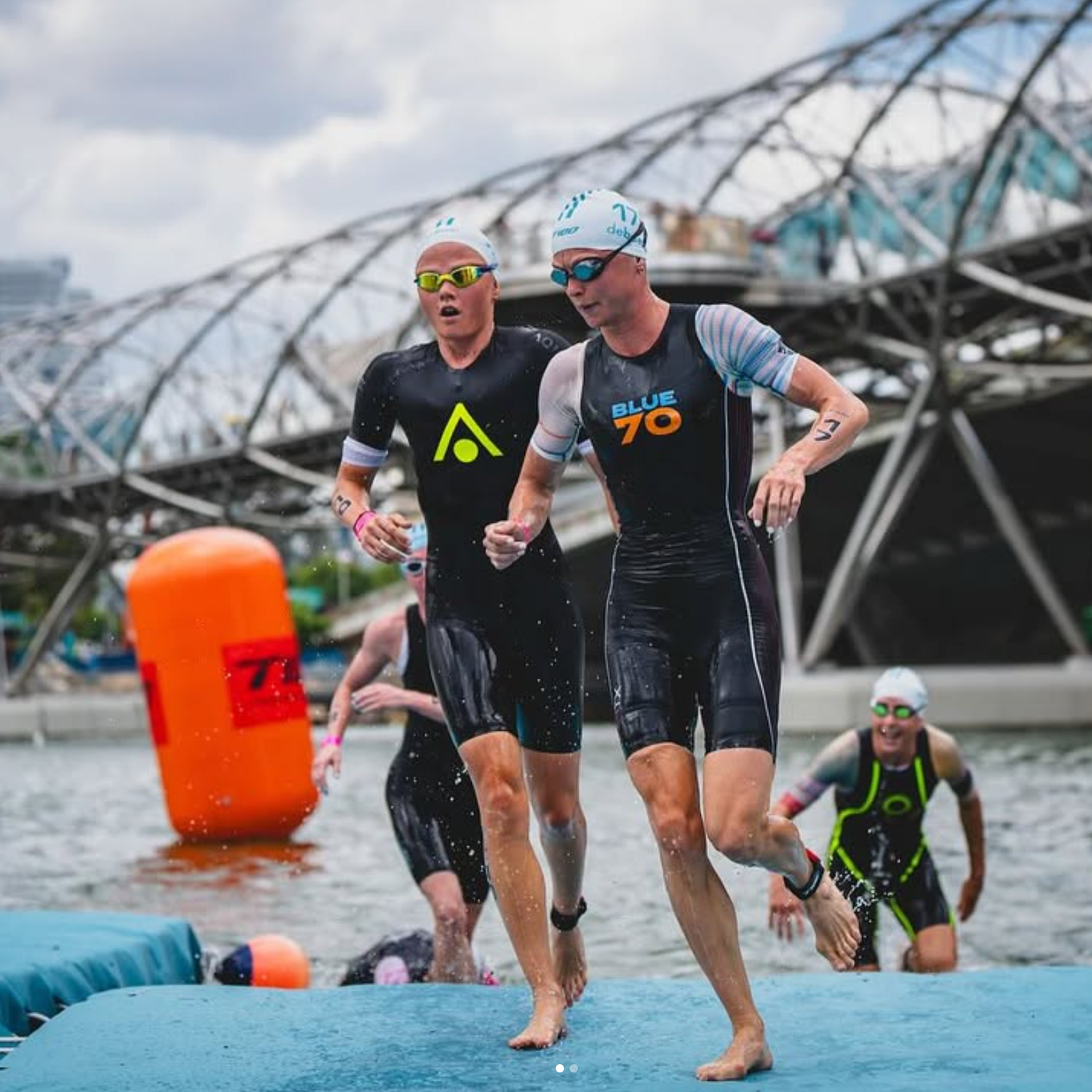
This is worth pushing back on. It's tempting to assume a rear closure must be slower to get out of than something positioned up front. In practice, exit speed has far less to do with where the zipper lives and far more to do with two other things entirely: how cleanly the collar releases, and whether the suit fits your shoulders and torso correctly in the first place.
A genuinely swim-specific wetsuit is cut so the whole thing comes off in one continuous motion - collar, arms, torso, legs - no matter where the closure track begins. The pull cord is designed to be found and released instantly, even by wet, fatigued hands fumbling in the sand.
If you actually want to shave time off your T1, here's where the real work is:
- Rehearse the entire strip-down, not just the unzip. Practice pulling the suit from collar to ankle as one continuous motion, over and over, until it's automatic.
- Practice it after a hard swim set, not only when you're fresh. Grip strength and coordination both take a hit after exertion - train the movement under those conditions, because that's the state you'll actually be in on race day.
- Check your collar position before you even start swimming. A collar sitting correctly releases cleanly. One that's twisted or riding too high will snag on your chin or ears no matter how quick your hands are.
An age-grouper who runs through this ten or fifteen times in the weeks before a race will almost always shave more time off their T1 than someone who simply owns a different closure design but has never practiced the exit while gassed. The skill matters more than the hardware.
None of This Matters Without the Right Fit
Here's the part that gets skipped over constantly: none of the above is relevant if the suit isn't sized correctly to begin with. A wetsuit should feel snug - almost uncomfortably so - on dry land, then settle into something more comfortable once you're in the water and the neoprene compresses slightly against your skin. If your shoulders are fatiguing late in a swim, an ill-fitting suit is almost always the real culprit, not the closure design. Before you get hung up on any zipper feature, it's worth confirming you're actually in the right size using Blue70's fitting guide and size charts.
This is also where Blue70's Femme Fit design shows its thinking. Rather than just shrinking a men's pattern down, Femme Fit reworks the pattern through the bust, torso, wrists, and ankles, lowers the neckline for comfort, and extends the zipper length specifically to accommodate wider hips - allowing for easier entry and a faster, cleaner exit. It's a clear case of closure length and placement being built around real body geometry, not bolted on as an afterthought.
Keeping the Zipper in Good Shape
Whatever closure design your suit has, the zip track and pull cord take on wear over a full season of use. A few habits go a long way toward protecting them:
- Rinse the zipper track with fresh water after every ocean or lake swim - salt and grit chew away at zip teeth over time.
- Never force a stuck zipper. Work it gently and check for trapped neoprene fibers or a snagged pull cord before you pull any harder.
- Treat the pull cord as a guide, not a handle. Yanking the suit off aggressively by the cord is one of the more common ways zippers get damaged, and that kind of damage typically isn't covered under warranty.
- Store the suit unzipped, laid flat or hung on a wide hanger. Folding it directly across the zip track, swim after swim, puts needless stress on the seam over a season.
The Bigger Picture
Zip placement was never really a styling decision - it's a direct consequence of what a wetsuit is actually built to do. A suit designed specifically for swimming routes its closure away from the shoulder because unrestricted rotation through the catch and pull is exactly what separates it from gear borrowed from another water sport altogether. Blue70's back-zip, pull-cord system reflects that priority across the entire range, and the Femme Fit zipper extension takes the same idea a step further by solving for fit rather than reinventing the closure itself.
So if you're trying to decide between wetsuits, the question worth asking isn't where the zipper sits. It's whether the suit actually fits your shoulders, torso, and hips - and whether you've practiced getting in and out of it enough times that it's second nature before it counts on race morning.
Not sure which fit is right for you? Take a look at Blue70's fitting guide and size charts, and remember - you can always take a Test Swim in your new wetsuit. It won't affect your ability to exchange or return it if it's not quite right.