


Swimmers ask about chest zips and back zips all the time. They compare entry ease against transition speed. The question that matters more is what changed when the zipper moved. A zipper is the stiffest part of a wetsuit. Neoprene stretches in multiple directions. A zipper doesn't.
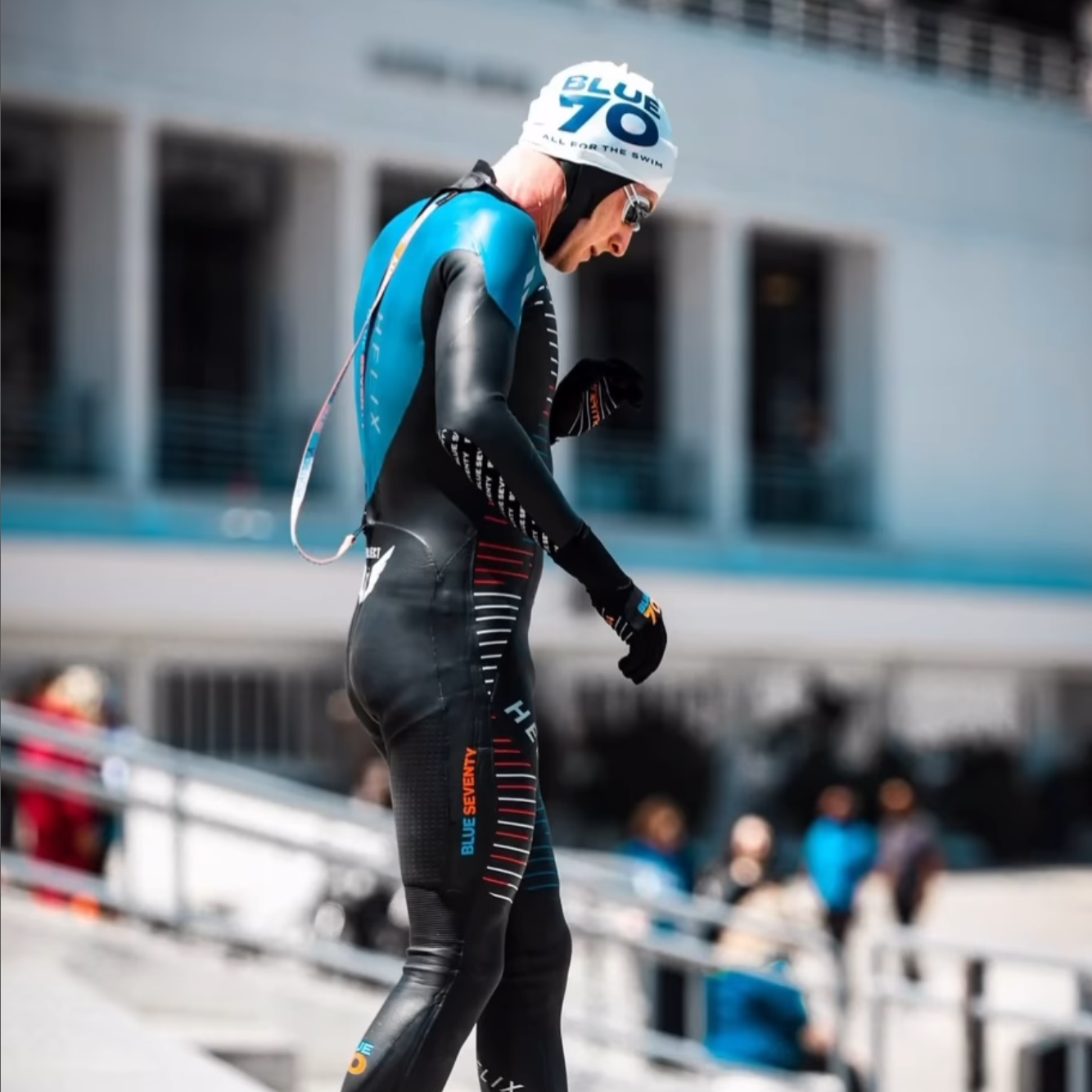
A full-length back zipper runs down the center of the spine, and when you rotate to breathe and reach forward, the back panel wants to lengthen and widen, but the zipper interrupts that movement. A chest-zip design moves the closure to the upper chest and leaves the back panel unbroken. That mechanical change shows up in your stroke long before it shows up in your transition time.
The Back Panel Is the Performance Feature
Early swim-focused wetsuits carried over the back zip because that was the familiar way to build a wetsuit. Back zips made entry straightforward, especially in thicker neoprene. As triathlon wetsuits became more swim-specific, designers looked at the stroke and saw a problem. Freestyle requires repeated overhead arm cycles, torso rotation, and scapular movement. A long, stiff line down the spine works against all of that. Moving the zipper to the chest let designers cut the back panel from high-stretch neoprene and shape it around the shoulder blades, and that changed how the suit moved with the swimmer.
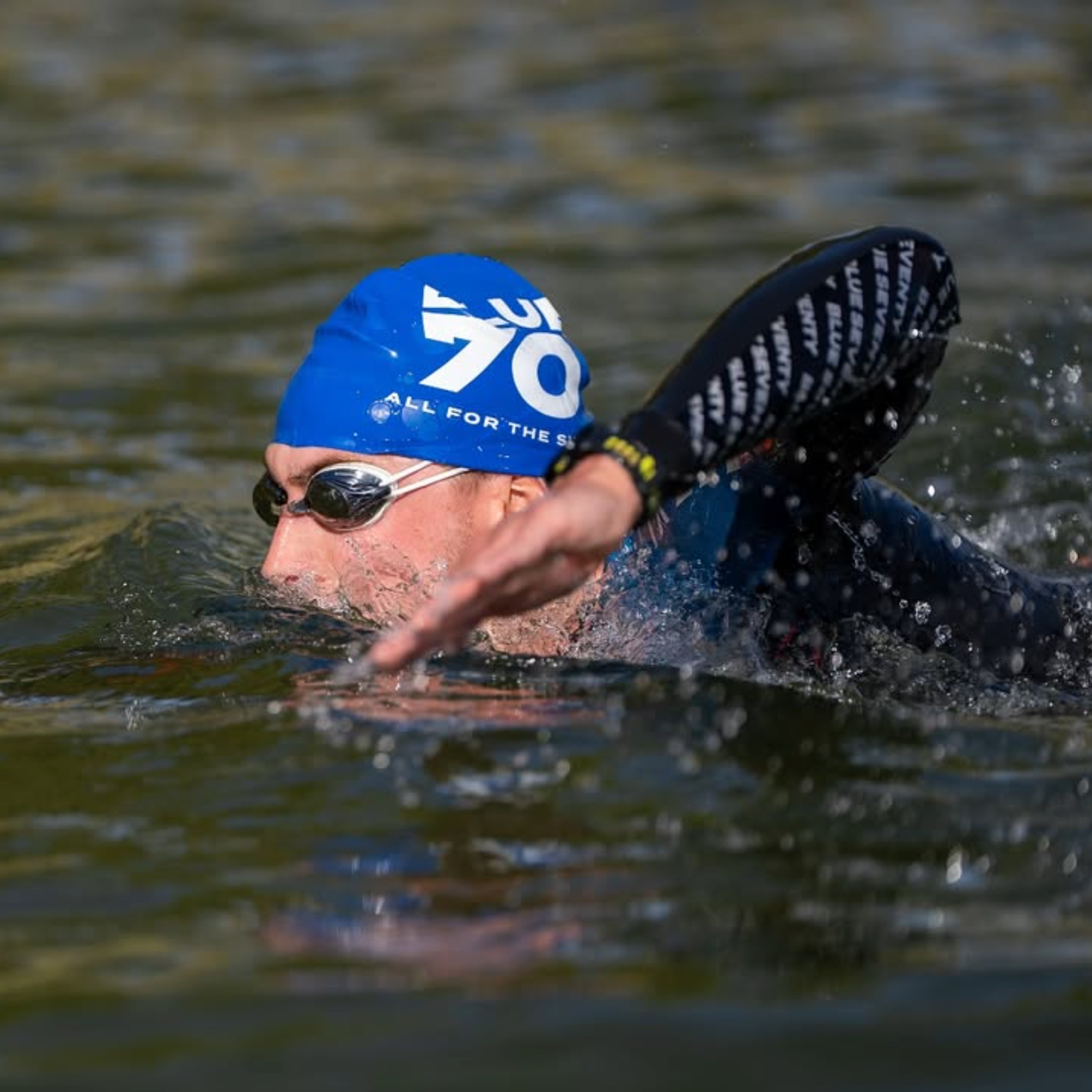
With a continuous back panel, the neoprene can stretch across both shoulder blades during the reach and recovery. That flexibility reduces the feeling of fighting the suit. A wetsuit's main job is to improve body position. Buoyancy equals speed. If the suit restricts the stroke, you lose part of that benefit. blueseventy uses Yamamoto neoprene in 38-cell, 39-cell, and 40-cell grades. Higher cell counts mean more flexibility. Race suits place thinner, more flexible neoprene in the arms and shoulders. Training suits use thicker neoprene to hold up to repeated use. The closure location matters. The material choice and panel shaping matter more.
That logic runs through the entire range. The Helix is the race-day suit with thin, flexible neoprene in the arms and shoulders. blueseventy recommends it for race day, not heavy training use. The Reaction uses higher-grade neoprene for frequent, longer swims. The Fusion has a lower-sitting neckline from the 2021 redesign and suits shorter, frequent swims. The Sprint is the entry-level suit. Thermal Reaction adds warmth for cold water. Sleeveless suits work for warm water and easier fit. Women's suits use Femme Fit patterns that adjust the bust, torso, wrists, and ankles.
Neck Seal and Water Entry
A back-zip suit has a long closure ending near the neck. If the collar doesn't lie flat, water can move down the zipper. A chest-zip suit uses a shorter closure and a neck panel that seals differently. Neither design is leak-proof on its own. The fit of the collar and the shape of the neck determine most water entry. A chest-zip suit with a loose neck lets in more water than a back-zip suit that fits correctly. When blueseventy redesigned the Fusion in 2021, it lowered the neckline without losing the watertight seal. That change addressed comfort and chafing as much as water entry, because fit decisions around the neck matter more than the zipper location.
Entry and T1: Skill Beats Closure Style
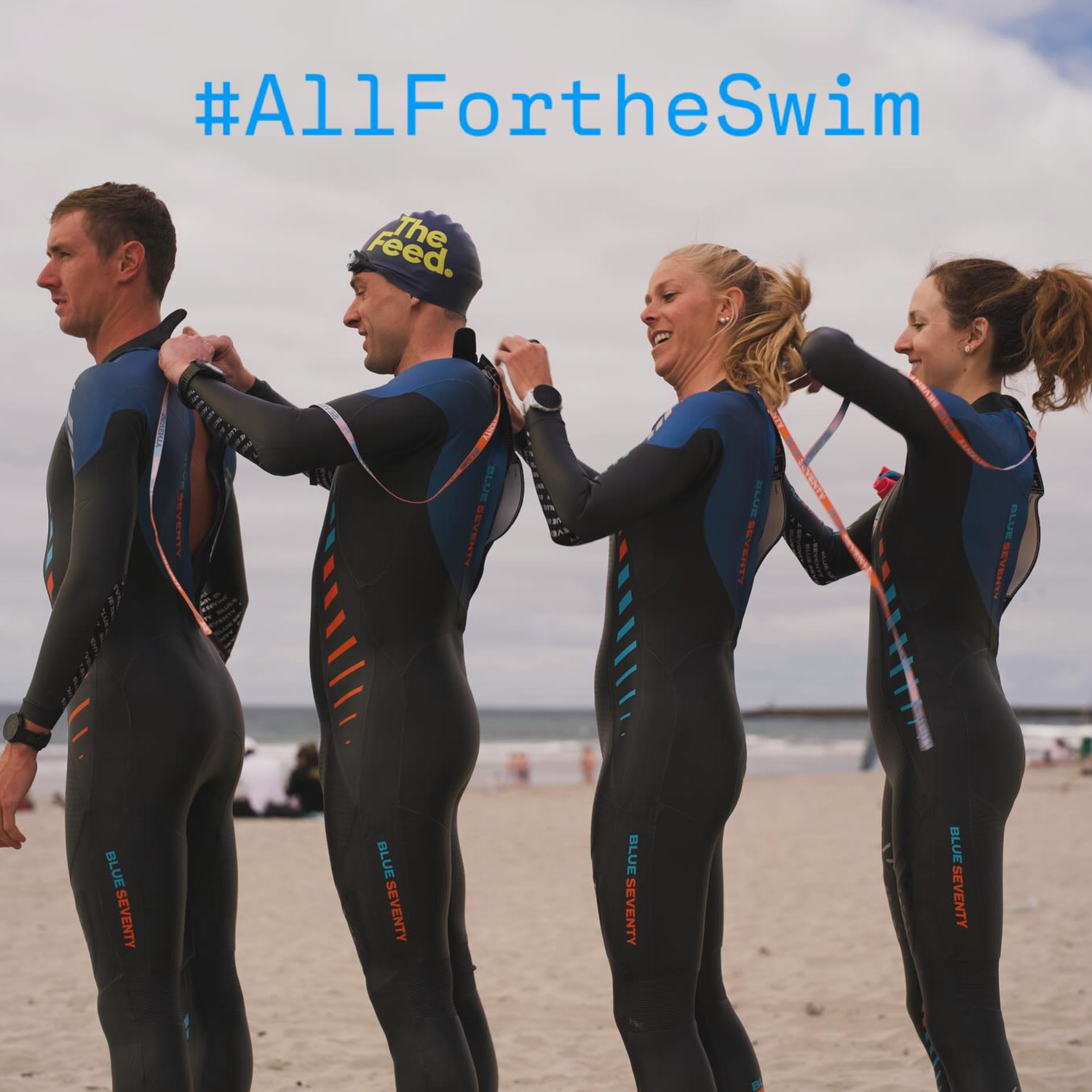
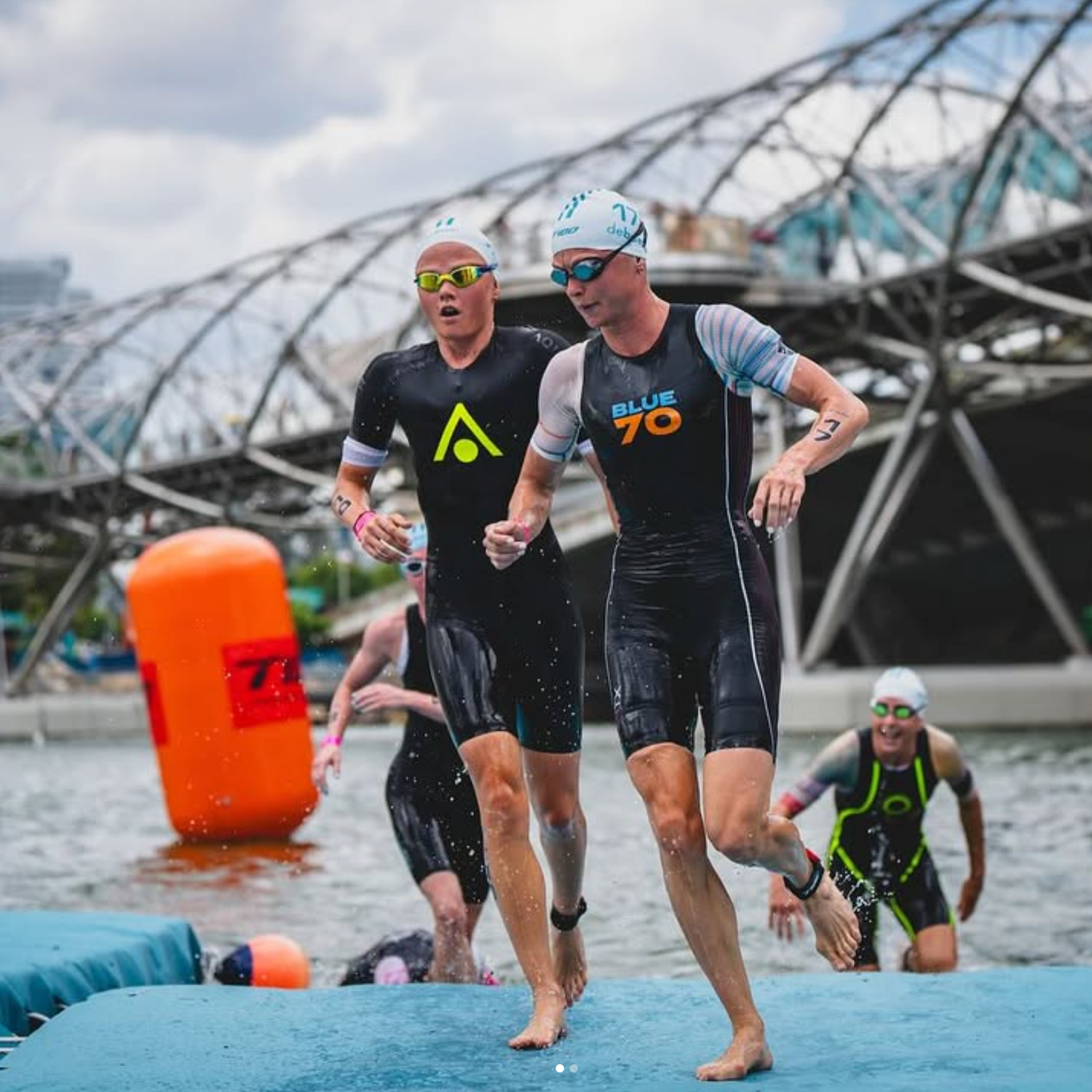
A back zip is easier to get on, especially for a first-time user. You can use a lanyard to pull it up without help. A chest zip requires pulling the suit over your head and shoulders. That takes more shoulder mobility and more patience. Once on, a chest-zip suit often needs fewer mid-swim adjustments because there's no long zipper down the back. In transition areas, you'll see both styles. The athletes with smooth exits are the ones who rehearsed them. Practice determines transition speed more than closure type. Pre-loosening the ankles and wrists, using a smooth pull-down motion, and rehearsing T1 make the biggest difference.
Choosing Without Arguing About Zippers
Start with your training week and race distance. Consider water temperature and how often you swim. The decision should follow the fit. Try several suits in your size. Rotate your arms as you would in the water. Reach forward and across your body. If the shoulders pull or the neck gapes, the zipper location won't fix that.
The US wetsuit range by use case
- Helix, $995: race-day suit with thin, flexible neoprene in the arms and shoulders
- Reaction, $680: frequent, longer swims
- Fusion, $420: mid-range, lower neckline, shorter frequent swims
- Sprint, $325: entry-level suit
- Thermal Reaction, $785: cold water
- Reaction Sleeveless, $395: warm water, easier fit
blueseventy lets you swim in a wetsuit and still return or exchange it if the suit is clean, dry, and unmodified. That removes the guesswork. Use the sizing tool and the fitting guide before you order.
Caring for the Closure You Already Own
Most zipper damage comes from force. Never yank a stuck zipper. Rinse the closure after salt or chlorinated water. Dry the suit away from heat. Use your fingertips to pull the zipper, not your fingernails. Fingernail punctures and heel tears are two of the most common wetsuit damages, and they aren't covered by warranty. The warranty covers manufacturing defects for one year for the original owner, but it doesn't cover fingernail punctures, heel tears, or zipper damage from force. If a small tear happens, a neoprene cement like Aquaseal can repair it. For both closure types, the care routine is similar: rinse, dry, store folded or hung, and handle the zipper gently.
The chest zip versus back zip debate will continue. The better question is whether the suit fits your shoulders, seals at the neck, and matches your training week. Choose the fit, not the fastener. Then get in the water and swim. Happy swimming.