


Most wetsuit warmth charts look tidy on paper. Water temperature goes in one column, a suit choice goes in the next, and the decision seems done. In open water, it rarely works that cleanly. A 60°F swim can feel controlled for 20 minutes at race pace, then feel very different halfway through a steady aerobic set. That gap is why a better wetsuit heat retention chart needs to account for more than the thermometer.
For swimmers and triathletes, the useful question is not just How cold is the water? The better question is How much thermal protection does this swim require? Duration, effort, fit, wind, and your ability to keep good mechanics all shape that answer. If your stroke shortens, your shoulders tighten, or you hit transition already chilled, the thermal decision affected performance long before it became a comfort issue.
Why temperature-only charts fall short
Water temperature matters, but it does not act alone. Two athletes can swim in the same lake on the same morning and have a different experience because the swim itself places different demands on the body. One athlete may be swimming hard for a short race effort. The other may be settling into a long open water session with a lower output and more total exposure.
A plain chart misses the variables that change how cold a swim feels:
- swim duration
- effort level
- air temperature before and after the swim
- wind exposure
- wetsuit fit
- body size and personal cold tolerance
- stroke efficiency
Wetsuits also do not keep you dry. They work by allowing in a thin layer of water, which your body warms, while neoprene slows the rate of heat loss. That means poor fit can undo a lot of the suit’s thermal value. If water is moving too freely through the neck, lower back, or legs, warmth drops fast.
A better way to read a wetsuit heat retention chart
The most useful warmth chart starts with four checks:
- What is the water temperature?
- How long will you be in the water?
- How hard will you be swimming?
- Can you still hold good form once the cold starts to build?
The fourth question is where many athletes learn the most. Cold water does not just make you uncomfortable. It changes how you swim. Your hands lose feel, your forearms anchor less cleanly, your neck and upper back get tighter, and your breathing can become less settled. In other words, heat retention is a technique issue as much as a comfort issue.
A practical warmth chart for open water swimmers and triathletes
Blueseventy’s published guidance gives two anchor points that are useful in real decision-making. Below about 56 to 58°F, a purpose-built thermal suit adds meaningful warmth. Above about 70 to 72°F, a full suit can become too warm over longer swims. Between those points, session length and effort often make the call.
Use this chart as a starting framework:
- Above 70 to 72°F: sleeveless suit, short john, or no wetsuit often makes the most sense for longer swims
- 64 to 70°F: full suit works well for many swimmers, while some athletes prefer sleeveless for shorter or harder efforts
- 58 to 64°F: full suit is the standard choice for most swimmers, especially as duration increases
- Below 56 to 58°F: a thermal suit becomes the better tool for many cold-water swims
This is a framework, not a guarantee. Your pace, acclimatization, and total time exposed to the cold still matter.
What each temperature band feels like in practice
Above 70 to 72°F
This is where overheating starts to matter. A full suit may still offer buoyancy and body position benefits, but longer swims in warmer water often favor less coverage. If you tend to run hot, a sleeveless option can give you a better balance of support and comfort.
Race logistics count here too. A hot start area, a long wait on shore, or direct sun before the horn can shift the thermal picture before you even begin swimming.
64 to 70°F
This is the broad middle zone for many races and open water sessions. A full suit suits a lot of athletes well in these conditions, especially if the swim is long enough for steady heat loss to matter. If your efforts are shorter and sharper, or you know you heat up fast, less coverage may feel better.
Fit becomes a major separator in this range. A suit that is seated properly through the torso and shoulders often feels more comfortable once you start swimming. A suit that sits low can let in enough water to make moderate conditions feel colder than expected.
58 to 64°F
This is where the first part of the swim can be misleading. Many swimmers feel fine early, then notice their stroke changing later. Hands get less precise, the catch gets less secure, and the upper body starts to tense. If your rhythm breaks down at 40 minutes, that is part of your warmth equation.
For triathletes, this matters beyond the swim split. If you exit the water already tight and cold, the first part of the bike can feel clumsy and over-tense.
Below 56 to 58°F
This is where a purpose-built thermal suit earns its place. The Thermal Reaction is fully lined with Zirconium jersey, a synthetic wool lining designed for added thermal protection in cold water. That construction changes how the suit performs over the course of the swim, not just in the first few minutes.
Cold water still demands good judgment. Session length, acclimatization, exit planning, and warm layers waiting for you after the swim all matter. A thermal suit provides added protection for cold-water swimming, but conditions and individual response still decide what is appropriate on the day.
Why warmth affects speed and form
Swimmers often separate warmth from performance. In open water, the two are tied together. A suit that supports stable body temperature helps you preserve the mechanics that make you efficient. A suit that leaves you cooling too quickly can change the way you move through the water.
Cold stress often shows up in these ways:
- the hand slips at the catch
- stroke length gets shorter
- the head lifts higher during sighting
- the neck and upper traps tighten
- breathing feels less relaxed
That is why the right warmth choice helps more than comfort. It helps you keep your position, preserve feel for the water, and finish the swim in a state that still supports the rest of your race.
How wetsuit design changes thermal performance
Fit
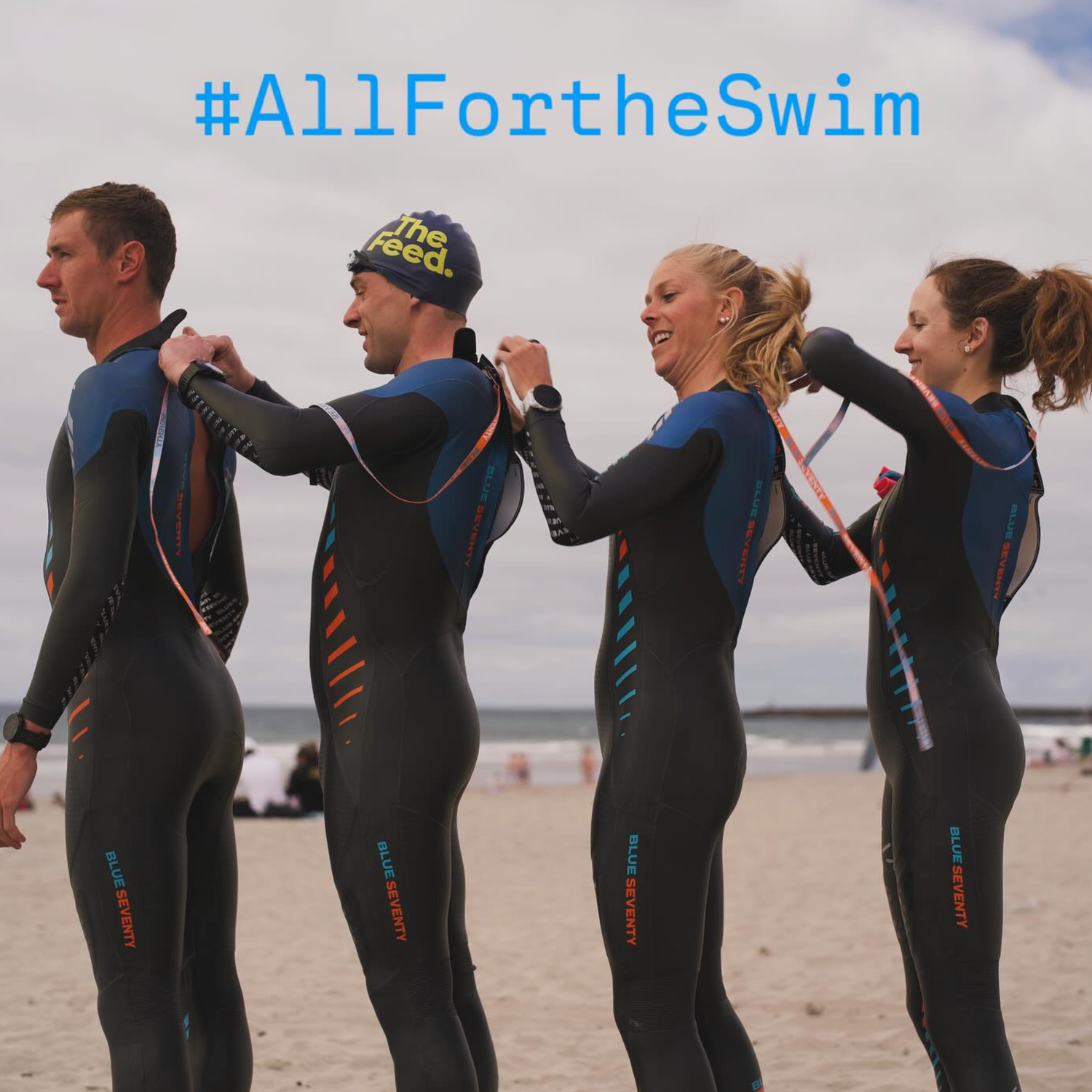
Fit is the first thermal feature. A snug wetsuit limits unnecessary water movement inside the suit. A loose fit allows more flushing, which pulls heat away from the body. That is one reason a properly fitted wetsuit should feel snug on land and usually settle into a better feel once you are in the water.
Neoprene grade
Blueseventy wetsuits use Yamamoto 38, 39, and 40 cell neoprene. Higher cell numbers mean more flexibility. That matters because insulation only helps if the suit still lets you swim naturally. If a suit restricts your stroke, you waste energy and fatigue sooner.
Lining
For dedicated cold-water swimming, lining matters. The Thermal Reaction’s full Zirconium jersey lining gives it a different role from a standard full suit. Cold-water swimmers need warmth that lasts through the entire session.
Coverage
Full sleeves, sleeveless cuts, and short john designs each change the thermal load. More coverage usually means more insulation. As conditions warm up, less coverage often gives a better balance of freedom and temperature control.
Matching the swim to the right blueseventy suit
Thermal Reaction
Choose the Thermal Reaction when cold water is the main challenge. It is built for swimmers who train or race in conditions where a standard suit stops providing enough thermal support over time.
Reaction
Choose the Reaction if you swim often and want a performance full suit suited to frequent use and longer sessions. It is a strong choice for athletes who need a dependable balance of flexibility, buoyancy, and training durability.
Fusion
Choose the Fusion if your season includes regular training, racing, and shorter frequent swims. The 2021 redesign added a lower-sitting neckline for comfort while keeping the seal in place, which makes a difference during repeated open water use.
Sleeveless options
Choose a sleeveless design if the water is warmer, if you want easier entry and exit, or if full sleeves tend to leave you too warm over distance.
Build your own personal warmth chart
The best chart is the one shaped by your own swimming. After each open water session, write down the details that actually affect thermal performance:
- water temperature
- air temperature
- wind
- suit used
- swim duration
- effort level
- when you first noticed cooling
- where you felt cold first
- whether your stroke changed
After a few swims, patterns become obvious. Some athletes lose hand feel early. Some stay comfortable through the core but overheat in a full suit once water climbs into the low 70s. Those notes give you a decision tool that is more useful than any generic chart.
Common mistakes swimmers make
Using water temperature alone
Temperature starts the decision. Duration and effort usually finish it.
Blaming the suit when the real problem is fit
If the wetsuit is not pulled high enough through the legs, hips, torso, and shoulders, it will feel colder and more tiring than it should.
Assuming more warmth is always better
Too much insulation can create its own problem. In warmer water, overheating can raise stress and make the swim feel harder than the pace suggests.
Ignoring time spent out of the water
A windy dock, a delayed start, or a long walk to transition all add up. The thermal picture includes more than the swim split.
The takeaway
A useful wetsuit heat retention chart does more than match a suit to a temperature band. It connects water temperature to swim duration, effort, fit, and the quality of the stroke you can still hold when the cold starts to work on you. That is the chart swimmers and triathletes need, because thermal protection is part of race-day performance and better open water training, not a separate decision.
If you want the shortest version, use this rule: choose your wetsuit for the full duration of the swim, not the first 10 minutes.
If you want to test that choice in real conditions, take a look at Take a Test Swim. Real water gives you the clearest answer.