


The first time you swim hard in a wetsuit, something feels off. The suit presses tight across your shoulders, your legs float higher than they ever do in a pool, and every stroke seems to arrive a touch early. That sensation is the wetsuit stroke making itself known, and the sooner you train it on purpose, the better your open water swims will feel.
blueseventy has been building swim-specific wetsuits since 1993, starting with one of the first triathlon wetsuits. The Helix arrived in 2005, the permeable catch panel came in 2010, and LIFT buoyancy panels followed in 2018. Each addition moved the category away from simple warmth and toward preserving stroke mechanics. A modern swim-specific wetsuit works as a tool for body position.
Buoyancy Reshapes Your Body Line
Neoprene lifts your hips and legs. Many triathletes leave the pool with slightly sunken legs, especially at the end of a hard set. In a wetsuit, the legs sit higher, the torso levels out, and the waterline moves. Less of the body pushes against the water, which reduces frontal drag. That is the physics behind the blueseventy phrase "buoyancy equals speed."
A flatter body line also resets your timing. You no longer need a strong kick to hold the legs up. You can stretch the glide a little longer, let the hips ride high, and spend your energy on the catch and rotation. The stroke becomes about maintaining a lifted position rather than recovering from a sinking one.
Your Catch Feels Different
Swimming is a feel sport. Your brain reads water pressure on the palm and forearm to time the catch. Neoprene over the forearm can muffle that signal. When the feedback softens, many swimmers pull early, snatch at the water, or drop the elbow. The result is wasted effort.
Swim-specific suits address this with flexible neoprene in the arms and shoulders. blueseventy uses Yamamoto neoprene in 38, 39, and 40 cell, and higher cell numbers mean more flexibility. The Helix adds a permeable catch panel in the forearm. That panel lets water pressure pass through, so the forearm still feels the water and the catch remains connected.
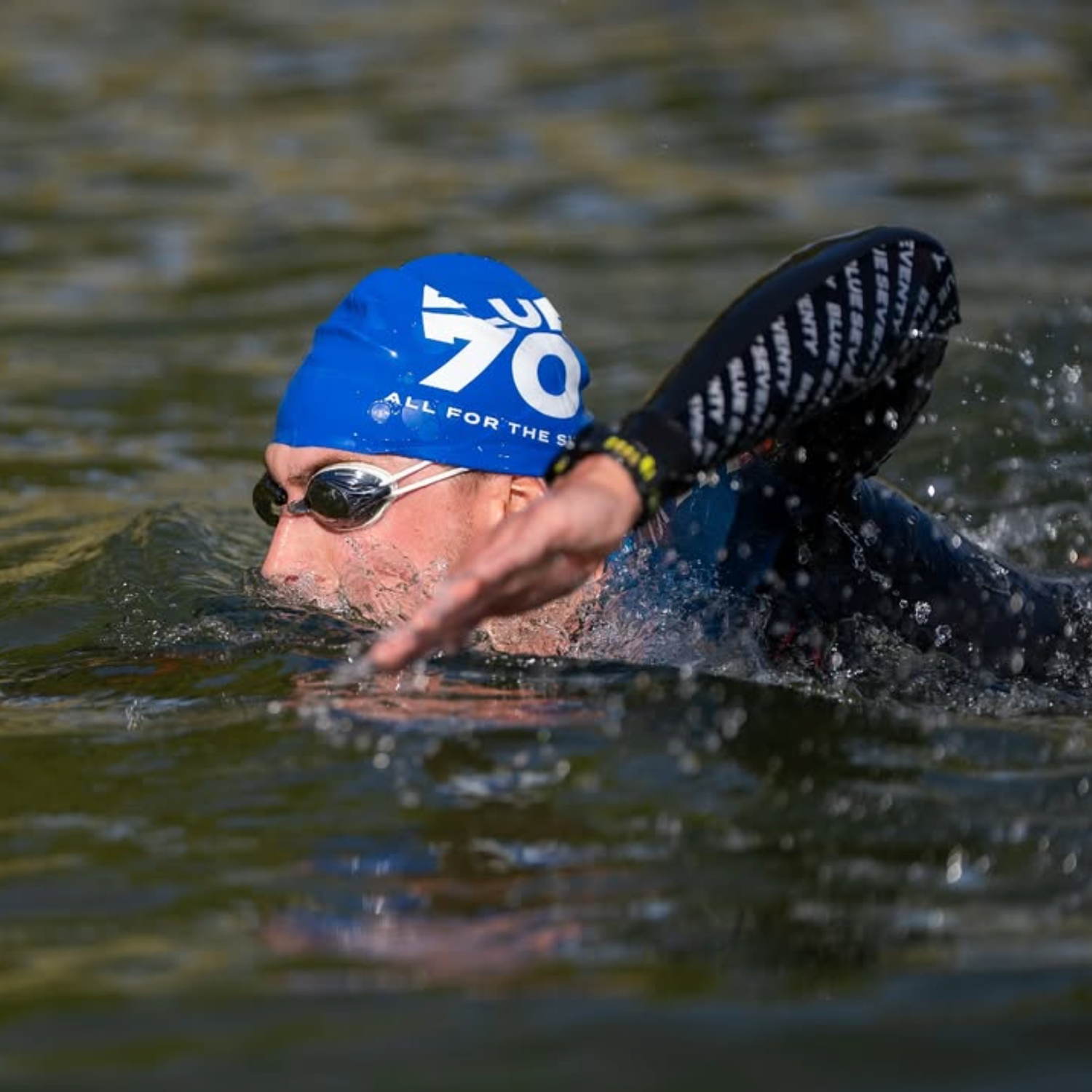
One cue helps here: don't grip the water. Instead, set an early vertical forearm and press the forearm surface back as the body rotates. The suit keeps you lifted, but the catch still has to generate propulsion.
Shoulder Freedom Changes the Recovery
In a pool you have a wall to push from. In open water the recovery has to happen in the middle of the stroke, and a restricted shoulder forces a wider arm swing. A wide recovery burns energy and disturbs body roll.
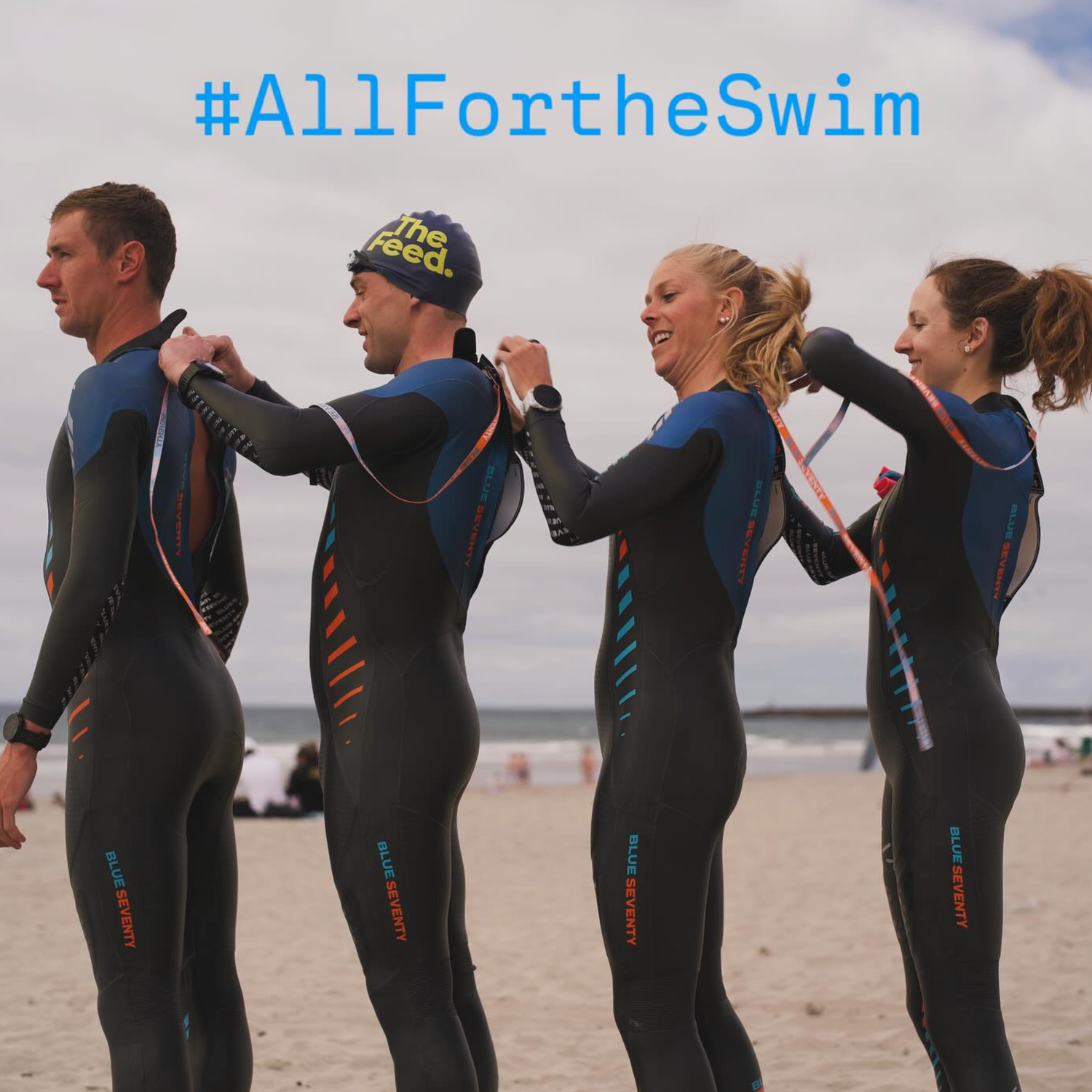
Fit is the starting point. A swim-specific wetsuit should feel snug on dry land and more comfortable once you swim, because the suit settles and the neoprene relaxes slightly with movement. Pull the suit high into the armpits and shoulders before swimming. A poorly donned suit, especially around the shoulders, causes early fatigue. blueseventy publishes a fitting guide and video for this step.
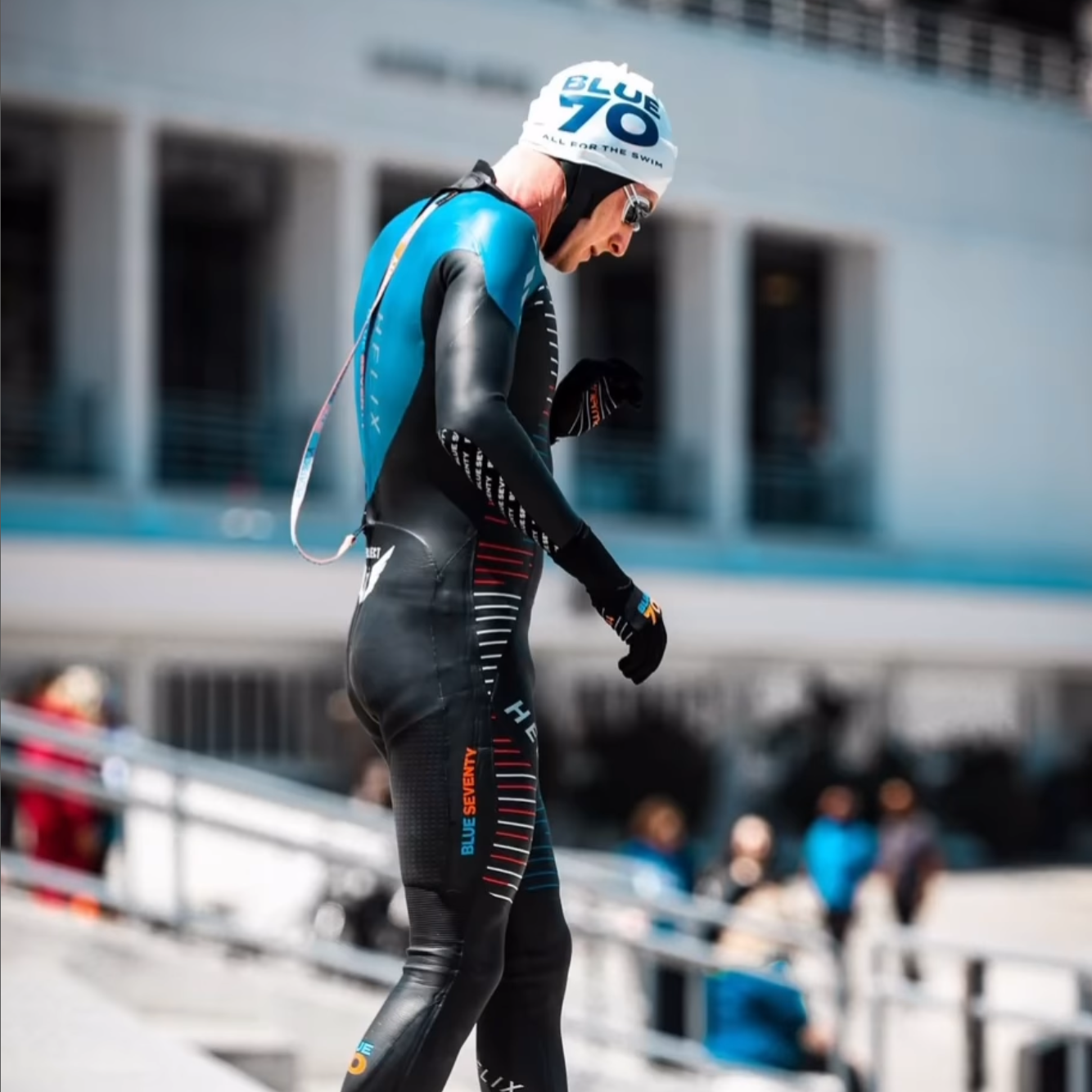
The Helix uses thin, flexible high-cell neoprene in the arms and shoulders. That is a race-day choice, with a durability trade-off. Thin neoprene breaks down faster with repeated hard training. If you swim open water several times a week, the Reaction or Fusion suits offer more durability while keeping the shoulder movement swim-specific.
Why the Kick Gets Quieter
Triathletes race the swim, then the bike, then the run. A hard six-beat kick in a wetsuit spends lower-body energy you will want later. Because the suit supports the legs, you can shift to a light two-beat kick for body roll and balance. This is one of the least discussed differences between pool swimming and wetsuit swimming.
An open water swimmer who races only the swim may still kick harder for propulsion. A triathlete in a wetsuit often benefits from a quieter lower body. The kick becomes a timing tool, not the main driver. Let the lifted body line do the work.
Three Sessions to Learn the Stroke
You need time in the suit before race week. A new suit feels stiff on the first swim, and the body line change takes repetition. These sessions build familiarity without overloading you.
- Easy orientation: Swim 200 meters at a relaxed pace. Notice hip position and try a light kick. Let the suit hold the lower body.
- Catch work: Swim 10 x 50 meters focusing on early vertical forearm. Feel water pressure on the forearm from entry through the pull.
- Sighting work: Swim 4 x 100 meters sighting every 8 to 10 strokes. Keep the hips high when you lift your head to sight.
Practice in the same open water conditions you will race in. If you are still deciding on a suit, use the blueseventy Test Swim policy. You can swim in the suit and still return or exchange it if it is clean, dry, unmodified, and has the tags and accessories.
Mistakes Worth Avoiding
Pulling too early is common when the suit dulls forearm feedback. You chase the catch instead of setting it. A relaxed entry followed by forearm pressure as the body rotates fixes most of it. The suit supports the lower body; the catch still does the work.
Over-kicking is the second pattern. Pool swimmers often bring a six-beat kick into the wetsuit. The fatigue shows up late in the swim and early on the bike. Drop to a light two-beat kick and let buoyancy hold the hips.
Finally, never swim a new wetsuit for the first time on race morning. Take it to open water at least twice. The first swim should stay easy and focused on body position. The second can include short pace efforts and sighting.
The Suit and the Stroke Work Together
A swim-specific wetsuit does more than keep you warm. It changes your body line, kick, catch, and recovery. Training the wetsuit stroke means learning how your movement adapts to that support. When the suit and stroke work as one system, you find speed without extra effort.
Start with a few open water sessions. Pay attention to the lifted hips, the quiet kick, the early vertical forearm, and the smooth sighting. The wetsuit stroke becomes second nature well before the start.
Happy Swimming!