


Wetsuit advice almost always assumes flat water. Pick a suit by water temperature, distance, and how competitive you are, and you're set. Nobody tells you what happens when the surface stops cooperating: when a chop pattern closes off your airway mid-breath, a swell drops your shoulders and lifts your hips in the same second, or a current turns every sighting stroke into a wasted one.
Rough water doesn't just make swimming harder. It changes what you actually need from a wetsuit's fit, its buoyancy, and its neckline. A suit that feels flawless in a calm bay can fight you in surf, and it's not because the neoprene changed. The demands on your body position did.
Calm Water Hides Fit Problems That Surf Exposes
In flat conditions, a slightly loose shoulder or a neckline sitting a half-inch too high barely registers. You settle into rhythm and the suit settles with you. Small gaps in fit stay small.
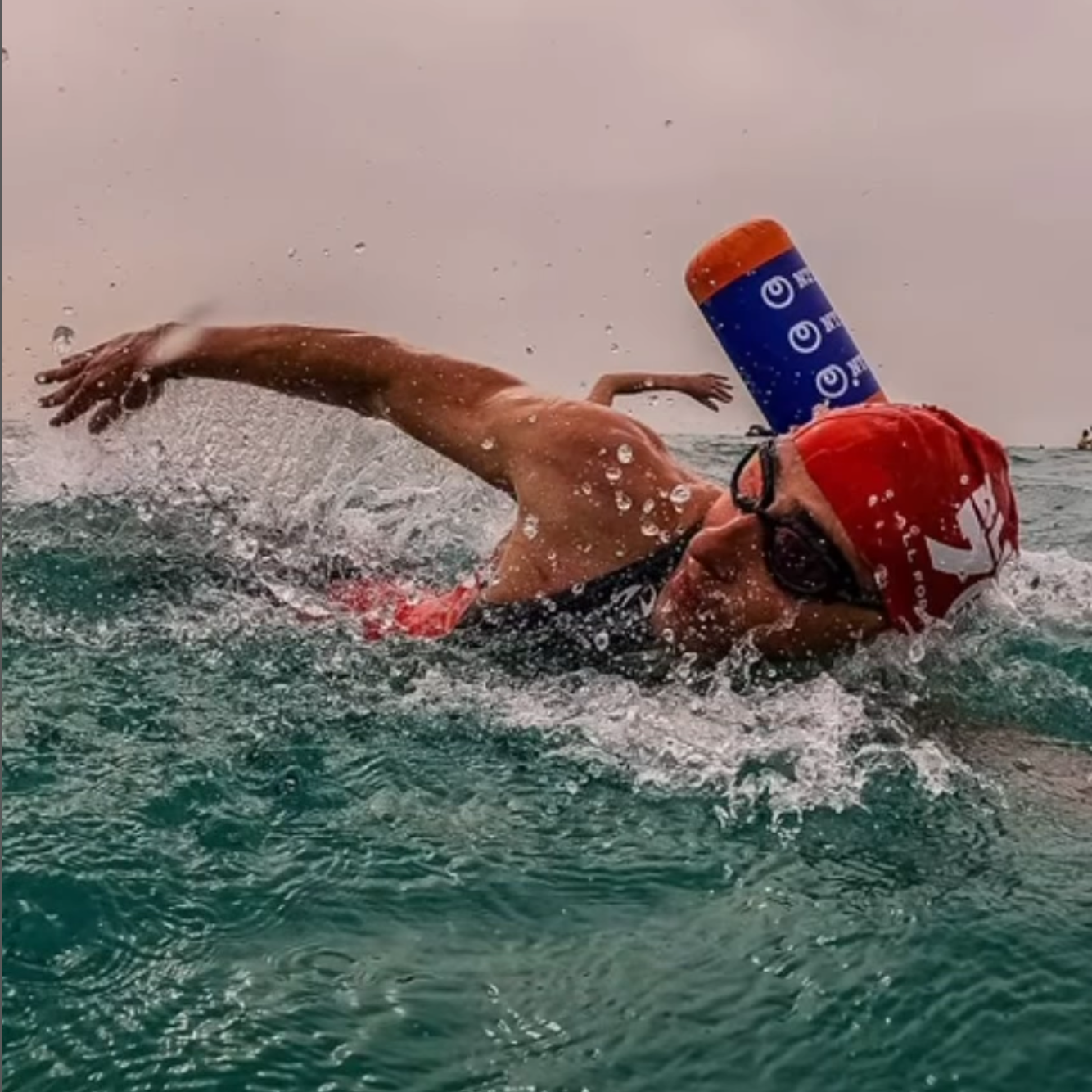
Chop removes that stability fast. Your torso rotates unpredictably as swells pass beneath you. Your head lifts higher and more often to sight or breathe, so the neckline takes repeated stress instead of occasional stress. Every spot where the suit doesn't quite match your body becomes a place where water floods in and out on every wave. That flushing, not the water temperature itself, is what makes a wetsuit feel cold and heavy instead of snug and fast.
This is why the standard fitting rule, snug on land and comfortable in the water, matters more once conditions turn. A suit that's merely fine in a calm lake can turn restrictive fast once your shoulders are already working overtime to punch through a wave face.
Buoyancy Placement Changes What "Stable" Means
Buoyancy usually gets discussed in terms of body position: lift the hips and legs, cut drag, swim faster. True in flat water. In chop and swell, buoyancy does something else that rarely gets mentioned. It affects how much a swimmer gets tossed around by each passing wave.
A swimmer riding higher in the water has more surface area exposed to lateral wave action. That's not a reason to avoid buoyant panels; the drag reduction is real and worth keeping. It does mean technique needs to adapt alongside the equipment. Roll with a wave instead of fighting it. Hold your stroke rate steady through a swell instead of panicking into a sprint. Time your breaths to the trough, not the crest.
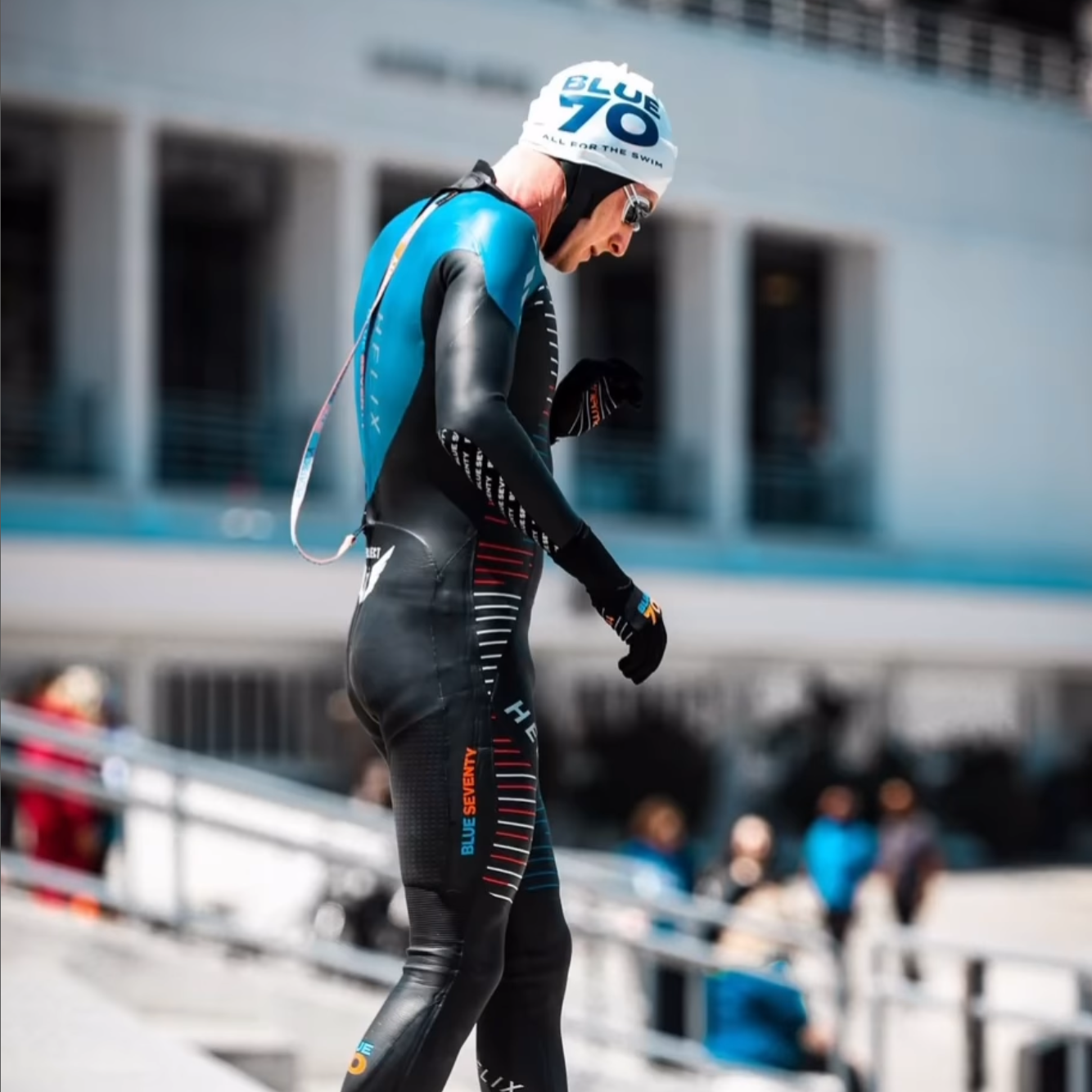
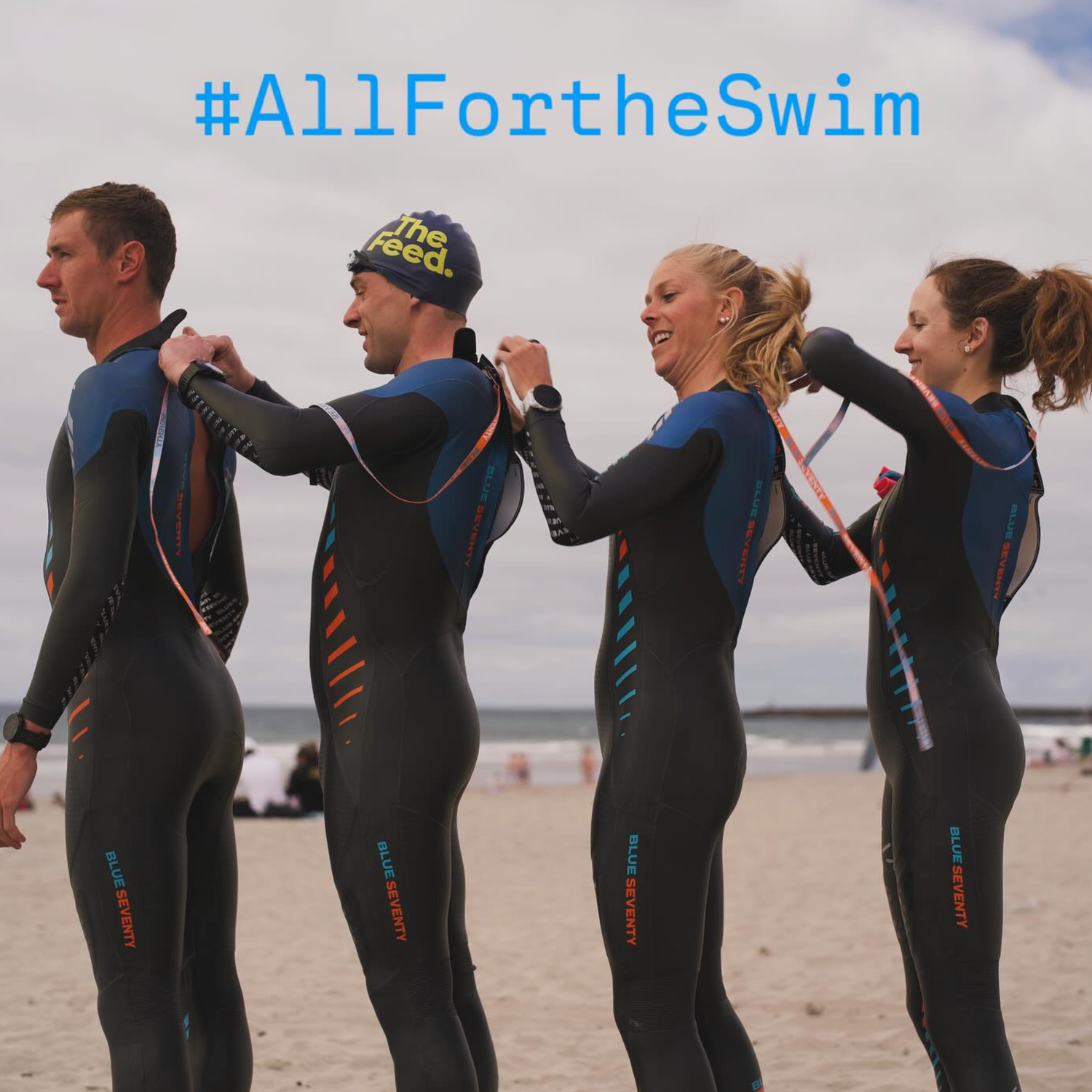
The LIFT panels built into the Helix, introduced in 2018, sit at the hips and legs specifically so they support position without adding bulk through the rotating torso. In rough water, that placement is the difference between a suit that helps you ride a swell and one that fights you on every stroke.
The Neck Seal Works Harder Than You'd Think
Here's a detail most wetsuit guides skip entirely: the neckline matters more in rough water than in calm water, and it has nothing to do with warmth.
Every time you lift your head to sight or breathe against chop, the neck seal stretches and releases. In flat water, that happens gently and occasionally. In a real surf zone, it happens on nearly every stroke, often with more force, because you're lifting higher to clear a swell or see over a wave before it breaks on you.
A neckline cut too high or too tight chafes faster under that kind of repeated stress. One cut too loose lets more water flush in with every lift. The 2021 redesign of the Fusion lowered the neckline specifically to reduce chafing while keeping a watertight seal, a change built around everyday comfort that pays off even more in rough water, where the seal gets worked harder and more often than in a calm swim.
If you're fitting a suit specifically for surf entries and exits, check the neckline under a lifted-head position, not just standing still. Have a training partner watch you sight aggressively in the pool and see whether the collar gaps when your head comes up hard.
Sleeves, Shoulders, and Clearing a Breaking Wave
The sleeved-versus-sleeveless choice usually comes down to water temperature and shoulder comfort. In rough conditions, there's a third factor worth weighing: the surface area of a full sleeve interacts with turbulent water differently than a sleeveless cut does.
A full sleeve adds thermal protection and, for most swimmers, some added buoyancy through the arms, which can help hold position when a wave momentarily buries an arm mid-recovery. The trade-off: sleeved suits ask more of your shoulder's range of motion at exactly the moment your stroke mechanics are already getting disrupted by the surface. If a suit's shoulder flexibility isn't there, rough water is where you'll feel it first. Clearing a breaking wave on recovery demands a higher, more exaggerated arm path than any flat-water stroke.
This is one reason the higher-tier suits in the line, Helix and Reaction, use thinner, more flexible Yamamoto neoprene through the shoulders and arms specifically. Flexibility here isn't a comfort footnote. In chop, it's what lets you adjust your stroke on the fly instead of getting locked into one arm path by a sleeve that won't move with you.
Train the Suit, Not Just the Stroke
Here's the training gap nobody talks about. Swimmers who only ever wear a wetsuit in a calm lake or pool are training their stroke, not their stroke inside a suit under real load. Rough water is where that difference shows up.
A useful progression before a rough-water swim or race:
- Practice sighting with an exaggerated head lift in the actual suit you'll race in, not just a swimsuit, so you feel exactly how the neckline and shoulder respond under that motion.
- Get at least one open-water session in genuinely choppy conditions before race day, even if it's shorter and slower than your usual swim. The first time you feel a suit under wave action shouldn't be the morning of the event.
- Pay attention to where and when water enters the suit. That's diagnostic information about your fit, not just something to accept as part of open water.
This is part of why a Test Swim policy, wearing a wetsuit in the water while retaining the ability to return or exchange it, matters as much as it does. Fit isn't fully knowable from a size chart. It's knowable from how a suit behaves once the conditions get honest.
What Chop Does to a Wetsuit Over a Season
Rough water speeds up two kinds of wear that flat-water swimmers rarely deal with: abrasion from sand or grit in the surf zone, and added stress on seams from bigger, more forceful arm movement.
- Rinse the suit in fresh water as soon as you can after a surf swim, paying close attention to the underarm and shoulder seams, where sand works its way in and acts as an abrasive every time you flex.
- Check the neckline and cuffs for small tears more often than you would after a calm-water swim. These areas absorb more repeated stress in chop.
- Remember that warranty coverage protects against manufacturing defects for one year, but it won't cover fingernail punctures, heel tears, or general wear. A quick post-swim check catches small problems before they end a suit's season.
Matching the Suit to the Swim You Actually Do
None of this changes the basic selection logic behind any wetsuit purchase: competitiveness, budget, frequency, distance, and water temperature still come first. What rough water adds is a filter on top of that logic. If chop and swell are a regular part of your swimming, weight your decision toward shoulder flexibility and neckline fit before you weigh anything else, buoyancy included.
- Swimming rough water more than once a week: the Reaction's durable, flexible build tends to hold up better over a season of surf entries than a suit built purely for flat-water speed.
- Racing rough water occasionally as part of a season: the Fusion's redesigned neckline and dependable seal cover most of what you'll need.
- Racing at the sharp end, where seconds matter and the suit comes off long before it wears out: the Helix still makes sense, but test it specifically in the conditions you'll race in, not just in a calm pool the week before.
Rough water doesn't call for a fundamentally different wetsuit. It calls for judging the same features, fit, flexibility, buoyancy placement, and neckline, against a far less forgiving set of conditions. Test there if you possibly can. The suit that feels right in the last calm minute before a start line is the one that's already proven itself where it actually counts.