


You know that feeling. You’re scrolling, half-watching TV, and then - bam - a sleek triathlon wetsuit at 40% off. The one you’ve been eyeing all season. Your finger hovers. It’s a steal, right?
Maybe not. I’ve seen too many athletes grab a race-day masterpiece on sale, only to realize a few months later that they’ve bought a suit that’s brilliant on a Sunday morning but disintegrating by Wednesday evening. The uncomfortable truth: the wetsuit that makes you fastest on race day is rarely the wetsuit you want grinding through weekly open-water sessions. At blueseventy, we’re pretty blunt about that. The same paper-thin neoprene that lets your shoulders move like you’re not wearing a thing? It won’t forgive three fingernail punctures and a thousand sighting strokes a week.
So before you smash that “add to cart” button, let’s walk through what actually makes a discounted wetsuit a good deal - and what makes it a very expensive mistake.
Why the Flagship Sale Stings Later
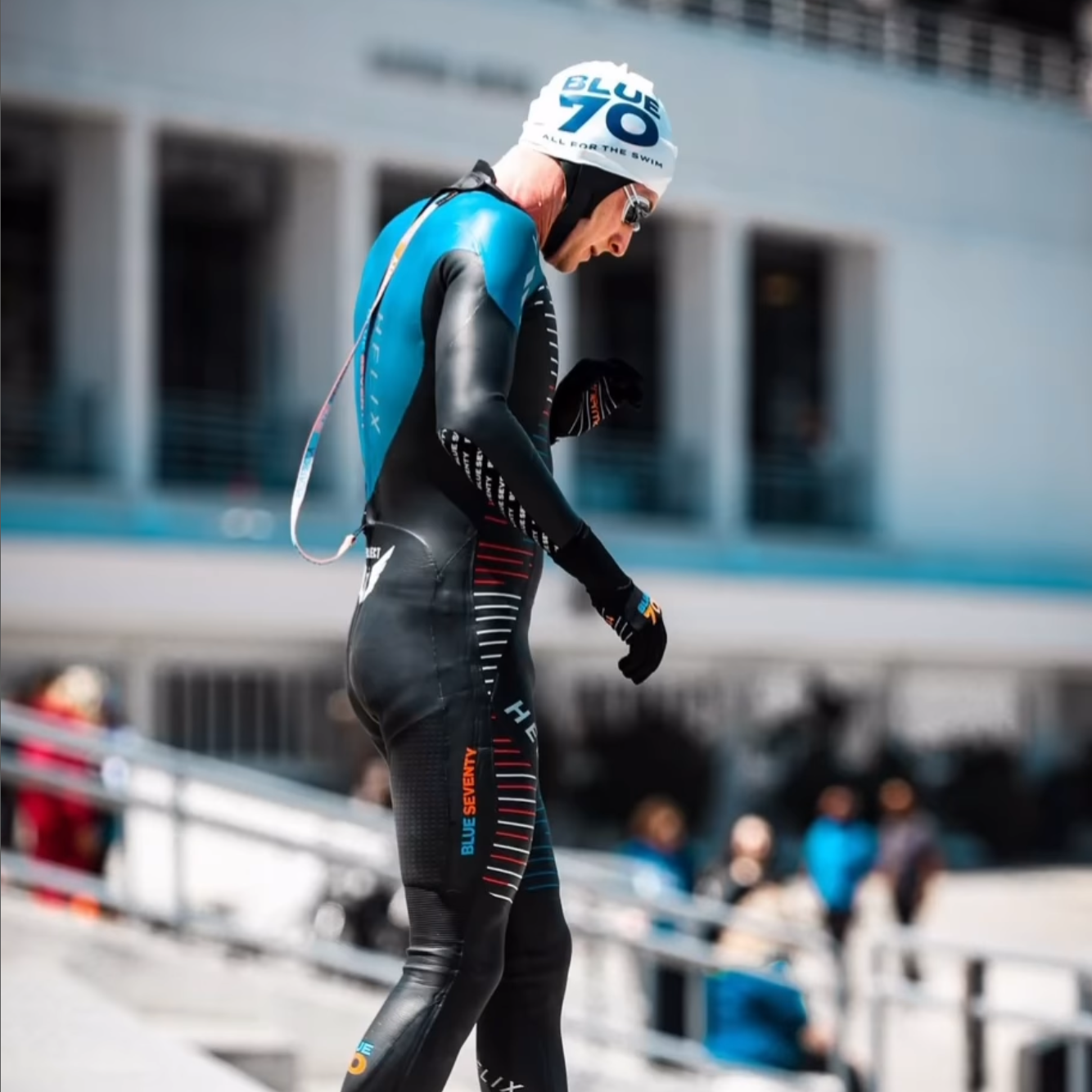
Let me put our own Helix under the microscope. It’s our lightest, most flexible suit - Yamamoto neoprene in the highest cell grades we use, cut so thin in the arms that you genuinely forget you’re wearing it. The LIFT buoyancy panels nudge your hips exactly where they need to be. A catch panel on the forearm gives you just enough grip on the water. It’s pure race-day precision, and we’re the first to say it: wear that suit three or four times a week for training, and the same delicacy that makes it magical will start to work against you. Neoprene thins, seams get stressed, and little fingernail tears turn into actual holes.
When someone buys a discounted Helix as their “forever suit,” they’re often back shopping again before the season ends - or patching neoprene in their kitchen sink, missing a Saturday morning swim. The “savings” evaporate. You didn’t get a lemon; you just ran a sports car on a dirt road. If you only race once or twice a year and do most of your training in a pool, that same delicate suit might be absolutely perfect. The trick isn’t finding the cheapest price; it’s finding the suit that lines up with your actual swimming life.
The Four Non-Negotiables of a Good Value Wetsuit
Before any price tag, learn to read a wetsuit like you’d read your own stroke - with a critical eye. A sale only matters if the suit underneath passes some basic tests.
1. Was it built for swimming, or just for water?
Surf suits are meant for ducking under waves and sitting on a board. Scuba suits prioritize deep-water warmth at low exertion. Neither gives you the shoulder mobility, neck comfort, or hip-lifting buoyancy you need when you’re breathing bilaterally for an hour. Every blueseventy model - from the $325 Sprint to the $995 Helix - is patterned exclusively for swimming. Our arm panels are cut to let you recover without fighting rubber, and the lower neckline we redesigned on the Fusion in 2021 means you won’t feel like you’re being slowly choked by buoy three. A non-swim suit at any price is just an expensive buoyancy aid.
2. Does the neoprene match your mileage?
We use Yamamoto neoprene in 38-, 39-, and 40-cell densities. Higher numbers mean more flexibility. The Helix leans hard into the top-shelf, thinnest stuff for that featherlight catch. The Reaction uses a slightly tougher blend - still plenty of stretch, but it’ll survive several open-water sessions a week without complaint. The Fusion ($420) uses a bit thicker panels that trade a smidge of suppleness for everyday reliability during shorter training swims. If you know your weekly volume, you can match the material to the workload.
3. Is the buoyancy working for you, or just floating you?
“Buoyancy equals speed” isn’t marketing fluff; it’s physics. A suit that simply floats you won’t fix a low hip position that’s dragging everything behind you. Our LIFT panels, which debuted on the Helix and now appear across multiple models, place targeted buoyancy right under the lower torso and upper thighs - exactly where most swimmers need help rotating as one long line instead of fishtailing. When eyeing a sale suit, ask: is this suit just adding foam, or is it actively improving my body position?
4. Does it pass the living-room test?
A wetsuit should feel snug on dry land - almost too tight. In the water, the neoprene relaxes, and that thin layer of water your body warms creates the insulating seal. If a suit feels “comfortable” while you’re standing in your hallway, it’s probably too big, and it’ll flush cold water with every breath. At blueseventy, we build our entire return policy around this: you can swim in the suit, really swim, and still return or exchange it within 30 days as long as it’s clean and dry. No sale should ever push you into a “close enough” size. If you can’t take it for a test swim, factor in the cost of buying the right size later.
How We Make Premium Suits Actually Affordable
We’re not big on flash sales. Instead, we do something a lot of performance-first brands avoid: we openly sell prior-year models and keep a dedicated outlet store where you’ll find suits with the exact same swim-specific DNA as the current line. Maybe it’s a previous-colorway Sprint, or a Reaction from last season’s run. These aren’t factory defects - they’re just not the newest seasonal design. And they’re priced accordingly.
The same decision framework applies, whether you’re shopping full price or outlet:
- You race once a season, train mostly in the pool, and want every possible second: A prior-year Helix can be a brilliant buy - just don’t suddenly ramp up your open-water volume without understanding the trade-off.
- You’re in open water two or three times a week, plus racing: The Reaction is the workhorse you want. Even a previous-generation one will outlast a race suit and still give you excellent shoulder freedom.
- You swim often, shorter distances, on a budget: The Fusion’s thicker, tougher neoprene and that redesigned neckline mean you can swim frequently without babying every seam. A discounted Fusion is a genuine steal for an everyday training suit.
- Cold water below about 56°F: The Thermal Reaction, with its Zirconium jersey lining, adds meaningful warmth. If you spot a previous-year thermal suit, it’s a solid move - because cold-water swimming demands reliable insulation, not a mystery bargain.
And remember, every suit we sell is backed by our Test Swim and 30-day exchange window. That’s the real safety net. When you can actually swim in the suit before committing, the pressure to nail the size on the first try disappears.
A Pre-Sale Checklist You Can Use in Five Seconds
Next time you’re staring at a big discount, run through this mental list:
- Is this suit designed for swimming, or just for being in water? If the brand can’t talk about neoprene grades or shoulder panel design, move on.
- What does my real training week look like, not my fantasy one? A suit that can’t handle three swims a week won’t magically survive yours.
- How long has this suit been sitting in a warehouse? Trust outlets that rotate inventory properly (like ours). Random deep-discount sites don’t offer that assurance, and neoprene can lose its snap over time.
- Can I swim in it and still return it? If not, budget for a second suit, because most first-timers get the sizing wrong.
- Am I buying the suit, or just the discount? Buy the suit. The discount is just a nice footnote.
Take the Swim, Not the Gamble
A wetsuit isn’t a t-shirt you’ll replace next summer. It’s the piece of gear that determines whether you climb out of the water feeling buoyant and strong, or depleted and shivering. Sales are exciting, but they reward the disciplined buyer - the athlete who knows their volume, their water temperature, and their fit long before the price ever shows up on screen.
If you want to find the blueseventy model that actually fits your swimming life, browse our full range - including prior-year suits in the outlet. Grab the size chart, watch our fitting guide video, and if you’re at all unsure, just take the suit for a literal swim. That’s the kind of purchase you’ll still feel good about when you’re zipping up on the shore at 6 a.m., long after the sale adrenaline has worn off.
Dive in at blueseventy.com - and if you have questions, drop us a line at us@blueseventy.com. We know this gear as well as any coach on deck.