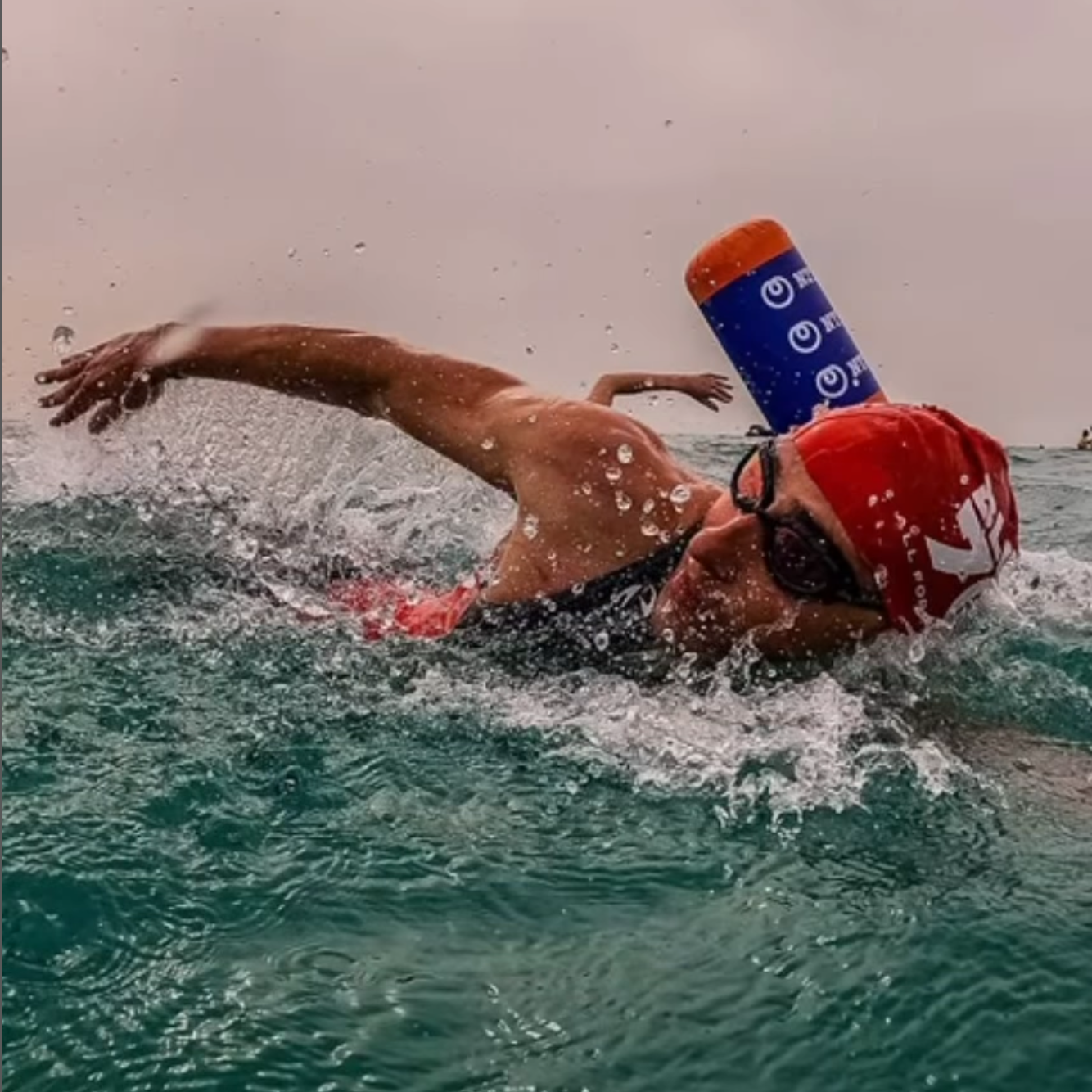



A key pocket seems like a minor wetsuit detail until you start swimming regularly in open water. Then it becomes part of the session plan. If you drive to the lake alone at 6:00 a.m., or head to the beach after work with no secure place to leave gear, your car key stops being an afterthought and starts becoming a problem that needs a clean solution.
Most athletes shop for a wetsuit by looking at buoyancy, shoulder flexibility, warmth, and fit. That is the right starting point. But storage, when it is done properly, has a direct effect on how simple the whole swim feels before you even hit the water. A secure place for a key reduces one more piece of shoreline improvisation, and that matters more than many swimmers expect.
Why this matters more in open water than at the pool
Pool swimmers usually have a deck, a locker, or at least a bench and a bag within sight. Open-water swimmers often have none of that. A gravel turnout, a public beach access point, or a lakeside parking lot doesn't offer much in the way of secure storage. If you are swimming solo, you either carry the key or you hide it somewhere and hope your system holds up.
That is why swimmers come up with all sorts of workarounds. Some tuck the key into a shoe. Some hide it under a towel. Some wedge it into the wetsuit opening. Some put it in a tow float. Those approaches can work, but they are all compromises, and compromises tend to show themselves once the swim gets underway.
- A key hidden on shore can be lost, exposed, or left too visible.
- A key tucked into the suit in the wrong spot can rub or shift.
- A bulky key ring can create pressure against the body.
- A loose item can become a distraction every time you rotate to breathe.
A proper key pocket solves a real open-water problem in a way that respects the demands of the stroke.
The overlooked benefit: better training consistency
The strongest case for a key pocket has less to do with storage and more to do with repeatability. Open-water improvement comes from frequency. You get better by stacking calm, uneventful sessions, not by reinventing your routine every time you park the car.
When the pre-swim process is simple, athletes are more likely to follow through on the session. You park, suit up, secure the key, swim, get out, and unlock the car. That sequence removes friction. Fewer decisions on shore usually means more time in the water over the course of a season.
- Park close to your swim entry point.
- Get the suit on properly, especially through the shoulders.
- Place the key flat and secure it.
- Start the swim without worrying about your gear pile.
- Finish, peel the suit down carefully, and head back to the car.
That sounds basic. It is also the kind of basic routine that keeps open-water training consistent.
Why swimming punishes bad storage choices
Running and cycling are more forgiving when you carry small items. Swimming is not. In the water, you notice things that would never register on land. A hard corner presses into the torso. A loose object shifts with body rotation. A lump in the wrong place changes how the suit feels during the catch. None of those problems needs to be large to become annoying.
This is why a key pocket has to meet a stricter standard than most gear storage. It needs to hold the item flat, stable, and close to the body. If the key moves, you will feel it. If it bulges, you risk disrupting clean water flow over the surface of the suit. If it sits near a high-movement area, it can interfere with comfort through every stroke cycle.
Pocket placement affects stroke feel
Where the key sits matters. The worst areas for a hard object are the sections of the suit that need to flex and rotate freely, especially around the shoulders, upper chest, and underarm zone. Those areas do too much work during freestyle to tolerate unnecessary interference.
A good pocket location keeps the key away from major shoulder mechanics and out of the way during removal. It should also stay clear of the zipper path so the suit remains easy to manage before and after the swim.
- Keep the key close to the body.
- Avoid high-flex zones.
- Keep the profile low.
- Make sure the key does not complicate suit removal.
This also ties directly into fit. A properly fitted wetsuit gives the key less room to move. A loose suit does the opposite. If the torso is baggy, even a small key can start to feel clumsy because the neoprene is shifting around it.
Fit and storage are connected
Swimmers often talk about fit and convenience as if they are separate topics. They are not. A key pocket works best when the wetsuit already fits the way it should. The suit needs to feel snug on land and settle more naturally once you are in the water. The shoulders need to be positioned high enough that the arms can move freely. The torso needs to lie smooth without bunching.
If those basics are off, the problem will not stay isolated. A poorly positioned shoulder panel leads to early fatigue. A loose torso lets water move too freely through the suit. That same extra space also gives a stored key room to shift around. In other words, a key pocket cannot rescue a poor fit. It only works as intended when the rest of the suit is doing its job.
If you need help dialing in that fit, Blue70 offers a fit guide and a Take a Test Swim option so you can check how the suit feels where it counts, in the water.
More storage is usually the wrong idea
There is a temptation in endurance gear design to keep adding features. More compartments. More carry options. More ways to stash things. That approach rarely improves a swim-specific wetsuit.
A wetsuit has a clear job description. It should support body position, preserve freedom from restriction, and provide added thermal protection suited to the conditions. Any extra feature needs to respect those priorities. A key pocket can do that because it solves one narrow problem without asking the suit to become something else.
That is why a small, well-placed key pocket makes sense, while larger storage ambitions usually do not. Swimming rewards restraint. The cleanest design is often the best design.
What belongs in a wetsuit key pocket
Keep the use case narrow. This is one place where less is better.
- A single car key is ideal.
- A simple locker key can work well.
- A small electronic key may be fine if its manufacturer allows submersion.
Avoid loading the pocket with anything bulky or abrasive.
- Do not carry a full key ring.
- Do not include multiple keys with large tags attached.
- Do not stash electronics that are not designed for water exposure.
- Do not carry anything with edges that can stress the suit lining.
This point matters: wetsuits are not waterproof, and they are not meant to keep stored items dry. Water enters the suit, and your body warms that thin layer to provide insulation. A secure key pocket keeps the key in place. It does not change the water exposure of the key itself.
How to use a key pocket without damaging the suit
Good habits here are simple and worth repeating. The same care that protects neoprene during donning and removal also protects the pocket area.
Bring only the key you need
A single key sits flatter, feels cleaner, and reduces pressure points. Remove rings, tags, and anything decorative before the swim.
Place it flat
Lay the key so a corner is not digging into the material. You want the lowest-profile setup possible.
Check it before you walk to the water
Take two seconds to confirm the key is secure while you are still at the car. That is better than spending the first ten minutes of the swim thinking about it.
Remove the suit with control
After the swim, avoid rushing the suit off if the key is still in place. Hard objects and frantic stripping do not work well together, especially if your hands are cold.
Rinse after saltwater use
Salt and sand increase abrasion. Rinse the suit thoroughly and inspect the pocket area as the wetsuit dries.
The race-day lesson inside a small feature
Most triathletes will not race with a car key in the suit. Even so, training with a key pocket teaches a useful lesson about gear management. Anything you carry on your body during a swim should stay quiet. It should not bounce, pinch, rub, or draw your attention mid-stroke.
That principle carries over to race-day details like goggle placement under the cap, anti-chafe application around the neckline, and fast, clean wetsuit removal in T1. The best setups disappear once the swim starts. A key pocket, when done properly, follows that same standard.
Small design choices shape the whole session
Some wetsuit details affect speed and body position directly. Others affect how likely you are to get in the water, stay focused, and repeat the routine next week. A key pocket belongs in that second category. It is not a headline feature, and it should not be oversold. But it can remove one of the most common annoyances in open-water swimming without interfering with the swim itself.
That is the benchmark we use at Blue70. Every feature has to earn its place through swim function. If it interrupts the stroke, adds bulk, or complicates fit, it does not belong. If it solves a real swimmer problem cleanly, it does.
A quick pre-swim checklist
- Take only the key you need.
- Remove extra rings and bulky attachments.
- Confirm the key or fob can handle water exposure.
- Place it flat and secure it properly.
- Make sure the suit still feels smooth through the torso.
- Remove the suit carefully after the swim.
- Rinse the wetsuit well, especially after saltwater sessions.
Open-water swimming gets easier when the routine around it gets simpler. A well-designed key pocket will not guarantee a better swim, and that is not the point. Its value is quieter than that. It keeps one essential item secure, reduces shoreline hassle, and lets you focus on the water instead of wondering where you hid your keys.