


Your wetsuit hanger is not a storage accessory. It is a maintenance tool. The way you hang a suit between swims determines how long the shoulder panels keep their stretch, how flat the neck seal sits, and where permanent creases form.
blueseventy suits use Yamamoto neoprene in 38, 39, and 40 cell densities. Higher cell numbers mean more flexibility because the foam structure is finer. That flexibility is why the shoulders of a race suit move with your catch instead of fighting it. The trade-off is that fine-cell foam compresses under a narrow load.
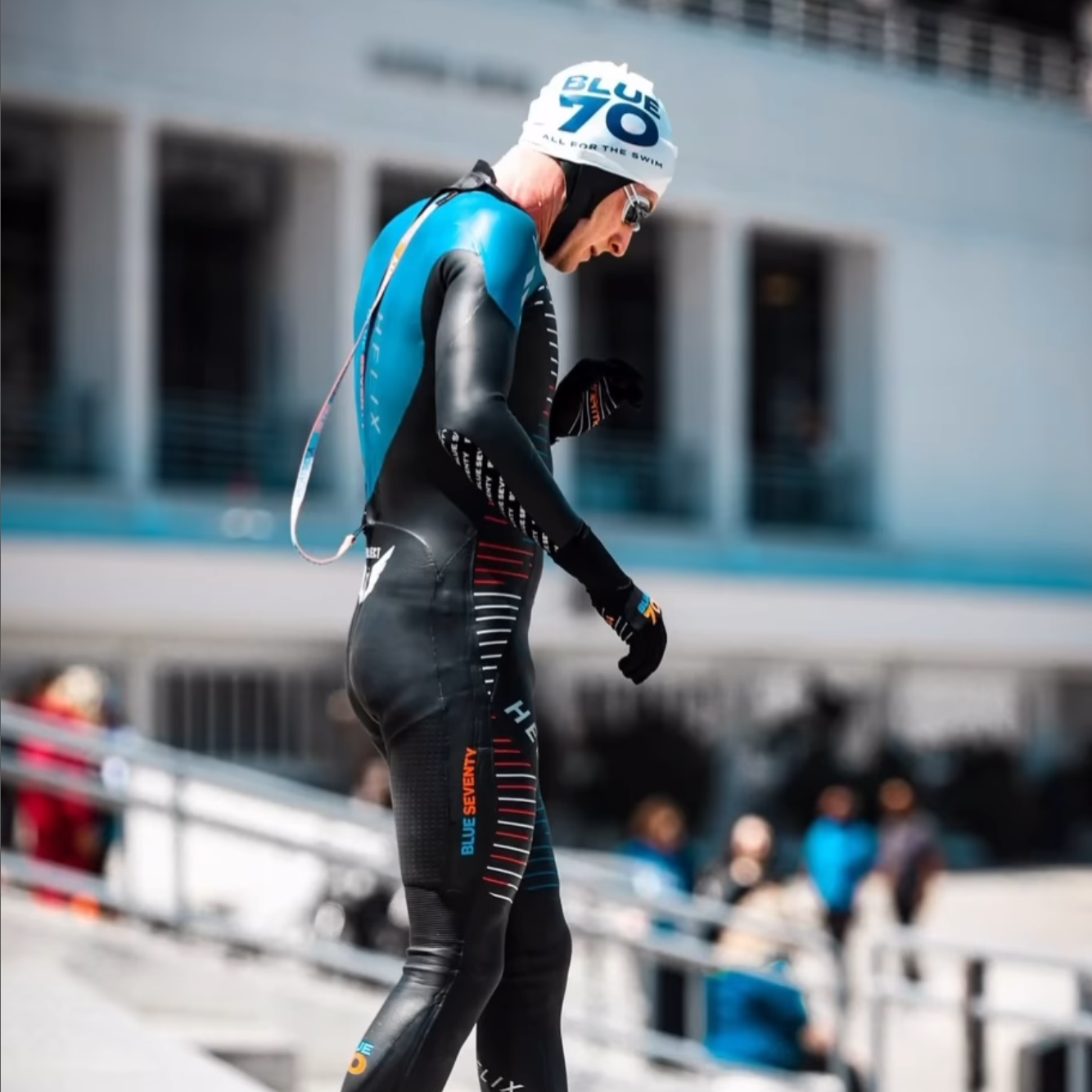
Hang a wet suit from a wire hanger or a small hook and the full weight pulls through two small contact points at the shoulders. The foam cells at those points flatten. Do that after every session and the shoulder panels start to hold a crease. You feel it later as a tight band across the front of the shoulder or a neckline that no longer sits flush. For the Helix, with thin, flexible neoprene in the arms and shoulders, that crease lands exactly where the suit needs to stay supple.
The Hanger Shape That Works
Most coat hangers fail a wetsuit in two ways. The ends are too narrow. The bar has no width, so the neoprene folds over a sharp edge. A wetsuit hanger needs a wide, smooth bar that spreads the load.
The safest method is to fold the suit once at the waist and hang it over the bar so the bar carries the weight. The arms and neck should hang freely without tension. If the bar is too short, the suit bunches and creases. If the bar has hooks or pointed ends, the neoprene can tear. Look for a smooth surface and enough width to take the folded waist without pinching.
The Full Storage Sequence
Follow this order every time you come back from a swim.
- Rinse the suit in cool fresh water. Salt, chlorine, and lake sediment sit in the neoprene and break down the foam and glue over time.
- Turn the suit inside out and rinse again.
- Let the suit drip dry out of direct sunlight before you hang it. A wet suit hung immediately puts more weight through the contact points and traps moisture against the lining longer.
- After the outside feels dry, turn it right side out and let the inside dry completely.
- Fold the suit once at the waist and hang it over a wide, smooth bar in a cool, dark closet.
Heat from a car trunk, garage, or radiator bakes the neoprene and shortens its life. Sunlight and fluorescent light can fade the outer jersey. Neither helps a suit you plan to race in next season.
What to Avoid
These storage choices compress the foam, trap moisture, or expose the suit to heat.
- Do not hang a wetsuit by the shoulders on a wire hanger.
- Do not leave it bunched in a bag or bin.
- Do not store it near a heater, in a sunny window, or in a hot car.
Small tears often start with a fingernail puncture during donning or a heel tear from pulling the suit on too fast. Storage makes those tears worse if the suit is folded sharply or hung under tension. For nicks and cuts, neoprene cement repairs the damage before it spreads. Aquaseal neoprene cement is the product we recommend for that job. A clean, dry tear bonded early holds through the season when the suit is stored correctly.
When the Hanger Is Not the Problem
Some creases recover after the suit gets wet again. Deep creases do not. Months of hanging under tension flatten the foam cells along the fold until they lose their ability to rebound. Test it by wetting the suit and stretching the area gently. If the crease stays visible after the suit dries flat, the panel has been compressed beyond normal recovery.
That kind of damage is not covered under warranty. blueseventy's one-year warranty covers manufacturing and materials defects for the original owner. It does not cover wear and tear from storage or misuse. Fingernail punctures, heel tears, zipper damage from force, and heat or chlorine damage are all excluded. The hanger you choose is a wear-and-tear decision within your control, and it costs less than a new suit.
Store It Like Equipment
Treat the hanger as part of your race day prep. Keep it cool. After each session, rinse, dry, and hang the suit at the waist on a wide smooth bar. Store it in a cool, dark place. The suit will keep its shoulder flex, the neck seal will sit flat, and the next swim will feel the way it should. If your suit has spent time on a narrow hanger and now feels tight through the shoulders, start with the fit guide before you make changes.