


Every wetsuit article seems to describe the rules the same way: cold water means you must wear one, warm water means you can't, done. That's not wrong, exactly. It's just incomplete. There's a wide band of water temperature sitting between those two extremes where a wetsuit is legal, optional, and comes with zero penalty either way. Nobody talks about that band, and it's where most triathletes actually stand on race morning trying to make a call.
For anyone racing in North America or Europe, the cold-mandatory and warm-banned edges of the temperature scale rarely force a real decision. You show up, you check the rule, you follow it. The middle is different. The middle asks you to think.
So let's actually think about it: how these rules got built, what your body is doing in that gray zone, and how to make a decision that fits you instead of copying whoever's standing next to you at the swim start.
Where the rules actually came from
Wetsuit rules in triathlon started as a fairness question, not a safety one. Once triathletes began racing in neoprene in the late 1980s, coaches noticed something odd: the suits weren't just keeping people warm. They were making people faster, and not evenly.
Dutch exercise physiologist Huub Toussaint measured this directly. His 1989 study in Medicine & Science in Sports & Exercise compared active drag between swimmers wearing a triathlon wetsuit and swimmers in a standard suit. The wetsuit group showed less drag, full stop. But the follow-up work got more interesting: the drag benefit was bigger for slower, less-efficient swimmers than for elite swimmers who already hold a flat body position without any help.
That's the whole reason governing bodies started writing wetsuit rules. A suit that lifts a struggling swimmer's hips toward the surface closes a gap that has nothing to do with training or fitness. Once that got documented, the sport built a three-tier system that most federations and major races still use:
- A cold-water zone where wetsuits are required to keep competing
- A middle zone where wetsuits are legal and optional, no time penalty attached
- A warm-water zone where wetsuits are banned outright, or allowed with a time penalty for athletes racing for placing or prize money
The exact cutoffs shift across rule cycles, and USA Triathlon, Ironman, and World Triathlon (the rebranded International Triathlon Union) don't run identical numbers. Here's the practical part: the only number that matters is whatever's printed in your race's current athlete guide, checked the week you race. Water temperature sometimes gets confirmed the morning of the event. A number from last season, or from a training partner's memory, isn't something to plan around.
Why the gray zone deserves more attention
Inside that discretionary band, the rulebook has done its job already. It's told you the suit won't get you disqualified and won't cost you time. What it hasn't told you is whether wearing one makes sense for your body, on that morning, in that water. That's a physiology question, and physiology doesn't read rulebooks.
Cold-water immersion research from physiologist Michael Tipton at the University of Portsmouth has spent decades documenting how wildly individual responses to identical water temperatures can be. Body composition matters. So does acclimatization. So does experience. A lean, fast swimmer with little body fat loses heat faster than a heavier, slower swimmer in the exact same water. But the slower swimmer is also in the water longer, covering the same distance. Two variables pulling in opposite directions. That's why "the water's 74 degrees, so decide accordingly" doesn't tell you much at all.
A few things that matter more than the number on a temperature gauge:
Time in the water
A 750-meter sprint swim and a 3.8-kilometer Ironman swim expose you to cold for wildly different amounts of time. Water that feels fine for twenty minutes can feel very different after an hour.
Body composition and experience
Newer swimmers tend to swim slower, which means more time in the water, often with less of the natural insulation that helps veteran open-water swimmers manage heat loss. That combination pushes a lot of first-timers toward wearing a suit even near the warm edge of the discretionary range, regardless of what a faster training partner decides to do.
Acclimatization
A swimmer who's trained outdoors all season handles a given temperature differently than someone doing their first open-water swim of the year on race morning. This is a real physiological adaptation. It's not toughness, and it's one more reason a friend's decision at a different race doesn't automatically apply to you.
Building a decision that's actually yours
Since the rulebook hands you the choice inside this band, treat it like one. Know your race's official policy and the forecast water temperature ahead of race week. On race morning, weigh that against your swim distance, your cold tolerance built up this season, and how your body has handled similar conditions in the past.
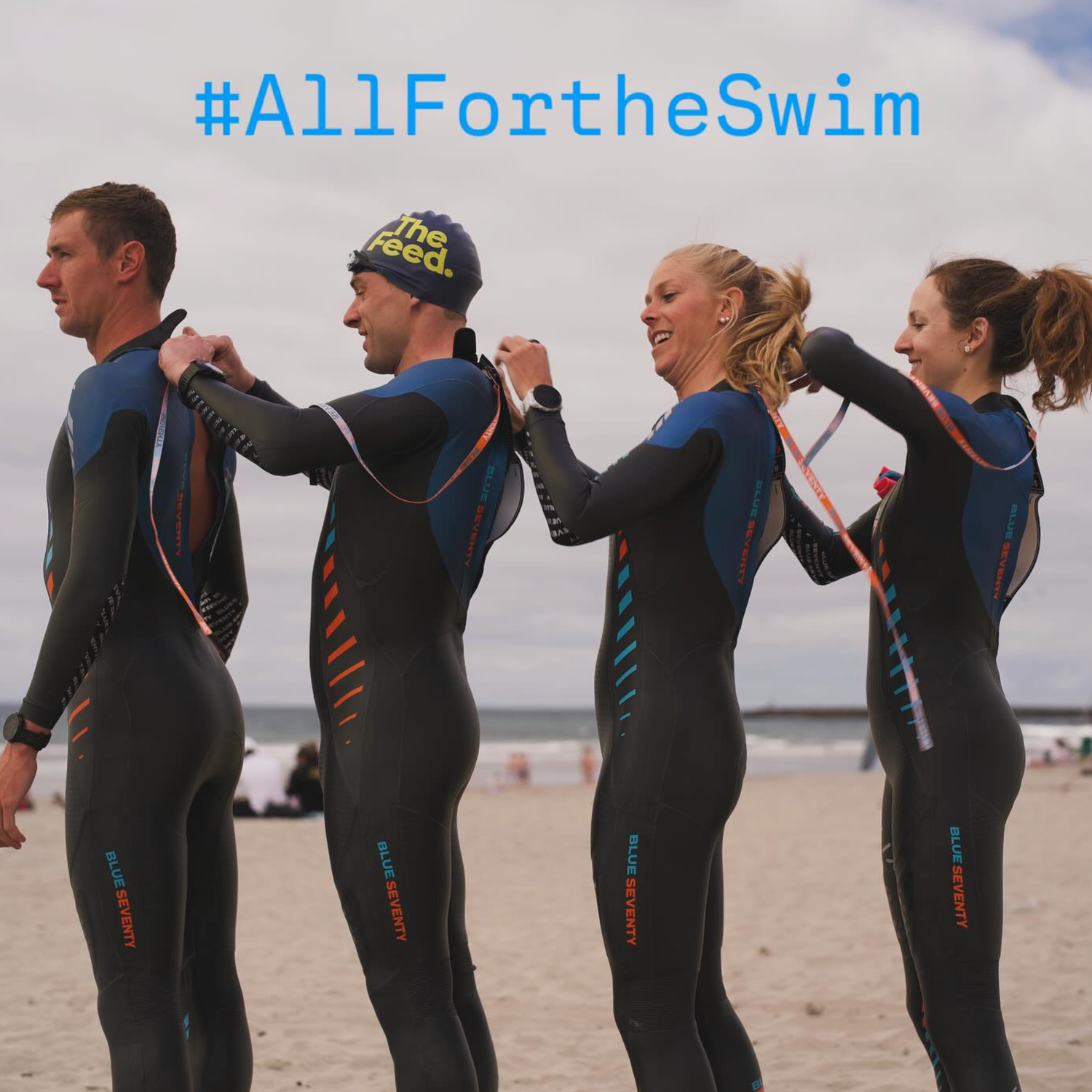
Still on the fence? A sleeveless design sits as a real middle option between a full suit and no suit. It keeps your shoulders moving freely and cuts the thermal load of full arm coverage, while still adding buoyancy through the torso, which is where most of a wetsuit's speed benefit comes from anyway. Blue70 built the Reaction Sleeveless around exactly this trade-off, for swimmers racing in warmer or borderline conditions who want some lift through the hips without the extra heat of full sleeves.
If you've never faced this decision before, get in open water and test it, ideally in conditions close to what race day will bring. That tells you more than any temperature chart. Blue70's Test Swim policy exists for this reason: swim in the suit, and if it turns out to be the wrong call for your body, send it back clean, dry, and tagged.
The thickness rule nobody mentions
Wetsuit rules don't just govern when you can wear one. They also cap how thick it can be, a limit that's stayed close to 5 millimeters across most rule cycles, with some variation for buoyancy panels. That single constraint has quietly driven most of the material innovation in this category for decades. If a suit can't get thicker to add more warmth or float, the only lever left is cell structure: how much gas the neoprene traps per millimeter, and how that affects flexibility at the shoulder without breaking the thickness cap.
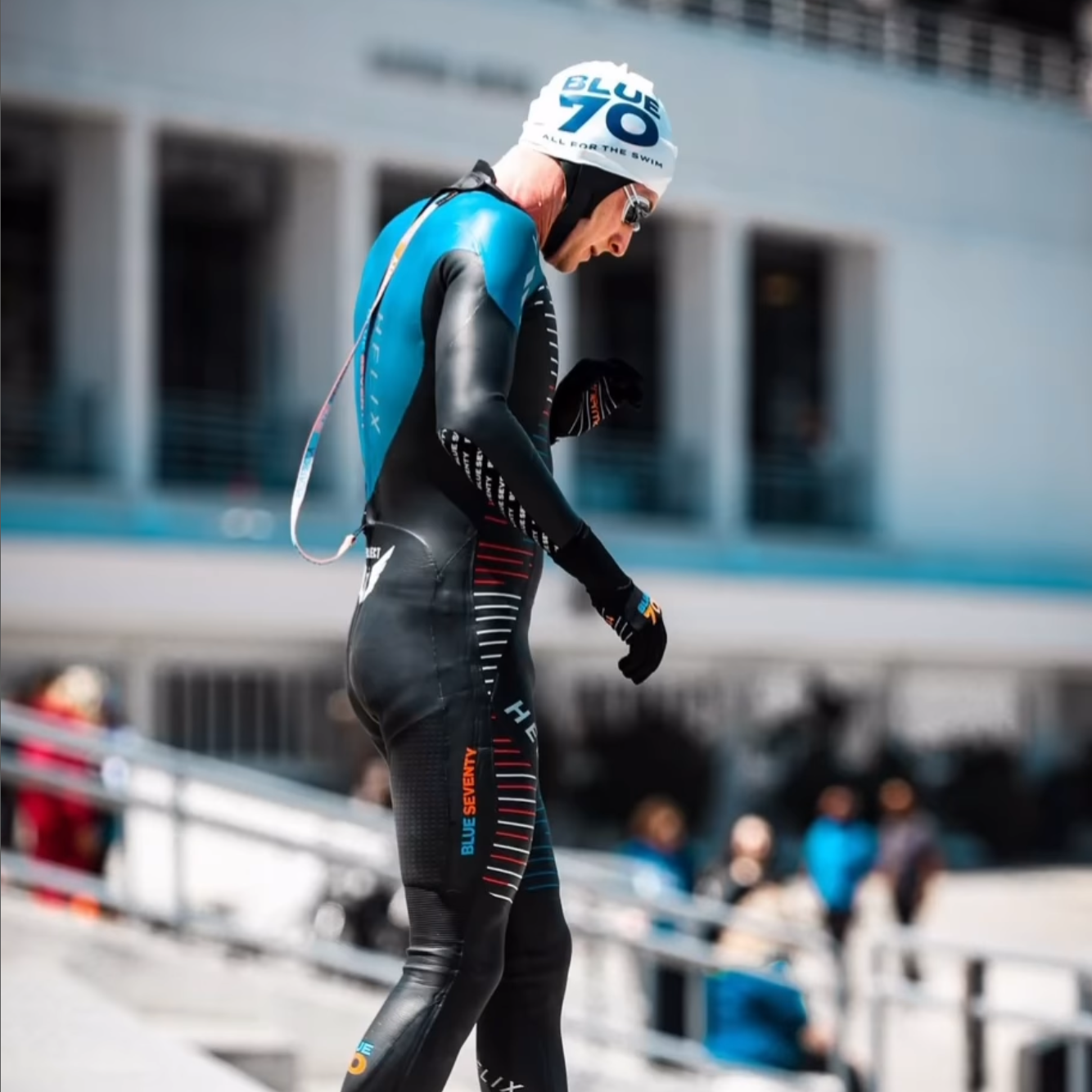
That's the logic behind grading neoprene by cell count. Yamamoto 38, 39, and 40-cell neoprene, used across the Blue70 line, is built around exactly this trade-off. A higher cell number traps more gas per cell within the same millimeter of material, which increases flexibility without pushing past the rule limit. A suit built at maximum thickness with 40-cell neoprene in the shoulders moves through a stroke cycle very differently than one built at the same thickness with denser material. That difference shows up as fatigue over a long swim, which is the whole point of getting the design right.
Blue70's own history runs straight through this same regulatory story. The company that became Blue70 built one of the first triathlon wetsuits back in 1993 and served as the official Ironman wetsuit under the Ironman Wetsuits name during that era, developing suits inside the same thickness constraints that still shape the category today.
Before you race
Water temperature rules exist to keep triathlon fair and to keep swimmers safe at both ends of the thermal scale. But the middle band was built on purpose to put a real decision in your hands. Check your race's specific rule the week you arrive, not from memory. Then decide based on your distance, your season's acclimatization, and how your own body has handled similar water before, not on what everyone else at the start line is wearing.
If you're still figuring out which suit fits that decision, Blue70's size charts and fitting guide are a solid place to start. And the Test Swim policy means you can find out exactly how a suit performs before you commit to it on race day.