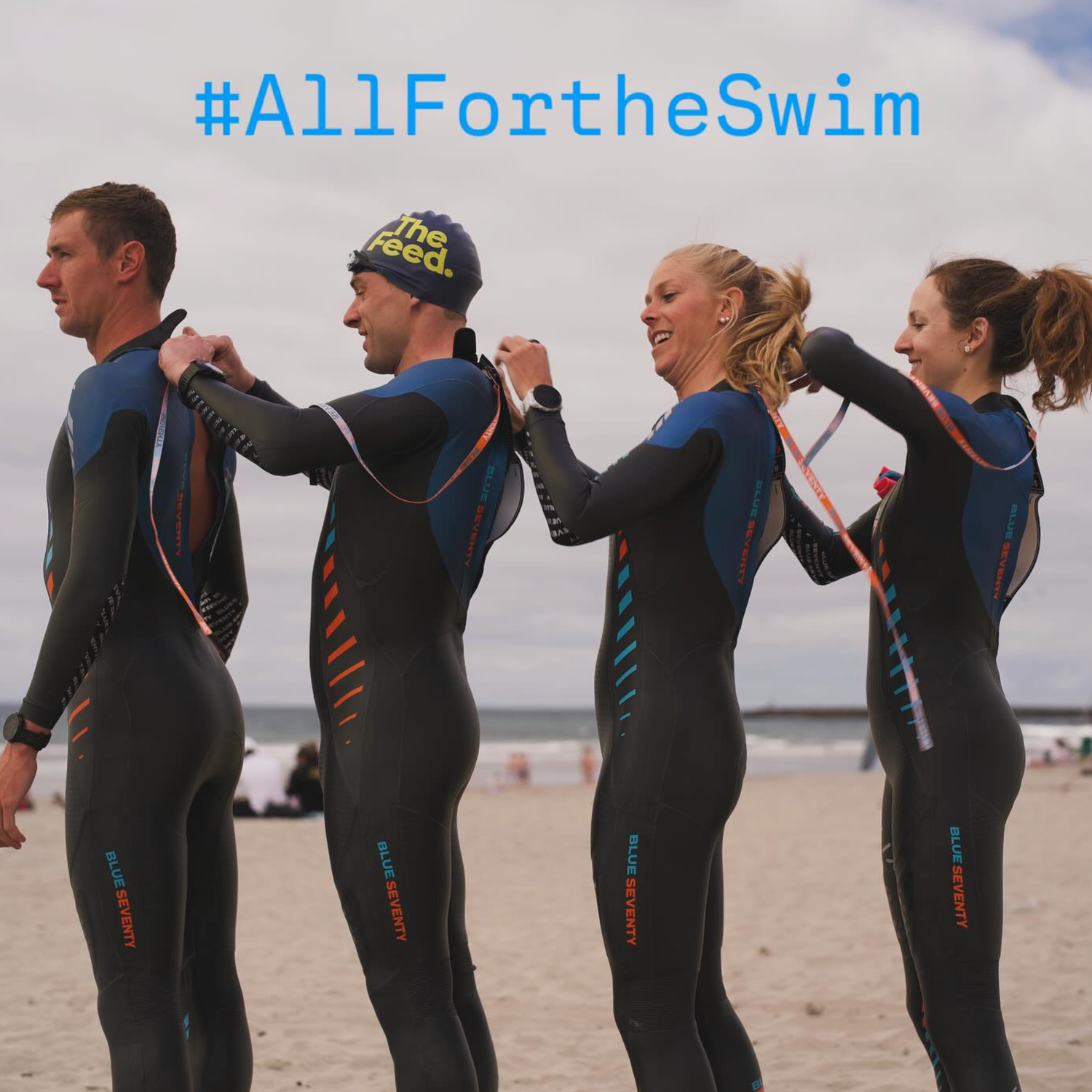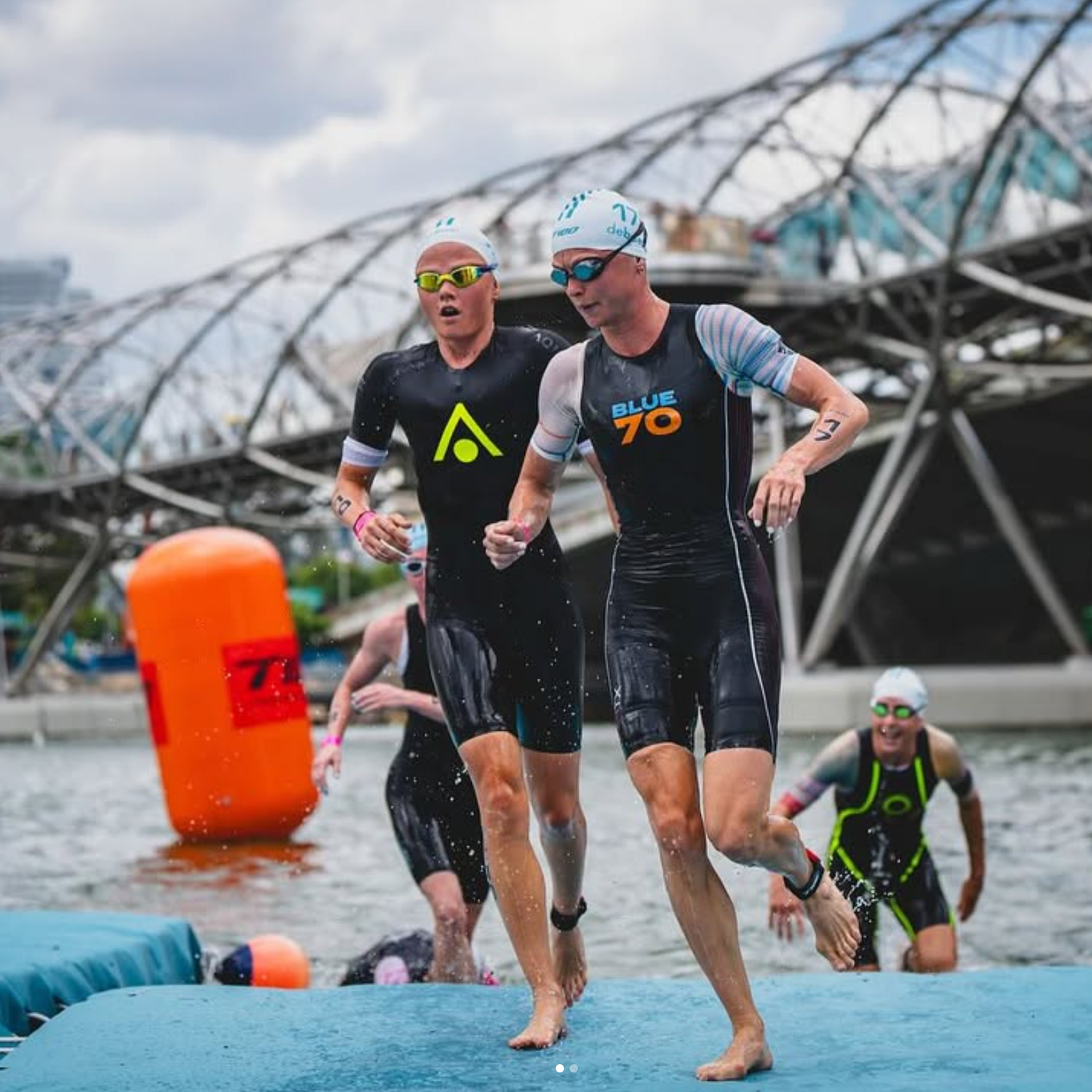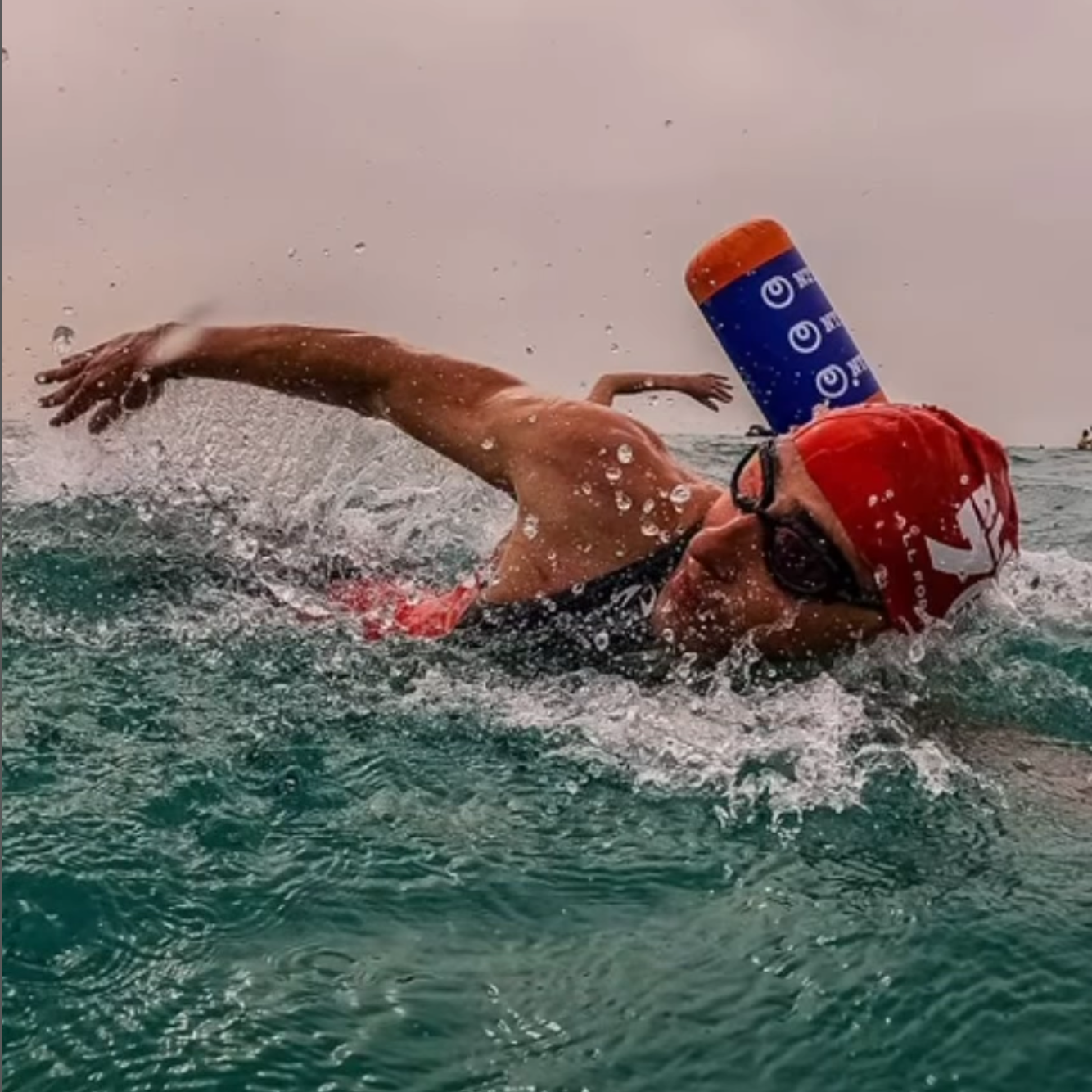



Most triathletes could recite their T1 routine half asleep: wetsuit to the waist, cap and goggles off, run for the bike. Fewer have ever thought about the thirty seconds before that, standing on gravel or wet sand, working a snug wetsuit onto cold feet in the dark. That patch of ground under your feet does more work than most swimmers give it credit for.
A wetsuit needs to fit tight on dry land, by design. Neoprene that feels loose on the beach takes on water once you're swimming, which adds drag and cancels out the buoyancy you paid for. That same tightness that helps you in the water fights you on the way in, and your foot fights back. Something gives. Too often, it's the neoprene.
The two ways almost everyone damages a new wetsuit
Wetsuit damage rarely happens during the swim itself. It happens in the ten minutes before, and the ten minutes after.
Fingernail punctures come from gripping neoprene to pull it up the calf or over the heel. A fingernail against thin material, under tension, is exactly the kind of point-pressure neoprene isn't built to handle. Blue70's own warranty terms exclude fingernail punctures for this reason: it's a handling issue, not a defect in materials or construction.
Heel tears happen when you're standing on rough ground, gravel, sand, a parking lot, and forcing a foot through a narrow ankle cuff. That's where the neoprene is thinnest and already under the most stretch. Also excluded from warranty coverage. Also entirely preventable.
Why the surface under your feet changes the outcome
Think about what your foot actually needs the moment it goes into the leg of a wetsuit. Enough grip to plant without sliding. Not so much grip that the cuff catches on grit as it slides past. Sand fails on both counts: it clings to wet neoprene, and every grain becomes a friction point as the cuff drags over it. Gravel and asphalt are worse, with sharp edges that don't distinguish between skin and neoprene.
A flat, clean surface removes that fight entirely. You're not fighting for balance, so you can focus on the actual task: easing the suit up in stages instead of yanking it. It also keeps the wetsuit off whatever's underneath you. A suit laid across hot asphalt or gritty sand picks up contaminants before you've even put it on.
This is a fit issue, not just a durability one
Torn neoprene is the obvious cost of a bad donning surface. The fit cost is less obvious, and arguably bigger.
Blue70's fitting guidance is direct here: a suit that's donned poorly, especially through the shoulders, causes fatigue in the water. Rushed donning on one leg, hopping across gravel with cold, shaking hands, is exactly the situation that produces a badly seated suit, and the fatigue shows up well before you'd expect it. Shoulders bunch. The torso panel sits wrong. None of it registers until you're fifty meters into the swim and your stroke feels heavier than it should.
A stable surface makes it easier to get this right the first time: suit seated evenly, shoulders free, zipper line straight.
Race morning is where all of this compounds
Open water venues are rarely tidy. Boat ramps, rocky beaches, lakeside grass hiding roots, gravel lots: that's the normal terrain of a race morning, not the exception. Add pre-dawn light, cold hands, and race nerves, and small problems stack fast. Cold hands grip harder than they need to. Unstable footing shifts more weight onto a foot that's mid-cuff. Low light means you feel a puncture before you see it happen.
A mat, or any barrier between your feet and the ground, removes one variable from a morning that already has plenty. You know exactly what you're standing on, every time, no matter what the venue throws at you.
Care starts before the swim, not after it
Wetsuit care conversations usually focus on what happens once you're out of the water: rinsing, drying away from direct sun, proper storage. All of that matters. But care starts earlier. If a mat keeps sand and grit off the neoprene during donning, there's less debris working into the suit's pores in the first place, and less abrasive material sitting against it once you're actually swimming.
It's a small habit. Over a season, it adds up. One puncture or heel tear rarely ends a wetsuit's life on its own. Dozens of them across a season of training will.
A few habits worth building
- Trim your nails before you travel, not on race morning when you're rushed and distracted.
- Use any flat barrier if you don't have a dedicated mat: a towel, a bag, a section of tarp. The material matters less than having something between skin, suit, and ground.
- Roll the cuff instead of yanking it. Working neoprene up in small sections reduces the shear force behind most heel tears, no matter what you're standing on.
- Practice the full routine at home before race day, mat included, so your hands already know the motion before you're doing it for the first time on an unfamiliar beach.
The detail nobody budgets for
Nobody buys a wetsuit and thinks about what they'll stand on while putting it on. But that surface is doing real work: cutting puncture risk, cutting abrasion, and giving you a stable base to get shoulder and torso fit right before you've touched the water. It's a small piece of the routine with an outsized effect on how long your suit lasts and how well it fits when it counts.
Take a Test Swim in your wetsuit before race day, and build the mat, and the full donning routine, into that practice. The only new variable on race morning should be the water.